Categories Economy


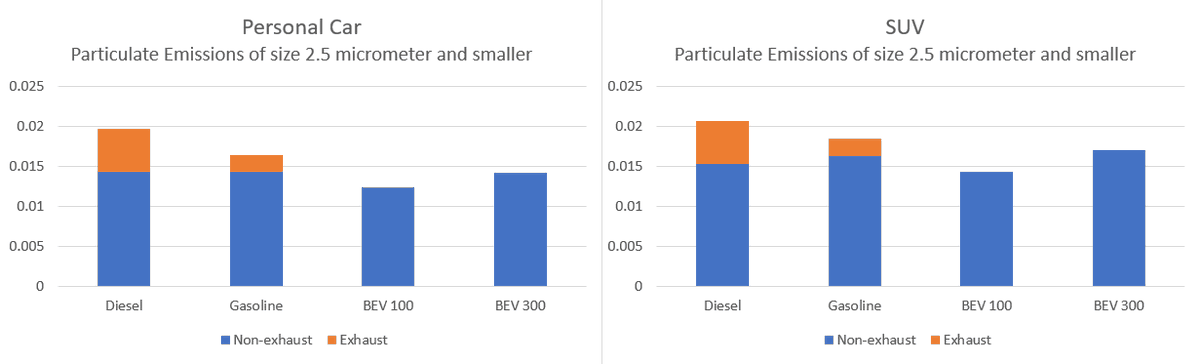
Recently @OECD published a report about particulate matter (PM) from road transport. Newspaper headlines blared that electric vehicles where worse than combustion vehicles. That conclusion was wrong according to the report itself.
Let me show you.
The report (published december 7) can be found here: https://t.co/1HpicKexOt

It's main point is well taken: as cars get cleaner, fine particles emitted by brakes, tires and road surfaces will become more important.
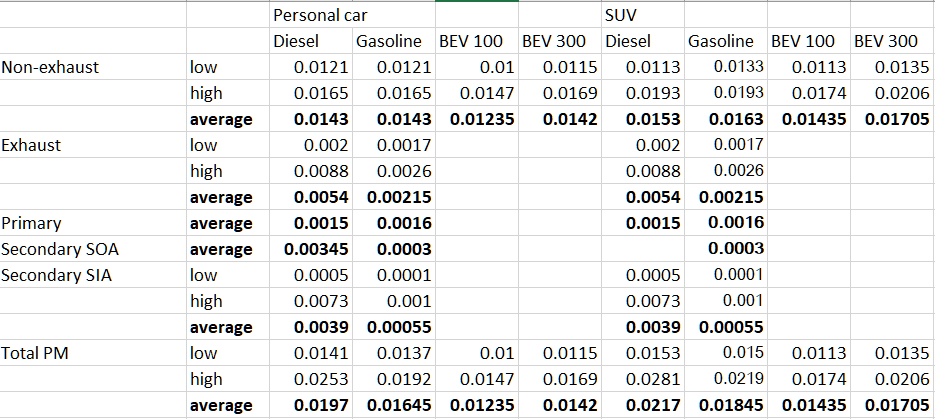
The table comparing electric and combustion engines is on page 92. I took averages of low and high values to get the graph in the first tweet.
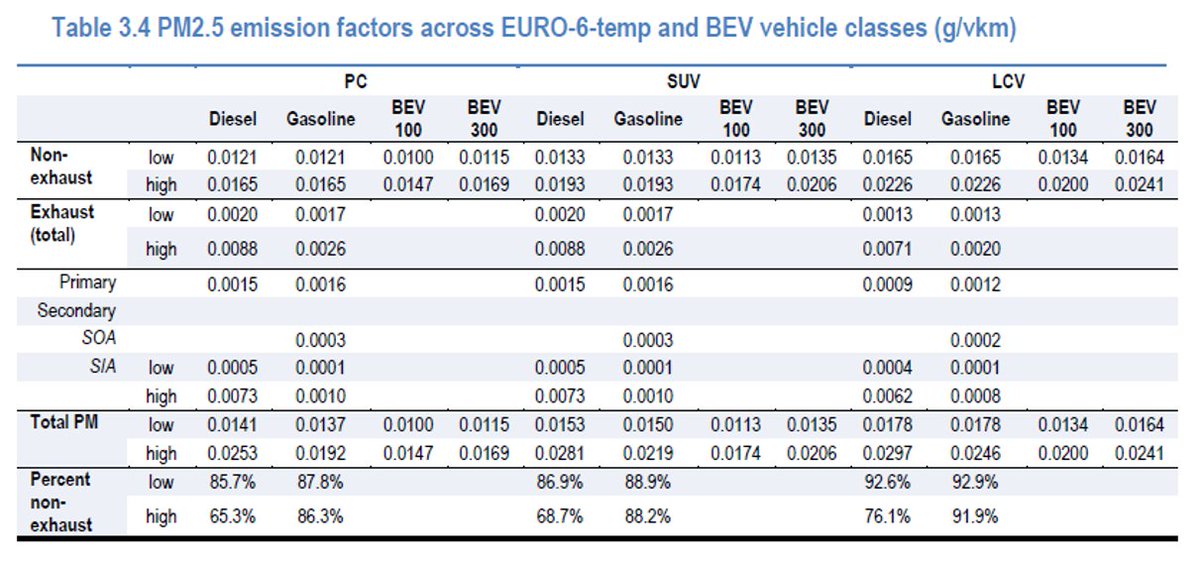
I merely took the averages. To get this.
I think it is a terrific report that pulls together a LOT of literature on fine particles that cars spew into the air and that make us sick.
We have ignored this problem for too long, and there's more here than simply exhaust!

I can't tell if I'm agreeing or disagreeing with @jc_econ.
There is no relationship b/w deficits & interest rates in the US & many other advanced economies. Centuries of dynamic institution building underpin our reserve currency status that allows rates to be a function of economic fundamentals, flows & policy not credit risk 1/3
— Dr. Julia Coronado (@jc_econ) January 26, 2021
Increasing government spending or reducing taxes increases demand (or reduces saving). This raises the price of loanable funds or the interest rate.
In a dynamic context, more demand means a stronger economy, the central bank raises interest rates sooner, and long rates rise.
(As an aside, we are not close to the United States needing to worry about credit risk and the risks are more overstated than understated in most other advanced economies too. But credit risk is not always & everywhere irrelevant, just look at the UK in 1976 or Canada in 1994.)
Interest rates have fallen over the last 20 yrs while debt has risen. This does not necessarily mean that debt rising causes interest rates to fall. It could also mean that other things have happened at he same time that pushed down interest rates more than debt pushed them up.
The suspects for these "other things" include slower productivity growth, slower popln growth, higher inequality, less investment, etc. All of which either increase the supply of saving or reduce the demand for investment, reducing the equilibrium interest rate.

There is both good news and bad news buried in the report.
Most often, too much attention is paid to the headline month on month numbers.
1)
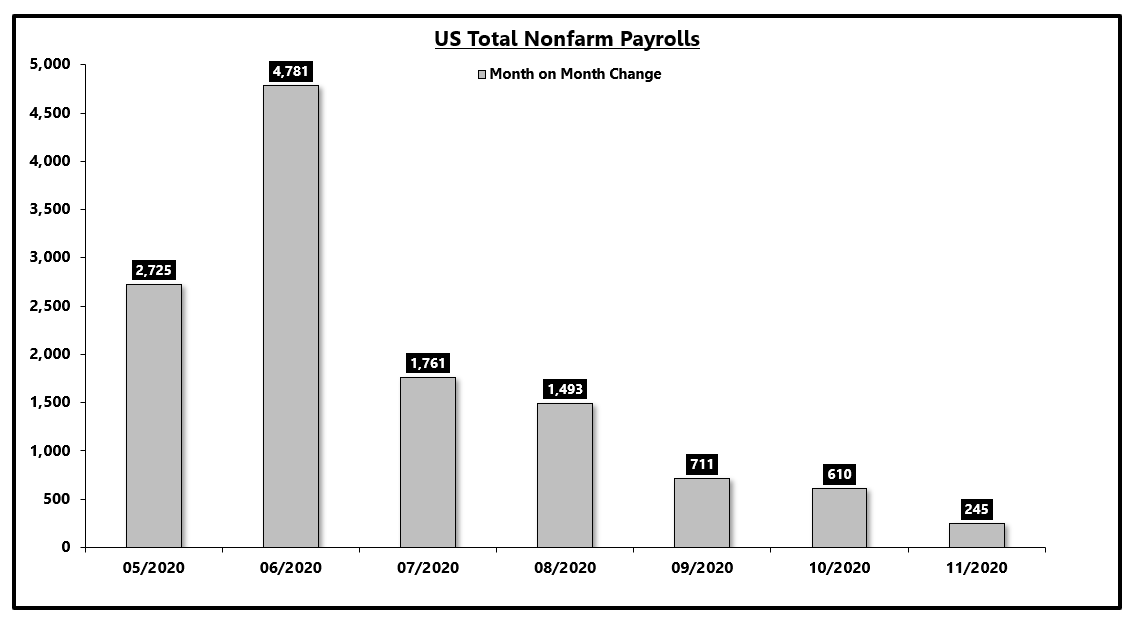
2) In year over year terms, total nonfarm payrolls did not increase for the first time since the pandemic. Generally, this is a negative.

3) Under the hood, most of the decline was in the government sector so it makes more sense to look at private payrolls in this context.
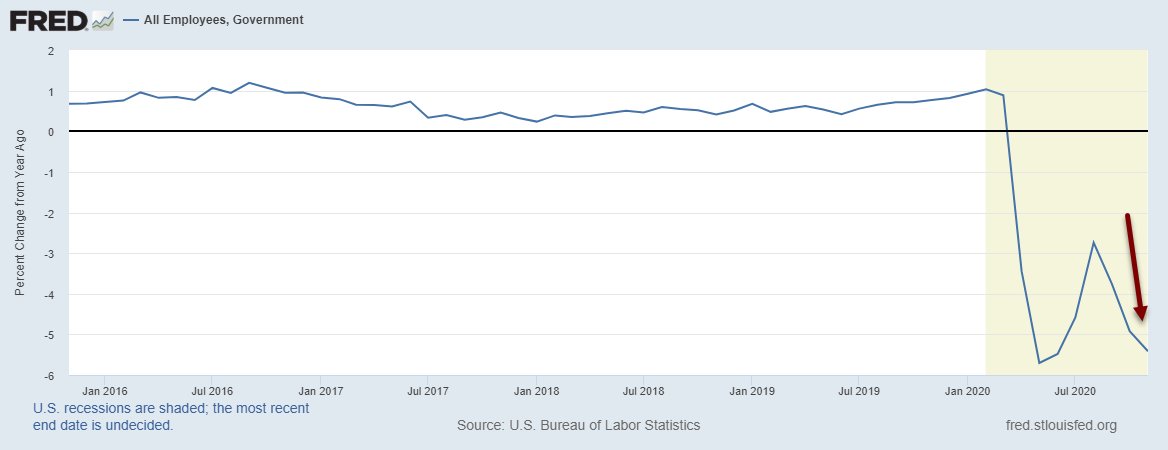
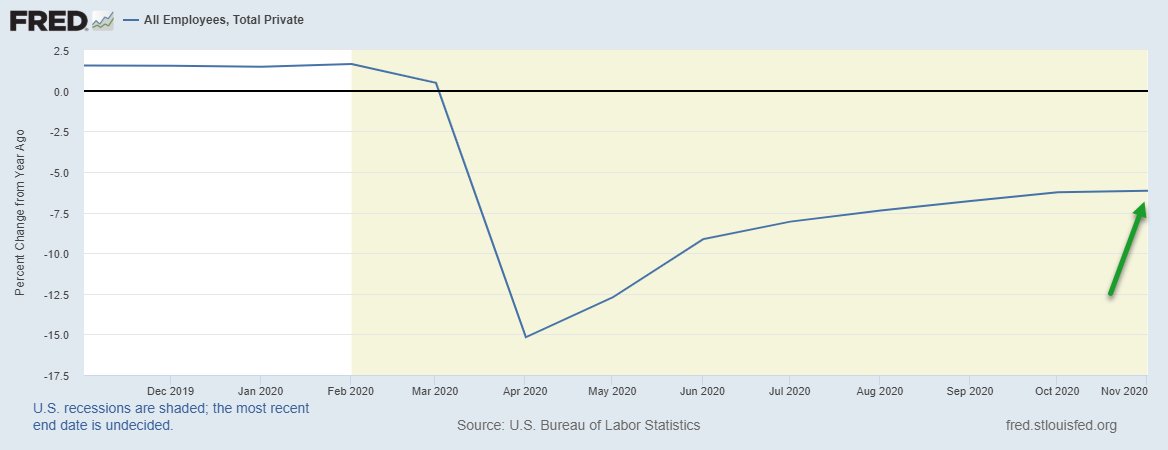
4) Private payroll growth continues to increase but the gains are clearly slowing down - this is to be expected.
5) The troubling part of the report was the labor force participation rate which remains stubbornly low.
As @R_Perli highlighted, if the LFPR does not increase back to pre-COVID levels, we're going to struggle with weaker trend potential growth.
https://t.co/zw7fCZ2gfY
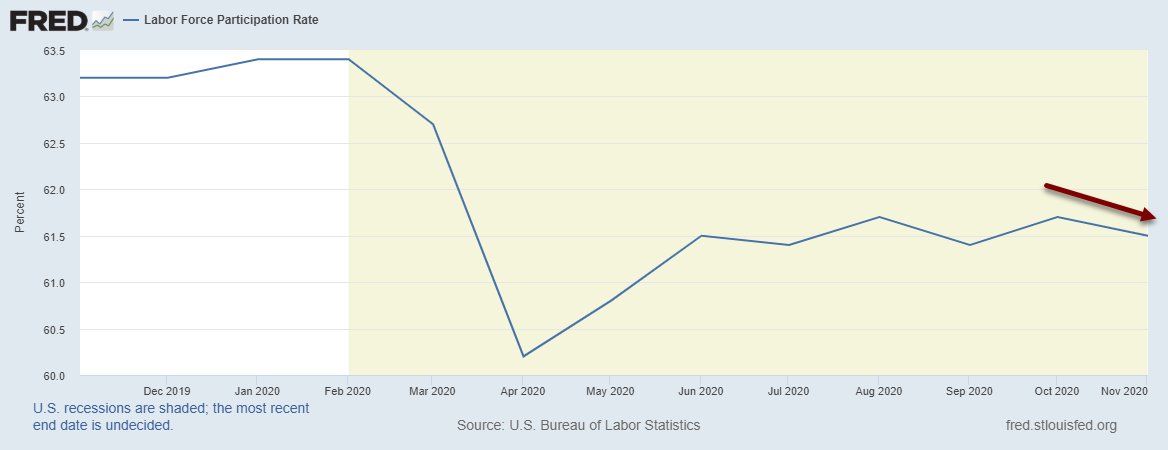
The worst part of the employment report is the stall in the labor force participation rate (-0.2% today and about 2% lower than pre-#COVID19).
— Roberto Perli (@R_Perli) December 4, 2020
The longer participation stays depressed, the harder it will be to bring those workers back, and the lower potential growth will be. pic.twitter.com/7u966oxBME


But don’t take @ambermruffin’s word for it. You should get references...
A thread
How did systemic racism get so dang strong? Find out a few of the like bajilliondy ways in our new segment, How Did We Get Here! pic.twitter.com/f4HfISckXh
— amber ruffin (@ambermruffin) January 30, 2021
How homes in Black neighborhoods are undervalued by $156
Every major bank in the US has been sued for mortgage discrimination and a study that included every mortgage in America found that Banks charge higher interest rates to nonblack customers
https://t.co/sx9tWWB98s
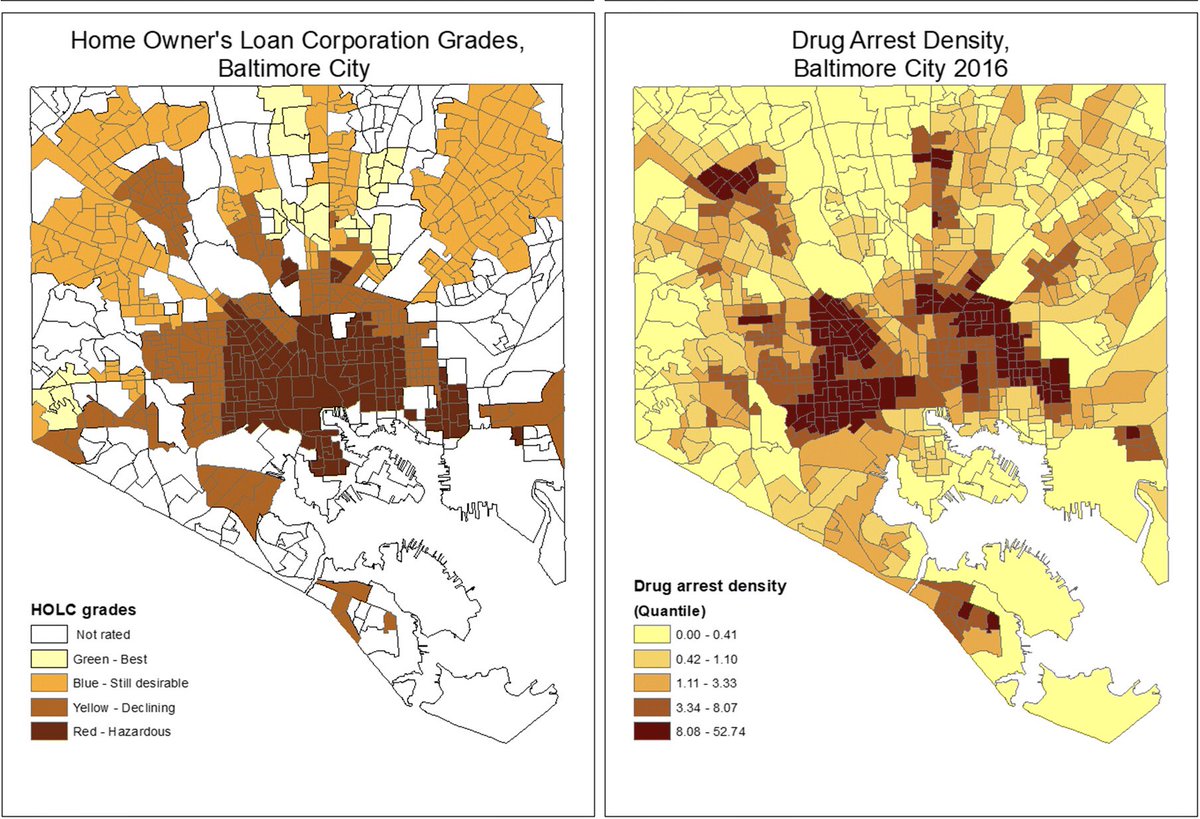
Baltimore redlined areas in 1935 vs Baltimore Drug arrests in 2016


Vol 70 Apr | '#Vote choices of left-#authoritarians: Misperceived congruence and issue #salience' by @NilsSteiner and Sven Hillen is now available @ches_data @german_gles #Germany https://t.co/pmCoP5t7CL pic.twitter.com/Vl8rCahcZL
— Electoral Studies (@ElectoralStdies) January 30, 2021
In the data from the Campaign Panel of the German Election Study 2017, many voters prefer higher social benefits and taxes and want to restrict immigration. @ches_data show that no party bundles issue positions in this way.
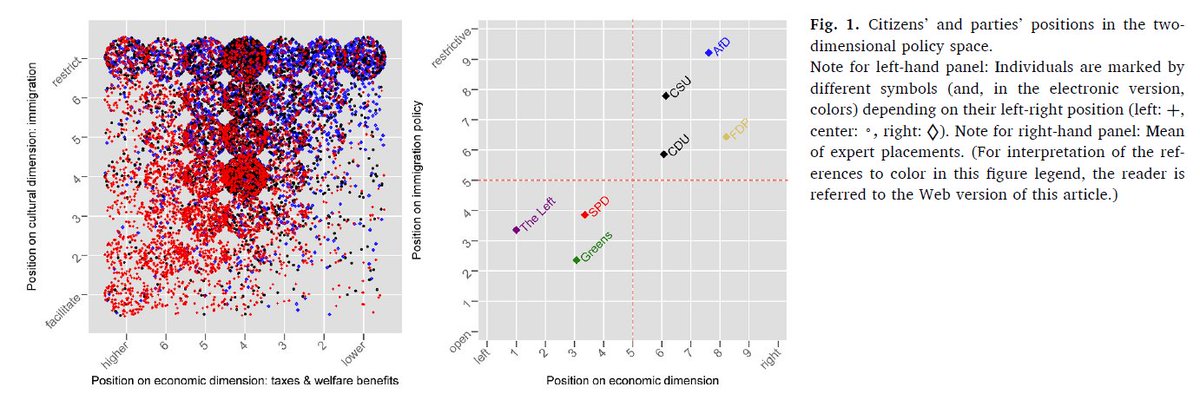
In the article, we show that many such “left-authoritarians” perceive the party they voted for to also hold a left-authoritarian position. Interestingly, this includes many AfD voters who report a perceived left-wing economic position of the party.
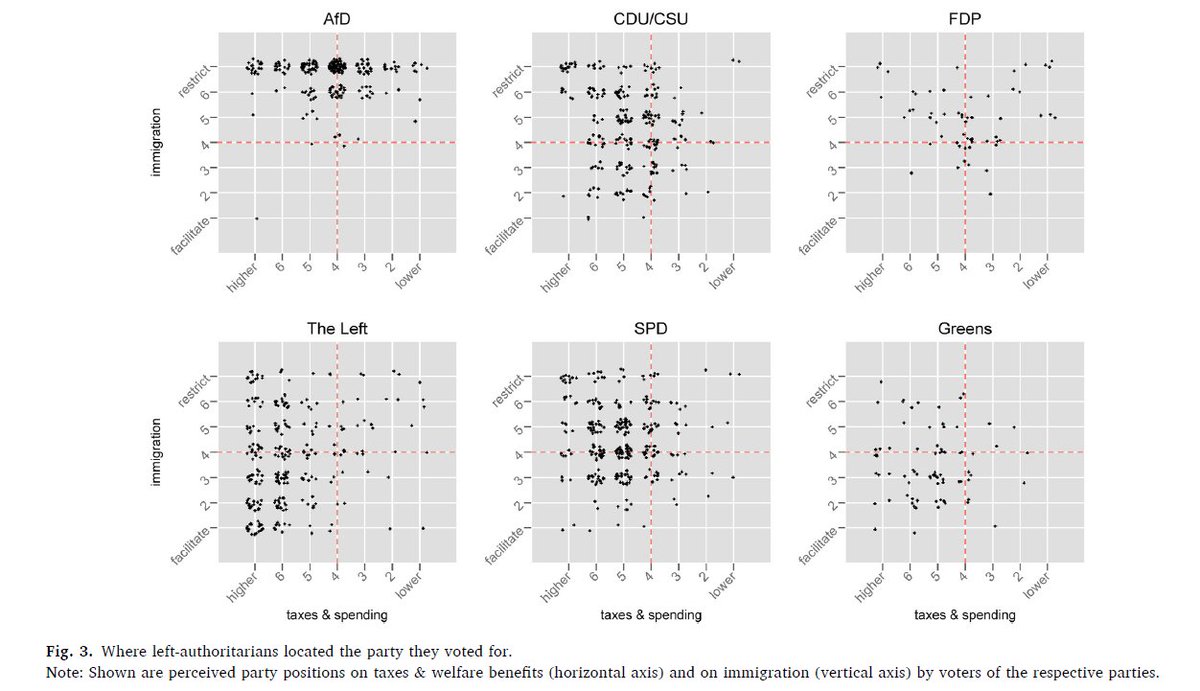
Our statistical models study the interplay between this (mis-)perceived congruence and issue importance, using an open-ended question on the most important political problem in Germany.
We find that (mis-)perceived congruence and issue importance interactively shape the left-authoritarian vote. Simply, perceived congruence matters more on an important issue—and issue salience matters most if voters accurately perceive incongruent party supply.


They often use EROI (Energy Return On Investment) as their metric
This is a rant against these EROI people misinforming the debate, based on a rebuttal of a 2020 paper
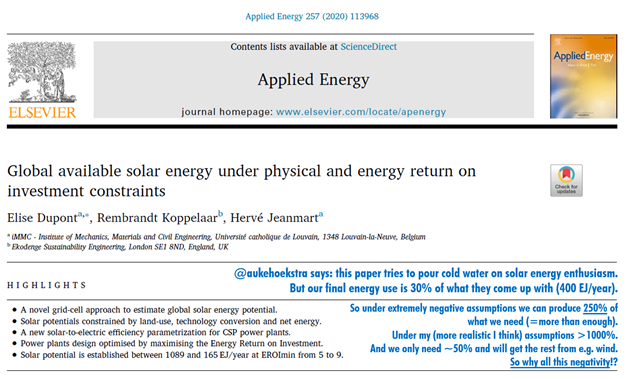
In essence the approach of the paper is straightforward:
1) Discard water and 96% of land because it's supposedly unavailable
2) Assume solar cells on just 1/5th of the remaining 4%
3) Complain that production of solar panels takes a lot of
About 1) (available land)
Discarding 96% of land seems pretty extreme:
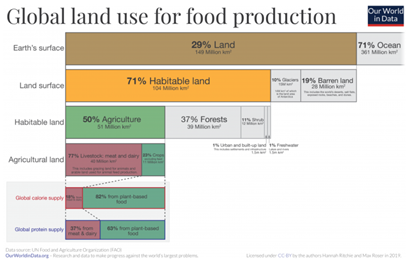
30% of the world's land is barren
40% of the world's land is used for meat
I think we could find more than 4% if we tried
(but we don't have to: we need less than 1%)
https://t.co/rJZiNWcu7F
About 2) (using 1/5th of available land)
If cells are expensive and land is dirt cheap, covering 20% with solar cells is logical
But with cheap cells you maximize land use: 80% is easily possible
New paper headline:
"Global available solar energy over 10 times what we need"
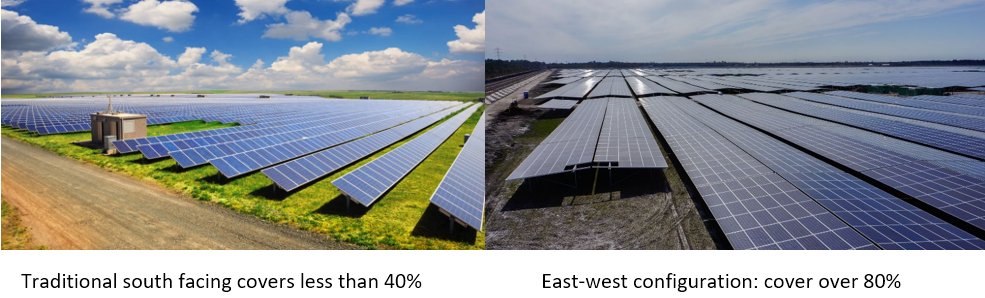
About 3) (20% of energy is needed for production)
This is something @MLiebreich and I often complain about:
If you get more energy out than you put it, that's FINE
If you get five times more energy out, that's GREAT
EROI is a USELESS metric. Let's STOP using it. At all.

1/14
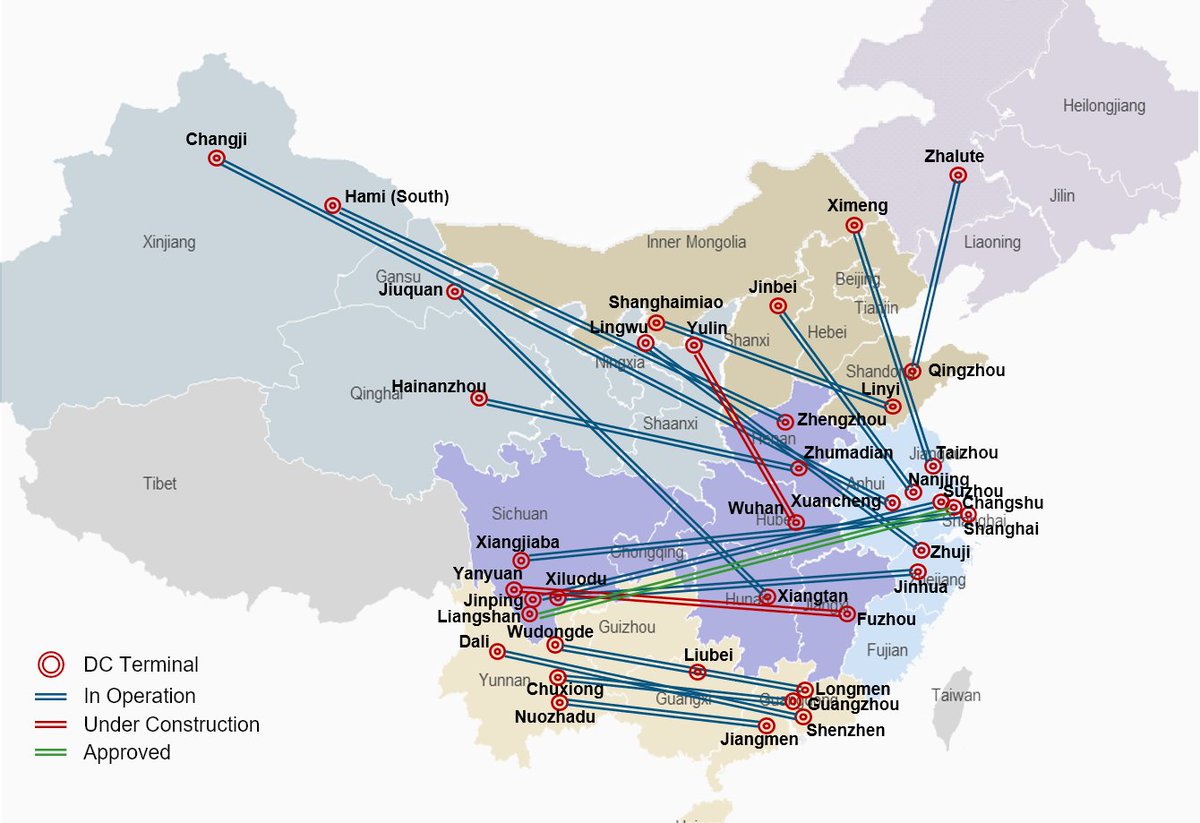
China is building the world's most advanced UHV grid right now.
UHV lines are good for carrying power over long distances. The high voltage level reduces line loss. But they are very expensive to build.
China's UHVDC Network now:
2/14
In the rest of the world, UHV lines have generally been used sparingly. Submarine power cables (e.g. connecting UK to mainland Europe) and some huge hydropower projects in Quebec are some notable exceptions.
China is building UHV lines on a scale never seen before.
3/14
So why is China different? Geography plays a huge role. China's load centers are in the coastal East and South, while the best wind, solar, and hydro resources are in the North, Northwest, and Southwest. Power (esp. RE) is being generated far from where it's needed most.
4/14
In the past, poor regional interconnectivity has been a big contributor to low offtake levels of renewable energy. Of course a glut of coal power also played a role. Curtailment has improved in recent yrs tho. I discussed regional grids before:
China Power Sector For Dummies- Part 1: Grids and Dispatch - Getting Smarter
— David F. (@pretentiouswhat) August 18, 2020
1/10
First, Chinese doesn't have a national grid, at least not in the way that small countries do. There are 6 regional grids (N, NE, NW, E, C, S). State Grid runs 5 of them and Southern Grid runs 1.
5/14
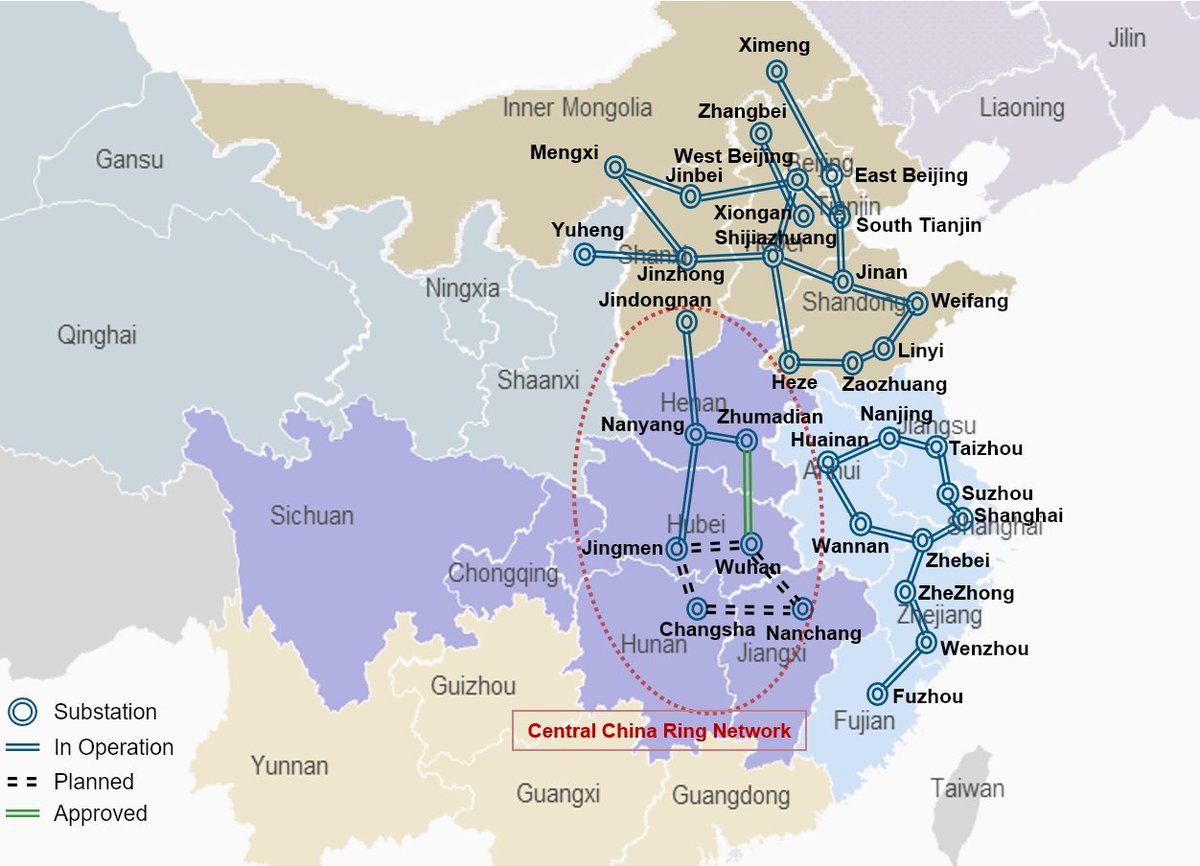
UHV lines provide a inter-region backbone to transport power hundreds or thousands of km across the country. The UHVDC lines are used for the longest distances, while UHVAC lines are used for shorter distances, often within the same regional grid.
China's UHVAC lines now:

[THREAD] 1/10
I know people think this is fun but -- why do we have a stock market? So productive firms can raise capital to do useful things. Detaching stock price from fundamental value (Gamestop is now worth almost as much as Best Buy) makes the markets serve the real economy worse.
— Josh Barro (@jbarro) January 27, 2021
What is profit? It's excess labor.
You and your coworkers make a chair. Your boss sells that chair for more than he pays for the production of that chair and pockets the extra money.
So he pays you less than what he should and calls the unpaid labor he took "profit." 2/10
Well, the stock market adds a layer to that.
So now, when you work, it isn't just your boss that is siphoning off your excess labor but it is also all the shareholders.
There's a whole class of people who now rely on you to produce those chairs without fair compensation. 3/10
And in order to support these people, you and your coworkers need to up your productivity. More hours etc.
But Wall Street demands endless growth in order to keep the game going, so that's not enough.
So as your productivity increases, your relative wages suffer. 4/10
Not because the goods don't have value or because your labor is worth less. Often it's actually worth more because you've had to become incredibly productive in order to keep your job.
No, your wages suffer because there are so many people who need to profit from your work. 5/10
