Categories Brexit

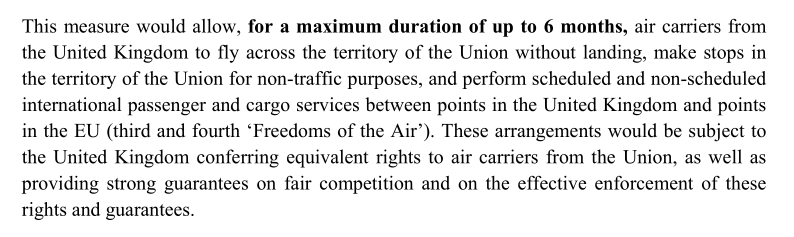


First Equity @EquityUK put out a letter to @BorisJohnson warning that #brexit was a "towering hurdle" (you'd want Brian Blessed reading that part) to UK actors plying their trade in EU - a double whammy with #COVID19 /2
https://t.co/mXjTAISqZk
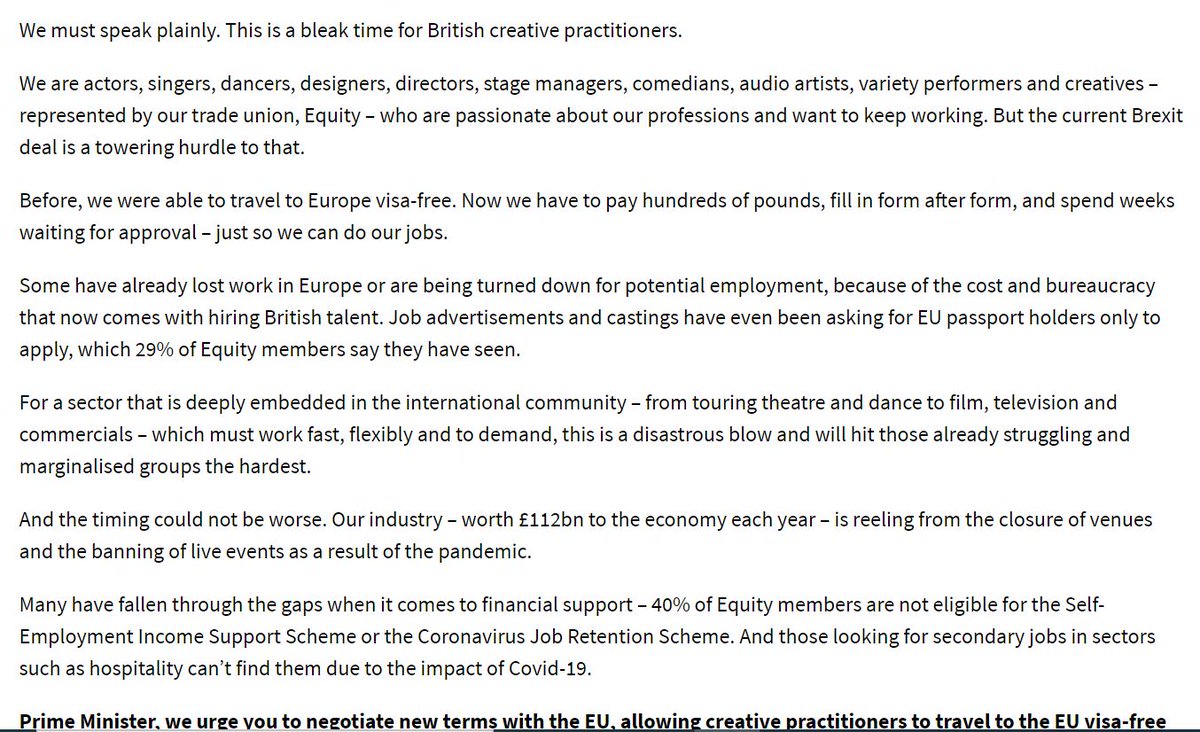
@BorisJohnson One third of Equity members say they've seen job ads asking for EU passport holders: "Before, we were able to travel to Europe visa-free. Now we have to pay hundreds of pounds, fill in form after form, and spend weeks waiting for approval" /3
@BorisJohnson Worth recalling that all this goes back to the UK desire NOT to have a 'mobility' provision within the TCA - all part of 'ending Free Movement' and the professional services folk - including musicians, actors, fashion models etc -are all victim of
@BorisJohnson What's the government going to do about all this? Good question, which brings us to todays @CommonsDCMS hearing in which the Culture Minister Caroline Dinenage @cj_dinenage frankly pin-balled around the issues /5

UK pork processors are experiencing significant issues in exporting products to the EU, which has already brought part of the industry to a complete standstill, risking knock-on impacts on farm.
Sector by sector falling overhttps://t.co/6HIXzf8qq8
— Morgan Leahy (@MorganLeahy) January 14, 2021
The widely seen footage of overzealous Dutch (*my edit: "no they were not"*) inspection officials confiscating ham sandwiches transported by British hauliers is just the tip of the iceberg as far as the UK pig sector is concerned.
The NPA’s processor members have reported that
excessive (*my edit: only for non-EU members*) bureaucracy associated with paperwork requirements are causing delays at Dover, Calais and other ports. With pork being a perishable product, these delays are making UK shipments unattractive to buyers in the EU, forcing processors
to reject shipments and cancel future orders.
Despite the trade deal agreed between the EU & UK just before Christmas, the UK’s formal departure from the EU Customs Union and Single Market was always going to mean additional checks, new labelling and certification requirements
and delays at ports. While the full overall impact of the new rules is yet to be felt, as UK export volumes remain lower than normal for the time of year, the UK pig sector is already feeling the effect. Processors have reported a number of issues, including:


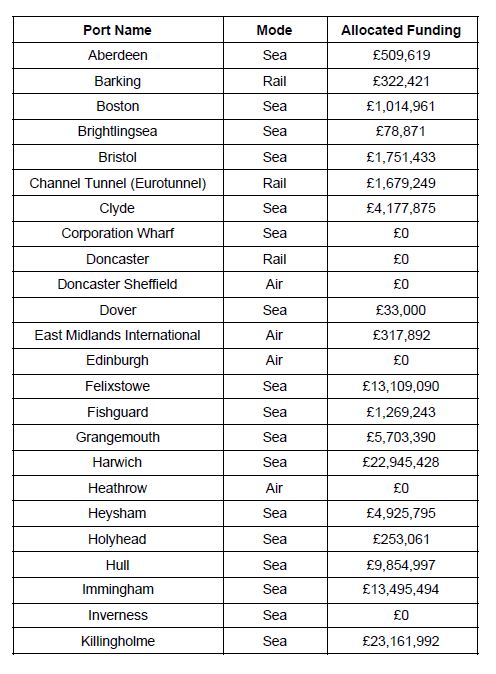
So what is this all about? Well back in October the govt announced a £200m Port Infrastructure Fund - details below - for ports to get ready for the new trade processes for #Brexit border. Dealing with those 215m extra customs decs etc..
Today we find out what everyone got - but it turns out that 54 ports asked for more than £450m - so a LOT have been bitterly disappointed. Not just Dover (on which more in a second)...they are furious the government is not willing to fully fund the very borders they mandated /3
So here is the list of what everyone got - 41 ports had winning bids totaling just over £194m - but you'll note that Dover got...wait for it...£33k. No, that is not a type. Thirty-three thousand pounds. They asked for £33m!! Why? Well to build new passport lanes. /4
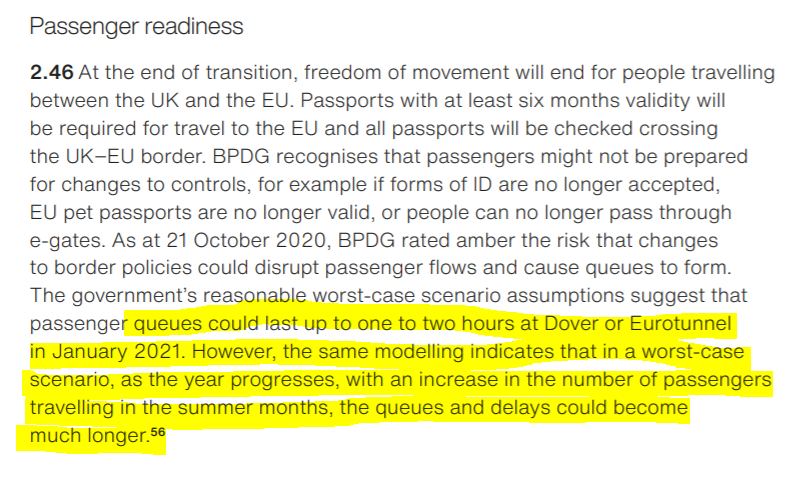
Why? Because as an @NAOorguk report warned in November the Govt's 'reasonable worst case scenario' for delays at Dover for passenger traffic was "one to two hours" and "much longer" in the summer. Eeek. Happy hols everyone! /5
https://t.co/K77Is5tfxk


London intends to make use of its costly SPS regulatory autonomy. As widely anticipated, first area of divergence expected to take place in the field of Crispr technology for genome editing, area where the UK has long argued for a more liberal stance.https://t.co/btRoxU3saZ
— Emily Rees (@emilyrees_eu) January 7, 2021
Let's start off with: I don't think any trade experts are surprised by this. It is why the TCA did not do much on SPS. It is why the EU did not offer much on SPS. It is why the UK did not ask much on SPS.
But it also shows that the popular slogan "after Brexit we'll have the same standards as before, so why would anything change in trade" was wrong - and worse, it was purposefully trying to stifle a necessary debate.
And this leads me to the next point: I have no issue with changing the rules, I have a massive issue with how it is done. Here's what we should discuss:
The decisive question: What are the standards the UK as a country wants. To inform this debate, we need the following information:


But that's ok
Priti only meant it unintentionally
And she was frustrated when she said it
So that's
[thread]
— ScottishPanda (@PandaScottish) November 23, 2020
The most difficult thing I find is writing the hook into a thread
There is a simple word
It is called Imagine
But first I want to focus on a different topic
Nigeriahttps://t.co/bF4zaDguzh
It's not like the UK talked of invading Spain or Calais
Or was busy trying to incite Irexit, Itexit or the AfD or so other discord in the EU
After all that 50 pence piece
Talks of friendship
So surely we were good friends?
Those liars who had nothing
And knew they had nothing
Well they passed their withdrawal agreement
Knowing they never had any intention of honouring
[thread] a simple question
— ScottishPanda (@PandaScottish) October 17, 2019
What are you prepared to sacrifice for brexit ?
Boris Johnson and his historic wordshttps://t.co/nFkevENjqB
Oh yes and a reminder
How many Tory MPs are unashamed they passed legislation without forming an opinion on it

The key questions are:
1⃣ Given the model of Brexit chosen, could this have been prevented, and by whom?
2⃣ Can it get better?
#Brexit & #fishing: True to their word, it looks like British #seafood exporters are taking their concerns around #trade to the streets of London #Brexality pic.twitter.com/CIqmDQR69d
— Bryce Stewart (@BD_Stew) January 18, 2021
2/ To put those another way:
"If you knew everything you needed to know and did everything right, is your existing business and delivery model still viable and competitive?"
The answer to that question determines if for you the problem is Brexit, or how Brexit was delivered.
3/ Some of the challenges at borders could have been prevented while still having the exact same model of Brexit (No Single Market, No Customs Union, but an FTA).
That they're appearing is an implementation failure and you can fully support Brexit but still be pissed about them.
4/ Examples include:
1) Government guidance and IT systems being ready earlier and/or easier to navigate;
2) More support for businesses, and more affordable bespoke help;
3) More time to prepare and better government communication about what preparation actually requires.
5/ This thread you've all seen from Daniel Lambert the wine merchant (primarily) deals with problems in this category.
There's no policy reason he can't export his product, but the procedures are a nightmare to navigate and he's badly under-supported.
Over the past 15 days I have not only been running my company as normal but I have been faced with largest threat to its future since it began in 1992. This is #Brexit & here is my thread on just how bad things are getting. 1/26
— Daniel Lambert (Wines). \U0001f1ea\U0001f1fa\U0001f1eb\U0001f1f7\U0001f3f4\U000e0067\U000e0062\U000e0077\U000e006c\U000e0073\U000e007f\U0001f347\U0001f942 (@DanielLambert29) January 16, 2021
The likelihood of continued trade problems for a £650 bn trade relationship is why there should be a huge cross-government effort led by the Foreign Office and Department for International Trade to put in place the necessary resources to seek best results.
There isn't.
So the UK's relationship with the EU currently consists of two not particularly good deals and no consistent effort to manage current problems or prevent future ones. Joint committees are a second order problem to putting in place the right internal structures.
But that's been the consistent UK problem in relations with the EU since 2016. Lack of focus on getting the right internal structures, people, asks, strategy, too much attention on being tough and a single leader.
News just in. This doesn't necessarily mean the right structure being put into UK-EU relations. I suspect Frost's main role is to ensure no renegotiations with the EU.
Also, wonder what this says about the PM's trust in Michael Gove?
NEW: David Frost is joining Boris Johnson\u2019s Cabinet! The peer has been appointed a minister at the Cabinet Office, effective March 1.
— Sebastian Payne (@SebastianEPayne) February 17, 2021
Frost will also chair the partnership council overseeing the UK-EU trade deal and oversee reform to "maximise on the opportunities of Brexit"