Mollyycolllinss's Categories
Mollyycolllinss's Authors


Latest Saves




A perfect moment for a thread on the Hunt Brothers and their alleged attempt to corner the silver market...

1/ First, let's set the stage.
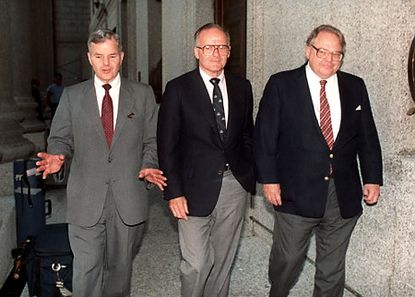
The Hunt Brothers - Nelson Bunker Hunt, William Herbert Hunt, and Lamar Hunt - were the sons of Texas tycoon H.L. Hunt.
H.L. Hunt had amassed a billion-dollar fortune in the oil industry.
He died in 1974 and left that fortune to his family.

2/ After H.L.'s passing, the Hunt Brothers had taken over the family holdings and successfully managed to expand the Hunt empire.
By the late 1970s, the family's fortune was estimated to be ~$5 billion.
In the financial world, the Hunt name was as good as gold (or silver!).
3/ But the 1970s were a turbulent time in America.
Following the oil crisis of the early 1970s, the U.S. had entered a period of stagflation - a dire macroeconomic condition characterized by high inflation, low growth, and high unemployment.
Stagflation 101
— Sahil Bloom (@SahilBloom) September 2, 2020
The term "stagflation" is used frequently in discussions of monetary policy and risks in the post-COVID world.
But what is stagflation and how does it work?
Here's Stagflation 101!
\U0001f447\U0001f447\U0001f447 pic.twitter.com/at4FmaCmkM
4/ The Hunt Brothers - particularly Nelson Bunker and William Herbert - believed that the inflationary environment would persist and destroy the value of their family's holdings.
To hedge this risk, they turned to silver.
They began buying the metal at ~$3 per ounce in 1973.



\u201cMilitary history\u201d is only in decline if you\u2014like the author & experts in this obnoxious piece\u2014see the subject as a narrowly defined, white dude-oriented, guns & bayonets approach. The field is 1000% better off w/today\u2019s diversity of topics & historians. https://t.co/dUf3OWyVpQ
— Jonathan S. Jones (@_jonathansjones) February 1, 2021
First off, Harvard students literally have multiple sections of military history that they can take listed. (It appears these ones are taught at MIT, so they might have to walk down the street for these) but... 2/

Say they want to stay on campus...they can only take numerous classes on war and diplomacy...3/

They have an entire class on Yalta. That’s right. An entire class on Yalta. 4/

But wait! There is more! They can take the British Empire, The Fall of the Roman Empire for those wanting traditional topics... 5/


I\u2019m sorry it\u2019s just insane that Democrats are like, \u201cwe won everything and our opening position on relief is $1.9T\u201d and Republicans are like, \u201cwe lost and our opening position is $600B,\u201d and the media will be like, \u201cDemocrats say they want unity but reject this bipartisan deal.\u201d
— Meredith Shiner (@meredithshiner) January 31, 2021
First, party/policy mandates from elections are far from self-executing in our system. Work on mandates from Dahl to Ellis and Kirk on the history of the mandate to mine on its role in post-Nixon politics, to Peterson Grossback and Stimson all emphasize that this link is... 2/
Created deliberately and isn't always persuasive. Others have to convinced that the election meant a particular thing for it to work in a legislative context. I theorized in the immediate period of after the 2020 election that this was part of why Repubs signed on to ...3/
Trump's demonstrably false fraud nonsense - it derailed an emerging mandate news cycle. Winners of elections get what they get - institutional control - but can't expect much beyond that unless the perception of an election mandate takes hold. And it didn't. 4/
Let's turn to the legislation element of this. There's just an asymmetry in terms of passing a relief bill. Republicans are presumably less motivated to get some kind of deal passed. Democrats are more likely to want to do *something.* 5/


1/13
A thread based on Figure 1
A mature adult cardiac myocyte is packed with sarcomeres, whose contractile forces are coupled to the extracellular environment. With sarcomeres so close to the plasma membrane, how can we study the nature of this coupling?
2/13
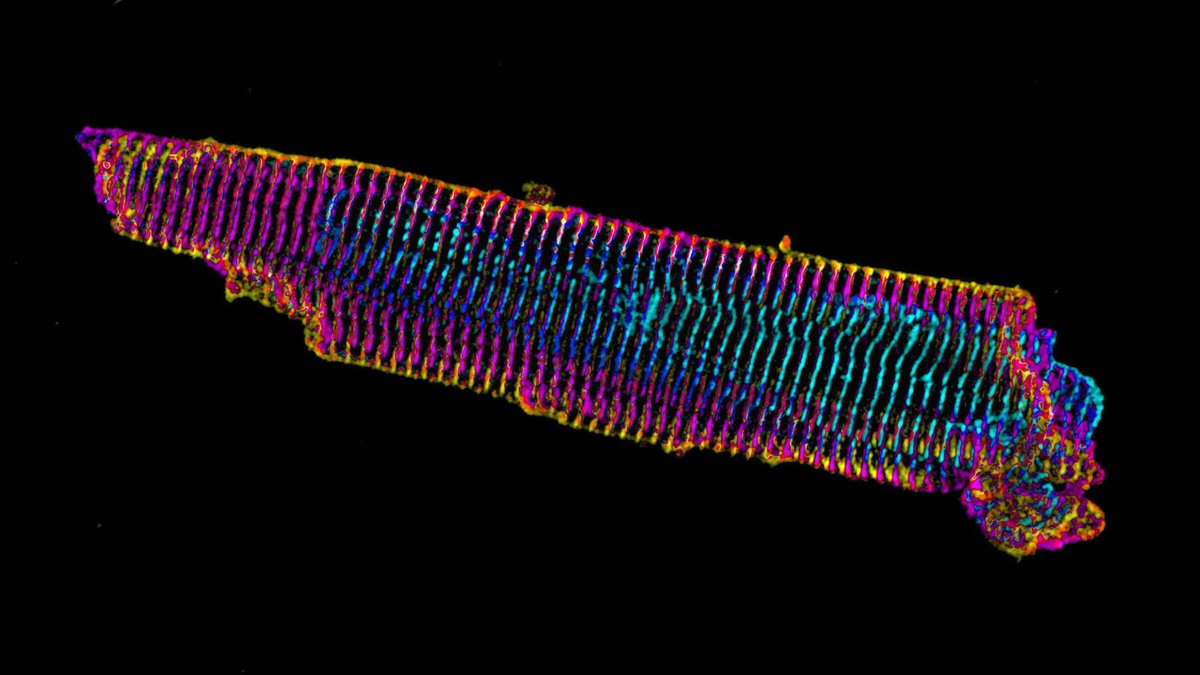
Short answer: find a model system where the sarcomeres are not so close to what the cardiac myocyte is attached to. Enter, iPS cell-derived cardiac myocytes. These are “immature” in culture as they resemble fetal or neonatal cardiac myocytes.
3/13
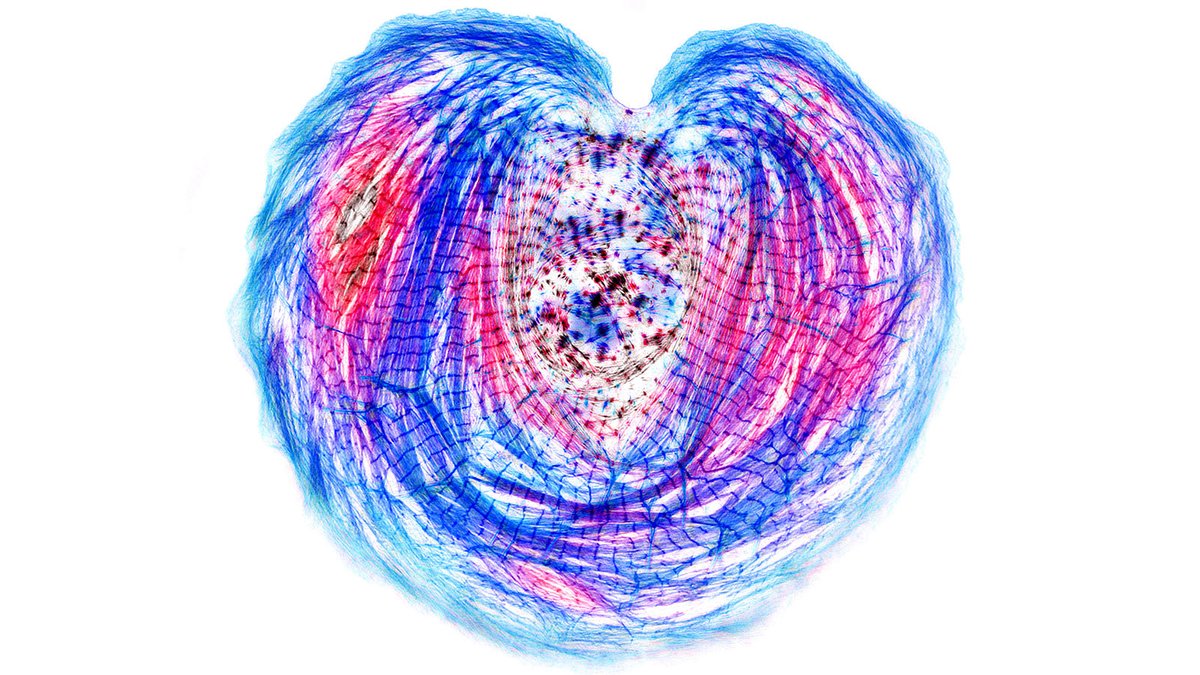
Our previous work on iPS cardiac myocytes reported that sarcomere containing myofibrils assembled on the top surface of the myocyte.
https://t.co/xIBCu3hG1W
4/13

The sarcomeres seemed to be connected to focal adhesions on the bottom of the cell by thin actin bundles that resembled the dorsal stress fibers (DSF) commonly found in non-muscle cells. This movie steps through a Z stack of a myocyte starting at the bottom of the cell.
5/13



So, a thread 👇🏻
2/ Firstly, the well hidden truth of online trading platforms is that most of the active traders lose money. And most does not mean 51%, but this is more like 90-95%. Clients burn out quite quickly as well.
3/ Some research:
a) from Brazil: "97% of traders lose money" https://t.co/DVEfRkyvuS
b) from Taiwan: "Less than 1% of daytraders consistently earn positive returns"
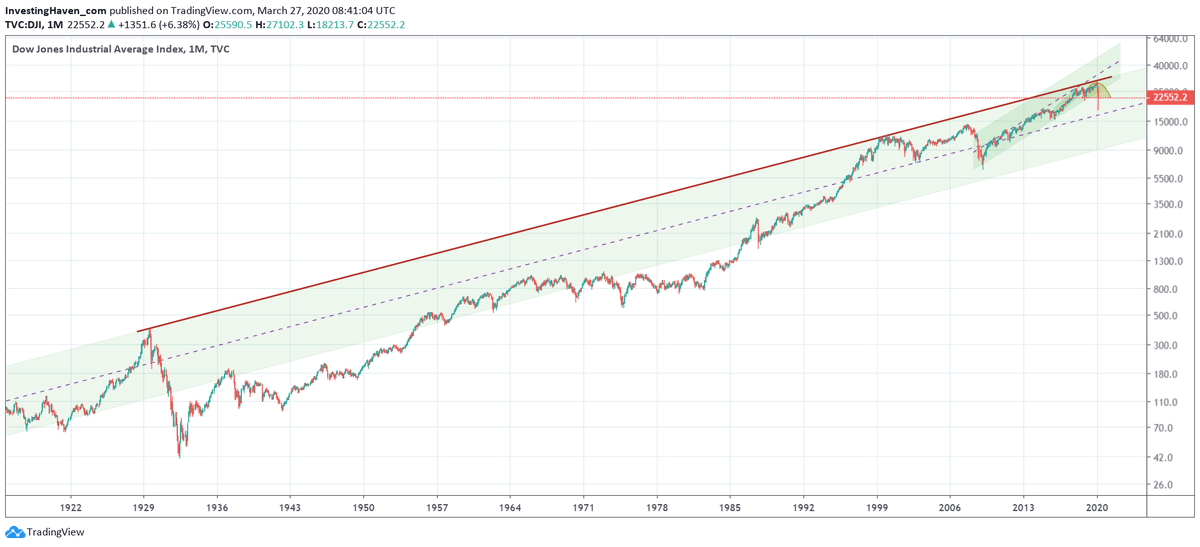
4/ If we take a 100 year stock market chart, one can clearly see that longterm investing makes a lot of sense, whereas active trading most often is not a very rational thing to do. People do it because they think they can be better than the average.
5/ Every online broker should say to their clients "just do long term buy and hold, please-pretty-please do not do any trading stuff." But have you seen messages like that? Me neither.
The reason is that one active trader can bring fees like 500 passive investors.










So I have a theory on this. And if I'm right, there's bad news about that acceleration in the overall case trend, and possibly good news about vaccines in the over-80s. WARNING: This is going to be another long, maths-y thread (involving cubic coefficients this time!) https://t.co/EiszSAIL9t
— James Ward (@JamesWard73) January 29, 2021
This is one of those university / job interview 'order of magnitude' estimation problems. So feel free to disagree with any or all steps on my logic chain, and please explain why - it will help improve / refine (or falsify) the analysis.
So let's focus on the primary-school-age kids as that's where the effect is strongest. We have 3.5m 5-9 year-olds in England. I don't know how many were in school on 4th Jan - we know some regions (London / Kent etc.) didn't go back, and a lot of schools had INSET days etc
So I'm going to make a wild guess and say 40% were in school on that day. Better ideas (particularly if backed by data) very welcome. So that's about 1.4m children in school
Now ONS tells us that about 1.5% of that age group would test positive for coronavirus in early January. So that's about 20,000 kids with the virus heading into school.


E19 is HERE \U0001f4a7\U0001f426\U0001f4a7
— The All-In Podcast \U0001f4a7\U0001f426 (@theallinpod) January 30, 2021
Breaking down & debating Robinhood's decision:
-- understanding the full WSB saga
-- how/why it happened
-- how it can be prevented in the future & more
\U0001f447\U0001f447
\U0001f50a: https://t.co/w8QSGBUQSi
\U0001f4fa: https://t.co/OU5W2qn7JN
Like he actually connects the two and mentions collateral requirements and says RH should go to jail
This is maybe the worst discussion I’ve heard of GME from people who clearly know better. They’re encouraging people to “watch billions” to understand how hedge funds work.
Oh just got to the point where they call for a short term transaction tax to REPLACE the capital gains tax.
Chamath calls lowering the cap gains tax “genius”
Oh now Chamath believes the class actions will work because of the “implied losses,” because users clearly lost tens of billions theoretical gains!
The solution is to move accounts to other brokers (like sofi)