VW LOOKS INTO THE VALLEY OF DEATH
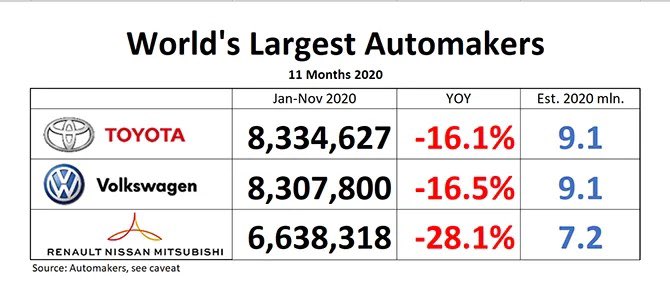
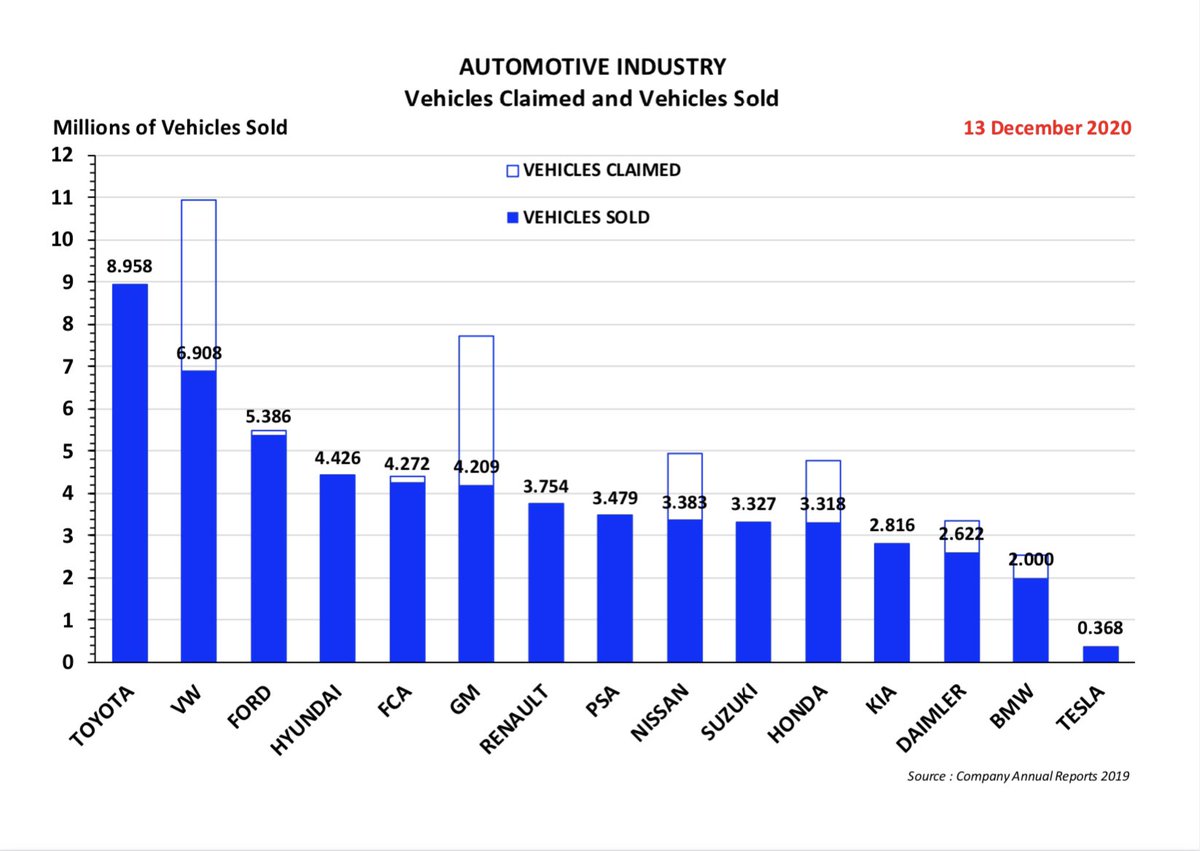
The disruptive threats Herbert Diess saw coming for big, incumbent automakers soon after he took over the top job at Volkswagen Group are playing out as predicted -- only faster and in more dramatic fashion
"What really has changed -- and what I had not expected to this extent -- is the view of capital markets on our industry”
This is more than just a matter of bragging rights
The $5 billion that Tesla raised was equivalent to about half of VW's annual net cash flow
Some analysts are warning the trend is overdone
“This leads to a grave disadvantage for us in terms of access to required resources”
Earnings at several peers proved more resilient
"The overhaul is still progressing too slowly," he said
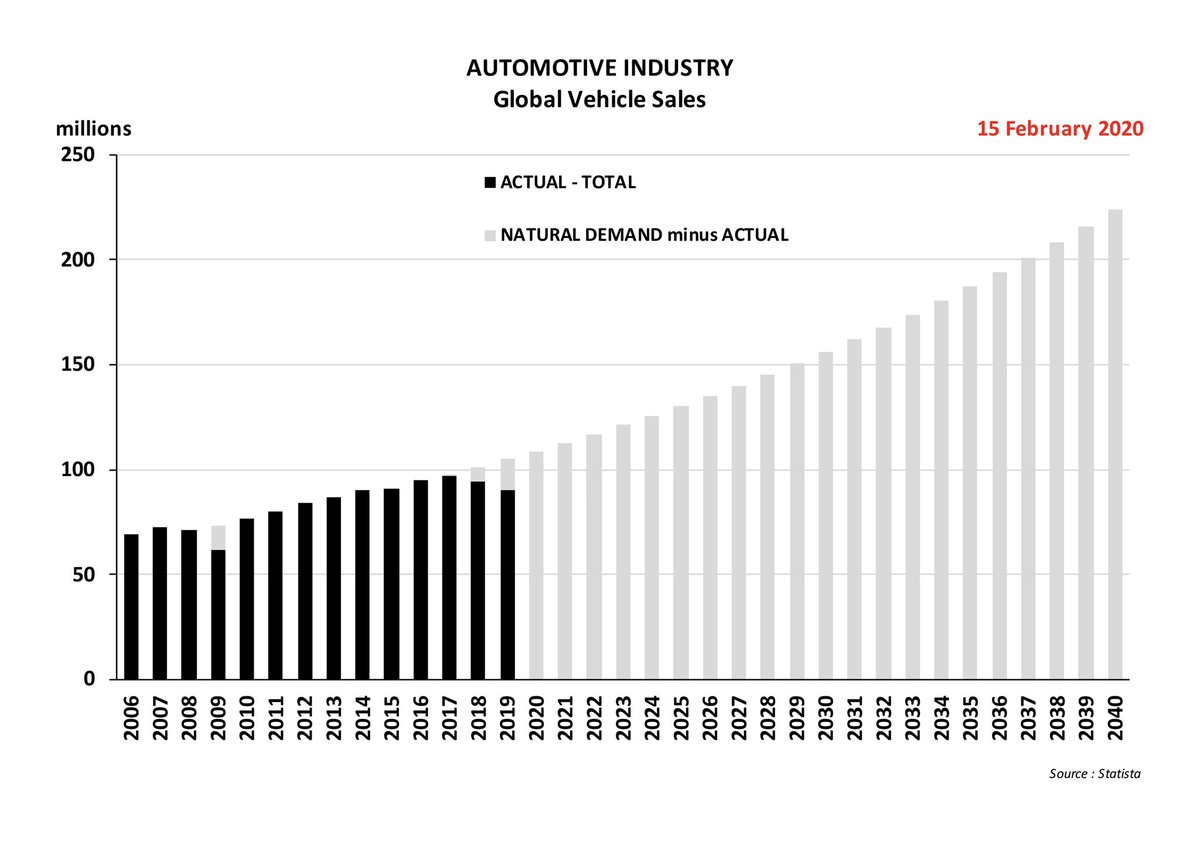
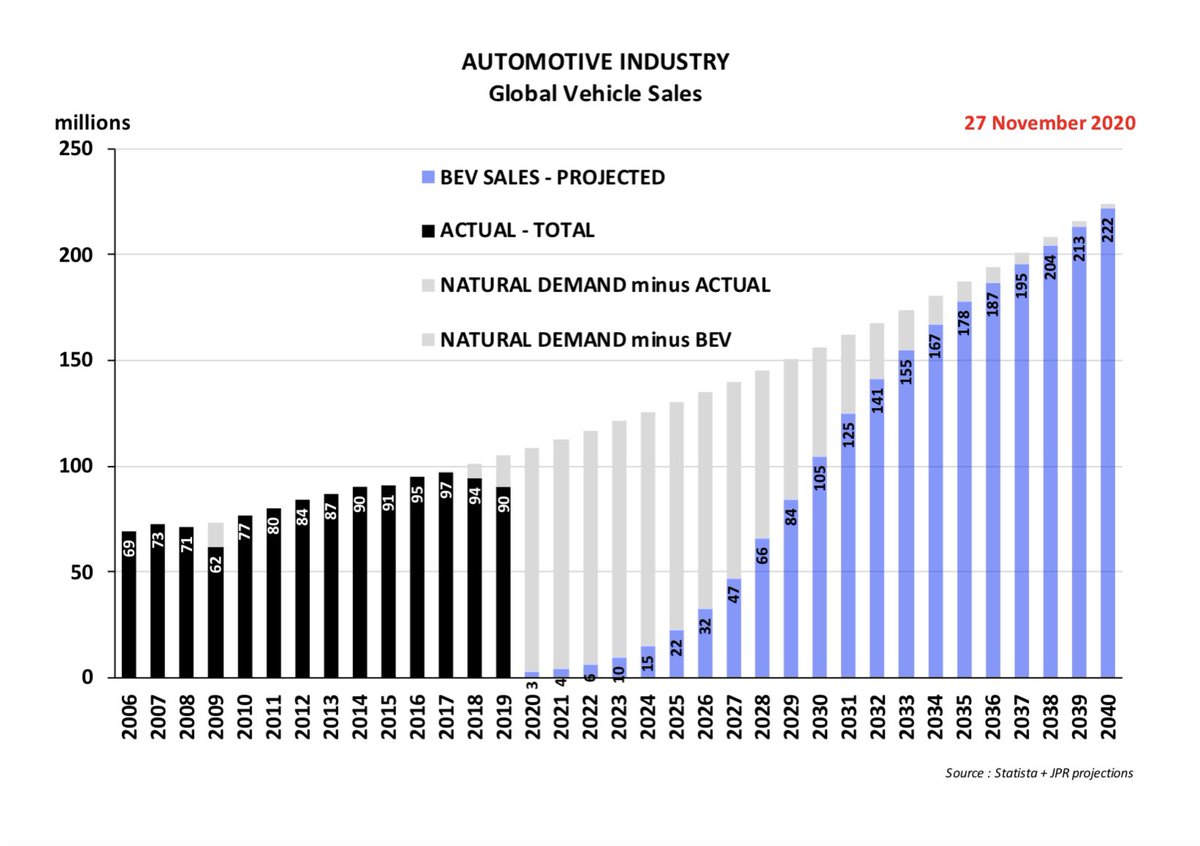
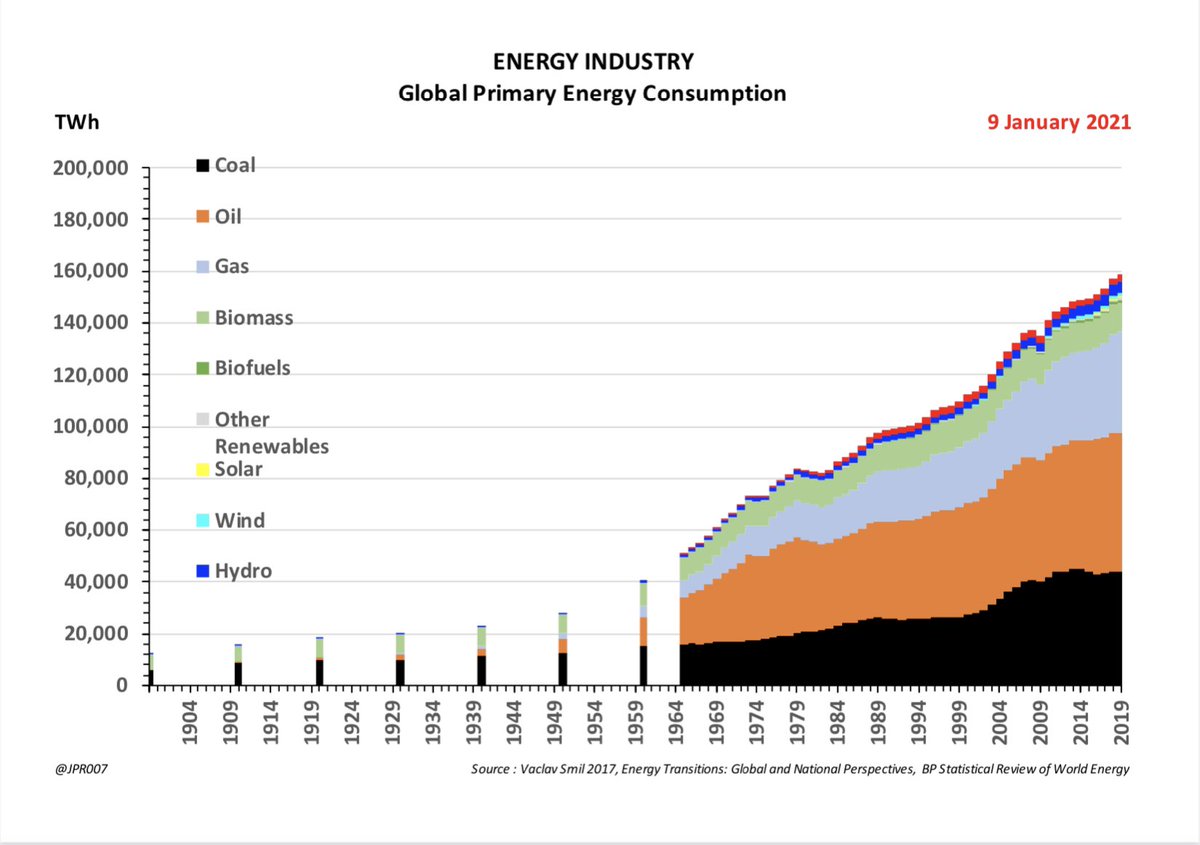
More from JPR007





More from Finance




I'm lucky to attain financial freedom before 30.
I credit Fintwit for my learnings.
Here's 10 key concepts every investor must know:
1. $$ needed to retire
2. Researching a business
3. Reading annual reports
4. Reading earnings calls
5. Criteria of a multi bagger
(Read on...)
6. Holding a multi bagger
7. Economic moats
8. When to buy a stock
9. Earnings vs cashflow
10. Traits of quality companies
Here's my 10 favourite threads on these concepts:
1. How much $$ do you need to retire
Before you start, you must know the end game.
To meet your retirement goals...
How much $$ do you need in your portfolio?
10-K Diver does a good job explaining what's a safe withdrawl rate.
Hint: It's NOT
2. Research a business
Your investment returns are a lagging indicator.
Instead, your research skills are the leading predictor of your results.
Conclusion?
To be a good investor, you must be a great business researcher.
Start with
3. Reading annual reports
This is the bread and butter of a good business analyst.
You cannot just listen to opinions from others.
You must learn to deep dive a business and make your own judgments.
Start with the 10k.
Ming Zhao explains it
I credit Fintwit for my learnings.
Here's 10 key concepts every investor must know:
1. $$ needed to retire
2. Researching a business
3. Reading annual reports
4. Reading earnings calls
5. Criteria of a multi bagger
(Read on...)
6. Holding a multi bagger
7. Economic moats
8. When to buy a stock
9. Earnings vs cashflow
10. Traits of quality companies
Here's my 10 favourite threads on these concepts:
1. How much $$ do you need to retire
Before you start, you must know the end game.
To meet your retirement goals...
How much $$ do you need in your portfolio?
10-K Diver does a good job explaining what's a safe withdrawl rate.
Hint: It's NOT
1/
— 10-K Diver (@10kdiver) July 25, 2020
Get a cup of coffee.
In this thread, I'll help you work out how much money you need to retire.
2. Research a business
Your investment returns are a lagging indicator.
Instead, your research skills are the leading predictor of your results.
Conclusion?
To be a good investor, you must be a great business researcher.
Start with
1/ Thoughts on Research Process
— Mostly Borrowed Ideas (@borrowed_ideas) September 27, 2021
I was invited to present my research process at a college in the US. I am sharing all ten slides here. pic.twitter.com/z0tjZcogfH
3. Reading annual reports
This is the bread and butter of a good business analyst.
You cannot just listen to opinions from others.
You must learn to deep dive a business and make your own judgments.
Start with the 10k.
Ming Zhao explains it
\U0001f9d0How to Read 10Ks Like a Hedge Fund\U0001f9d0
— Ming Zhao (@FabiusMercurius) May 7, 2021
\u201cFundamentals don\u2019t matter anymore!\u201d I\u2019ve heard this a lot lately on Fintwit.\U0001f644
But, for those who\u2019ve diversify beyond $GME and $DOGE, here\u2019s a primer on what metrics fundamental buy-side PMs look at and why:
(real examples outlined)
\U0001f447 pic.twitter.com/tLlNRvpnDK
You May Also Like



First thread of the year because I have time during MCO. As requested, a thread on the gods and spirits of Malay folk religion. Some are indigenous, some are of Indian origin, some have Islamic
Before I begin, it might be worth explaining the Malay conception of the spirit world. At its deepest level, Malay religious belief is animist. All living beings and even certain objects are said to have a soul. Natural phenomena are either controlled by or personified as spirits
Although these beings had to be respected, not all of them were powerful enough to be considered gods. Offerings would be made to the spirits that had greater influence on human life. Spells and incantations would invoke their
Two known examples of such elemental spirits that had god-like status are Raja Angin (king of the wind) and Mambang Tali Arus (spirit of river currents). There were undoubtedly many more which have been lost to time
Contact with ancient India brought the influence of Hinduism and Buddhism to SEA. What we now call Hinduism similarly developed in India out of native animism and the more formal Vedic tradition. This can be seen in the multitude of sacred animals and location-specific Hindu gods
i wonder if you can make a thread bout witchcraft in malaysia.. or list of our own local gods/deites..
— r a y a \U0001f319 (@lcvelylilith) February 20, 2020
Before I begin, it might be worth explaining the Malay conception of the spirit world. At its deepest level, Malay religious belief is animist. All living beings and even certain objects are said to have a soul. Natural phenomena are either controlled by or personified as spirits
Although these beings had to be respected, not all of them were powerful enough to be considered gods. Offerings would be made to the spirits that had greater influence on human life. Spells and incantations would invoke their
Animist ceremonies of a religious or magical nature were normally held for the purpose of divination or making a request. This would either be done at a keramat or at a shrine similar to the Thai spirit houses or Chinese roadside shrines pic.twitter.com/I1hliyi0x3
— \u2745\u1710\u170b\u1713\u170e (@uglyluhan) June 16, 2019
Two known examples of such elemental spirits that had god-like status are Raja Angin (king of the wind) and Mambang Tali Arus (spirit of river currents). There were undoubtedly many more which have been lost to time
Contact with ancient India brought the influence of Hinduism and Buddhism to SEA. What we now call Hinduism similarly developed in India out of native animism and the more formal Vedic tradition. This can be seen in the multitude of sacred animals and location-specific Hindu gods