
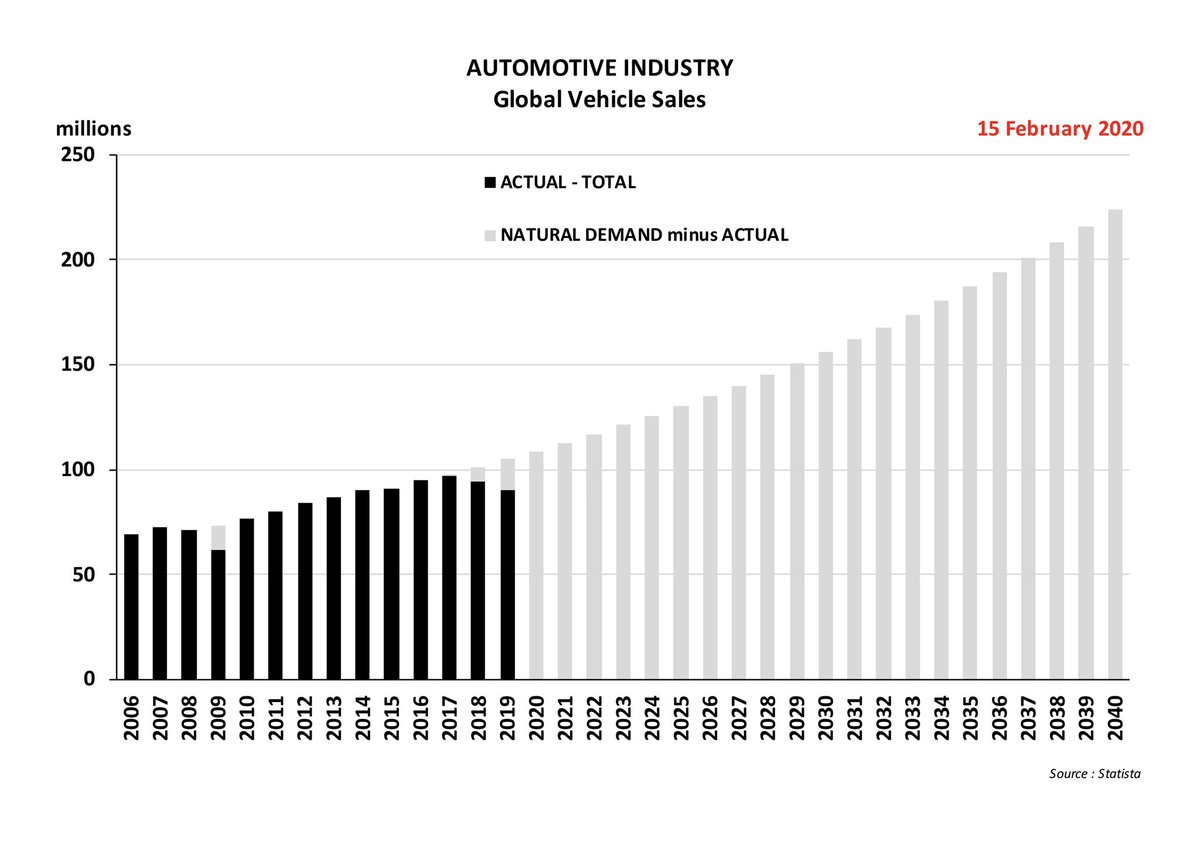
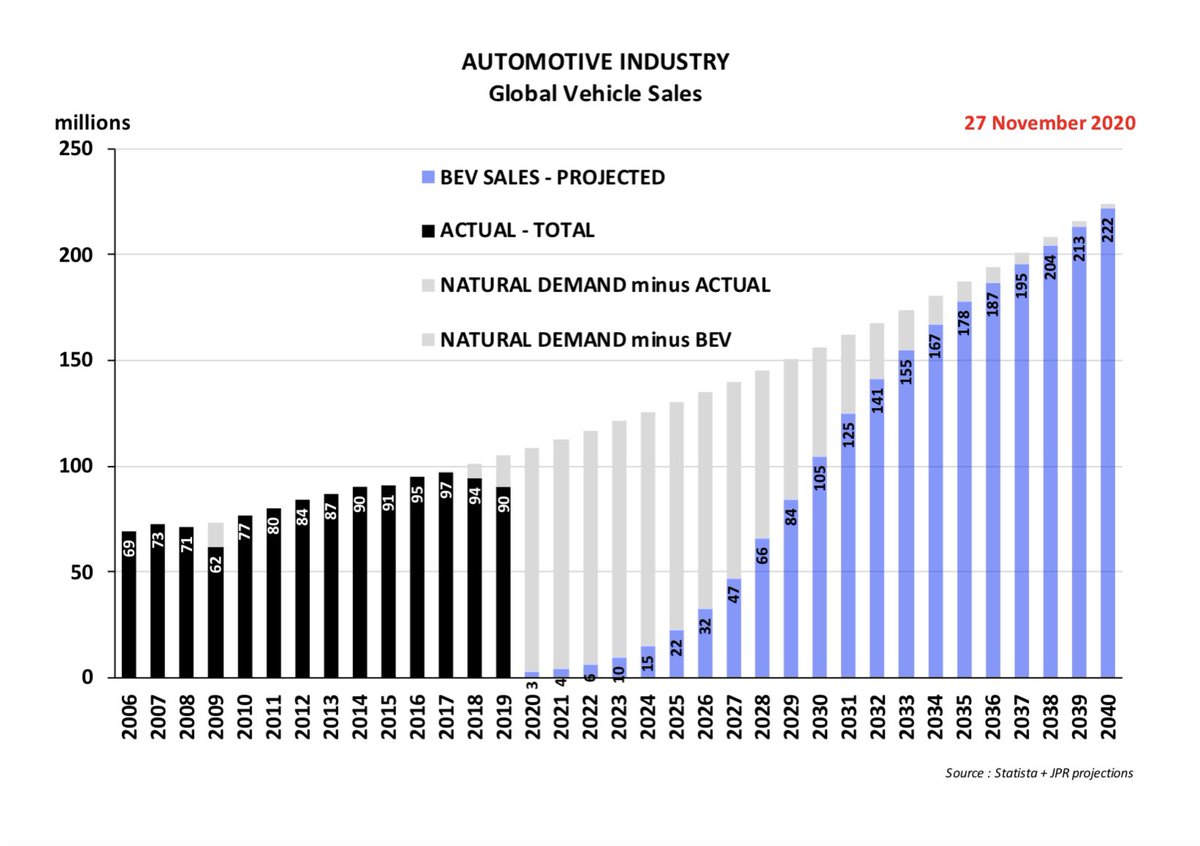
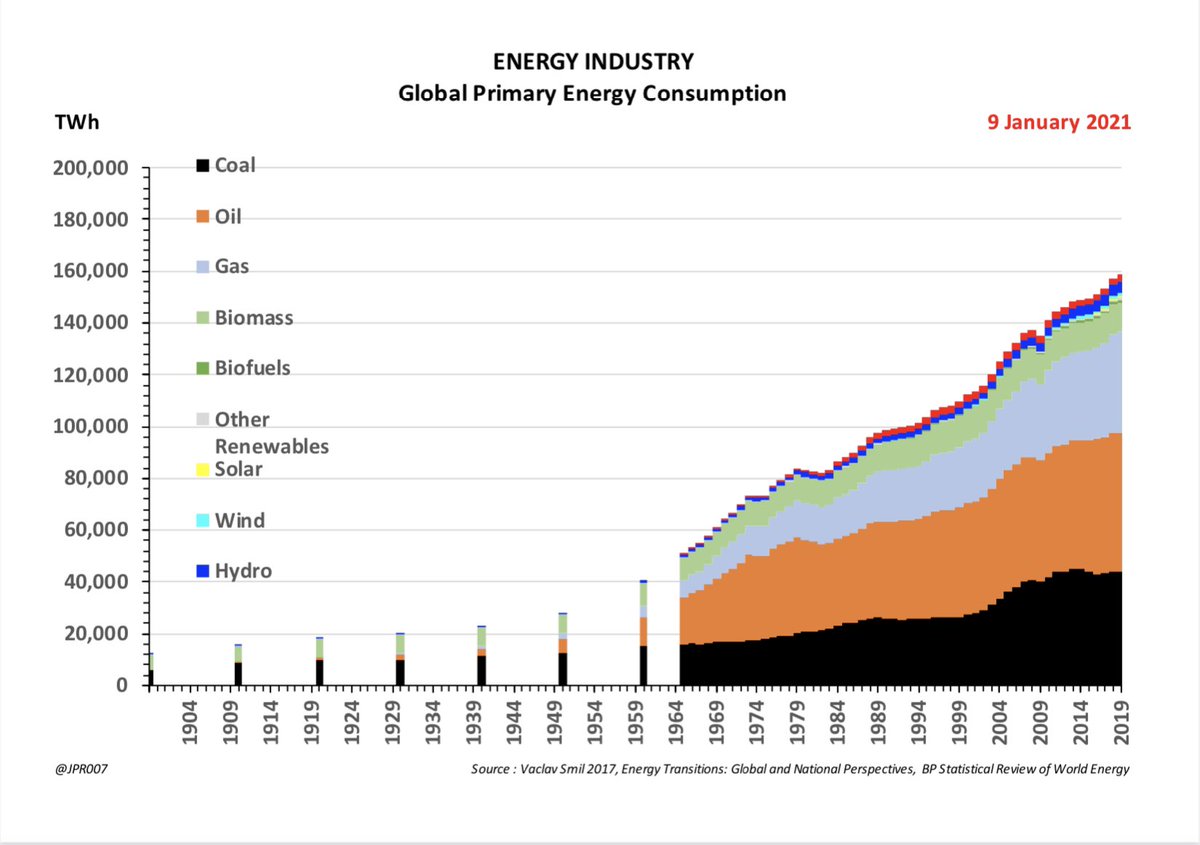
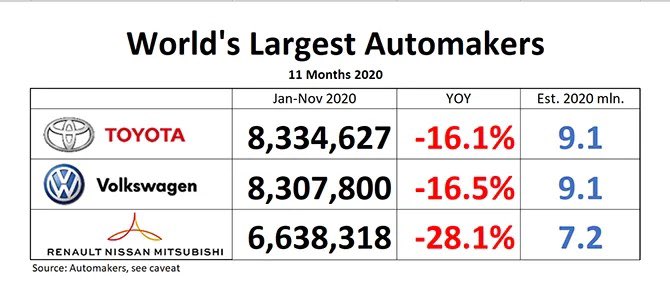
South Korean carmaker Hyundai on Wednesday presented the first 7 hydrogen-powered trucks to customers in Switzerland, out of 50 such vehicles scheduled this year to bring zero-emission commercial vehicles to European roads
PARITY WITH DIESEL ???
Hyundai plans to put 1,600 trucks on Swiss roads by 2025
More from JPR007





More from Tech


1. One of the best changes in recent years is the GOP abandoning libertarianism. Here's GOP Rep. Greg Steube: “I do think there is an appetite amongst Republicans, if the Dems wanted to try to break up Big Tech, I think there is support for that."
2. And @RepKenBuck, who offered a thoughtful Third Way report on antitrust law in 2020, weighed in quite reasonably on Biden antitrust frameworks.
3. I believe this change is sincere because it's so pervasive and beginning to result in real policy changes. Example: The North Dakota GOP is taking on Apple's app store.
4. And yet there's a problem. The GOP establishment is still pro-big tech. Trump, despite some of his instincts, appointed pro-monopoly antitrust enforcers. Antitrust chief Makan Delrahim helped big tech, and the antitrust case happened bc he was recused.
5. At the other sleepy antitrust agency, the Federal Trade Commission, Trump appointed commissioners
@FTCPhillips and @CSWilsonFTC are both pro-monopoly. Both voted *against* the antitrust case on FB. That case was 3-2, with a GOP Chair and 2 Dems teaming up against 2 Rs.
2. And @RepKenBuck, who offered a thoughtful Third Way report on antitrust law in 2020, weighed in quite reasonably on Biden antitrust frameworks.
3. I believe this change is sincere because it's so pervasive and beginning to result in real policy changes. Example: The North Dakota GOP is taking on Apple's app store.
Republican North Dakota legislators have introduced #SB2333, a bill that prohibits large tech companies from locking their users into a single app store or payment processor.https://t.co/PgyhgOhFAl
— Cory Doctorow #BLM (@doctorow) February 11, 2021
1/ pic.twitter.com/KZ8BMFQoPO
4. And yet there's a problem. The GOP establishment is still pro-big tech. Trump, despite some of his instincts, appointed pro-monopoly antitrust enforcers. Antitrust chief Makan Delrahim helped big tech, and the antitrust case happened bc he was recused.
5. At the other sleepy antitrust agency, the Federal Trade Commission, Trump appointed commissioners
@FTCPhillips and @CSWilsonFTC are both pro-monopoly. Both voted *against* the antitrust case on FB. That case was 3-2, with a GOP Chair and 2 Dems teaming up against 2 Rs.
You May Also Like

**Thread on Bravery of Sikhs**
(I am forced to do this due to continuous hounding of Sikh Extremists since yesterday)
Rani Jindan Kaur, wife of Maharaja Ranjit Singh had illegitimate relations with Lal Singh (PM of Ranjit Singh). Along with Lal Singh, she attacked Jammu, burnt - https://t.co/EfjAq59AyI

Hindu villages of Jasrota, caused rebellion in Jammu, attacked Kishtwar.
Ancestors of Raja Ranjit Singh, The Sansi Tribe used to give daughters as concubines to Jahangir.

The Ludhiana Political Agency (Later NW Fronties Prov) was formed by less than 4000 British soldiers who advanced from Delhi and reached Ludhiana, receiving submissions of all sikh chiefs along the way. The submission of the troops of Raja of Lahore (Ranjit Singh) at Ambala.
Dabistan a contemporary book on Sikh History tells us that Guru Hargobind broke Naina devi Idol Same source describes Guru Hargobind serving a eunuch
YarKhan. (ref was proudly shared by a sikh on twitter)
Gobind Singh followed Bahadur Shah to Deccan to fight for him.

In Zafarnama, Guru Gobind Singh states that the reason he was in conflict with the Hill Rajas was that while they were worshiping idols, while he was an idol-breaker.
And idiot Hindus place him along Maharana, Prithviraj and Shivaji as saviours of Dharma.

(I am forced to do this due to continuous hounding of Sikh Extremists since yesterday)
Rani Jindan Kaur, wife of Maharaja Ranjit Singh had illegitimate relations with Lal Singh (PM of Ranjit Singh). Along with Lal Singh, she attacked Jammu, burnt - https://t.co/EfjAq59AyI
Tomorrow again same thing happens bcoz fudus like you are creating a narrative oh Khalistan. when farmers are asking MSP. (RSS ki tatti khane wale Kerni sena ke kutte).
— Ancient Economist (@_stock_tips) December 5, 2020
U kill sikhs in 1984 just politics. To BC low IQ fudu Saale entire history was politics.
Hindu villages of Jasrota, caused rebellion in Jammu, attacked Kishtwar.
Ancestors of Raja Ranjit Singh, The Sansi Tribe used to give daughters as concubines to Jahangir.
The Ludhiana Political Agency (Later NW Fronties Prov) was formed by less than 4000 British soldiers who advanced from Delhi and reached Ludhiana, receiving submissions of all sikh chiefs along the way. The submission of the troops of Raja of Lahore (Ranjit Singh) at Ambala.
Dabistan a contemporary book on Sikh History tells us that Guru Hargobind broke Naina devi Idol Same source describes Guru Hargobind serving a eunuch
YarKhan. (ref was proudly shared by a sikh on twitter)
Gobind Singh followed Bahadur Shah to Deccan to fight for him.
In Zafarnama, Guru Gobind Singh states that the reason he was in conflict with the Hill Rajas was that while they were worshiping idols, while he was an idol-breaker.
And idiot Hindus place him along Maharana, Prithviraj and Shivaji as saviours of Dharma.



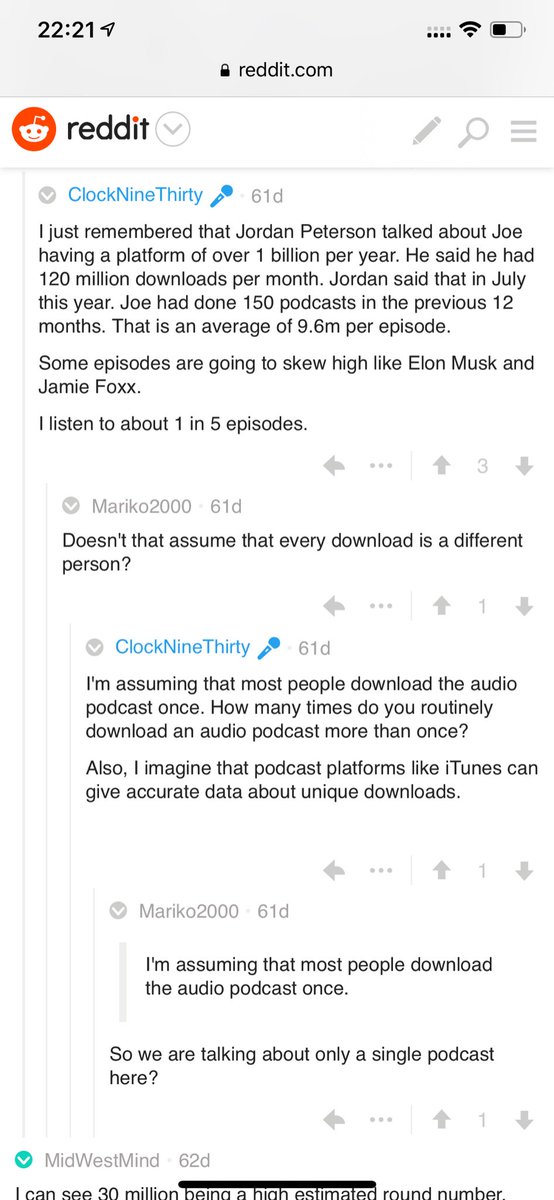
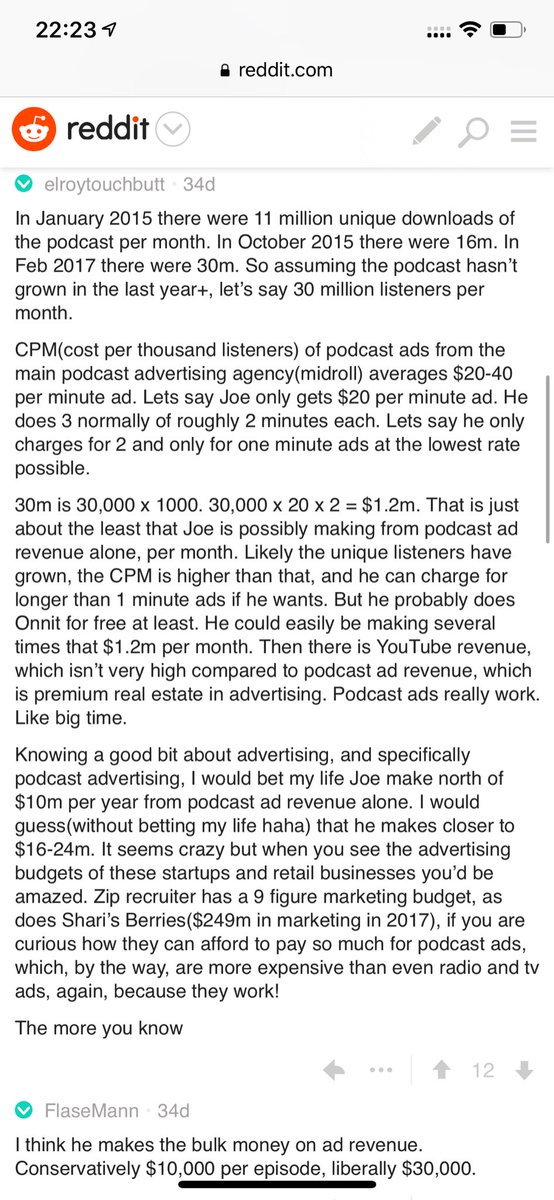
Joe Rogan's podcast is now is listened to 1.5+ billion times per year at around $50-100M/year revenue.
Independent and 100% owned by Joe, no networks, no middle men and a 100M+ people audience.
👏
https://t.co/RywAiBxA3s
Joe is the #1 / #2 podcast (depends per week) of all podcasts
120 million plays per month source https://t.co/k7L1LfDdcM
https://t.co/aGcYnVDpMu
Independent and 100% owned by Joe, no networks, no middle men and a 100M+ people audience.
👏
https://t.co/RywAiBxA3s
Joe is the #1 / #2 podcast (depends per week) of all podcasts
120 million plays per month source https://t.co/k7L1LfDdcM
https://t.co/aGcYnVDpMu
