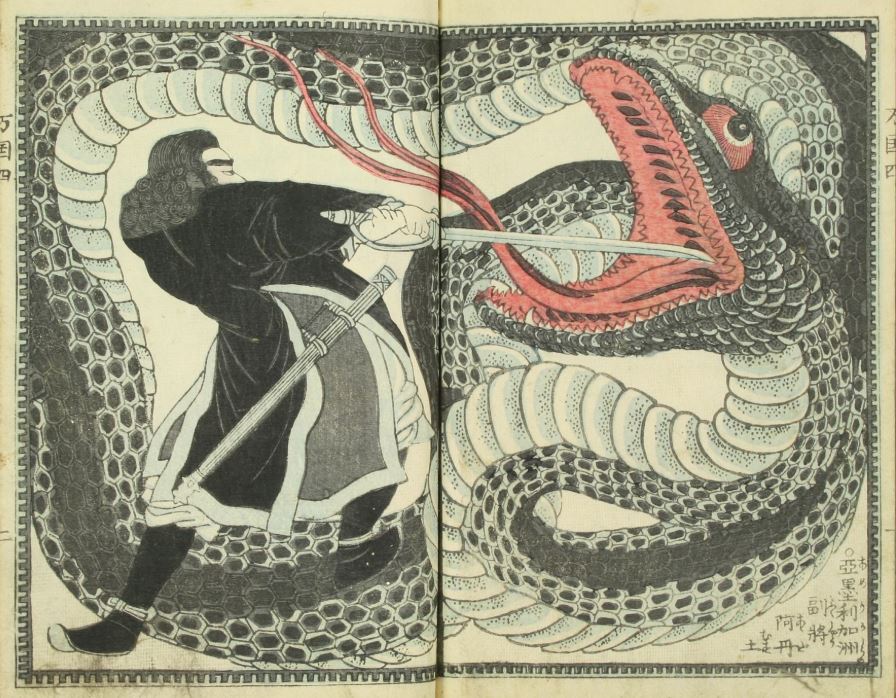
A quote from this excellent piece, neatly summarising a core impact of Brexit.
The Commission’s view, according to several sources, is that Brexit means existing distribution networks and supply chains are now defunct and will have to be replaced by other systems.
Brexit reality bites: The new dawn of trade friction via @RTENews https://t.co/p6VdlhZUAN
— Tony Connelly (@tconnellyRTE) January 9, 2021
More from Objective Columnist

I tend to agree with this - of course many things can still go wrong...but (certainly on the UK side) as the list of outstanding issues decreases and as the cost of no deal becomes more apparent deal momentum will increase.
I find it most amusing that people invest so much value in public statements, briefings, tabloid headlines, the tweets of obscure backbenchers etc. Cherchez les fundamentals!
There is a deep vein of analytical pessimism in one particular direction, which, whether correct or not, is noteworthy. On the one hand, a firm belief in the fundamentals - gravity exists - but on the other hand those fundamentals are not meaningful to the final decision.
But gravity does exist! Whether one likes it or not. We do not have wings. Or feathers. And the realisation of the fundamentals will impact the political calculation (though timing differences may apply).
You don’t have to invest any particular optimism or see any virtue in the principal players to make this point.
Still, he's taken a very big step back now. The cliff risk was today; both sides were so close to the edge they could easily have gone over it. The fact @10DowningStreet didn't means Govt must genuinely believe there's now a landing zone that works, & which it can sell ENDS
— Mujtaba Rahman (@Mij_Europe) December 13, 2020
I find it most amusing that people invest so much value in public statements, briefings, tabloid headlines, the tweets of obscure backbenchers etc. Cherchez les fundamentals!
There is a deep vein of analytical pessimism in one particular direction, which, whether correct or not, is noteworthy. On the one hand, a firm belief in the fundamentals - gravity exists - but on the other hand those fundamentals are not meaningful to the final decision.
But gravity does exist! Whether one likes it or not. We do not have wings. Or feathers. And the realisation of the fundamentals will impact the political calculation (though timing differences may apply).
You don’t have to invest any particular optimism or see any virtue in the principal players to make this point.
Typically excellent piece from @dsquareddigest The exponential insight is especially neat. Think of it a little like fishing...today you can’t export oysters to the EU (because you simply aren’t allowed to), tomorrow you don’t have a fish exporting business (to the EU).
The extremely small minority of people who known anything about this who think that Brexit will be good for the City make a number of arguments which I shall address in turn...
1. They need us more than we need them. This is a variant of the German carmakers argument. And we know how that went...Business will follow the profit opportunity and if that has moved then so will the business...
And what do we mean by us / we. We’re not talking about massed ranks of Euro investing / trading etc blue blooded British institutions.
Au contraire. We’re talking about the London based subs of US, Asian and indeed European capital markets players...As soon as they think the profit opportunity has moved then so will they...it’s a market innit...
London's status as a financial centre isn't as secure as some might think | Dan Davies https://t.co/q9SU7ra4oF
— The Guardian (@guardian) February 13, 2021
The extremely small minority of people who known anything about this who think that Brexit will be good for the City make a number of arguments which I shall address in turn...
1. They need us more than we need them. This is a variant of the German carmakers argument. And we know how that went...Business will follow the profit opportunity and if that has moved then so will the business...
And what do we mean by us / we. We’re not talking about massed ranks of Euro investing / trading etc blue blooded British institutions.
Au contraire. We’re talking about the London based subs of US, Asian and indeed European capital markets players...As soon as they think the profit opportunity has moved then so will they...it’s a market innit...
More from Brexit


[thread] on the tub thumping jingoism of "best in the world"
Whether it be Gavin Williamson
or Jeremy Hunt
Why they need this amidst the shitshow of brexit and the disaster of covid?
Is a fascinating question
A reminder
Whether it be Gavin Williamson
or Jeremy Hunt
Why they need this amidst the shitshow of brexit and the disaster of covid?
Is a fascinating question
Is British science the best in the world? My question to the boss of our gold medal winning regulator, Dr June Raine pic.twitter.com/cR9977XeUt
— Jeremy Hunt (@Jeremy_Hunt) December 9, 2020
A reminder
We could only approve this vaccine so quickly because we have left the EU. Last month we changed the regulations so a vaccine did not need EU approval which is slower. https://t.co/y2Az7okPdx
— Jacob Rees-Mogg (@Jacob_Rees_Mogg) December 2, 2020


This very short article by Jeremy Cliffe is the best thing I have ever read on Brexit and the EU. It pivots on the contrast between Delors’ and Thatcher’s authentically provincial Christian visions and suggests the battle in Britain between the two is not over.
Thatcher: Protestant believer in the totally free market and absolutely sovereign centralised nation state. Delors: Catholic believer in third way personalism, corporatism and federalism. Individualism versus relational love. Heterodoxy versus Orthodoxy.
The article useful gives the lie to the idea that the Catholic vision of the EU has altogether vanished even though it is weakened. Delors wanted a social dimension to the free market and single currency and yet lexiteers laughably insist the EU is more neoliberal than the U.K.!
Subsidiary federalism is a doctrine of democracy and human fraternity. State sovereignty is a doctrine of naked power. It is a face of Antichrist. Leviathan.
Those combined that democracy can only be inside a single state fail to power just how much of private law and evermore so is necessarily international. Thus if political institutions don’t extend over borders there can be no democracy.
The rupture between Margaret Thatcher and Jacques Delors lives on in Brexit https://t.co/r3YiyPoSFB
— john milbank (@johnmilbank3) January 9, 2021
Thatcher: Protestant believer in the totally free market and absolutely sovereign centralised nation state. Delors: Catholic believer in third way personalism, corporatism and federalism. Individualism versus relational love. Heterodoxy versus Orthodoxy.
The article useful gives the lie to the idea that the Catholic vision of the EU has altogether vanished even though it is weakened. Delors wanted a social dimension to the free market and single currency and yet lexiteers laughably insist the EU is more neoliberal than the U.K.!
Subsidiary federalism is a doctrine of democracy and human fraternity. State sovereignty is a doctrine of naked power. It is a face of Antichrist. Leviathan.
Those combined that democracy can only be inside a single state fail to power just how much of private law and evermore so is necessarily international. Thus if political institutions don’t extend over borders there can be no democracy.
You May Also Like




1/x Fort Detrick History
Mr. Patrick, one of the chief scientists at the Army Biological Warfare Laboratories at Fort Detrick in Frederick, Md., held five classified US patents for the process of weaponizing anthrax.
2/x
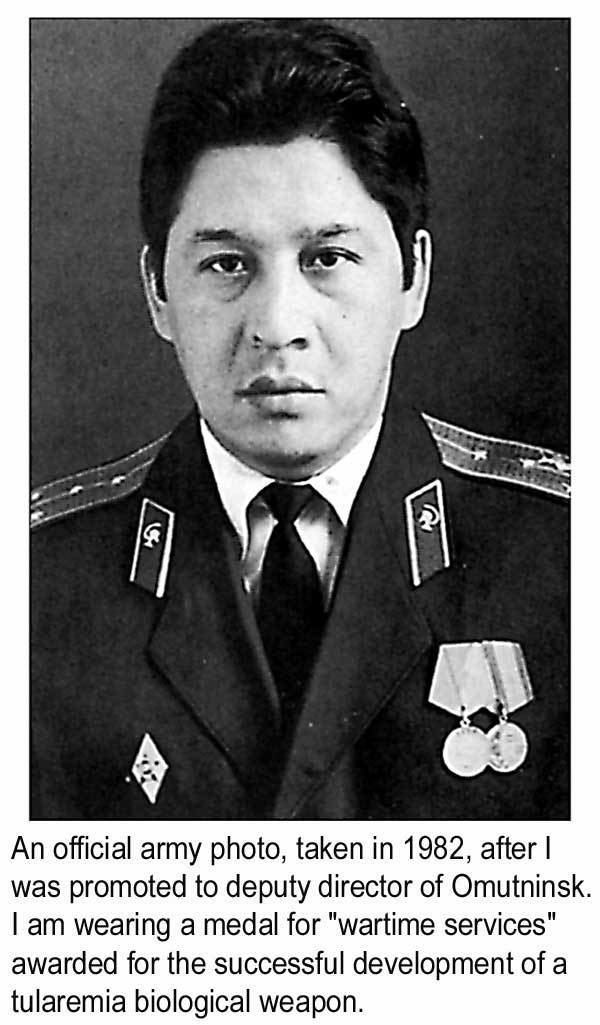
Under Mr. Patrick’s direction, scientists at Fort Detrick developed a tularemia agent that, if disseminated by airplane, could cause casualties & sickness over 1000s mi². In a 10,000 mi² range, it had 90% casualty rate & 50% fatality rate
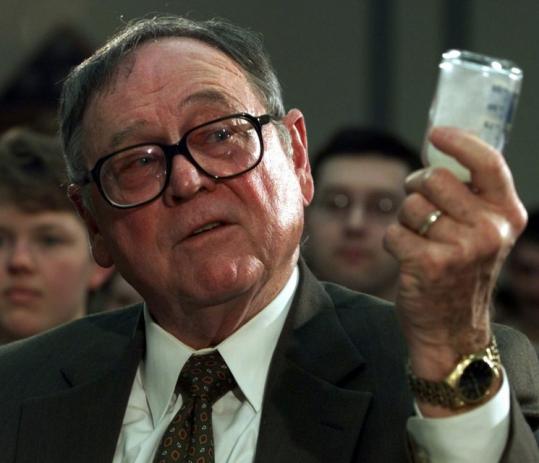
3/x His team explored Q fever, plague, & Venezuelan equine encephalitis, testing more than 20 anthrax strains to discern most lethal variety. Fort Detrick scientists used aerosol spray systems inside fountain pens, walking sticks, light bulbs, & even in 1953 Mercury exhaust pipes

4/x After retiring in 1986, Mr. Patrick remained one of the world’s foremost specialists on biological warfare & was a consultant to the CIA, FBI, & US military. He debriefed Soviet defector Ken Alibek, the deputy chief of the Soviet biowarfare program
https://t.co/sHqSaTSqtB
5/x Back in Time
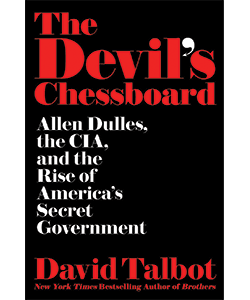
In 1949 the Army created a small team of chemists at "Camp Detrick" called Special Operations Division. Its assignment was to find military uses for toxic bacteria. The coercive use of toxins was a new field, which fascinated Allen Dulles, later head of the CIA
Mr. Patrick, one of the chief scientists at the Army Biological Warfare Laboratories at Fort Detrick in Frederick, Md., held five classified US patents for the process of weaponizing anthrax.
2/x
Under Mr. Patrick’s direction, scientists at Fort Detrick developed a tularemia agent that, if disseminated by airplane, could cause casualties & sickness over 1000s mi². In a 10,000 mi² range, it had 90% casualty rate & 50% fatality rate
3/x His team explored Q fever, plague, & Venezuelan equine encephalitis, testing more than 20 anthrax strains to discern most lethal variety. Fort Detrick scientists used aerosol spray systems inside fountain pens, walking sticks, light bulbs, & even in 1953 Mercury exhaust pipes
4/x After retiring in 1986, Mr. Patrick remained one of the world’s foremost specialists on biological warfare & was a consultant to the CIA, FBI, & US military. He debriefed Soviet defector Ken Alibek, the deputy chief of the Soviet biowarfare program
https://t.co/sHqSaTSqtB
5/x Back in Time
In 1949 the Army created a small team of chemists at "Camp Detrick" called Special Operations Division. Its assignment was to find military uses for toxic bacteria. The coercive use of toxins was a new field, which fascinated Allen Dulles, later head of the CIA