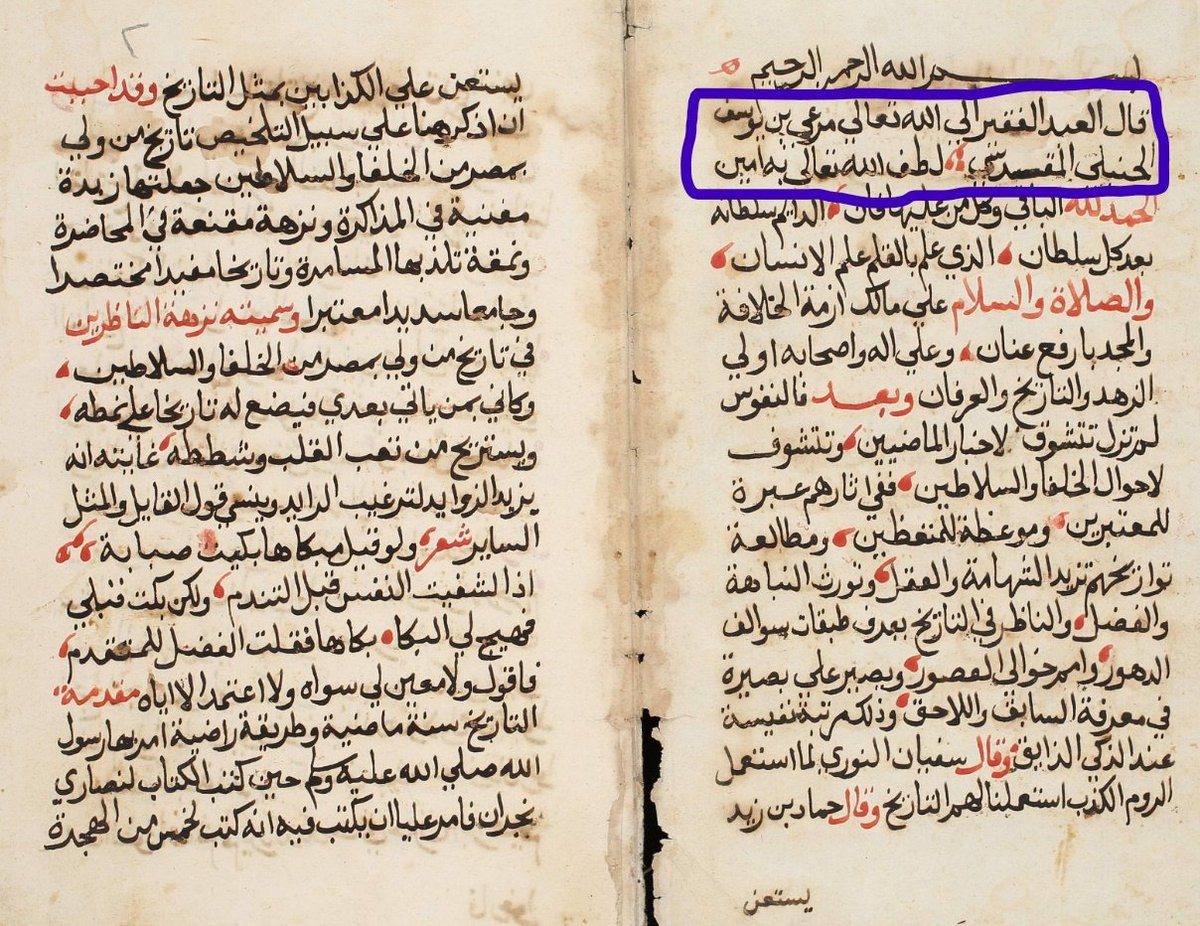
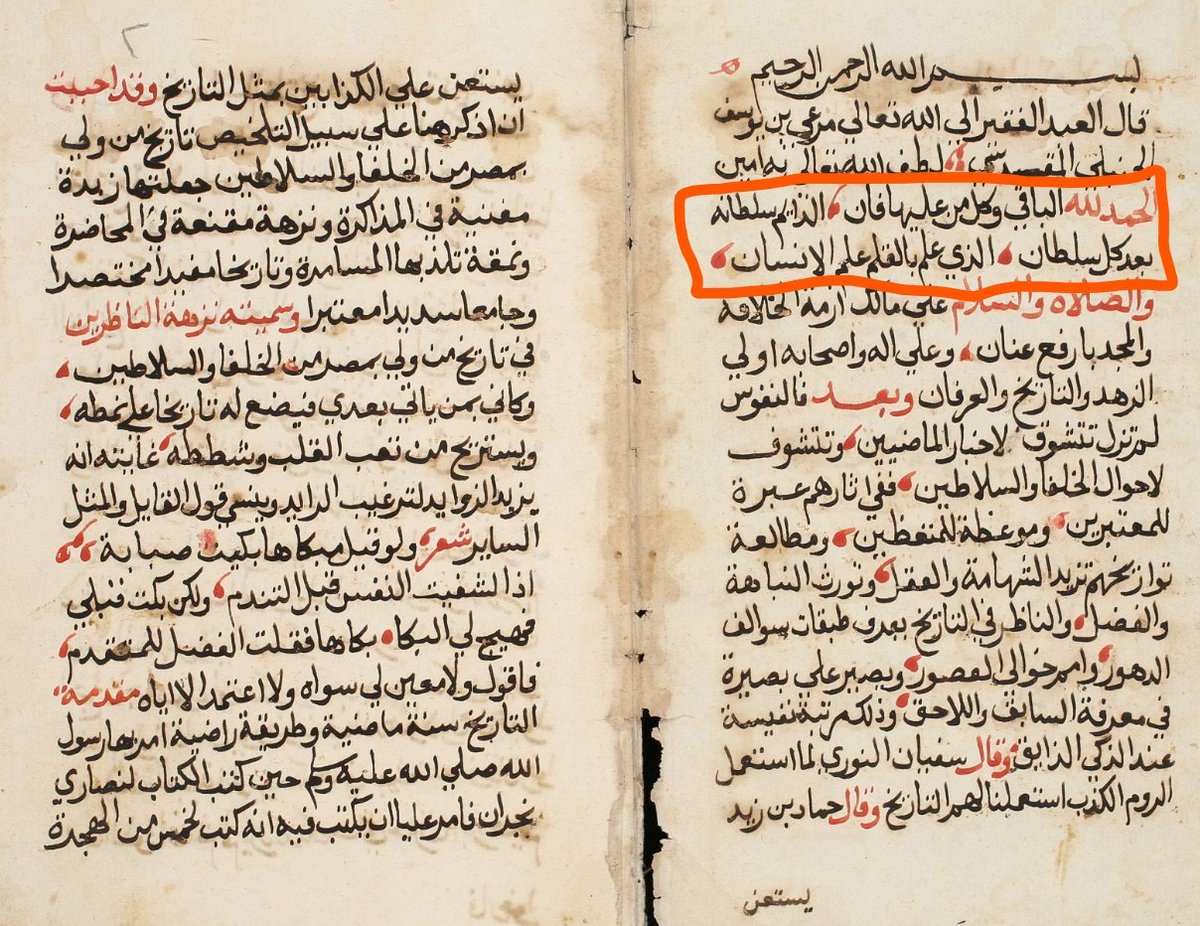
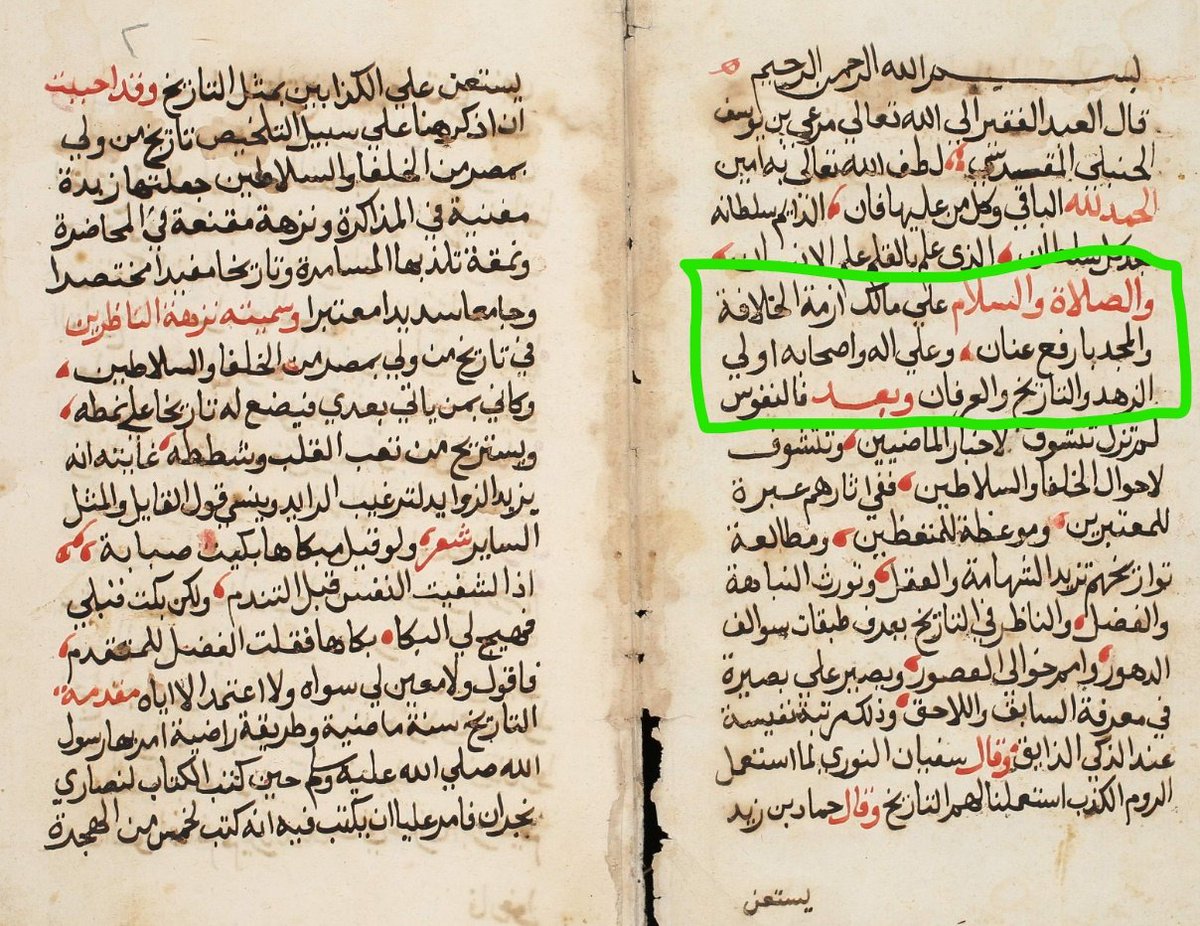
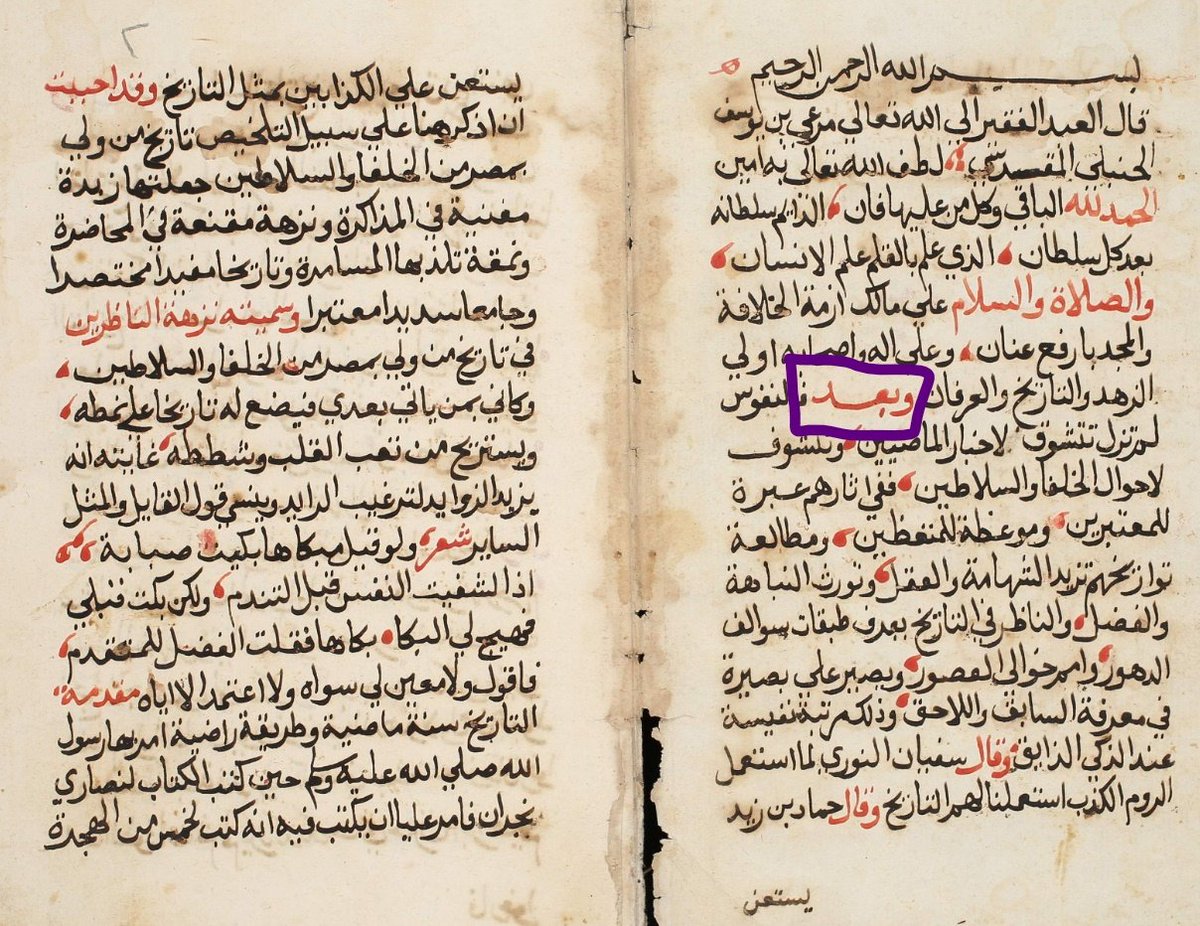
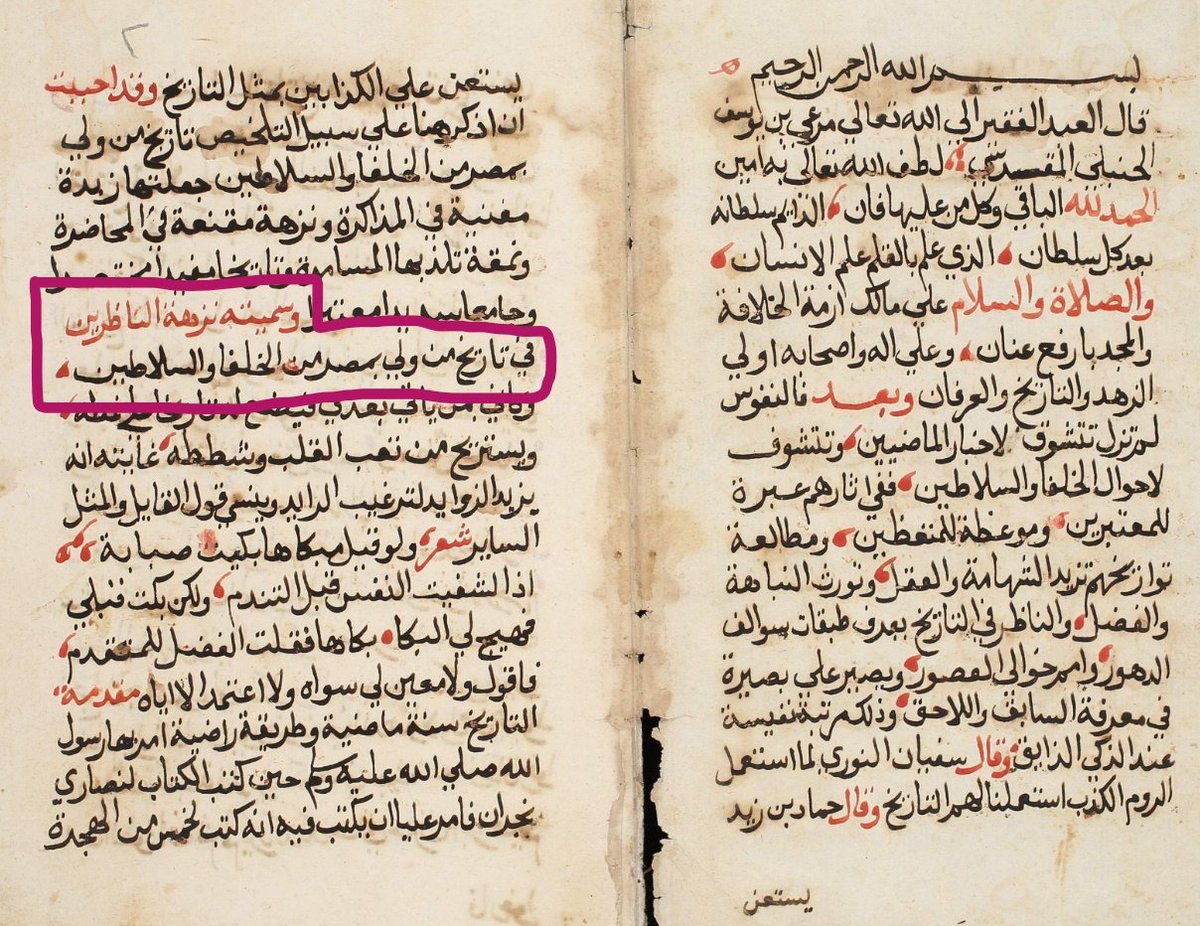
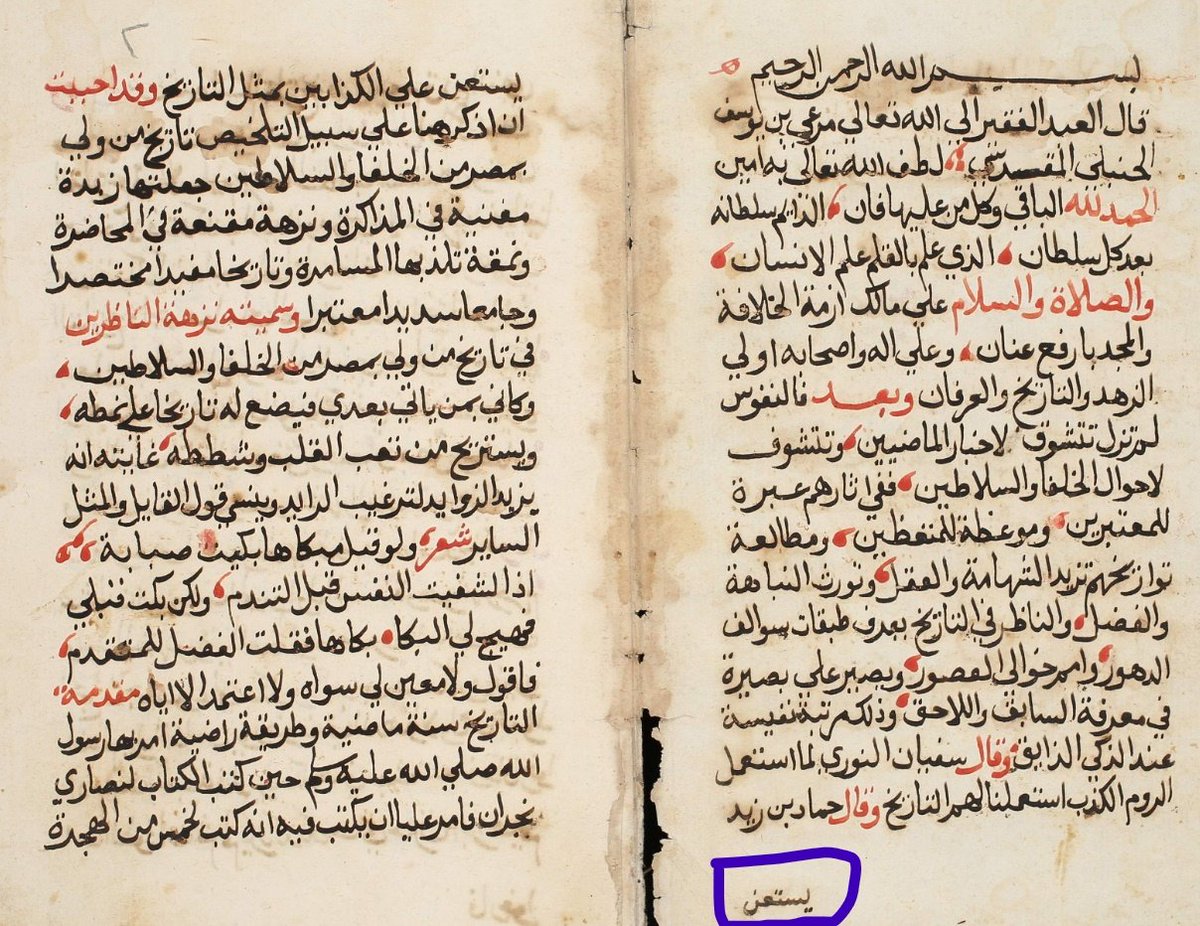
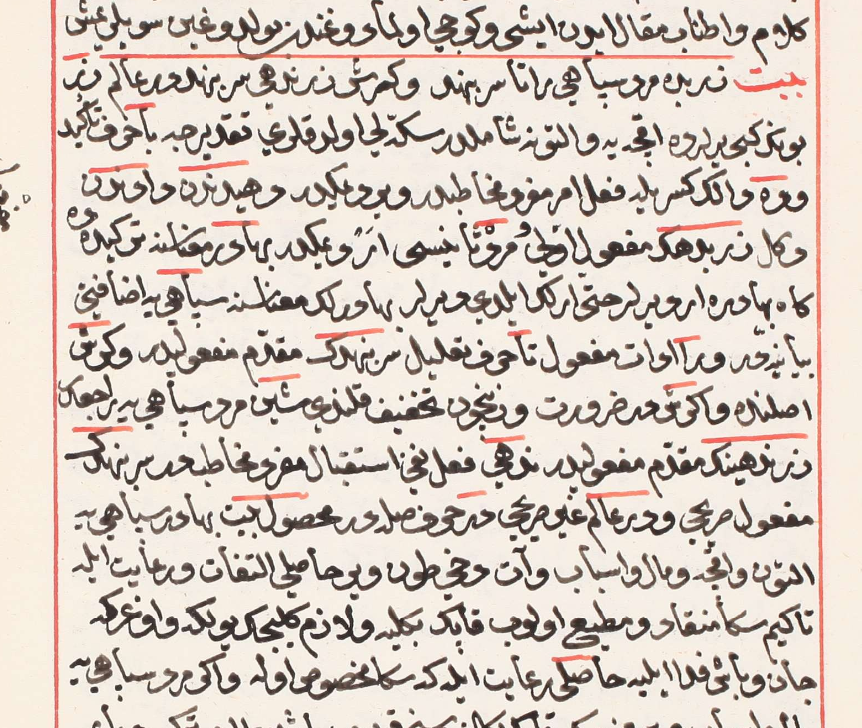
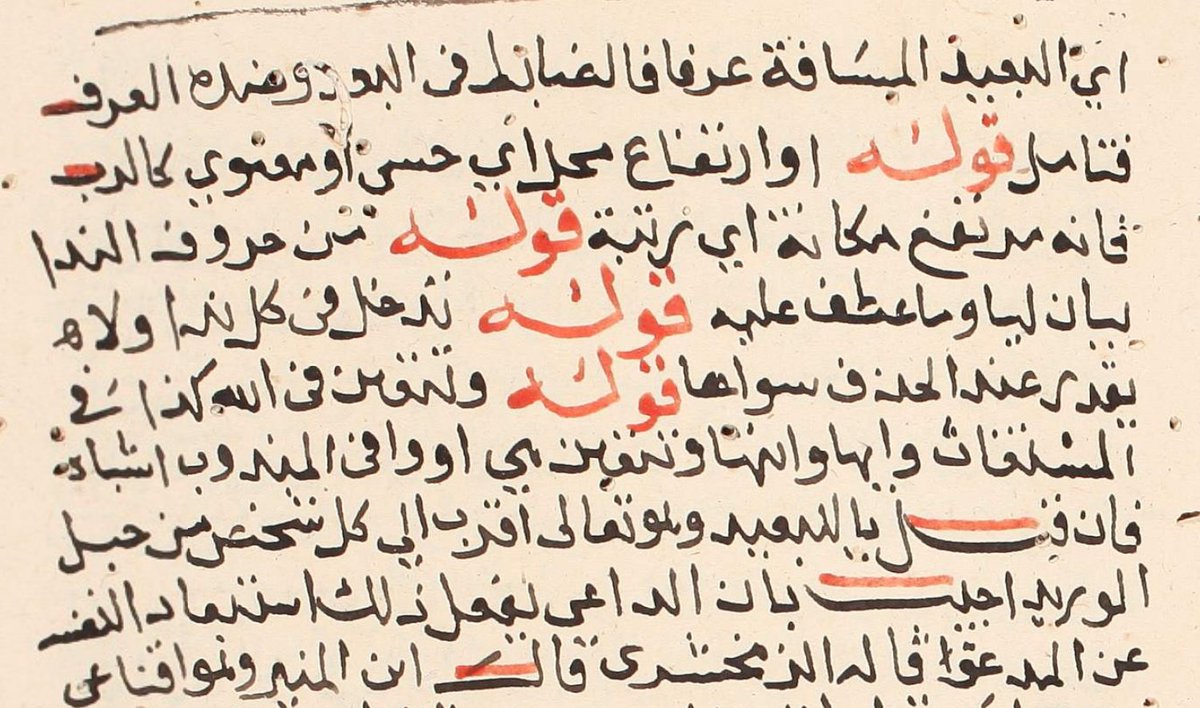
I want to talk about the key textual elements you might find in an Islamic manuscript. I'll focus on this manuscript, roughly 18th century, of an Arabic history of the rulers of Egypt called Nuzhat al-nāẓirīn, by Marʻī al-Karmī (d. 1623/4).
Budeiry Library (Jerusalem) MS 593 -jm
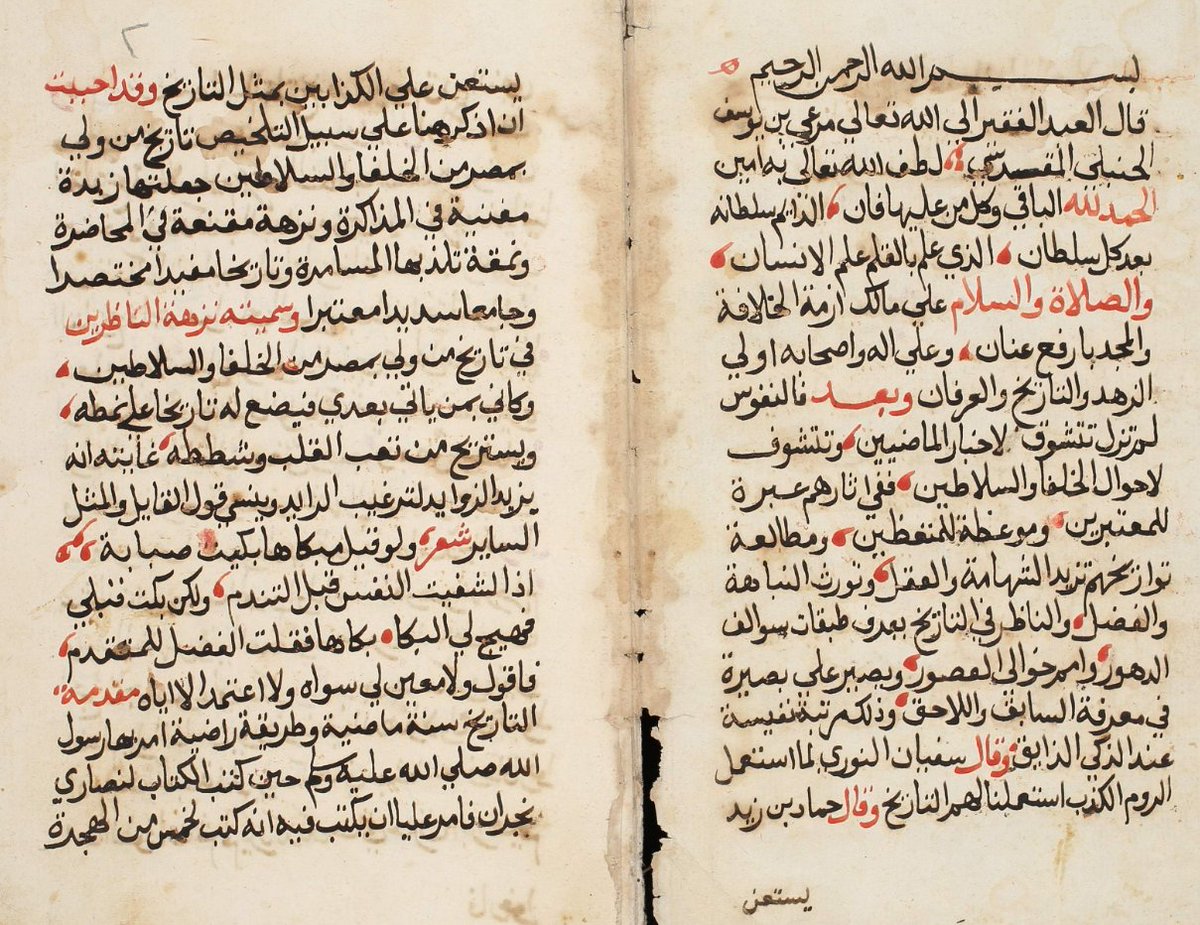
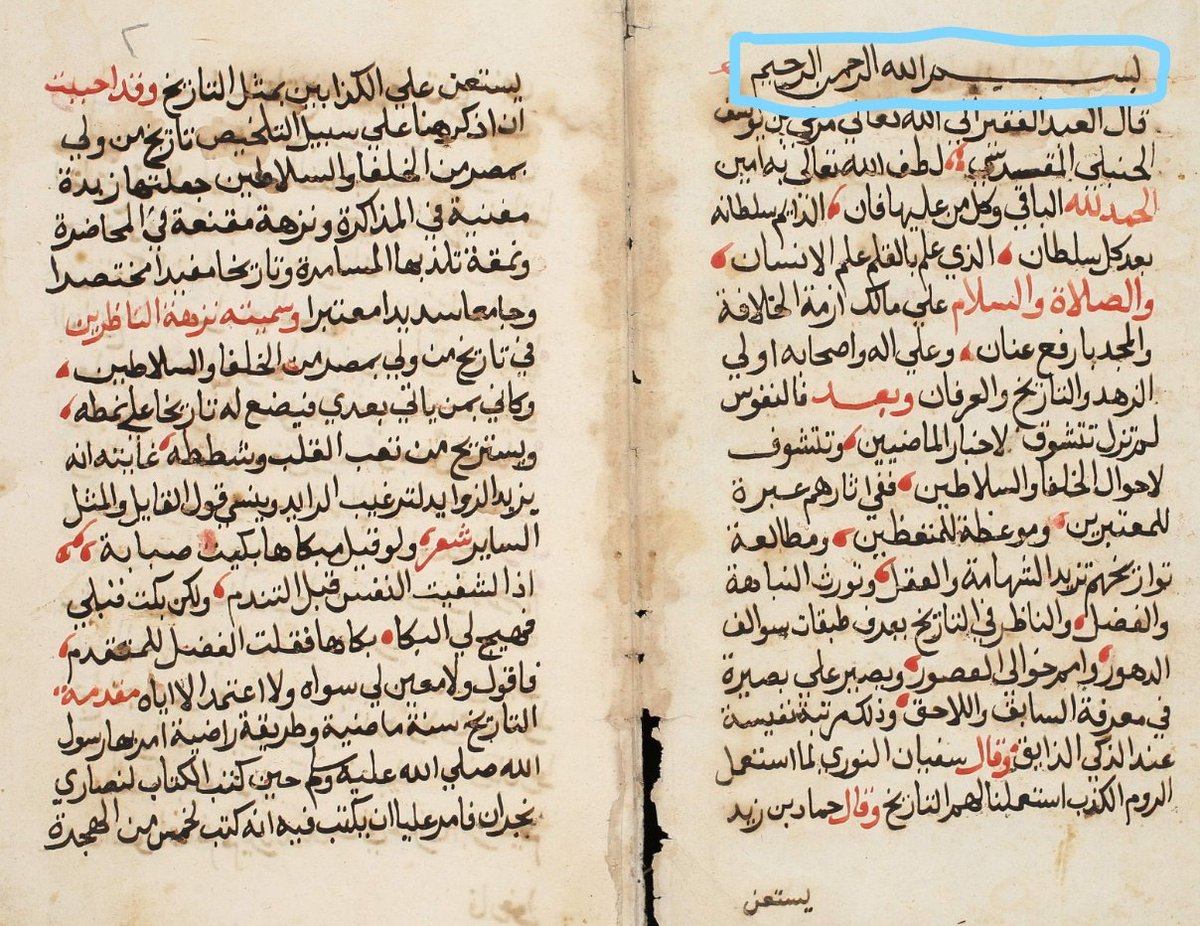
These little prayers are fun pic.twitter.com/hJYk2M01bO
— Josh Mugler (@J_mugs) February 16, 2019
More from Tweeting Historians
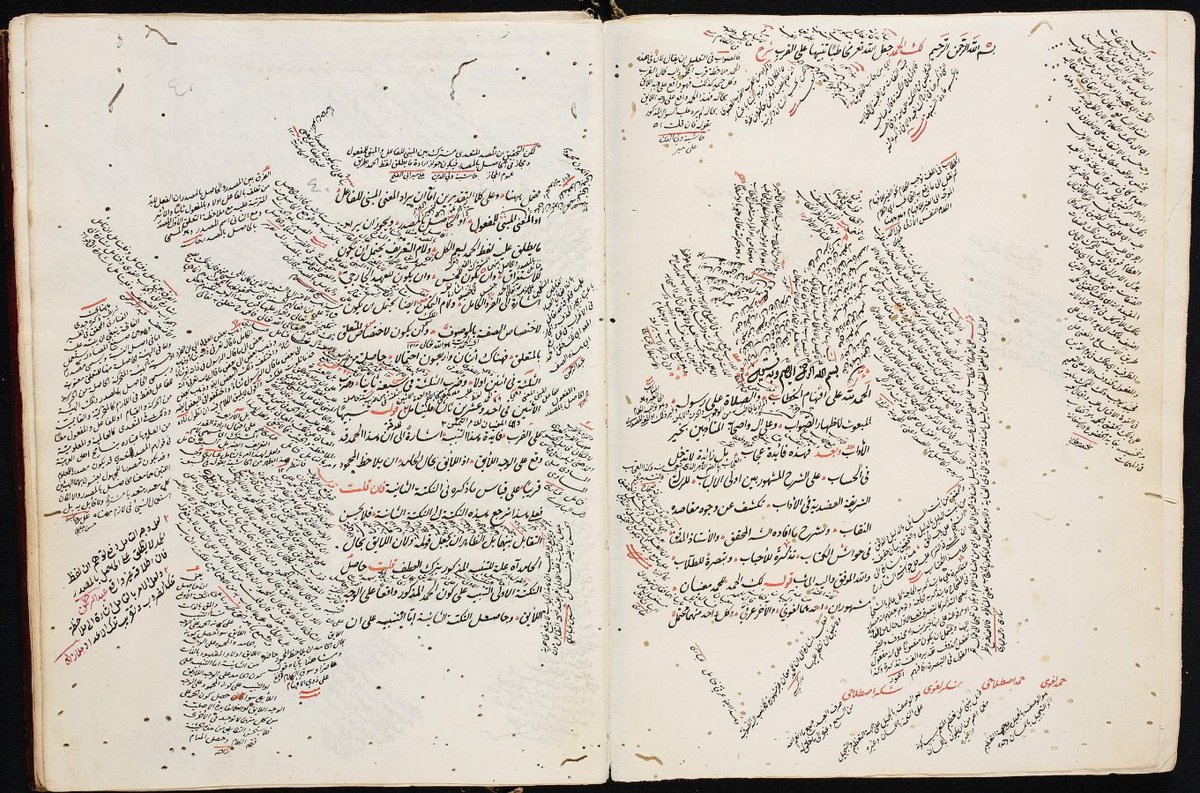
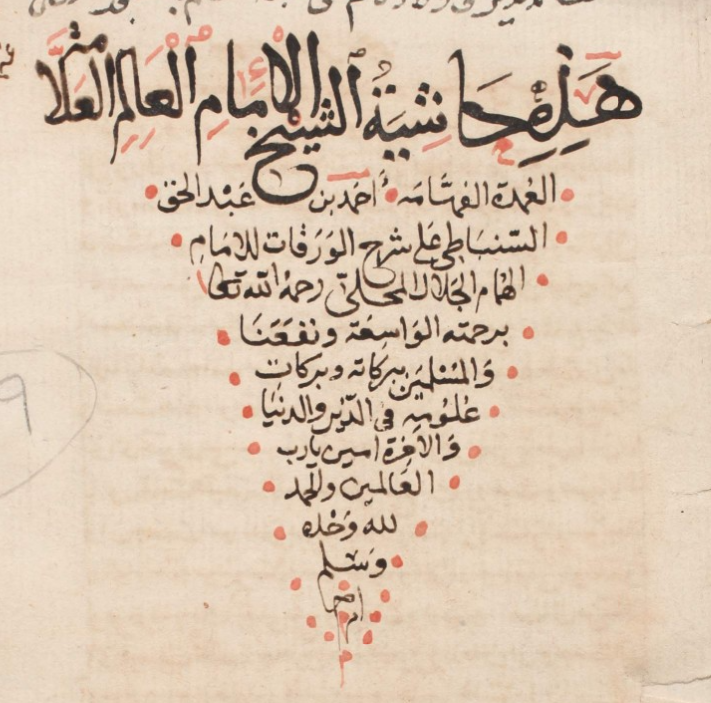
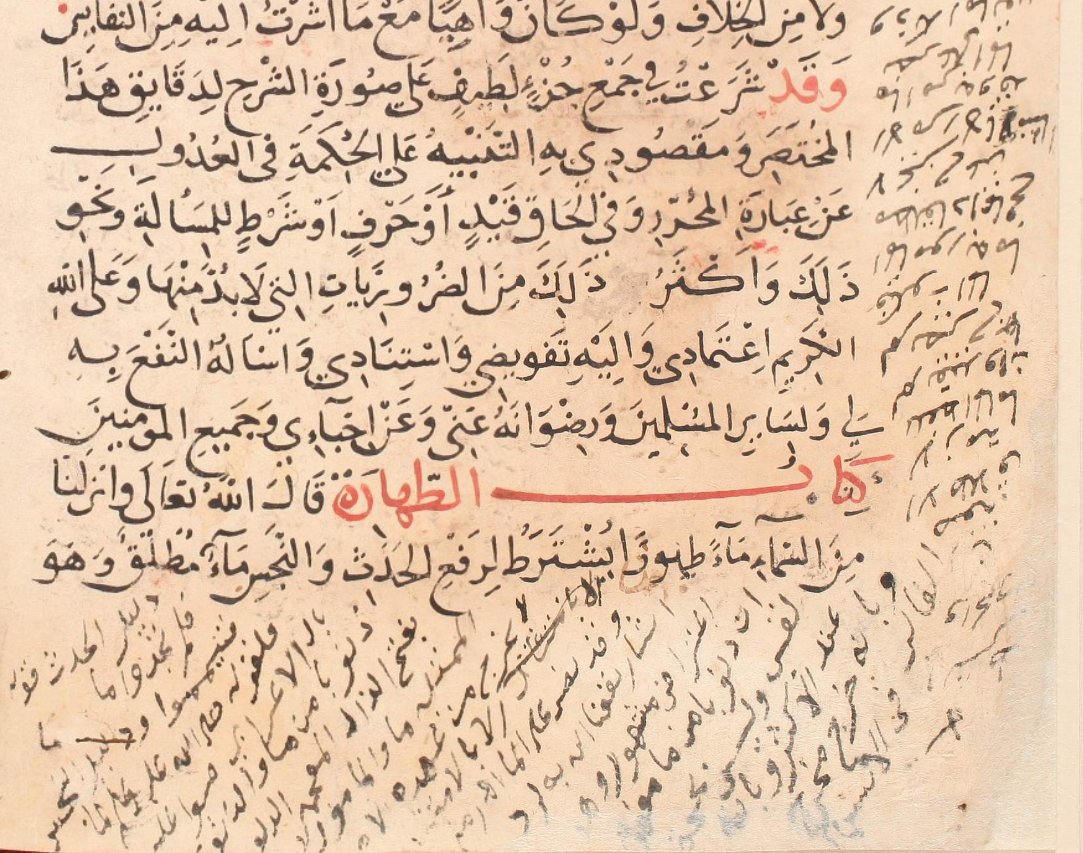


More from Religion


Assalam Alaiki dear Sister in Islam. I hope this meets you well. Hope you are keeping safe in this pandemic. May Allah preserve you and your beloved family. I would like to address the misconception and misinterpretation in your thread. Please peruse the THREAD below.
1. First off, a disclaimer. Should you feel hurt by my words in the course of the thread, then forgive me. It’s from me and not from Islam. And I probably have to improve on my delivery. And I may not quote you verbatim, but the intended meaning would be there. Thank You!
2. Standing on Imam Shafii’s quote: “And I never debated anyone but that I did not mind whether Allah clarified the truth on my tongue or his tongue” or “I never once debated anyone hoping to win the debate; rather I always wished that the truth would come from his side.”
3. Okay, into the meat (my love for meat is showing. Lol) of the thread. Even though you didn’t mention the verse that permitted polygamy, everyone knows the verse you were talking about (Q4:3).

4. Your reasons for the revelation of the verse are strange. The first time I came across such. I had to quickly consult the books on the exegeses or tafsir of the Quran written by renowned specialists!
A lot of things Muslims do now and claim as Islamic rule is actually a culture that Islam curtailed or tried to perfect.
— Sule Nana (@izesule) January 2, 2021
Let's talk polygamy.
Islam didn't come and say, "oh men, marry four wives"
No.
Polygamy was in existence, long before the coming of Islam.
1. First off, a disclaimer. Should you feel hurt by my words in the course of the thread, then forgive me. It’s from me and not from Islam. And I probably have to improve on my delivery. And I may not quote you verbatim, but the intended meaning would be there. Thank You!
2. Standing on Imam Shafii’s quote: “And I never debated anyone but that I did not mind whether Allah clarified the truth on my tongue or his tongue” or “I never once debated anyone hoping to win the debate; rather I always wished that the truth would come from his side.”
3. Okay, into the meat (my love for meat is showing. Lol) of the thread. Even though you didn’t mention the verse that permitted polygamy, everyone knows the verse you were talking about (Q4:3).
4. Your reasons for the revelation of the verse are strange. The first time I came across such. I had to quickly consult the books on the exegeses or tafsir of the Quran written by renowned specialists!


#Bookmark this
The full story of || Dhruv ||
We’ll see How Dhruv occupied a fixed position in the northern sky?
I repeat “Untold Unsung now Unearthed”
Go through entire thread carefully.
OM NAMO BHAGWATE VAASUDEVAAY
RT & spread the knowledge.
Any questions use #AskPratz

.... continuing from previous thread/story
O prince! Thus concentrate on that omnipotent eternal Lord with the mantra - ‘OM NAMO BHAGWATE VAASUDEVAAY’ .
https://t.co/H62ehDT3ix
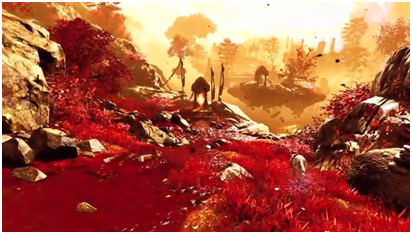
The prince Dhruv greeted the sages and continued on his journey. At last, he reached a beautiful forest Madhuvan on the bank of the river Yamuna. It was the same forest, which was later occupied by a demon Madhu.
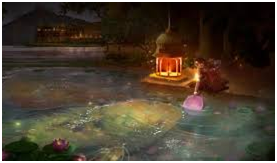
Shatrughana, the youngest brother of Sri Rama had killed demon Lavan, son of Madhu in the same forest & founded the township of Mathura. In the same forest, prince Dhruv decided to carry out his penance. As per the dictate of the sages, he began to recite the mantra continuously
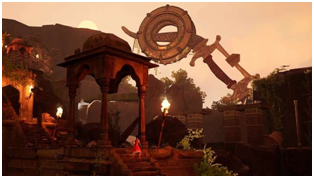
Very soon, the earth began to move because of Dhruv’s severe penance. Even the seat of Indra could not remain stable. A stampede resulted among the gods. The gods then hatched a conspiracy to disturb the penance.
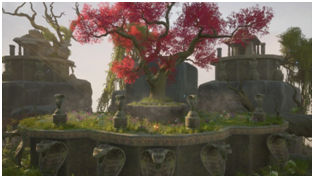
The full story of || Dhruv ||
We’ll see How Dhruv occupied a fixed position in the northern sky?
I repeat “Untold Unsung now Unearthed”
Go through entire thread carefully.
OM NAMO BHAGWATE VAASUDEVAAY
RT & spread the knowledge.
Any questions use #AskPratz
.... continuing from previous thread/story
O prince! Thus concentrate on that omnipotent eternal Lord with the mantra - ‘OM NAMO BHAGWATE VAASUDEVAAY’ .
https://t.co/H62ehDT3ix
So you too go and recite the same mantra in order to please Lord Vishnu.
— Prateechi \U0001f6eb\u2708\ufe0f\U0001f6e9\ufe0f (@BahuRaani) February 6, 2021
\u2026To be continued
It\u2019s a beautiful long story. Read it to your loved ones.
(Next Weekly Thread)
We\u2019ll see How Dhruv occupied a fixed position in the northern sky?
Stay Tuned
Jai Maa
_/\\_ pic.twitter.com/7TxdNsoZes
The prince Dhruv greeted the sages and continued on his journey. At last, he reached a beautiful forest Madhuvan on the bank of the river Yamuna. It was the same forest, which was later occupied by a demon Madhu.
Shatrughana, the youngest brother of Sri Rama had killed demon Lavan, son of Madhu in the same forest & founded the township of Mathura. In the same forest, prince Dhruv decided to carry out his penance. As per the dictate of the sages, he began to recite the mantra continuously
Very soon, the earth began to move because of Dhruv’s severe penance. Even the seat of Indra could not remain stable. A stampede resulted among the gods. The gods then hatched a conspiracy to disturb the penance.

You May Also Like

I think a plausible explanation is that whatever Corbyn says or does, his critics will denounce - no matter how much hypocrisy it necessitates.
Corbyn opposes the exploitation of foreign sweatshop-workers - Labour MPs complain he's like Nigel
He speaks up in defence of migrants - Labour MPs whinge that he's not listening to the public's very real concerns about immigration:
He's wrong to prioritise Labour Party members over the public:
He's wrong to prioritise the public over Labour Party
One of the oddest features of the Labour tax row is how raising allowances, which the media allowed the LDs to describe as progressive (in spite of evidence to contrary) through the coalition years, is now seen by everyone as very right wing
— Tom Clark (@prospect_clark) November 2, 2018
Corbyn opposes the exploitation of foreign sweatshop-workers - Labour MPs complain he's like Nigel
He speaks up in defence of migrants - Labour MPs whinge that he's not listening to the public's very real concerns about immigration:
He's wrong to prioritise Labour Party members over the public:
He's wrong to prioritise the public over Labour Party