So, deal or no-deal? I'm afraid it looks gloomy. Too many outstanding issues, a political context that is not conducive to compromise, and a tunnel leaking like mad. Quite possibly forming between them a vicious cycle. So, is this it? I suspect not... 1/n
More from David Henig
This potential benefit list from CPTPP is not the longest and is still misleading. Those Malaysian whisky tariffs - emilimated over 15 years (if they don't seek any specific exemption for UK). Those rules of origin benefits? Only apply to import / export to CPTPP countries. https://t.co/9TbheOVhsR
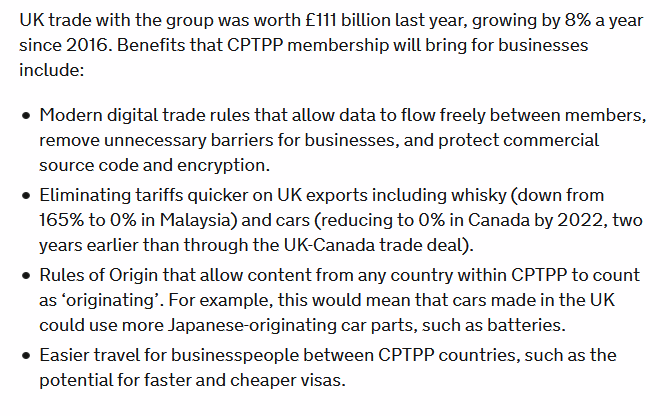
Here's my more realistic take on CPTPP. Economic gains limited, but politically in terms of trade this makes some sort of sense, these are likely allies. DIT doesn't say this, presumably the idea of Australia or Canada as our equal upsets them.
As previously noted agriculture interests in Australia and New Zealand expect us to reach generous agreements in WTO talks and bilaterals before acceding to CPTPP. So this isn't a definite. Oh and Australia wants to know if we'll allow hormone treated beef
Ultimately trade deals are political, and the UK really wants CPTPP as part of the pivot to indo-pacific, and some adherents also hope it forces us to change food laws without having to do it in a US deal (isn't certain if this is the case or not).
If we can accede to CPTPP without having to make changes to domestic laws it is fine. Just shouldn't be our priority, as it does little for services, is geographically remote, and hardly cutting edge on issues like climate change or animal welfare.
Tomorrow we will formally apply to join #CPTPP \U0001f1ec\U0001f1e7
— Liz Truss (@trussliz) January 31, 2021
Membership will help drive an export- led, jobs-led recovery across \U0001f1ec\U0001f1e7 bringing more opportunities to trade with fast growing Pacific nations. \U0001f30e
Read more here\U0001f447https://t.co/5sQhgW4vCM
Here's my more realistic take on CPTPP. Economic gains limited, but politically in terms of trade this makes some sort of sense, these are likely allies. DIT doesn't say this, presumably the idea of Australia or Canada as our equal upsets them.
Gather UK application to join CPTPP is finally about to be announced, not that it was exactly a secret. Economic value limited given distance and existing UK deals, not a particularly strong or modern agreement in areas of UK strength like services, but...
— David Henig (@DavidHenigUK) January 30, 2021
As previously noted agriculture interests in Australia and New Zealand expect us to reach generous agreements in WTO talks and bilaterals before acceding to CPTPP. So this isn't a definite. Oh and Australia wants to know if we'll allow hormone treated beef
Ultimately trade deals are political, and the UK really wants CPTPP as part of the pivot to indo-pacific, and some adherents also hope it forces us to change food laws without having to do it in a US deal (isn't certain if this is the case or not).
If we can accede to CPTPP without having to make changes to domestic laws it is fine. Just shouldn't be our priority, as it does little for services, is geographically remote, and hardly cutting edge on issues like climate change or animal welfare.

More from Politics


Handy guide for Dominic Raab and other Brexiteers, and for anyone keen to replace our EU trade with trade with the rest of the world on WTO terms...
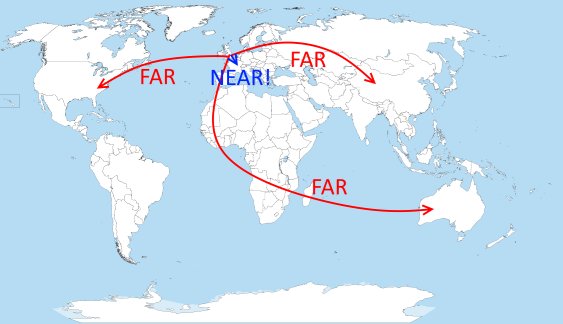
You can't magic away the vast distances involved. Clue: we fly in only 1/192th of our trade compared to the amount that arrives via sea
But even if you invented a teleporter tomorrow, WTO terms are so bad, so stacked against us, that a no-deal Brexit will be a total economic disaster
And while the Brexiteers fantasise, real jobs are being lost, investments are drying up, companies are moving assets to the EU27 or redomiciling. All already happened and happening right now, not in some mythical
Of course, there are many, many myths that Brexiteers perpetuate that are total fiction. You've seen a couple of them already. The thread below busts a whole lot
You can't magic away the vast distances involved. Clue: we fly in only 1/192th of our trade compared to the amount that arrives via sea
In 2016, the UK transported 484,000,000 tons of freight by sea, but just 2,511,000 tons by air (192x less than by sea). Therefore absurd to think of simply substituting air freight for sea freight (e.g. if we have to fly in food or medicines because of post-Brexit jams at ports)
— Edwin Hayward (@uk_domain_names) October 28, 2018
But even if you invented a teleporter tomorrow, WTO terms are so bad, so stacked against us, that a no-deal Brexit will be a total economic disaster
Here's the truth about Brexit, the "punishment" some people claim the EU wants to inflict on us, the full horrific consequences of no deal, and the dangers lurking behind any deal we reach. Buckle in, it's pretty long. Better to be thorough than to leave anything out. 1/47
— Edwin Hayward (@uk_domain_names) October 14, 2018
And while the Brexiteers fantasise, real jobs are being lost, investments are drying up, companies are moving assets to the EU27 or redomiciling. All already happened and happening right now, not in some mythical
Ok, it's high time to look at the REAL effects of Brexit. As the Tories implode & Labour sits on its hands, companies are executing contingency plans, shifting jobs & assets, slashing investments, or redomiciling (accounting exercise). Happening NOW, not in a fantasy future. 1/95
— Edwin Hayward (@uk_domain_names) November 14, 2018
Of course, there are many, many myths that Brexiteers perpetuate that are total fiction. You've seen a couple of them already. The thread below busts a whole lot
Unicorn Shredder: Hard Brexit Truths
— Edwin Hayward (@uk_domain_names) November 15, 2018
- The major economic harm Brexit is already inflicting on the UK
- Reality of "no deal" & WTO terms
- EU "punishment" narrative
- Endangered industries: automotive & haulage
+ much, much more...
(Each tweet is a self-contained thread.)


What does "patriots in control" mean?
What would that "look like" in reality?

So a massive adult film star in all his glory is included in an official FBI government filing
Hunter Biden's book is categorized as "Chinese
TIME admits to "conspiracy" to "not rig, rather
A "pillow guy" has military-grade intercepts detailing the IP addresses and device MAC IDs of EVERY incursion into every county in the
What would that "look like" in reality?
So a massive adult film star in all his glory is included in an official FBI government filing
Perhaps the explanation is that Patriots are in control.
— David Burney (@jdburney1) February 6, 2021
\U0001f923\U0001f923\U0001f923\U0001f923 https://t.co/W3S8TgeY74
Hunter Biden's book is categorized as "Chinese
Patriots in control?
— David Burney (@jdburney1) February 6, 2021
\U0001f923\U0001f923\U0001f923\U0001f923 https://t.co/p0rEyfd2DW
TIME admits to "conspiracy" to "not rig, rather
TIME admits stolen election, with spin!
— David Burney (@jdburney1) February 6, 2021
"They weren't rigging the election, they were fortifying it."
Recognize the Ministry of Truth? How many things in the last few years have been redefined to be the opposite of reality?
Google the definition of "bigot" if you doubt me. https://t.co/CNU888fxr4 pic.twitter.com/UEhRBOtUB6
A "pillow guy" has military-grade intercepts detailing the IP addresses and device MAC IDs of EVERY incursion into every county in the
God bless the pillow manufacturer.
— David Burney (@jdburney1) February 6, 2021
The last 30 minutes details where every single incursion is recorded including IP and MAC addresses. 100% proof. pic.twitter.com/P5MVb1xGNC