THREAD: Now that @Amazon @awscloud has announced they will no longer host @parler_app, many have speculated that they will just “find another host.”
Here is why that’s not so simple and what it will likely mean for the app’s future. First, let’s look at where things are...
The sane answer is to GIVE UP. Here is why.
1: the user data; this is part of the same Cambridge Analytica data play they started years ago and which continues with firms like Gloo et al, 2: they wished to challenge § 230 of the Comms. Decency Act, 3: to radicalize people.
https://t.co/xYFJOeja8X
For all these reasons, I think Parler ends today.
END
https://t.co/r8V63qpzLe
So let\u2019s talk about Parler. Where did it come from? Founder John Matze met his now wife, Alina Mukhutdinova, in May 15, 2016 in Las Vegas. Alina is from Kazan, Russia. She was on a two week road trip \u201cvacation\u201d across the USA with a friend.
— Dave Troy (@davetroy) November 13, 2020
More from Dave Troy
More from Internet



SolarWinds follow up. Very good tweet explaining what happened.
Basically what this means is that SolarWinds itself was exploited. Someone posted an infected update as legitimate (digitally signed), leading customers to download a bad update.
“Multiple trojanized updates were digitally signed from March - May 2020 and posted to the SolarWinds updates website” https://t.co/8e3bMFWXYu

FireEye then explains that infected organizations were approached and exploited. This is a separate Step 2.
At this point, information is already going to “malicious domains” without extra intervention, after the malware does nothing for “up to two weeks”

Hackers reportedly slipped malware into prior SolarWinds software updates, which gave them access to a "God-mode" for infected networks, including the Treasury and Commerce departments.
— Wes Wilson (@weswilson4) December 14, 2020
The Pentagon is also a SolarWinds customer.https://t.co/Srcoztssol https://t.co/OgMhAjJqPx
Basically what this means is that SolarWinds itself was exploited. Someone posted an infected update as legitimate (digitally signed), leading customers to download a bad update.
“Multiple trojanized updates were digitally signed from March - May 2020 and posted to the SolarWinds updates website” https://t.co/8e3bMFWXYu
FireEye then explains that infected organizations were approached and exploited. This is a separate Step 2.
At this point, information is already going to “malicious domains” without extra intervention, after the malware does nothing for “up to two weeks”


You May Also Like


Took me 5 years to get the best Chartink scanners for Stock Market, but you’ll get it in 5 mminutes here ⏰
Do Share the above tweet 👆
These are going to be very simple yet effective pure price action based scanners, no fancy indicators nothing - hope you liked it.
https://t.co/JU0MJIbpRV
52 Week High
One of the classic scanners very you will get strong stocks to Bet on.
https://t.co/V69th0jwBr
Hourly Breakout
This scanner will give you short term bet breakouts like hourly or 2Hr breakout
Volume shocker
Volume spurt in a stock with massive X times
Do Share the above tweet 👆
These are going to be very simple yet effective pure price action based scanners, no fancy indicators nothing - hope you liked it.
https://t.co/JU0MJIbpRV
52 Week High
One of the classic scanners very you will get strong stocks to Bet on.
https://t.co/V69th0jwBr
Hourly Breakout
This scanner will give you short term bet breakouts like hourly or 2Hr breakout
Volume shocker
Volume spurt in a stock with massive X times

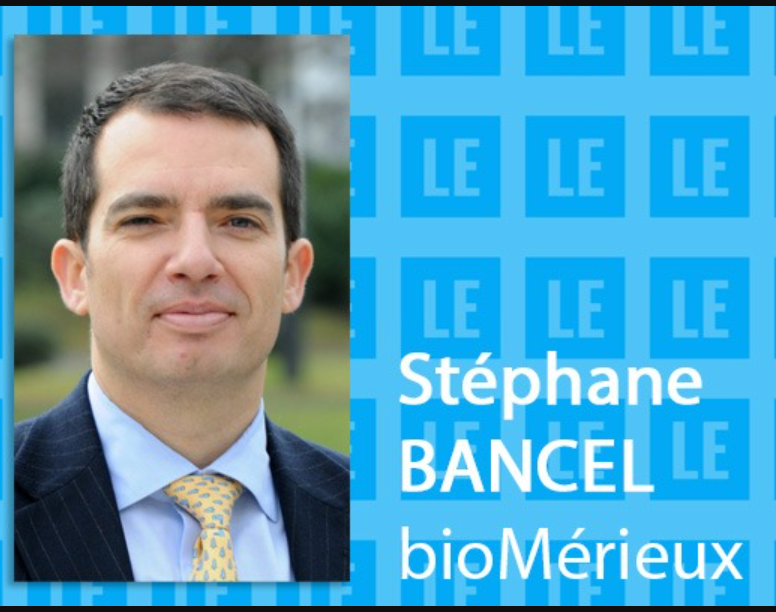
Moderna CEO Stephane Bancel was previously CEO of bioMerieux in France from 07-10.
Alain Merieux, who owns bioMerieux, was instrumental in the creation of the Wuhan Institute of Virology P4 Lab.
The same people who helped create the virus, also helped to create the vaccines...
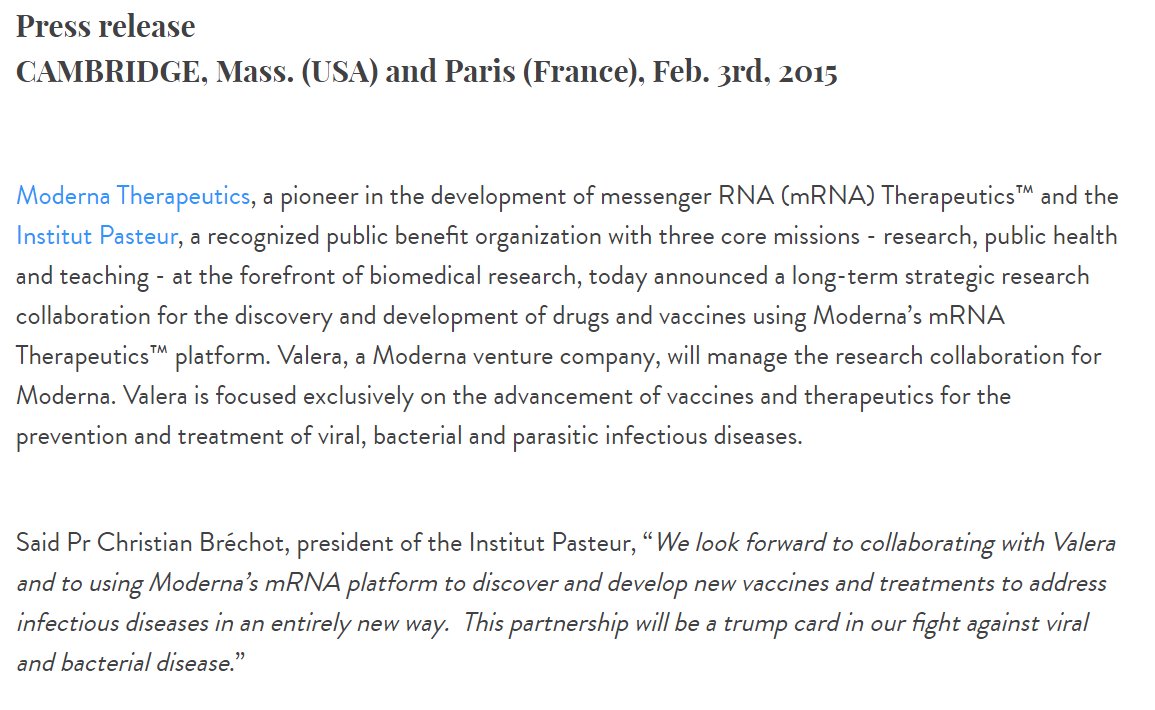
Moderna partnered with French Pasteur Institute in 2015 to develop mRNA vaccine technology.
Pasteur Institute partnered with the Wuhan P4 Laboratory in 2017 along with the Merieux Foundation to study emerging viruses...
https://t.co/yFsHwrNYaK
https://t.co/9M5lydBKhM
Nobel prize winning scientist Luc Montagnier asserts that Sars-Cov-2 is man-made and originated from the Wuhan Institute of Virology.
Montagnier did extensive work with the Pasteur Institute in France which was partnered with the Wuhan P4.
Merieux Foundation & the Chinese government have worked together since 1965, and partnered to study emerging pathogens in Africa in 2015.
Their research included "PATHOGENS CARRIED BY BATS" that provoke respiratory diseases.
🚨🚨🚨
https://t.co/gVwpT0ssqI

Alain Merieux, who owns bioMerieux, was instrumental in the creation of the Wuhan Institute of Virology P4 Lab.
The same people who helped create the virus, also helped to create the vaccines...
Moderna partnered with French Pasteur Institute in 2015 to develop mRNA vaccine technology.
Pasteur Institute partnered with the Wuhan P4 Laboratory in 2017 along with the Merieux Foundation to study emerging viruses...
https://t.co/yFsHwrNYaK
https://t.co/9M5lydBKhM
Nobel prize winning scientist Luc Montagnier asserts that Sars-Cov-2 is man-made and originated from the Wuhan Institute of Virology.
Montagnier did extensive work with the Pasteur Institute in France which was partnered with the Wuhan P4.
Merieux Foundation & the Chinese government have worked together since 1965, and partnered to study emerging pathogens in Africa in 2015.
Their research included "PATHOGENS CARRIED BY BATS" that provoke respiratory diseases.
🚨🚨🚨
https://t.co/gVwpT0ssqI