"COVID-19 vaccines designed to elicit neutralising antibodies may sensitise vaccine recipients to more severe disease than if they were not vaccinated. Vaccines for SARS, MERS and RSV have never been
https://t.co/MbAoJDXI2A
More from Robin Monotti MA FRSA⭐
The problem with meta-analysis like this is that it obfuscates the most important issue of treatment, which is timing.
This meta-analysis of controlled trials only looks at hospitalized patients. How long were the patients ill for before being hospitalized? One week? Two? Three? Too late for zinc ionophores (HCQ) (+ZINC? No zinc no point..) to work. Severe illness becomes bacterial in nature.
Was azythromycin administered when the bacterial infections were also too advanced? I have seen Azythromycin work with my very own eyes but that's not to say that if administered too late it may not save the patient. How many patients were given AZT & ventilated? It's all timing.
All the meta-analysis is telling us is if you leave it too late you may have missed the early window for antiviral zinc treatment (Zn+HCQ) & that if you are given AZT when you are ventilated or very severe it may too late for it to save you & corticosteroids may be last resort.
And of course antibiotics need also probiotics, or they may harm the bacterial flora which is part of the immune response. Difficult to tell from a meta-analysis how this problem was managed.
#BMJResearch update: Corticosteroids probably reduce mortality and mechanical ventilation in patients with covid-19 compared with standard care, whereas azithromycin, hydroxychloroquine, interferon-beta, and tocilizumab may not reduce either https://t.co/oQ3lTWUqaz
— The BMJ (@bmj_latest) December 18, 2020
This meta-analysis of controlled trials only looks at hospitalized patients. How long were the patients ill for before being hospitalized? One week? Two? Three? Too late for zinc ionophores (HCQ) (+ZINC? No zinc no point..) to work. Severe illness becomes bacterial in nature.
Was azythromycin administered when the bacterial infections were also too advanced? I have seen Azythromycin work with my very own eyes but that's not to say that if administered too late it may not save the patient. How many patients were given AZT & ventilated? It's all timing.
All the meta-analysis is telling us is if you leave it too late you may have missed the early window for antiviral zinc treatment (Zn+HCQ) & that if you are given AZT when you are ventilated or very severe it may too late for it to save you & corticosteroids may be last resort.
And of course antibiotics need also probiotics, or they may harm the bacterial flora which is part of the immune response. Difficult to tell from a meta-analysis how this problem was managed.
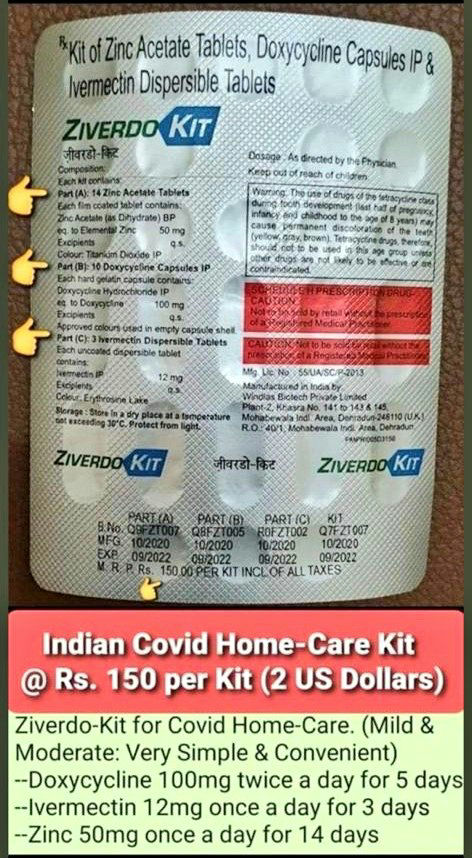
Italian researchers: vaccines will not work against SARSCoV2 because this virus does not only replicate in human cells like other viruses, this one replicates through bacteria too. This is the fundamental reason why antibiotics work & vaccines will not:
Here is the Italian-EU scientific study indicating SARSCoV2 replicates in bacteria, not only human cells, and that is why antibiotics work and these vaccines will not:
"The preliminary results suggest that SARS-CoV-2 replicates in bacterial
2 of the 4 authors of the study work at the European Commission. Another works at an Italian medical research facility called Craniomed: https://t.co/EETSM3nb3T

You can find all of CRANIOMED's Carlo Brogna's published scientific research articles here, take a look:
Here is the Italian-EU scientific study indicating SARSCoV2 replicates in bacteria, not only human cells, and that is why antibiotics work and these vaccines will not:
"The preliminary results suggest that SARS-CoV-2 replicates in bacterial
2 of the 4 authors of the study work at the European Commission. Another works at an Italian medical research facility called Craniomed: https://t.co/EETSM3nb3T
You can find all of CRANIOMED's Carlo Brogna's published scientific research articles here, take a look:
I have now re-examined this document:
It clearly does indicate both the risks of bacterial infection & to prescribe broad spectrum antibiotics as part of treatment:
"Collect blood cultures for bacteria that cause pneumonia and sepsis, ideally before antimicrobial therapy. DO NOT
delay antimicrobial therapy"
"6. Management of severe COVID-19: treatment of co-infections
Give empiric antimicrobials [broad spectrum antibiotics] to treat all likely pathogens causing SARI and sepsis as soon as possible, within 1 hour
of initial assessment for patients with sepsis."
"Empiric antibiotic treatment should be based on the clinical diagnosis (community-acquired
pneumonia, health care-associated pneumonia [if infection was acquired in health care setting] or sepsis), local epidemiology &
susceptibility data, and national treatment guidelines"
"When there is ongoing local circulation of seasonal influenza, empiric therapy with a neuraminidase inhibitor [anti-viral influenza drugs] should
be considered for the treatment for patients with influenza or at risk for severe disease."
On the 19th March 2020 the WHO released this guidance intended for healthcare workers (HCWs), healthcare managers and IPC teams at the facility level & at national and district/provincial level:https://t.co/C4aV2BnMPj pic.twitter.com/tCk1EyLskV
— Robin Monotti (@robinmonotti) December 21, 2020
It clearly does indicate both the risks of bacterial infection & to prescribe broad spectrum antibiotics as part of treatment:
"Collect blood cultures for bacteria that cause pneumonia and sepsis, ideally before antimicrobial therapy. DO NOT
delay antimicrobial therapy"
"6. Management of severe COVID-19: treatment of co-infections
Give empiric antimicrobials [broad spectrum antibiotics] to treat all likely pathogens causing SARI and sepsis as soon as possible, within 1 hour
of initial assessment for patients with sepsis."
"Empiric antibiotic treatment should be based on the clinical diagnosis (community-acquired
pneumonia, health care-associated pneumonia [if infection was acquired in health care setting] or sepsis), local epidemiology &
susceptibility data, and national treatment guidelines"
"When there is ongoing local circulation of seasonal influenza, empiric therapy with a neuraminidase inhibitor [anti-viral influenza drugs] should
be considered for the treatment for patients with influenza or at risk for severe disease."
More from Category c19


It's all here folks...How the CoVid Con was 37 years in the marking
3/4
https://t.co/WBAnAUO0UU
3/4
https://t.co/WBAnAUO0UU
Finally, this film demonstrates that EVERY SINGLE aspect of the fraudulent "science" used to the sell SARS-2=CoVid fraud was perfected in the 1980s to sell the HIV=AIDS fraud. https://t.co/Gjqo2lGjQw
— Ken McCarthy (@KenMcCarthy) March 10, 2021

1/: Avicenna was a Persian scientist, who lived 1000 years ago. He put two lambs in separate cages, which had the same health conditions. But only one lamb could see a wolf that was put in a third cage. The observations were astounding. (h/t @farmer_student) ⬇️a thread⬇️
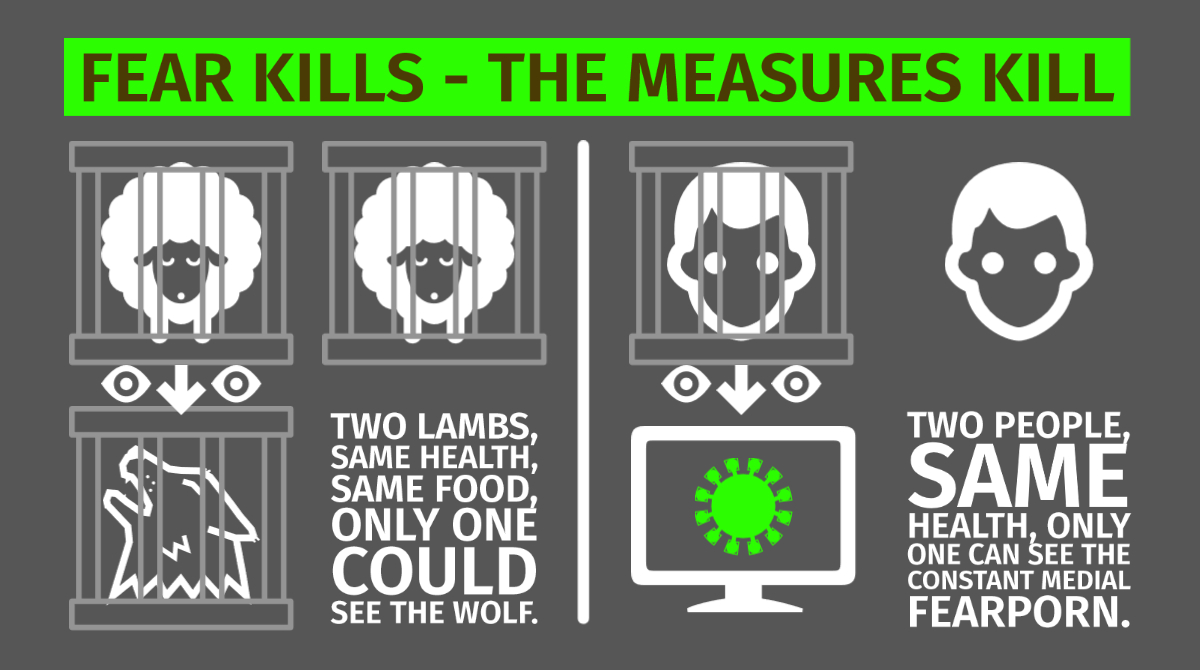
2/: Both lambs were provided with the same feed. Also, the weight was exactly the same when the experiment started. Several months later, the lamb with sight on the wolf became cranky, restless, weak, and showed a significant weight loss and signs of poor development.
3/: The lamb that was under chronic stress as it was placed in a situation of constant apparent danger died eventually. 🐑🪦 In fact, the wolf did not pose a danger at all, but this was beyond the lamb's perception.
4/: This experiment showed that increased levels of the stress hormone cortisol have a bad impact on the metabolism of mammals. And 1000 years after this experiment, we are facing a similar situation again but with the difference that we are aware of the impact of stress.
5/: Currently, we are overwhelmed with medial and governmental propaganda with respect to a common cold virus (that might hypothetically be more lethal though) that doesn't do harm to the majority of the people. Extreme global measures are taken.
2/: Both lambs were provided with the same feed. Also, the weight was exactly the same when the experiment started. Several months later, the lamb with sight on the wolf became cranky, restless, weak, and showed a significant weight loss and signs of poor development.
3/: The lamb that was under chronic stress as it was placed in a situation of constant apparent danger died eventually. 🐑🪦 In fact, the wolf did not pose a danger at all, but this was beyond the lamb's perception.
4/: This experiment showed that increased levels of the stress hormone cortisol have a bad impact on the metabolism of mammals. And 1000 years after this experiment, we are facing a similar situation again but with the difference that we are aware of the impact of stress.
5/: Currently, we are overwhelmed with medial and governmental propaganda with respect to a common cold virus (that might hypothetically be more lethal though) that doesn't do harm to the majority of the people. Extreme global measures are taken.
Cortisol is known as the 'stress hormone' and is a silent killer. Cortisol levels are increased by:
— Dr. Simon \u30c4 (@goddeketal) February 17, 2021
\U0001f449\U0001f3fc Fear & anxiety
\U0001f449\U0001f3fc Constant stress
\U0001f449\U0001f3fc Social isolation
The media propagated fear and political measures are counterproductive. They shorten our lives. https://t.co/6BZ34pVBjw
1/: The inventor of the corona PCR-Test @c_drosten is one of the #protagonists of the current crisis. He is known for involving himself in contradictions. In 2014, he gave a legendary #interview to @wiwo (https://t.co/jzTRh5Suhc) that I will address in this ⬇️short thread⬇️.

2/: The interview is significant because @c_drosten made totally sane statements back then that follow the principle of common sense. Considering his involvement in the "genesis of the current pandemic", his assertions appear in an entirely different
3/: In 2014, for instance, washing the hands was sufficient against being infected by coronaviruses. Several years he demands measures that destroy national economies and social life worldwide.
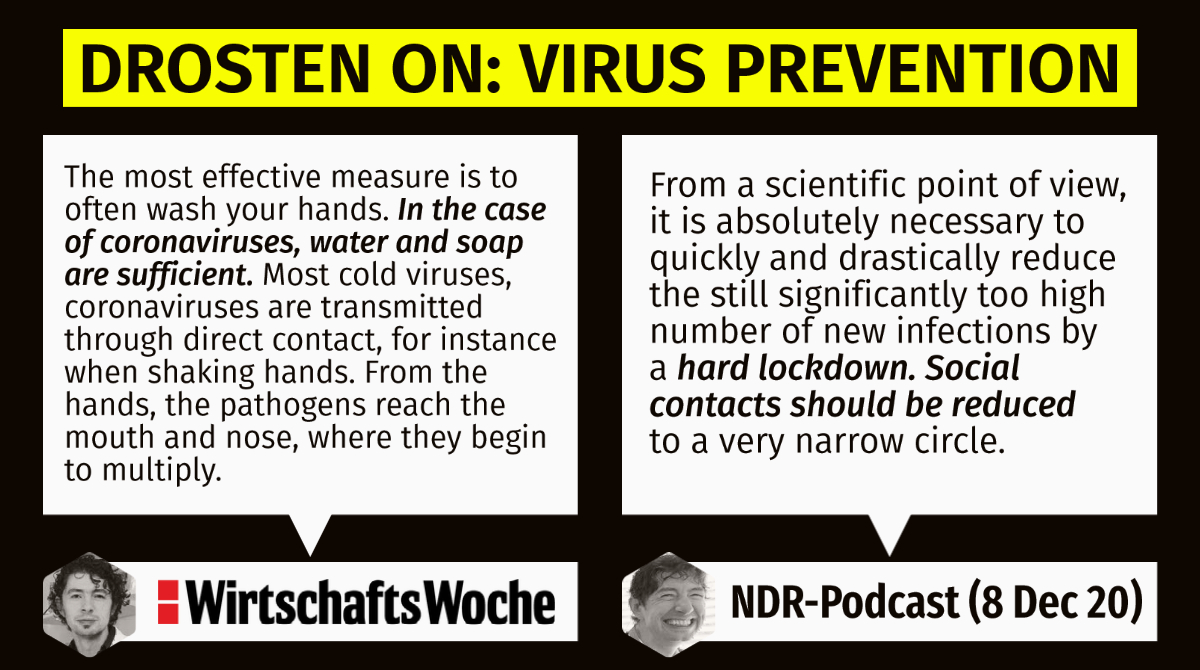
4/: Young @c_drosten also severely criticized the fact that Saudi Arabia used the PCR method to detect potential infections. From his point of view, that specific method could lead to many irrelevant cases. Nowadays, his view shifted his opinion towards 'collective punishment'.
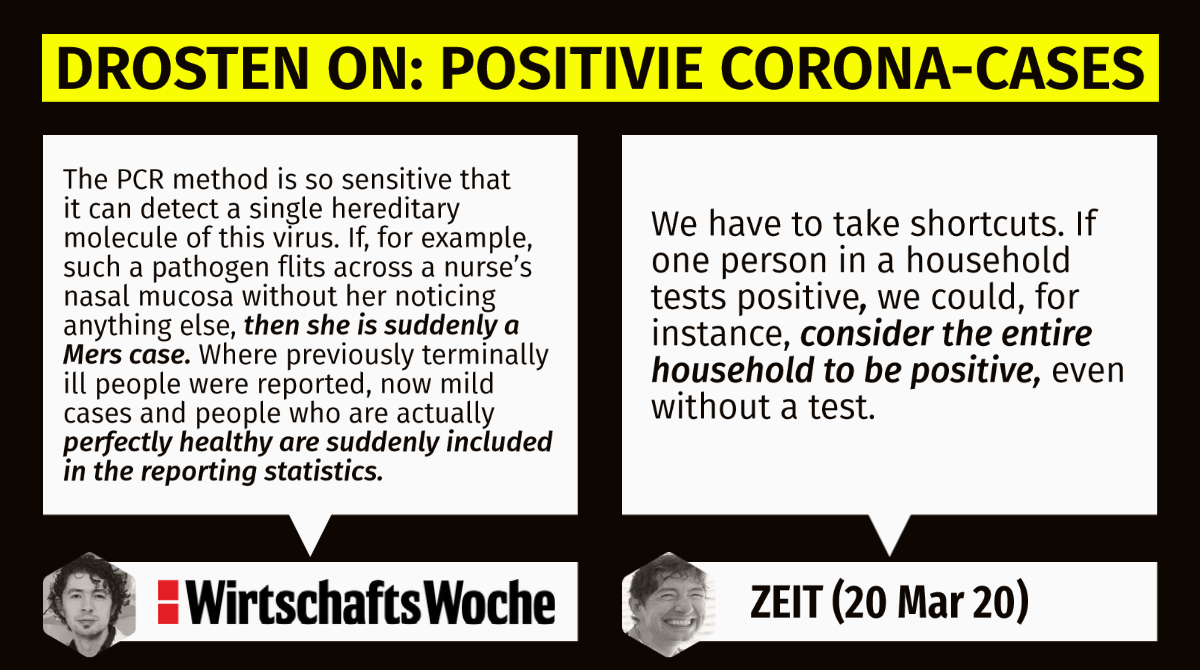
5/: Whereas he demands "testing, testing, testing" nowadays and spreads panic and fear via (social) media, he heavily condemned that behaviour of Saudi media in 2014. On top of that, he expressed his concern that medial panic could increase the number of lab tests significantly.
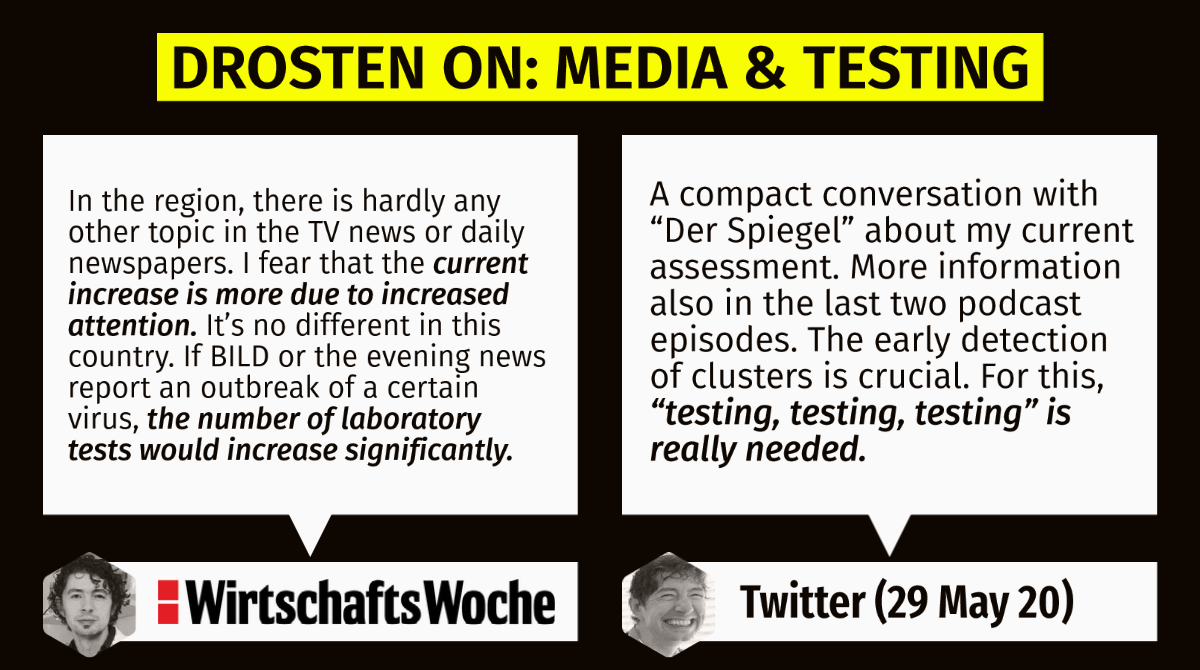
2/: The interview is significant because @c_drosten made totally sane statements back then that follow the principle of common sense. Considering his involvement in the "genesis of the current pandemic", his assertions appear in an entirely different
The genesis of a pandemic.
— Pace \U0001f642 (@theotherphilipp) February 25, 2021
The #Corona crisis began with a panopticon of absurd events, improbable coincidences and outright lies.
Time for a review of the impossibilities.
A thread \U0001f9f5 pic.twitter.com/PLbETVv2p8
3/: In 2014, for instance, washing the hands was sufficient against being infected by coronaviruses. Several years he demands measures that destroy national economies and social life worldwide.
4/: Young @c_drosten also severely criticized the fact that Saudi Arabia used the PCR method to detect potential infections. From his point of view, that specific method could lead to many irrelevant cases. Nowadays, his view shifted his opinion towards 'collective punishment'.
5/: Whereas he demands "testing, testing, testing" nowadays and spreads panic and fear via (social) media, he heavily condemned that behaviour of Saudi media in 2014. On top of that, he expressed his concern that medial panic could increase the number of lab tests significantly.