Twitter removed 800 followers from my account today. People have been writing saying twitter automatically unfollowed me for them. Follow me on Parler @robinmonotti & Telegram https://t.co/o5rFaSrCpa to bypass this.
https://t.co/NeZ1t39S1q
https://t.co/m70uj6vviC
Trust us not to turn over data. Trust us not to read your messages. Trust us not to close your channel. Maybe @Durov is an angel. I hope so! But angels have fallen before. Telegram should have been working to make channels decentralized\u2014meaning outside their control\u2014for years.
— Edward Snowden (@Snowden) December 30, 2017
https://t.co/QnfUzGiAW9
Think about this with reference to the media operation on Covid19.
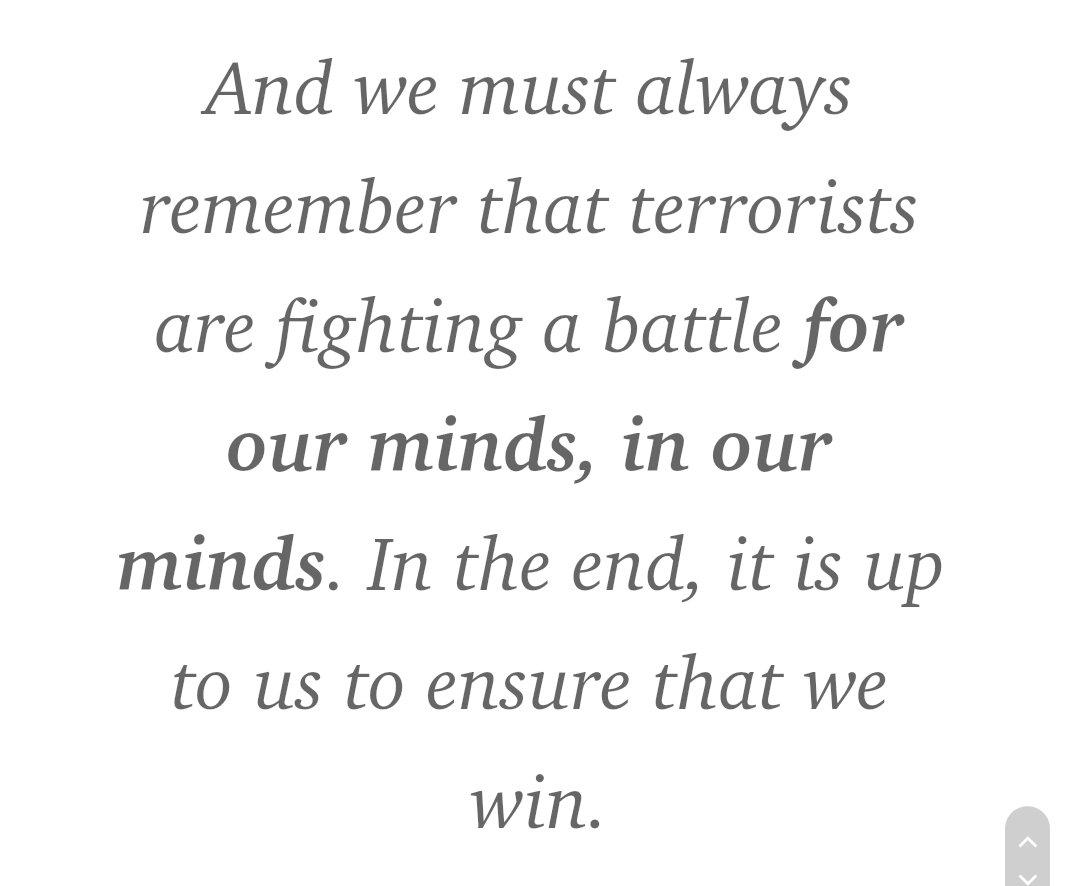
A Telegram channel (amadnews) started to instruct their subscribers to use Molotov cocktails against police and got suspended due to our "no calls for violence" rule. Be careful \u2013 there are lines one shouldn't cross. Similar case from October \u2013 https://t.co/OWQFBLywjr
— Pavel Durov (@durov) December 30, 2017
https://t.co/i0MidqAR6i
Any chance you are going to change the flag of Great Britain as well? There are some good dystopian films to draw inspiration from. pic.twitter.com/qKp43zBiMi
— Pavel Durov (@durov) June 8, 2017

More from Robin Monotti
I have now re-examined this document:
It clearly does indicate both the risks of bacterial infection & to prescribe broad spectrum antibiotics as part of treatment:
"Collect blood cultures for bacteria that cause pneumonia and sepsis, ideally before antimicrobial therapy. DO NOT
delay antimicrobial therapy"
"6. Management of severe COVID-19: treatment of co-infections
Give empiric antimicrobials [broad spectrum antibiotics] to treat all likely pathogens causing SARI and sepsis as soon as possible, within 1 hour
of initial assessment for patients with sepsis."
"Empiric antibiotic treatment should be based on the clinical diagnosis (community-acquired
pneumonia, health care-associated pneumonia [if infection was acquired in health care setting] or sepsis), local epidemiology &
susceptibility data, and national treatment guidelines"
"When there is ongoing local circulation of seasonal influenza, empiric therapy with a neuraminidase inhibitor [anti-viral influenza drugs] should
be considered for the treatment for patients with influenza or at risk for severe disease."
On the 19th March 2020 the WHO released this guidance intended for healthcare workers (HCWs), healthcare managers and IPC teams at the facility level & at national and district/provincial level:https://t.co/C4aV2BnMPj pic.twitter.com/tCk1EyLskV
— Robin Monotti (@robinmonotti) December 21, 2020
It clearly does indicate both the risks of bacterial infection & to prescribe broad spectrum antibiotics as part of treatment:
"Collect blood cultures for bacteria that cause pneumonia and sepsis, ideally before antimicrobial therapy. DO NOT
delay antimicrobial therapy"
"6. Management of severe COVID-19: treatment of co-infections
Give empiric antimicrobials [broad spectrum antibiotics] to treat all likely pathogens causing SARI and sepsis as soon as possible, within 1 hour
of initial assessment for patients with sepsis."
"Empiric antibiotic treatment should be based on the clinical diagnosis (community-acquired
pneumonia, health care-associated pneumonia [if infection was acquired in health care setting] or sepsis), local epidemiology &
susceptibility data, and national treatment guidelines"
"When there is ongoing local circulation of seasonal influenza, empiric therapy with a neuraminidase inhibitor [anti-viral influenza drugs] should
be considered for the treatment for patients with influenza or at risk for severe disease."
The problem with meta-analysis like this is that it obfuscates the most important issue of treatment, which is timing.
This meta-analysis of controlled trials only looks at hospitalized patients. How long were the patients ill for before being hospitalized? One week? Two? Three? Too late for zinc ionophores (HCQ) (+ZINC? No zinc no point..) to work. Severe illness becomes bacterial in nature.
Was azythromycin administered when the bacterial infections were also too advanced? I have seen Azythromycin work with my very own eyes but that's not to say that if administered too late it may not save the patient. How many patients were given AZT & ventilated? It's all timing.
All the meta-analysis is telling us is if you leave it too late you may have missed the early window for antiviral zinc treatment (Zn+HCQ) & that if you are given AZT when you are ventilated or very severe it may too late for it to save you & corticosteroids may be last resort.
And of course antibiotics need also probiotics, or they may harm the bacterial flora which is part of the immune response. Difficult to tell from a meta-analysis how this problem was managed.
#BMJResearch update: Corticosteroids probably reduce mortality and mechanical ventilation in patients with covid-19 compared with standard care, whereas azithromycin, hydroxychloroquine, interferon-beta, and tocilizumab may not reduce either https://t.co/oQ3lTWUqaz
— The BMJ (@bmj_latest) December 18, 2020
This meta-analysis of controlled trials only looks at hospitalized patients. How long were the patients ill for before being hospitalized? One week? Two? Three? Too late for zinc ionophores (HCQ) (+ZINC? No zinc no point..) to work. Severe illness becomes bacterial in nature.
Was azythromycin administered when the bacterial infections were also too advanced? I have seen Azythromycin work with my very own eyes but that's not to say that if administered too late it may not save the patient. How many patients were given AZT & ventilated? It's all timing.
All the meta-analysis is telling us is if you leave it too late you may have missed the early window for antiviral zinc treatment (Zn+HCQ) & that if you are given AZT when you are ventilated or very severe it may too late for it to save you & corticosteroids may be last resort.
And of course antibiotics need also probiotics, or they may harm the bacterial flora which is part of the immune response. Difficult to tell from a meta-analysis how this problem was managed.





More from Twitter

Today's threads (a Twitter thread).
Inside: Twitter's Project Blue Sky; Brazil's world-beating data breach; Evictions and utility cutoffs are covid comorbidities; "North Korea" targets infosec researchers; and more!
Archived at: https://t.co/eCzogk14kg
#Pluralistic
1/

Join me this Thursday for the launch of the print edition of my 2020 book HOW TO DESTROY SURVEILLANCE CAPITALISM!
https://t.co/8Op6IEocPB
2/

Twitter's Project Blue Sky: Fix the internet, not the platforms.
https://t.co/KoZNABMJrE
3/

Brazil's world-beating data breach: More than 100% of the population doxed.
https://t.co/6tcbcX2gQ6
4/

Evictions and utility cutoffs are covid comorbidities: 143,000 covid deaths due to economic precarity.
https://t.co/pZM80W5DuR
5/

Inside: Twitter's Project Blue Sky; Brazil's world-beating data breach; Evictions and utility cutoffs are covid comorbidities; "North Korea" targets infosec researchers; and more!
Archived at: https://t.co/eCzogk14kg
#Pluralistic
1/
Join me this Thursday for the launch of the print edition of my 2020 book HOW TO DESTROY SURVEILLANCE CAPITALISM!
https://t.co/8Op6IEocPB
2/
Twitter's Project Blue Sky: Fix the internet, not the platforms.
https://t.co/KoZNABMJrE
3/
It's been more than a year since @jack announced Project Blue Sky, inspired by @mmasnick's "Protocols, Not Platforms," paper - a critical work explaining how walled gardens can be transformed into open protocols.https://t.co/1yDSNJehRP
— Cory Doctorow #BLM (@doctorow) January 26, 2021
1/ pic.twitter.com/xwDIErMFLJ
Brazil's world-beating data breach: More than 100% of the population doxed.
https://t.co/6tcbcX2gQ6
4/
Brazil's public health agency has suffered what is arguably the worst data-exposure in world history, losing 243m+ records in a country of 211m people (the excess represents dead peoples' records).https://t.co/VsQUtIEnC7
— Cory Doctorow #BLM (@doctorow) January 26, 2021
1/ pic.twitter.com/DV6k2NfvHW
Evictions and utility cutoffs are covid comorbidities: 143,000 covid deaths due to economic precarity.
https://t.co/pZM80W5DuR
5/
"Public health" isn't just about vaccinations, clinics and urgent care: it's a holistic discipline that encompasses all the contributors to health outcomes, which include things like housing, employment, transportation, pollution and more.
— Cory Doctorow #BLM (@doctorow) January 26, 2021
1/ pic.twitter.com/UQRgLVoczQ





You May Also Like

"I lied about my basic beliefs in order to keep a prestigious job. Now that it will be zero-cost to me, I have a few things to say."
We know that elite institutions like the one Flier was in (partial) charge of rely on irrelevant status markers like private school education, whiteness, legacy, and ability to charm an old white guy at an interview.
Harvard's discriminatory policies are becoming increasingly well known, across the political spectrum (see, e.g., the recent lawsuit on discrimination against East Asian applications.)
It's refreshing to hear a senior administrator admits to personally opposing policies that attempt to remedy these basic flaws. These are flaws that harm his institution's ability to do cutting-edge research and to serve the public.
Harvard is being eclipsed by institutions that have different ideas about how to run a 21st Century institution. Stanford, for one; the UC system; the "public Ivys".
As a dean of a major academic institution, I could not have said this. But I will now. Requiring such statements in applications for appointments and promotions is an affront to academic freedom, and diminishes the true value of diversity, equity of inclusion by trivializing it. https://t.co/NfcI5VLODi
— Jeffrey Flier (@jflier) November 10, 2018
We know that elite institutions like the one Flier was in (partial) charge of rely on irrelevant status markers like private school education, whiteness, legacy, and ability to charm an old white guy at an interview.
Harvard's discriminatory policies are becoming increasingly well known, across the political spectrum (see, e.g., the recent lawsuit on discrimination against East Asian applications.)
It's refreshing to hear a senior administrator admits to personally opposing policies that attempt to remedy these basic flaws. These are flaws that harm his institution's ability to do cutting-edge research and to serve the public.
Harvard is being eclipsed by institutions that have different ideas about how to run a 21st Century institution. Stanford, for one; the UC system; the "public Ivys".