We found 6 startups that are growing way faster than everyone else.

We figured out their unconventional growth tactics.

This thread walks you through how to repeat them for yourself.

1/6 Experiment with timing.

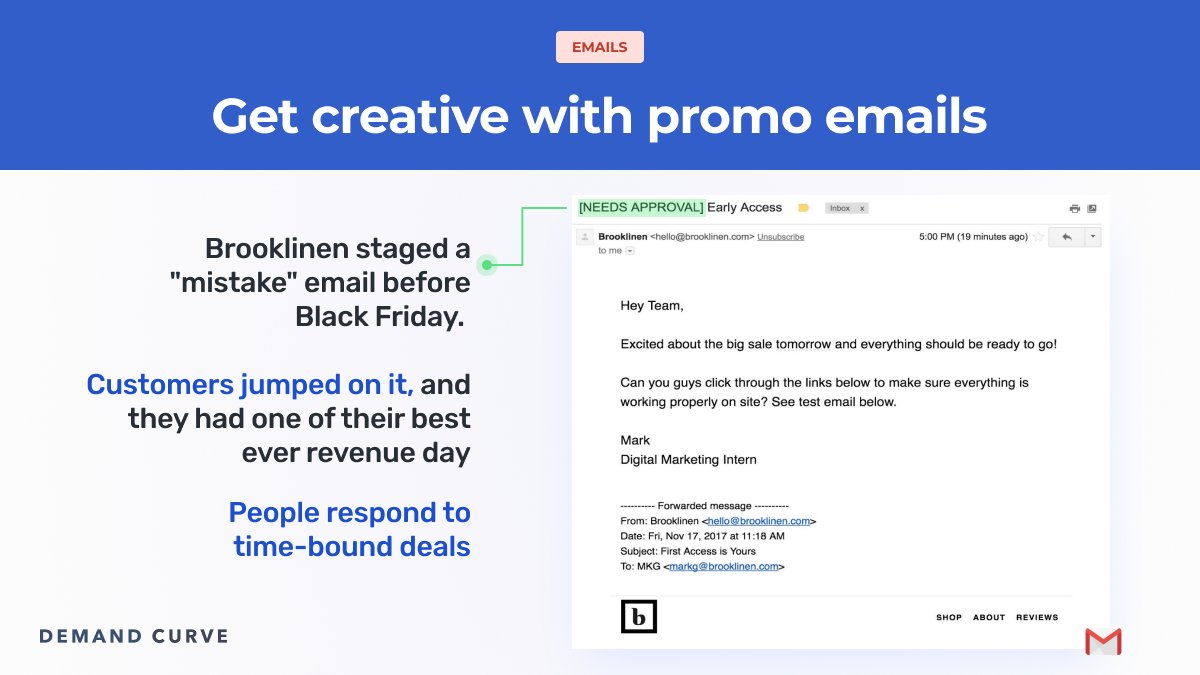
Here's a clever example:

@brooklinen "leaked" a time-bounded discount and had one of their *best* revenue days of the year.

Great startups experiment not only with copy/creative, but also framing.
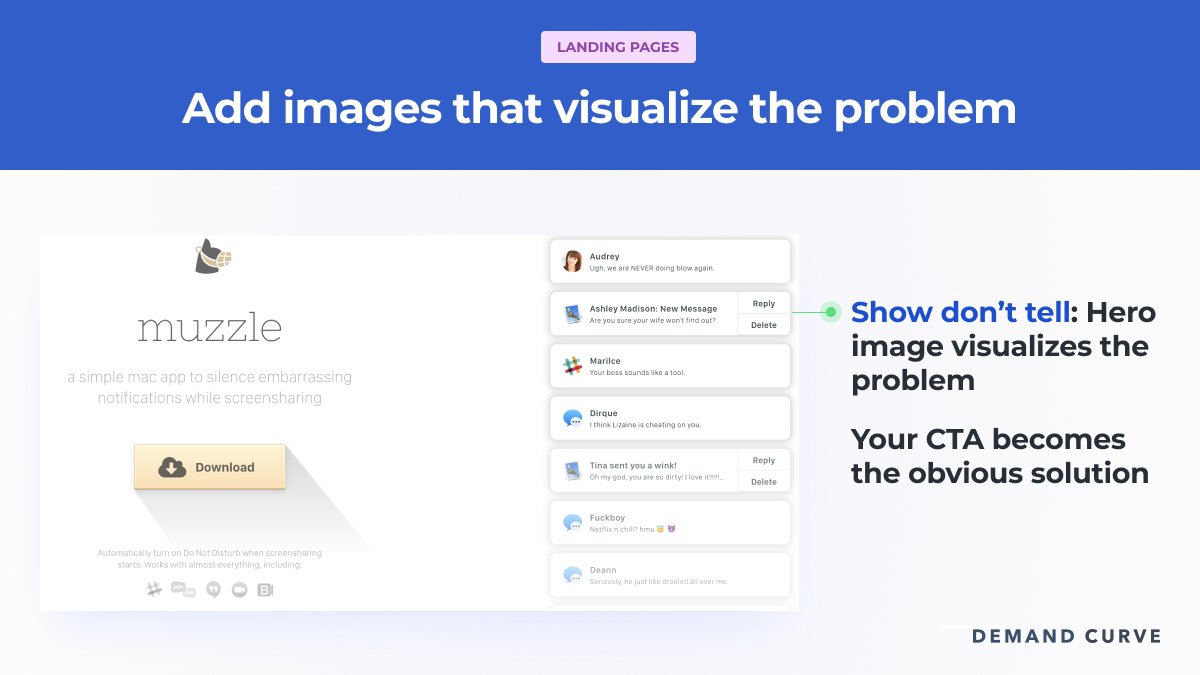
2/6 Get people to FEEL the problem your startup solves.

Here’s how Muzzle (notification hiding tool) uses their site to visualize the problem:

• Shows cringey notifications
• Makes them super vulgar
• Points out how Muzzle puts an end to this during Zoom calls
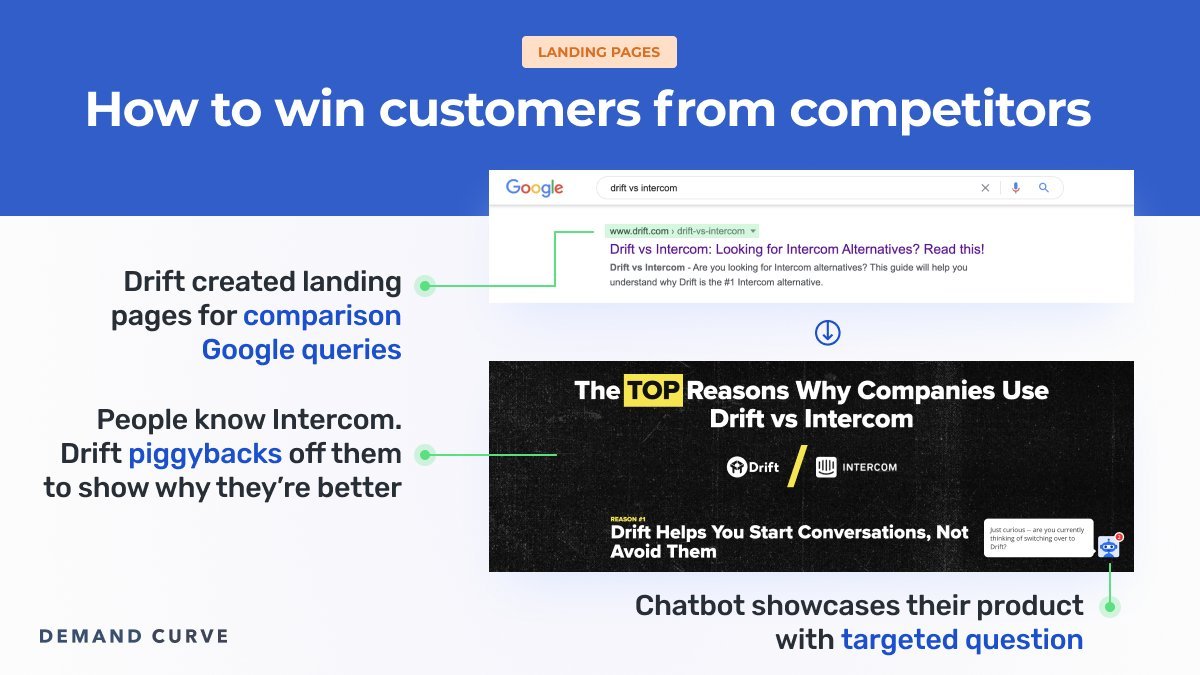
3/6 Poach potential customers from competitors:

• Create landing pages that compare you against them
• Address customers' biggest objections
• Show your product in action

Then, when people search for you versus your competitors, you'll show up on the Google results page.
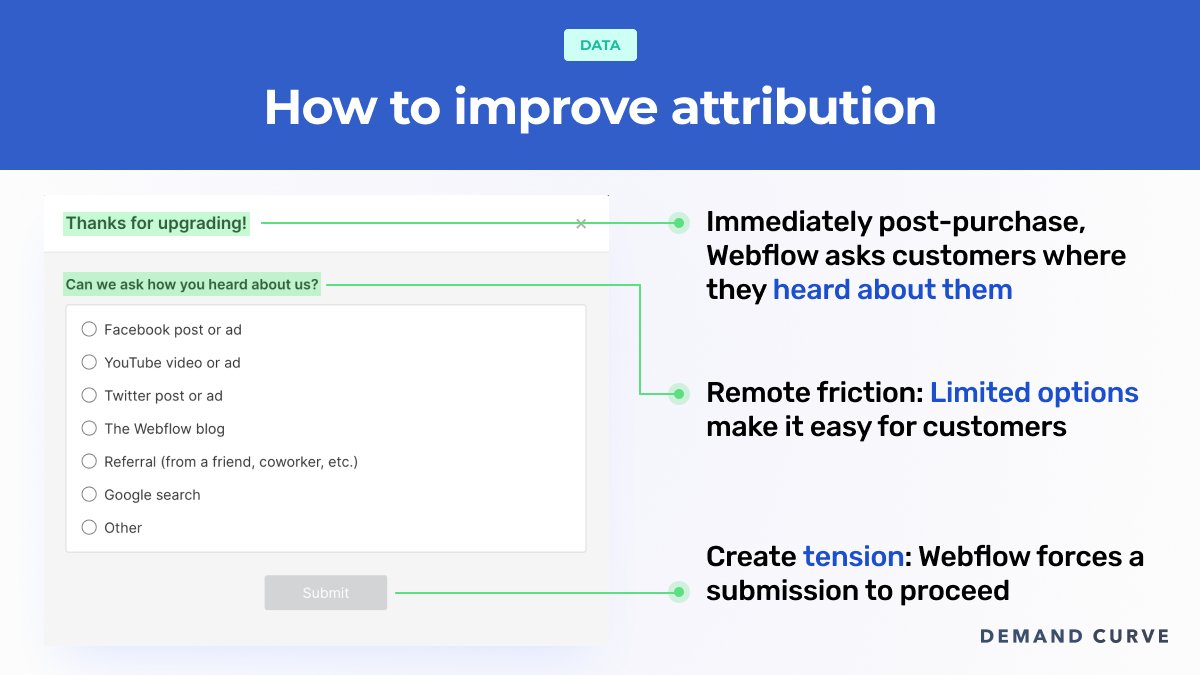
4/6 Improve your attribution.

It's often unclear what drives a purchase.

So try this:

• Add a post-purchase survey asking customers how they found you
• Remove friction—limit choices. Make it super easy to quickly select the right one

Attribution helps you double down.
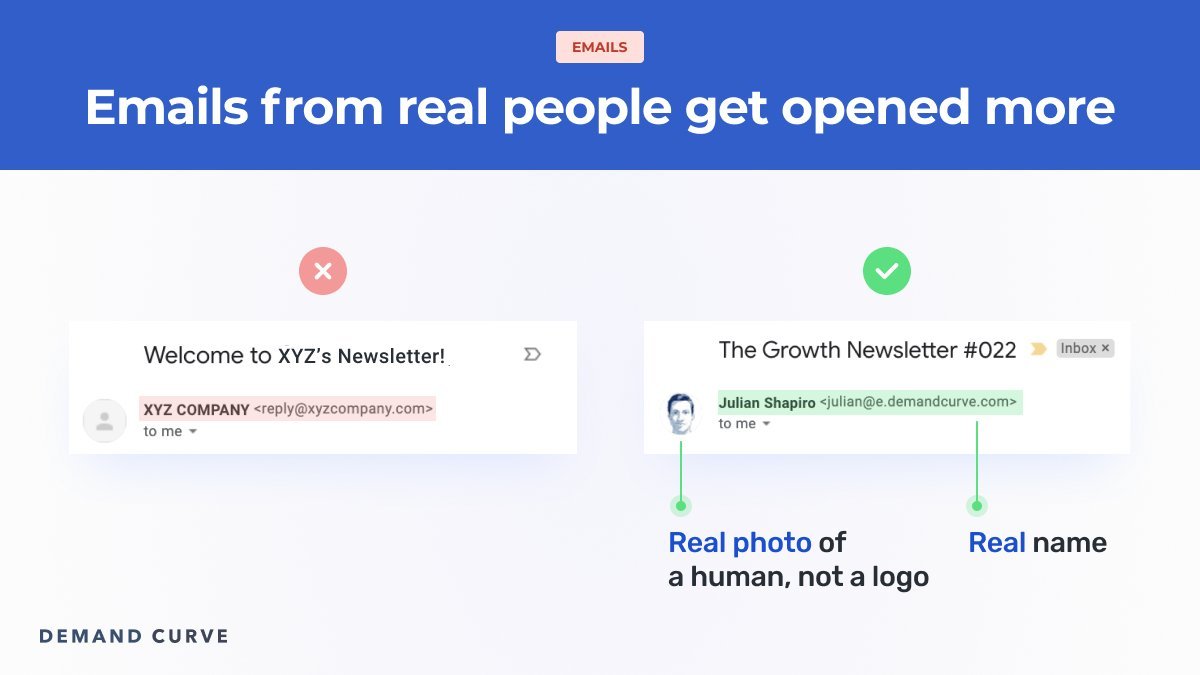
5/6 Get more people to open and read your emails.

How? Don’t hide behind a company name:

• Set yourself as the sender name.
• Make your email icon your headshot.

Most importantly: Write using your real, friendly voice.
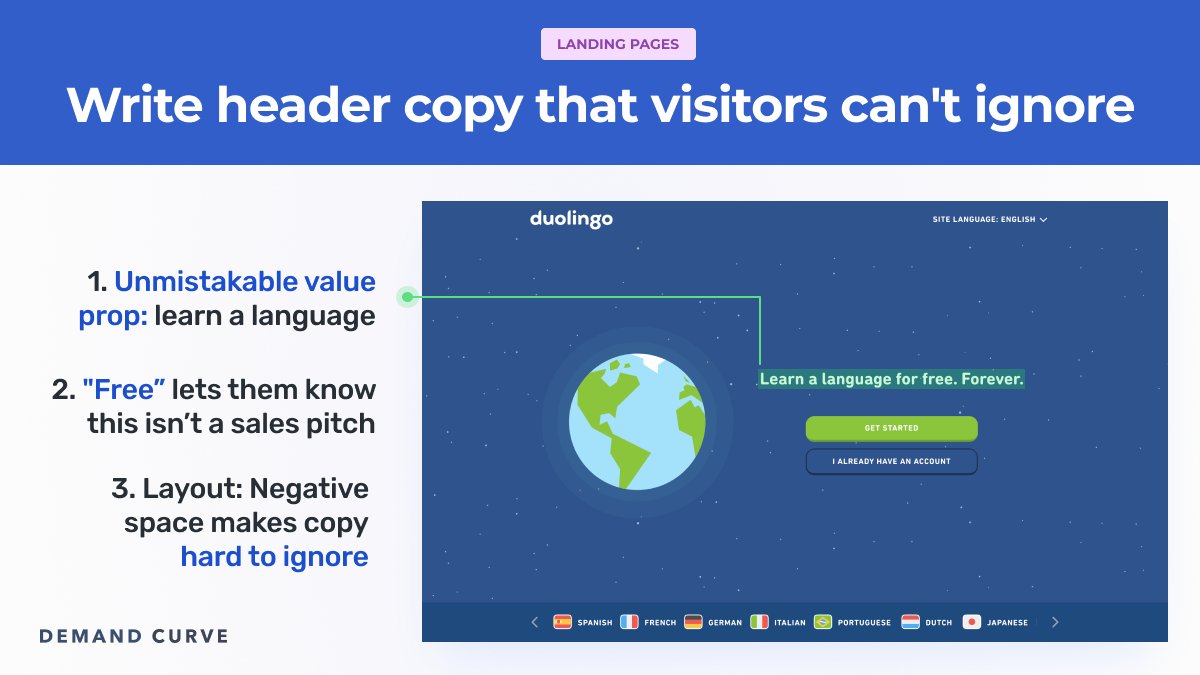
6/6 Create better landing pages:

• Handle the most obvious objection upfront
• Use negative space to direct people’s eyes to your header

Key: Don't give people too much to read. Be clear then get out of their way.

More from Growth Tactics

More from Startups

From day 1, I intended to build @shoutoutso_ in public, and part of it is to be transparent with numbers, talk openly about our highs and lows, and share lessons as we grow!

I have been doing individual posts on numbers every week so wanted to one big thread with all updates 👇🏽

Week


Week


Week


Week
There are some amazing founders and indie hackers that have made 🤯-worthy progress this last year.

The stuff you can do in a year is seriously astounding 👇

👉 @TransistorFM reaching $22k MRR in one year:
https://t.co/BuKmXEeEtH

I was one of their first customers and the progress @mijustin and @jonbuda have made working mostly part-time has been crazy.

Now both are full-time. Follow them on @buildyoursaas

👉 @talk2oneup reaching $10k MRR in one year: https://t.co/SOoGkKA19r

@daviswbaer joined as a co-founder and through many different marketing tactics, pricing changes, and product updates, they've managed to carve out a niche market in a really competitive industry.

👉 @hostifi_net $9k MRR in one year: https://t.co/TknroGZWoK

After getting fired from his full-time job, @_rchase_ embarked on a year focused on building products to replace his salary in a year.

The dude seriously SHIPS and even took investment from @earnestcapital


👉 @ClosetTools $11k MRR WHILE WORKING FULL-TIME AND WITH A FAMILY: https://t.co/pKQ7pFvpZY

With a strong product, continuous improvement, and SEO, @unindie has really been inspirational.

There are no excuses.

You May Also Like

Recently, the @CNIL issued a decision regarding the GDPR compliance of an unknown French adtech company named "Vectaury". It may seem like small fry, but the decision has potential wide-ranging impacts for Google, the IAB framework, and today's adtech. It's thread time! 👇

It's all in French, but if you're up for it you can read:
• Their blog post (lacks the most interesting details):
https://t.co/PHkDcOT1hy
• Their high-level legal decision: https://t.co/hwpiEvjodt
• The full notification: https://t.co/QQB7rfynha

I've read it so you needn't!

Vectaury was collecting geolocation data in order to create profiles (eg. people who often go to this or that type of shop) so as to power ad targeting. They operate through embedded SDKs and ad bidding, making them invisible to users.

The @CNIL notes that profiling based off of geolocation presents particular risks since it reveals people's movements and habits. As risky, the processing requires consent — this will be the heart of their assessment.

Interesting point: they justify the decision in part because of how many people COULD be targeted in this way (rather than how many have — though they note that too). Because it's on a phone, and many have phones, it is considered large-scale processing no matter what.