Female athletes are still subjected to the equivalent of a sex test, based on whether they appear feminine.

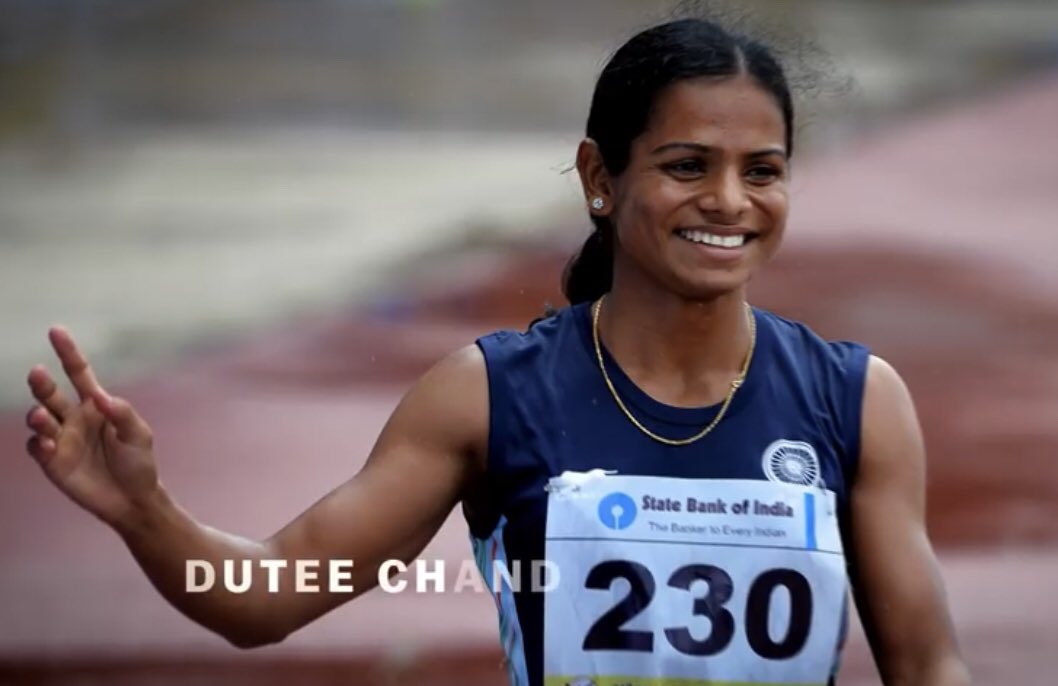
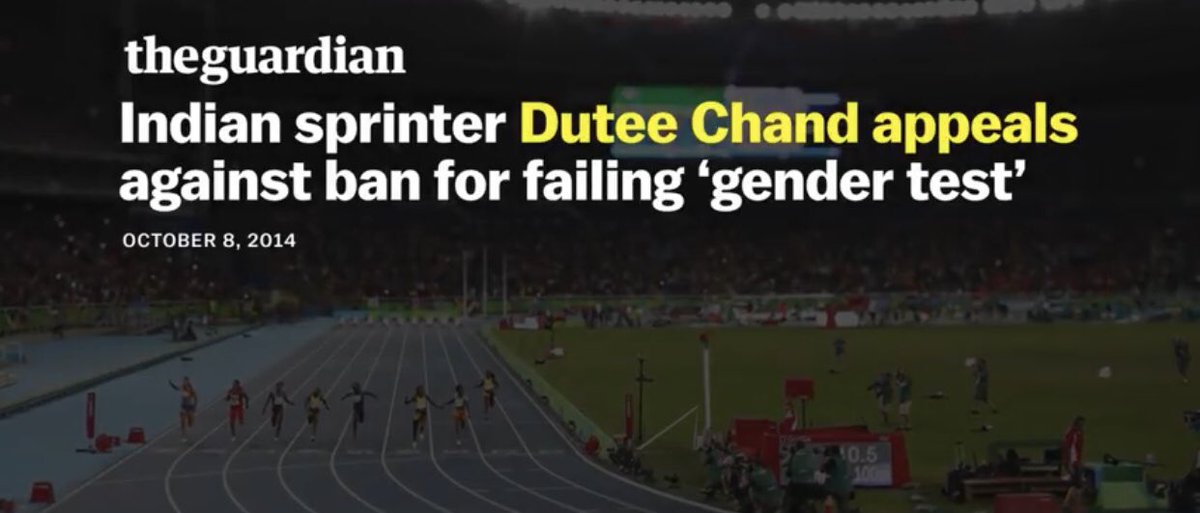
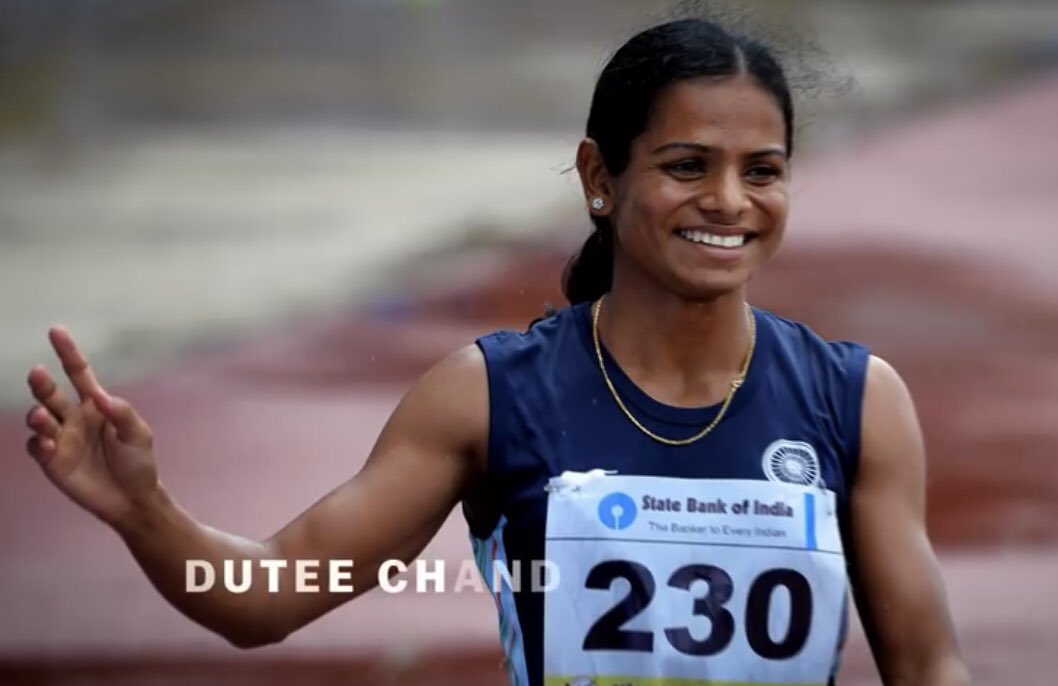
Dutee Chand in her successful appeal against the validity of the IAAF’s hyperandrogegism regulations, the Athletics Federation of India (AFI) originally began investigating her after complaints that she “ran like a boy”.
Chand was banned in 2014 after the AFI decided that her androgen (testosterone) levels were above the 10 nmol/L permitted by the IAAF’s hyperandrogegism regulations, resulting in her missing the Glasgow 2014 Commonwealth Games.
Androgens, including testosterone, are naturally produced in significant – but varying – levels by both men and women.
Endocrine profiles in 693 elite athletes in the post-competition setting’, found that 16.5% of the ‘male’ athletes had low testosterone levels, and 13.7% of the ‘females’ had high testosterone levels, ‘with complete overlap between the sexes’.
https://t.co/V9Ggi6cJVH
The CAS suspended the regulations in 2015, ruling that the IAAF ‘has not provided sufficient scientific evidence about the qualitative relationship between enhanced testosterone levels and improved athletic performance in hyperandrogenic athletes
[…] The IAAF has not established, on the balance of probabilities, that the Hyperandrogenism Regulations apply only to exclude female athlete that are shown to have a competitive advantage of the same order as that of a male athlete.’
The CAS has gave the IAAF until 27 July 2017 to provide scientific evidence to support its Hyperandrogenism Regulations, however no evidence has been presented to date in 2020.
Whilst the IAAF Regulations seek to impose an upper limit on female athletes, perhaps tellingly, no upper limit has been set for male athletes.
Dr. María José Martínez-Patiño successfully challenged her exclusion from the Spanish Olympic team in 1985 on the grounds that she had androgen insensivity syndrome, a condition in which her body does not respond to testosterone, either natural or synthetic.
Dr. Martínez-Patiño pointed out that any women suffering from polycystic ovary syndrome will have elevated testosterone levels, but that does not make them an elite athlete.
If, as testosterone is such an important arbiter of performance as the IAAF argues, then how did Dr. Martínez-Patiño manage to compete to such a high level?
The scientific evidence suggests that testosterone levels vary amongst individuals and medical issues occur when an individual loses the ability to produce the testosterone their physiology requires.
There also is NO scientific evidence that natural (endogenous) testosterone levels are any kind of arbiter of sporting performance.
@threadreaderapp please unroll

More from Kirsti Miller

Would having the testosterone limit for transgender women at 10nmol/L (5-10 times what’s considered “typical” for women) give them a massive advantage over their cisgender opponents?


Absolutely not, is recognized an XY chromosome body is seen as unhealthy <12nmol/L or less. A XY female as they lose the ability to produce natural occurring testosterone, falls into a range of 0.4nmol/L.

Which we know too, the individual falls into menopause at 9.6nmol/L, and due to complete androgen deprivation eventually into the position of that would equate a XX female = who had had a complete hysterectomy including her gonads.

We can be assured, one this is extremely unhealthy – Moreover, and most important, we can be assured that there are no women either XX and or XY competing internationally like this.

This is not for anyone a desired state and for the participation high performance sport eventually impossible to participate longterm.

More from Sport

You May Also Like

“We don’t negotiate salaries” is a negotiation tactic.

Always. No, your company is not an exception.

A tactic I don’t appreciate at all because of how unfairly it penalizes low-leverage, junior employees, and those loyal enough not to question it, but that’s negotiation for you after all. Weaponized information asymmetry.

Listen to Aditya


And by the way, you should never be worried that an offer would be withdrawn if you politely negotiate.

I have seen this happen *extremely* rarely, mostly to women, and anyway is a giant red flag. It suggests you probably didn’t want to work there.

You wish there was no negotiating so it would all be more fair? I feel you, but it’s not happening.

Instead, negotiate hard, use your privilege, and then go and share numbers with your underrepresented and underpaid colleagues. […]
The entire discussion around Facebook’s disclosures of what happened in 2016 is very frustrating. No exec stopped any investigations, but there were a lot of heated discussions about what to publish and when.


In the spring and summer of 2016, as reported by the Times, activity we traced to GRU was reported to the FBI. This was the standard model of interaction companies used for nation-state attacks against likely US targeted.

In the Spring of 2017, after a deep dive into the Fake News phenomena, the security team wanted to publish an update that covered what we had learned. At this point, we didn’t have any advertising content or the big IRA cluster, but we did know about the GRU model.

This report when through dozens of edits as different equities were represented. I did not have any meetings with Sheryl on the paper, but I can’t speak to whether she was in the loop with my higher-ups.

In the end, the difficult question of attribution was settled by us pointing to the DNI report instead of saying Russia or GRU directly. In my pre-briefs with members of Congress, I made it clear that we believed this action was GRU.