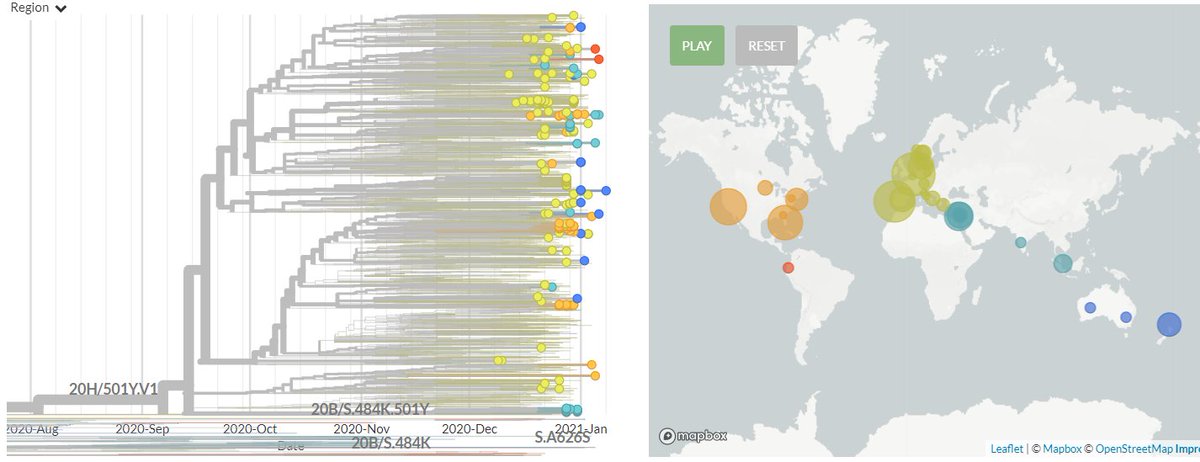
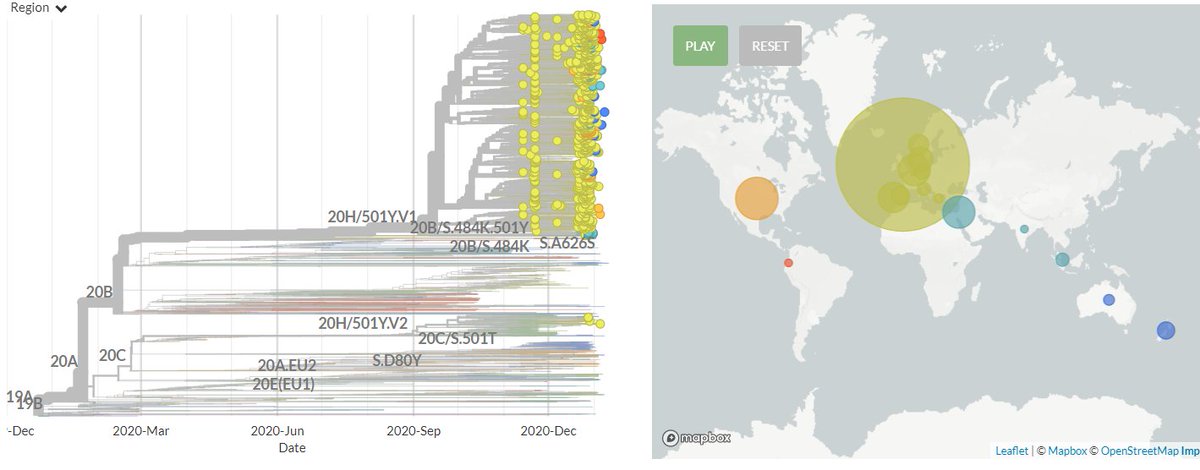
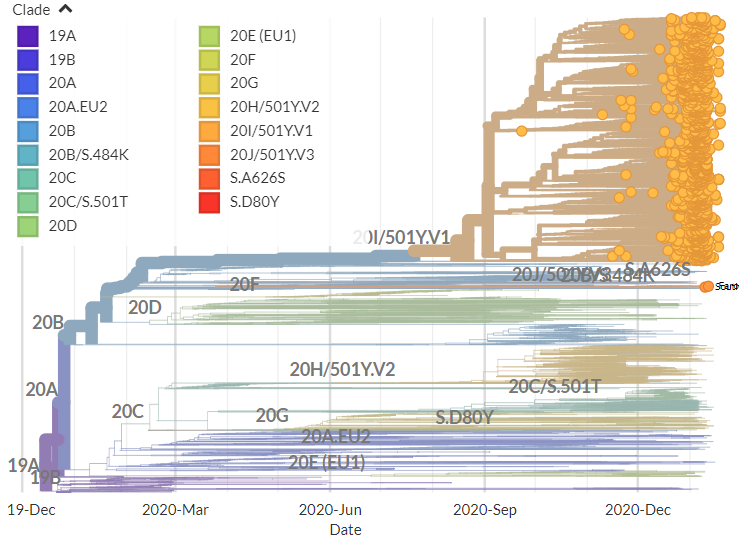
The focal S:N501 build is now updated with data from 13 Jan!

There are a total of 247 non-UK & non-South African sequences in 501Y.V1 (B.1.1.7 #b117) & 501Y.V2.

I'll do an additional thread later on, covering S:E484 & the 'Ohio variants'.

1/18

https://t.co/3bdttjKVl4

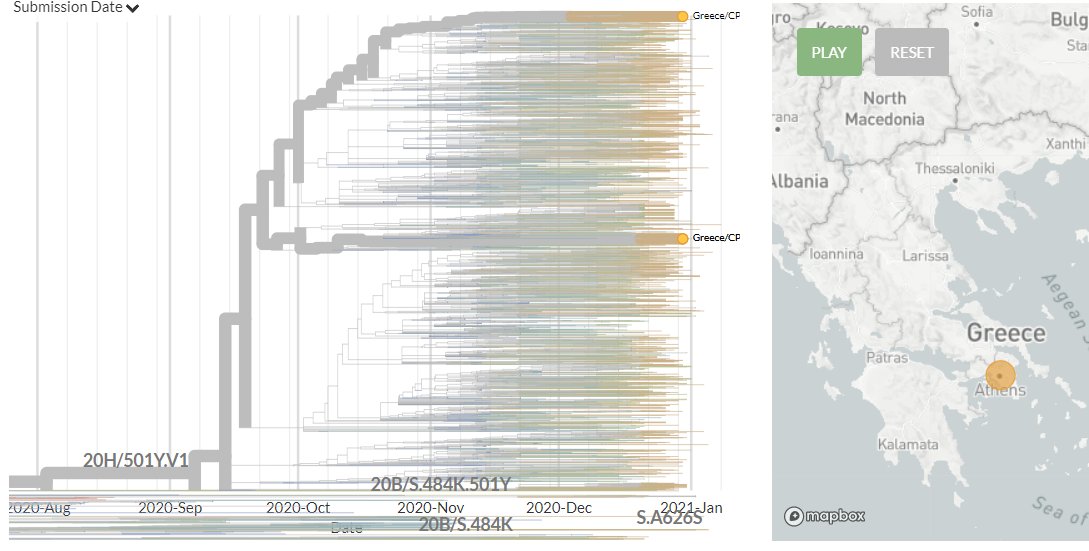
There are 244 new sequences in 501Y.V1 (B.1.1.7) from Australia, Belgium, Denmark, Germany, India, Israel, Italy, Netherlands, New Zealand, Norway, Portugal, Singapore, Spain & USA, as well sequences as from Ecuador and Greece for the first time.

2/18
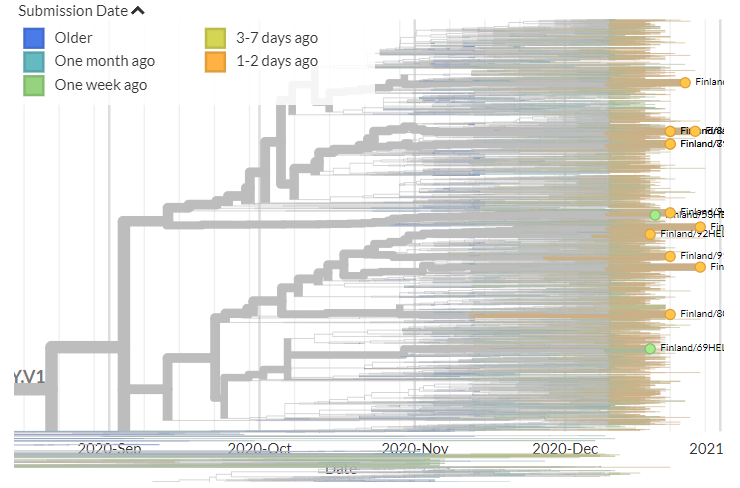
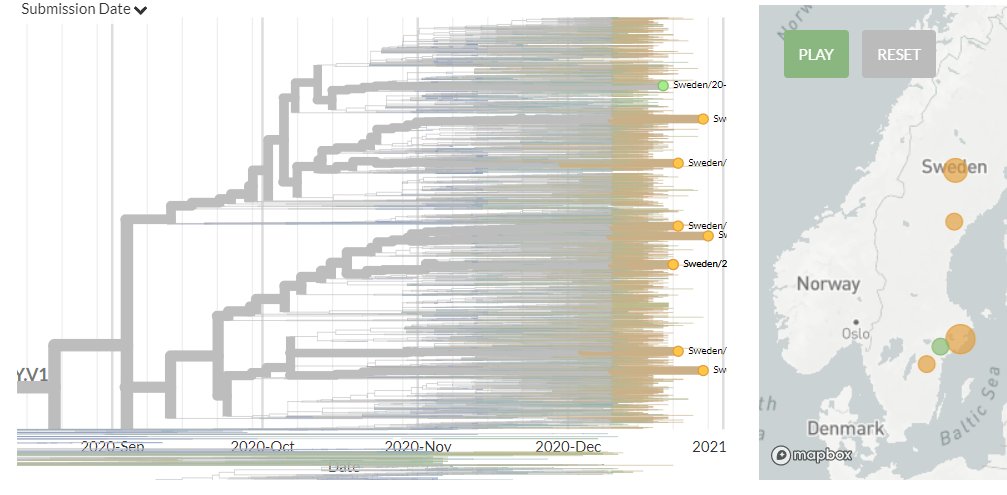
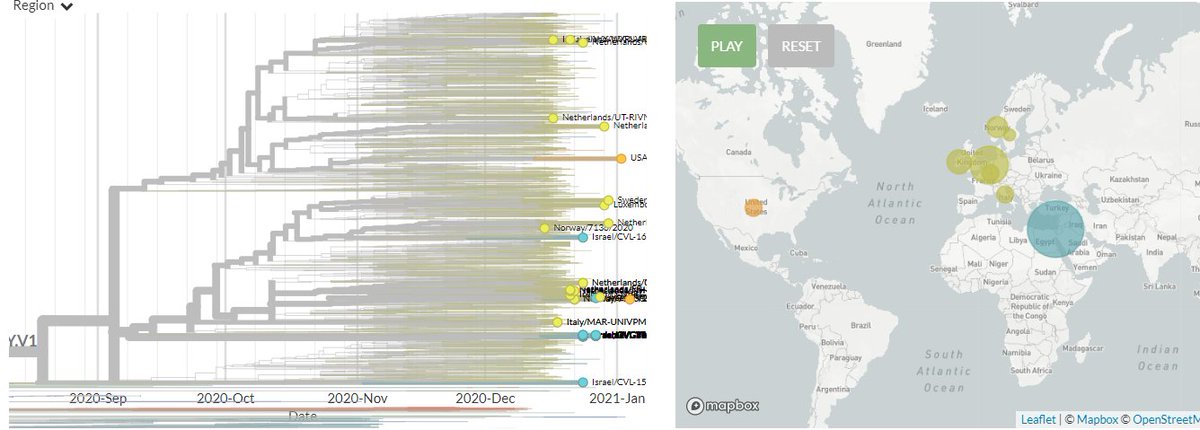
Greece has 3 new sequences in 501Y.V1 for the first time. They indicate 2 separate introductions.

Ecuador has 2 sequences for the first time. They also indicate 2 separate introductions.

3/18
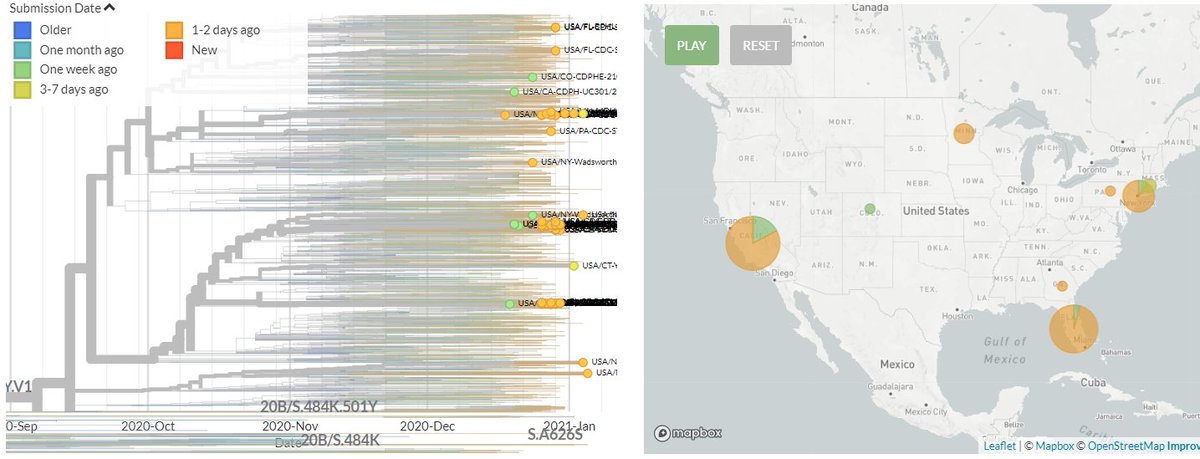
The USA has 61 new sequences (orange), from Florida, Minnesota, California, Pennsylvania, & New York.

A few of these represent separate introductions. Others form distinct clusters that may indicate ongoing local transmission.

4/18
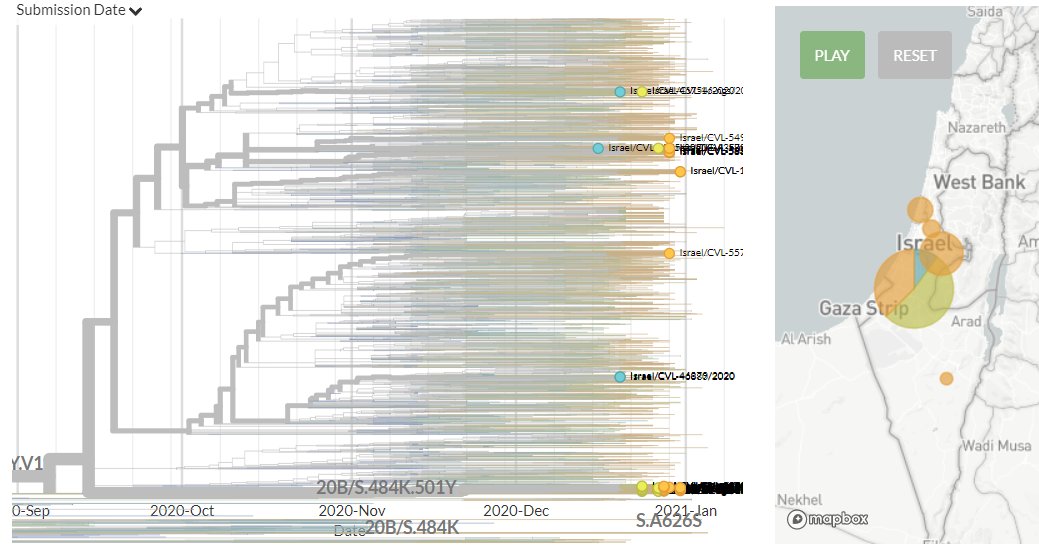
Israel has 35 new sequences (orange). Some of these show separate introductions, but many link with older sequences, indicating ongoing local transmission.

5/18
The Netherlands has 34 new sequences (orange). A few of these represent separate introductions, but most form a large cluster with older sequences from the Netherlands, indicating ongoing local transmission.

6/18
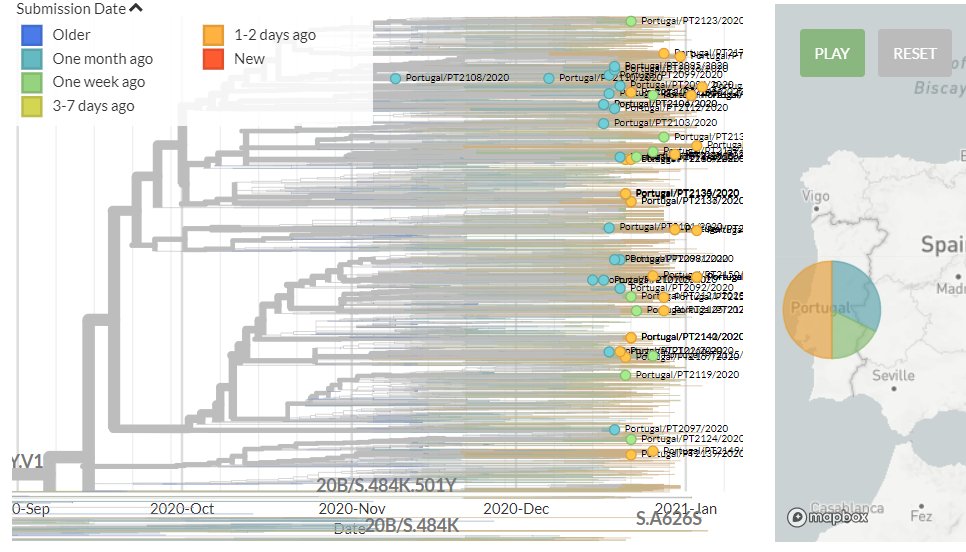
Portugal has 31 new sequences (orange). Though hard to see in the zoomed-out view, most of these represent separate introductions. There is one case where 2 new seqs are identical to an older one, but this could be a common exposure source.

7/18
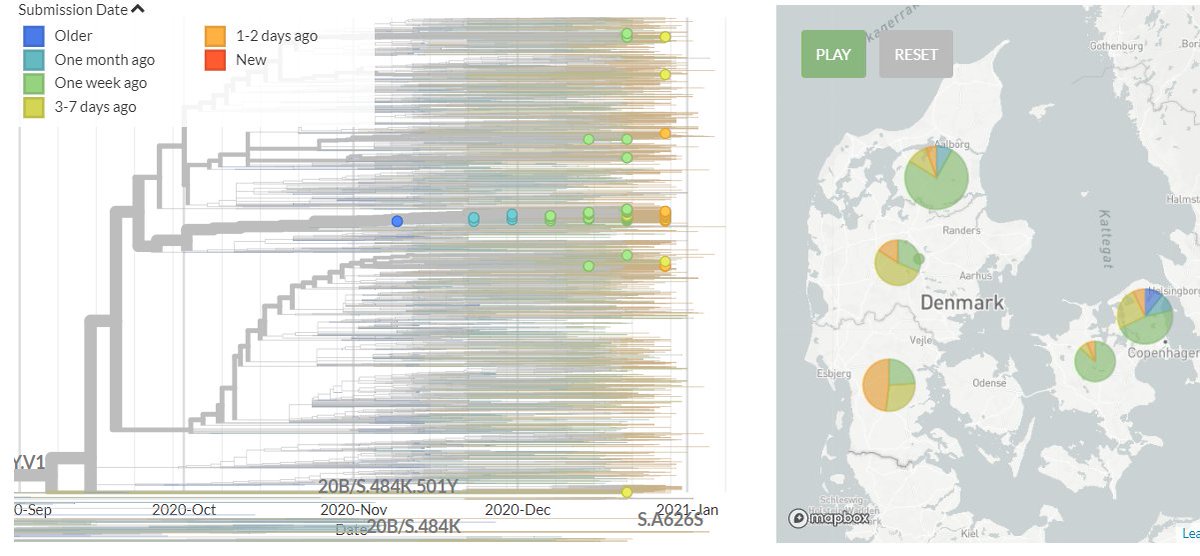
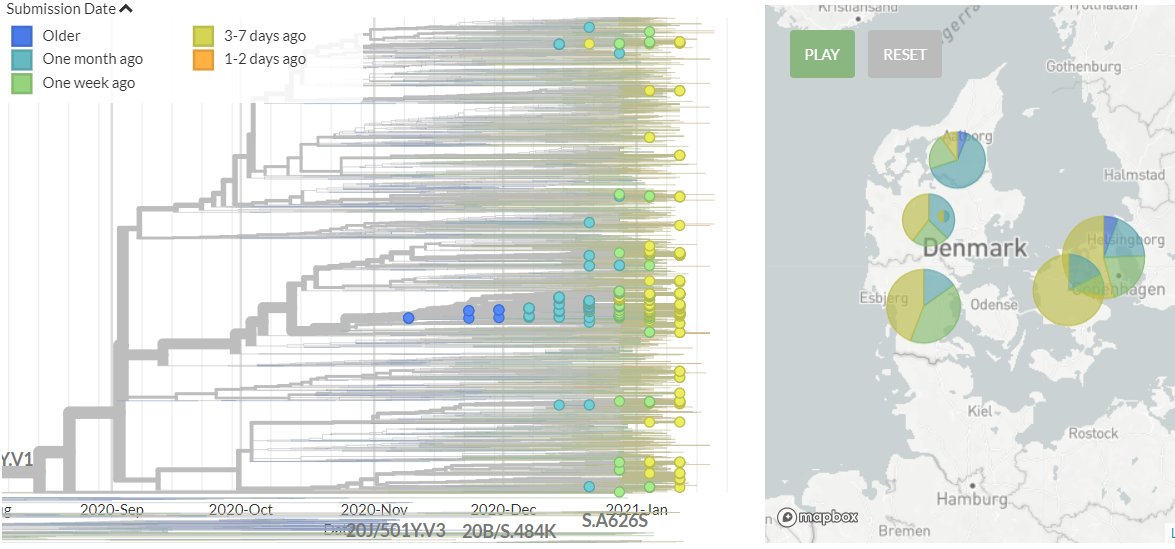
Denmark has 20 new sequences (orange). A few of these indicate separate introductions, but must cluster with older sequences in smaller groups or in the very large Danish group previously identified, indicating local transmission.

8/18
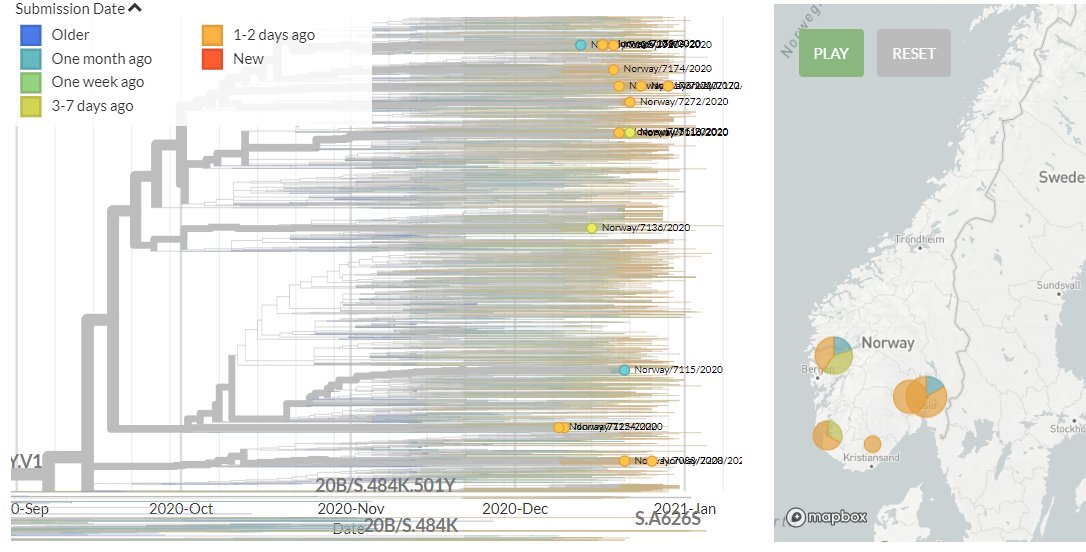
Norway has 14 new sequences (orange). Most indicate separate introductions, but a few are identical to or related to an older sequence, which may indicate local transmission.

9/18
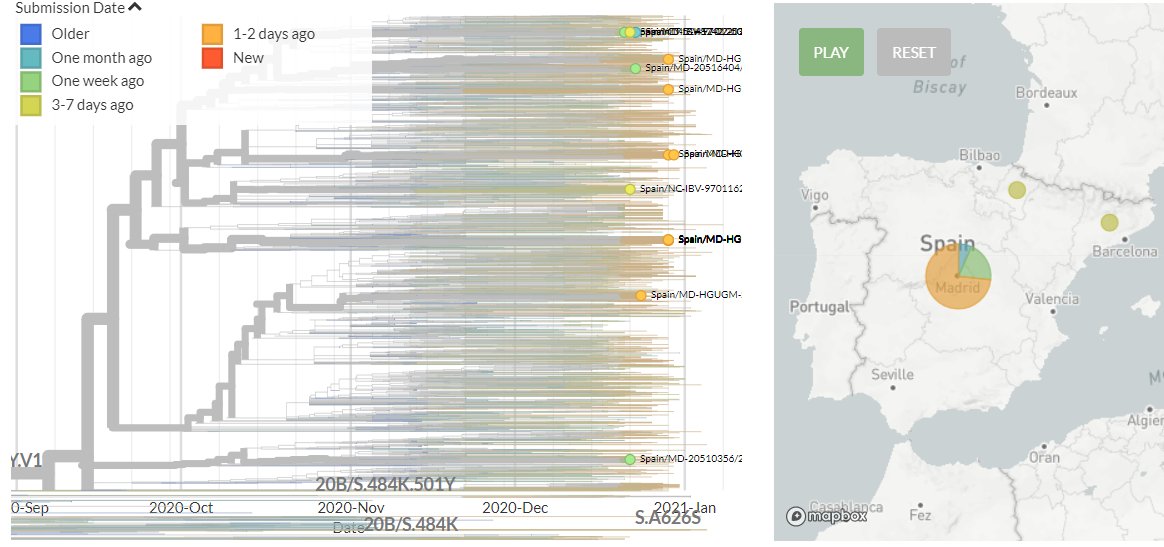
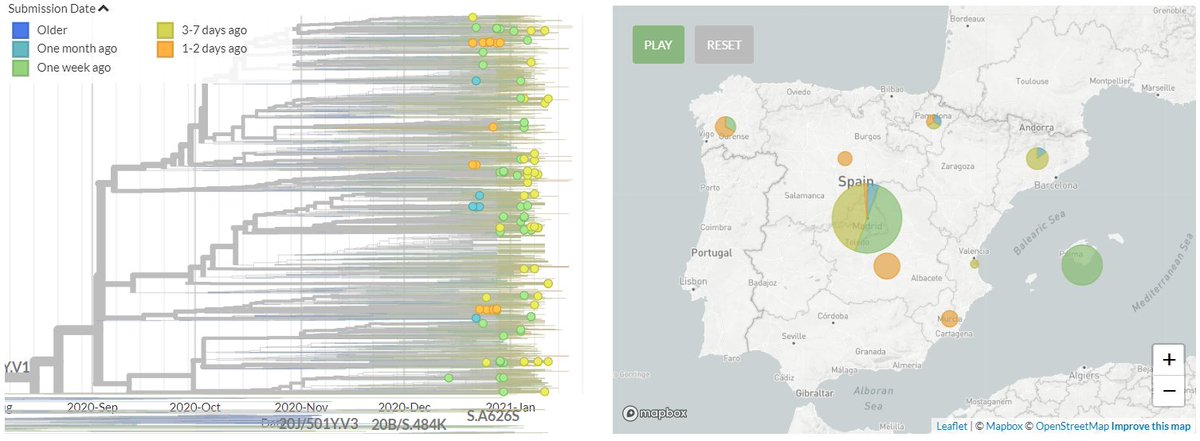
Spain has 11 new sequences (orange). All of these indicate separate introductions, though some new sequences link together to form tight clusters. This could indicate local transmission or a common source.

10/18
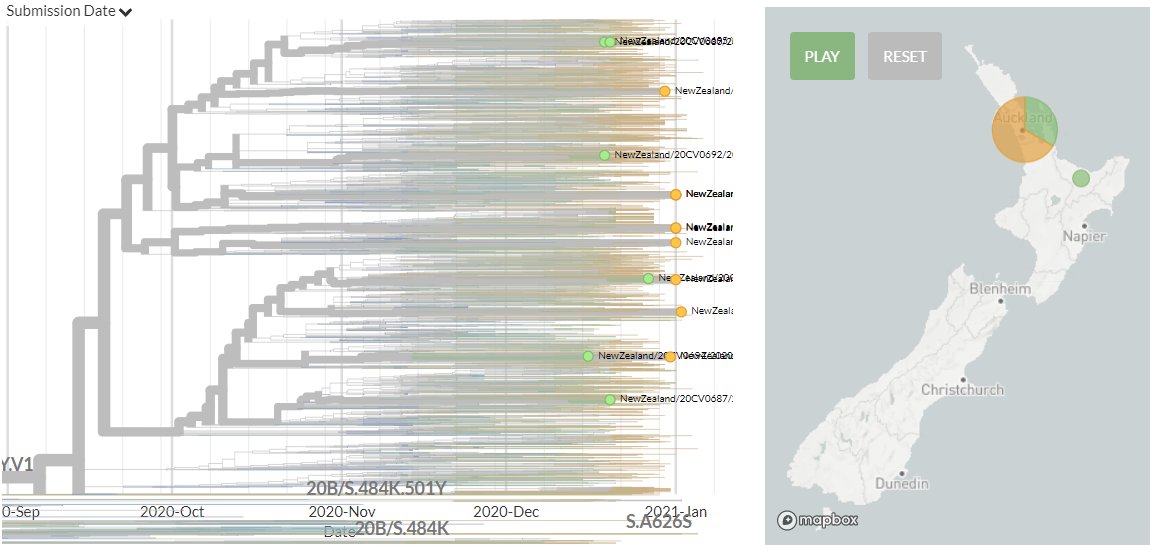
New Zealand has 10 new sequences (orange). All represent separate introductions, though some new sequences are linked together.

11/18
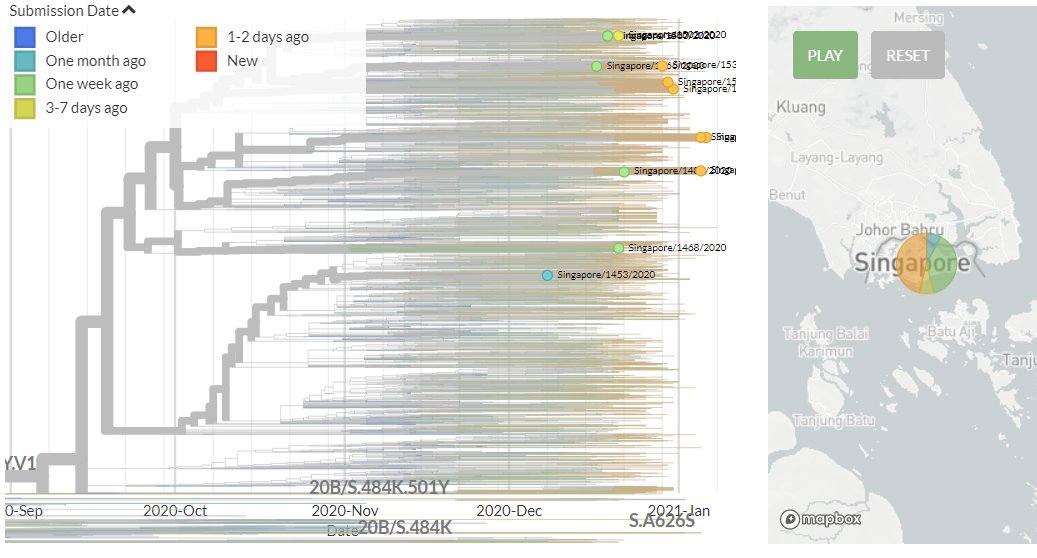
Singapore has 6 new sequences (orange). Though hard to see in zoomed-out view, most of these indicate separate introductions.

12/18
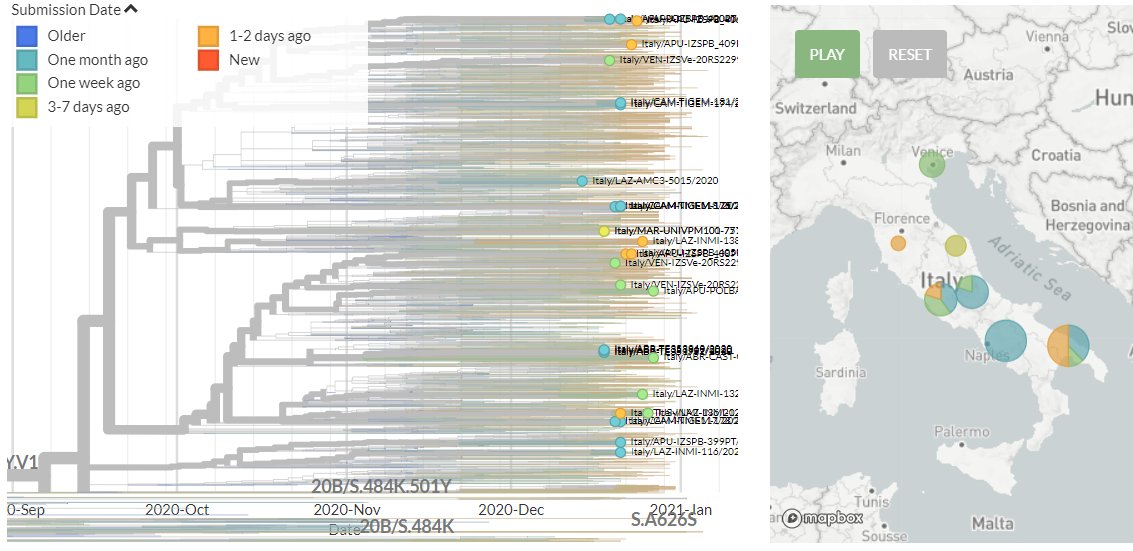
Italy has 6 new sequences (orange). It's a bit hard to see in the zoomed-out view, but none of these link directly with older samples, indicating separate introductions - though 2 new seqs link together.

13/18
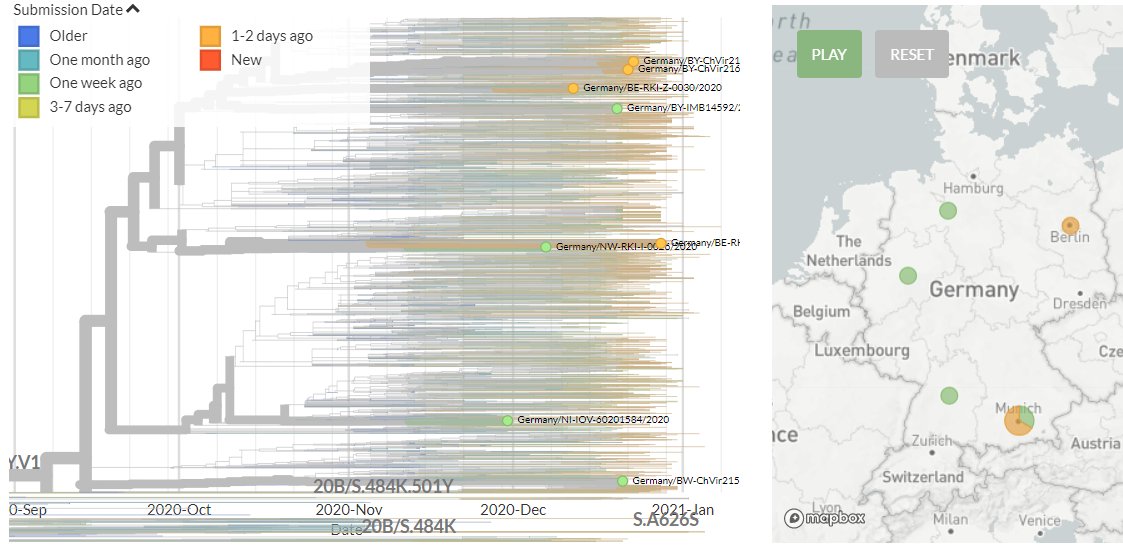
Germany has 4 new sequences (orange). Though hard to see in the zoomed-out view, these all represent separate introductions.

14/18
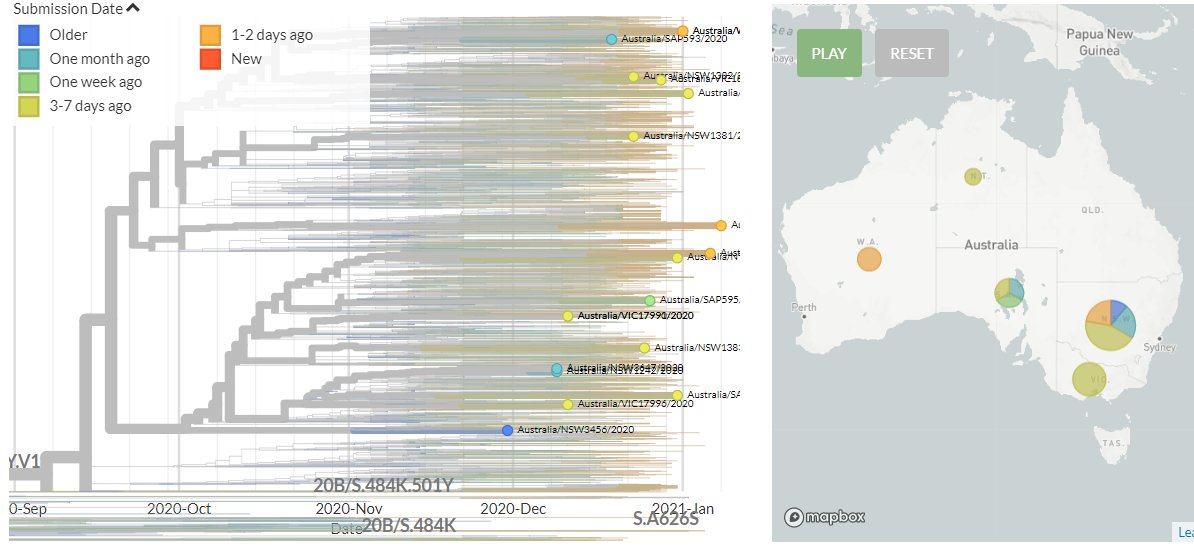
Australia also has 4 new sequences (orange), including the first from Western Australia. These indicate separate introductions, though 2 of the new sequences are identical (marked in red).

15/18
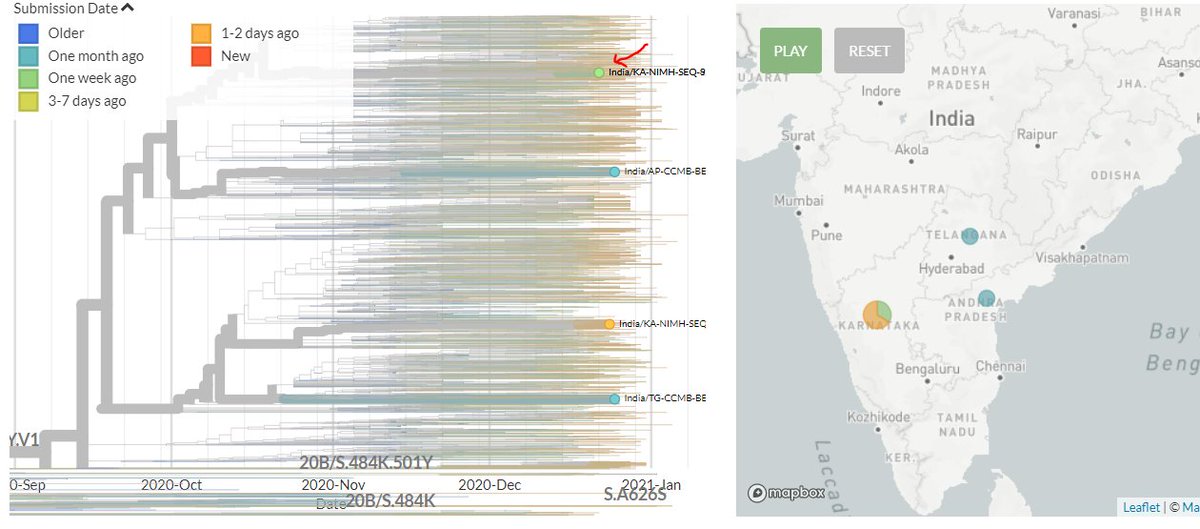
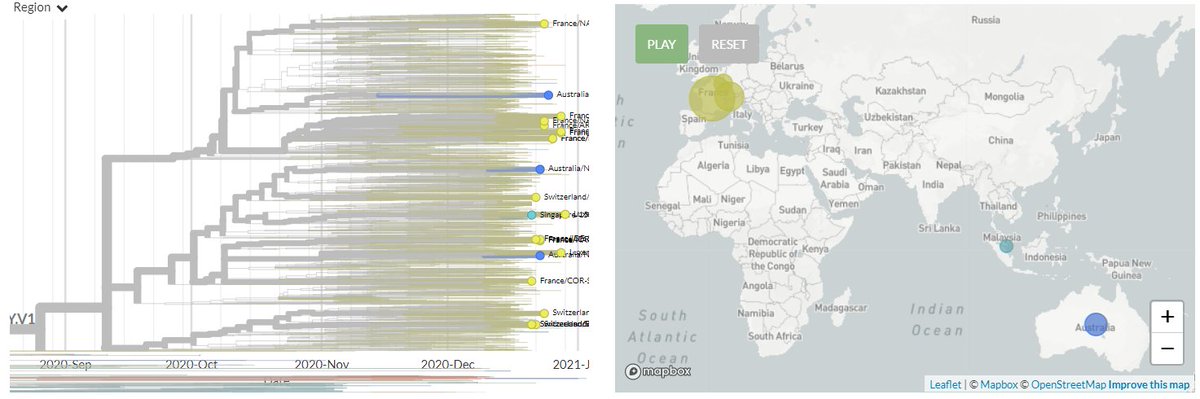
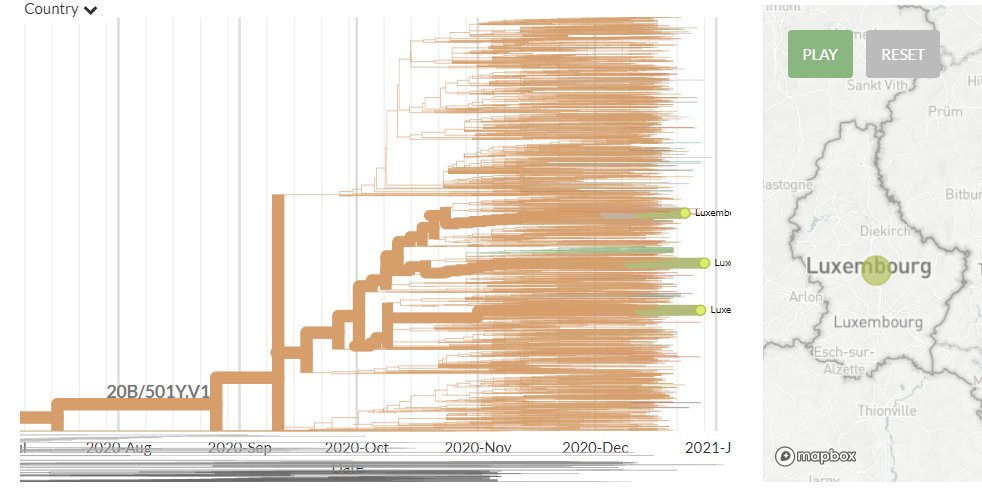
India has 2 new sequences (orange, one hidden behind the green - pic 1). One is a separate introduction, the other links with a previous sequence (pic 2).

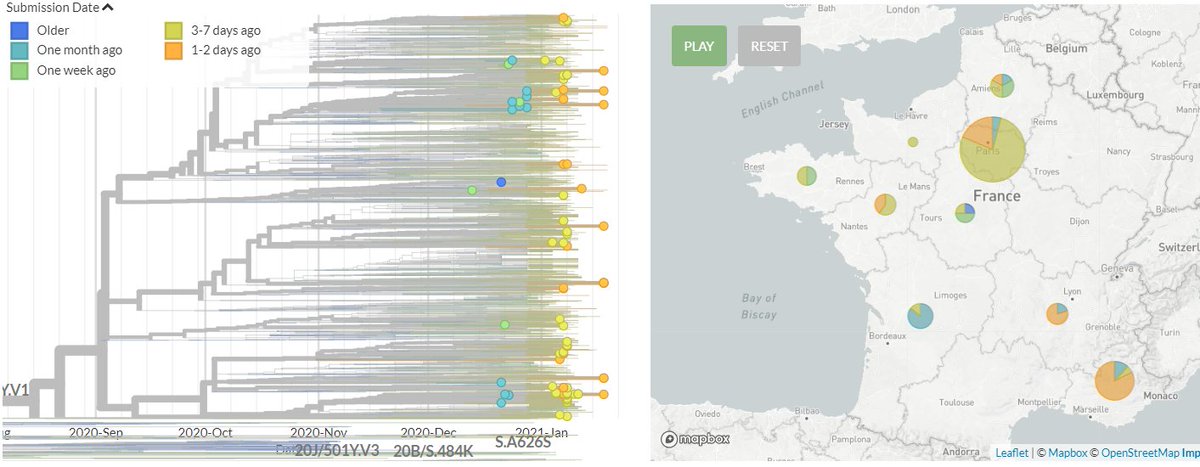
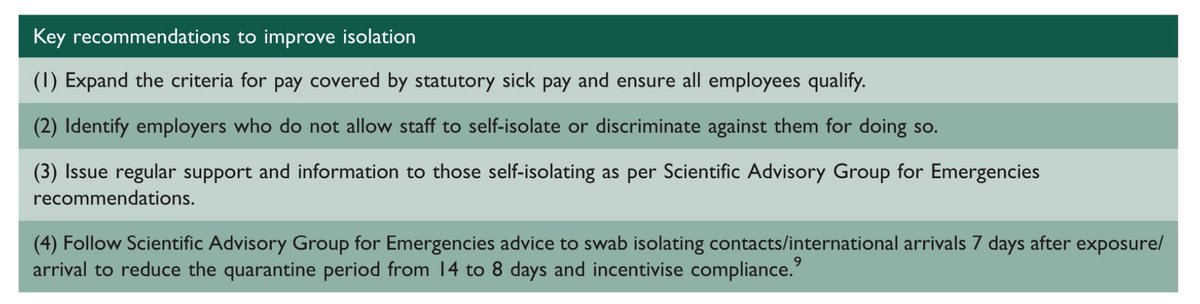
Belgium has 1 new sequence, which links 1 mutation away from a previous sequence (pic 3).

16/18
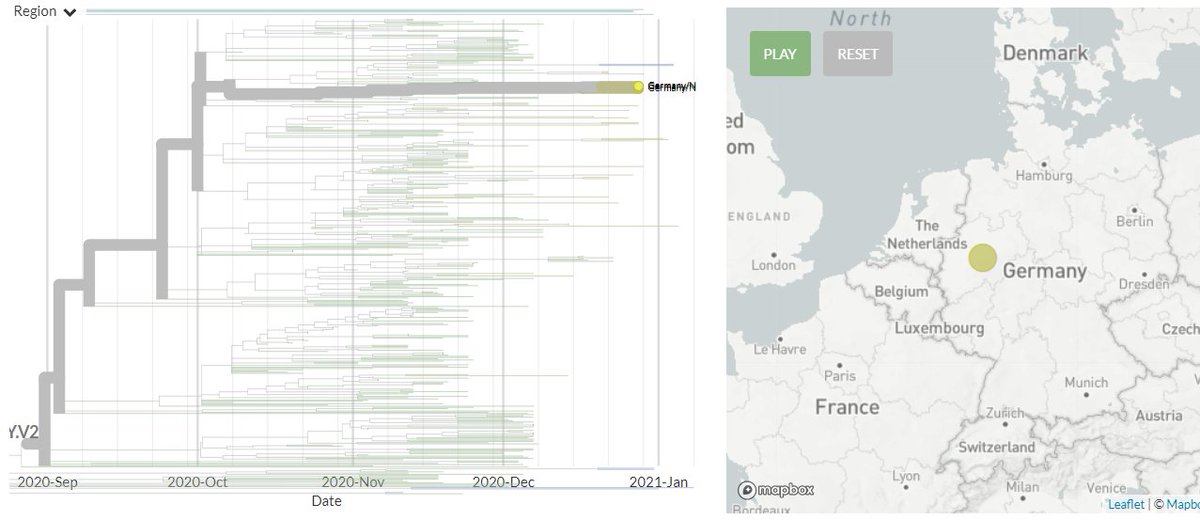
There are 3 new non-South African sequences in 501Y.V2, from Germany for the first time. They are identical, which may indicate a common exposure.

17/18
The updated country plots will go up soon, and I'll add another thread later on S:E484 & the 'Ohio variants'.

18/18
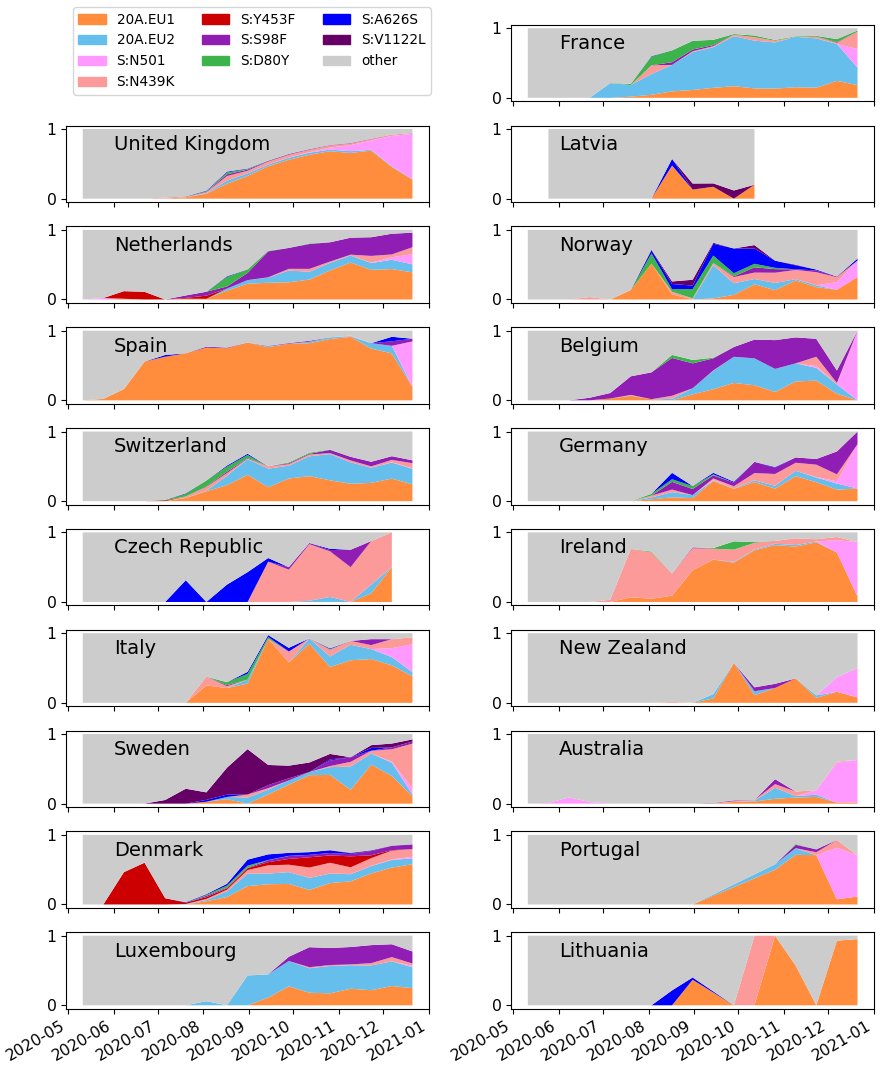
The updated country plots are now up. As always, be careful interpreting plots as many countries are selectively sequencing S:N501 & S-drop outs (which often increases S:N439), so frequencies are often not representative!

19/18

https://t.co/c7wlQOufTQ

More from Dr Emma Hodcroft

🎉Happy New Year!🎉

To kick off 2021, here's an update on:
- S:N501 variants (501Y.V1/V2) with data from 31 Dec 2020
- 69/70del variants
- 20A.EU1 variant (most prevalent variant in Europe)

(Here are some fireworks that look a bit like phylogenies! 🎆)

1/23


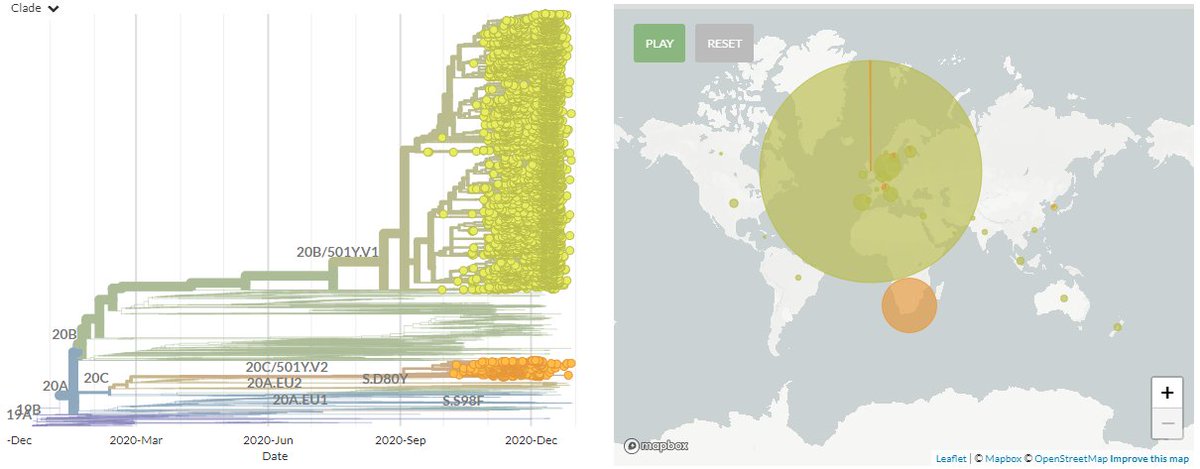
The latest sequences from 31 Dec show new sequences in the S:N501Y.V1 variant (originating from SE England) from Netherlands, Denmark, Australia, Italy, Canada, the USA, Germany, Switzerland, & India.

2/23

S:N501 link
https://t.co/TfHfPgBEBS

Image link
https://t.co/3aCKv1pAcI


Canada, Germany, & Switzerland all have sequences that fall in 501Y.V1 for the first time, scattered across the tree.

3/23


The USA also has its first 2 sequences that fall in 501Y.V1, from Colorado & California. India also had its first 3 sequences, also from different regions.

In both cases, the sequences are not connected, indicating separate introductions.

4/23


In countries with previous sequences:

6 new sequences from Netherlands, in orange/yellow (green are older).
1 is clearly separate - zooming in (& in divergence view, coloured by country) it is harder to determine the relationship between the others.

5/23
Lots of tweets about this today!
Let's see what we can see in the focal S:E484 build!

Phylogenetics (what I do - making 'family trees' from virus genetics) can be very informative to see how different variants are spreading, and how cases

There are two variants circulating predominantly in Brazil:
- 20B/S.484K seems to be older & more widespread. It has (among others) a mutation at position 484
- 20J/501Y.V3 is smaller & detected recently. It has mutations at 501 *and* 484.

2/10

https://t.co/Cw5u2kuATa


The variant predominantly in the UK (501Y.V1 / B.1.1.7) and the variant predominantly in South Africa (501Y.V2) also both have 501. 501Y.V2 *also* has the 484K mutation.

Why are there concerns about these mutations? You can read more at https://t.co/wVE7ubYBoy!

3/10


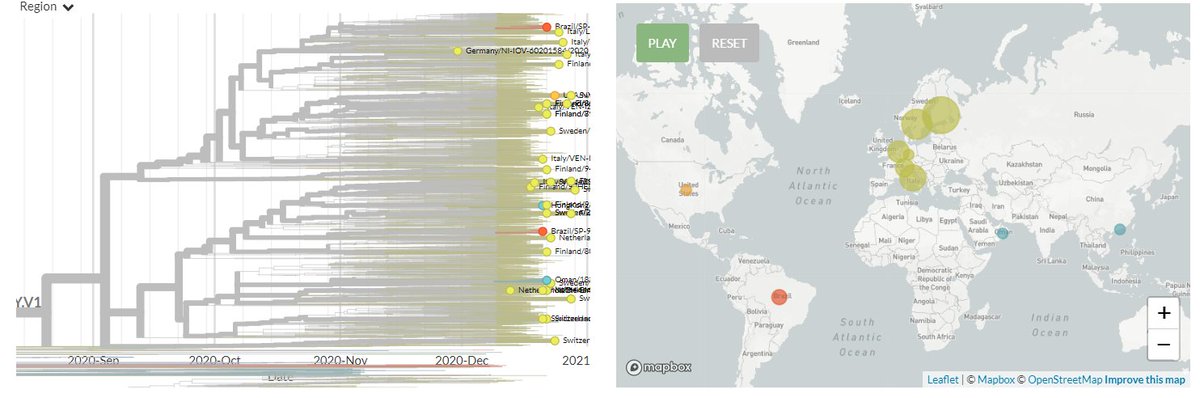
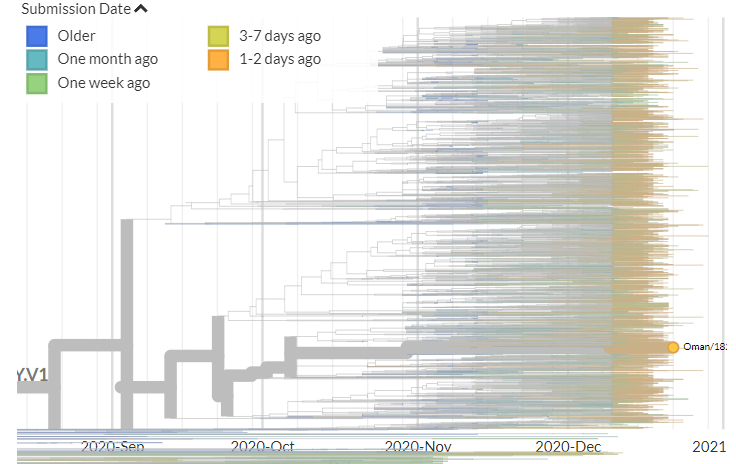
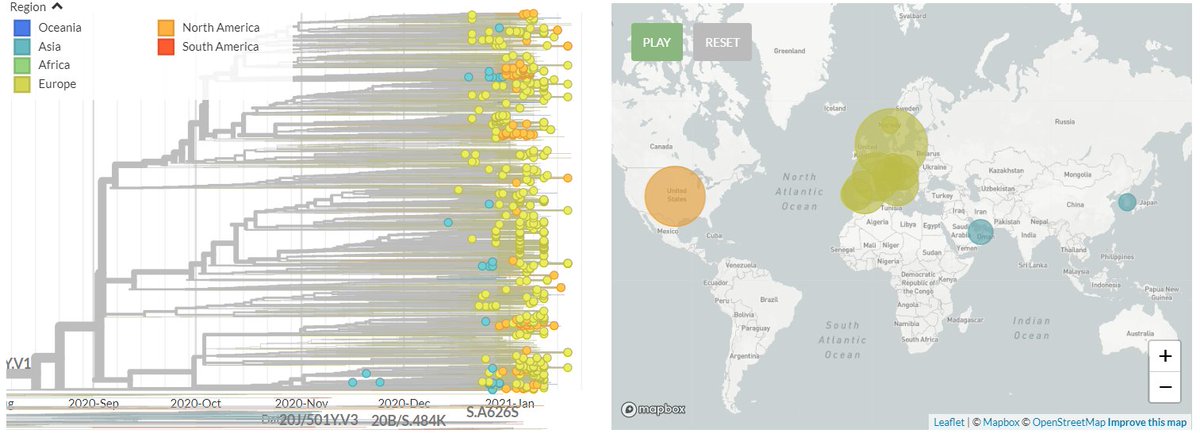
The view below is from an analysis focusing on sequences with a mutation at 484. It shows all the samples in the 2 variants (20B/S.484K & 20J/501Y.V3) & how they're related. More closely related = closer together (very, very roughly).

4/10


We can colour these samples by region to see where they're from. As we expect - most are in Brazil! A few are in Argentina (also red).

5/10

https://t.co/Cw5u2kuATa

More from Society

I've seen many news articles cite that "the UK variant could be the dominant strain by March". This is emphasized by @CDCDirector.

While this will likely to be the case, this should not be an automatic cause for concern. Cases could still remain contained.

Here's how: 🧵

One of @CDCgov's own models has tracked the true decline in cases quite accurately thus far.

Their projection shows that the B.1.1.7 variant will become the dominant variant in March. But interestingly... there's no fourth wave. Cases simply level out:

https://t.co/tDce0MwO61


Just because a variant becomes the dominant strain does not automatically mean we will see a repeat of Fall 2020.

Let's look at UK and South Africa, where cases have been falling for the past month, in unison with the US (albeit with tougher restrictions):


Furthermore, the claim that the "variant is doubling every 10 days" is false. It's the *proportion of the variant* that is doubling every 10 days.

If overall prevalence drops during the studied time period, the true doubling time of the variant is actually much longer 10 days.

Simple example:

Day 0: 10 variant / 100 cases -> 10% variant
Day 10: 15 variant / 75 cases -> 20% variant
Day 20: 20 variant / 50 cases -> 40% variant

1) Proportion of variant doubles every 10 days
2) Doubling time of variant is actually 20 days
3) Total cases still drop by 50%

You May Also Like

One of the most successful stock trader with special focus on cash stocks and who has a very creative mind to look out for opportunities in dark times

Covering one of the most unique set ups: Extended moves & Reversal plays

Time for a 🧵 to learn the above from @iManasArora

What qualifies for an extended move?

30-40% move in just 5-6 days is one example of extended move

How Manas used this info to book


Post that the plight of the


Example 2: Booking profits when the stock is extended from 10WMA

10WMA =


Another hack to identify extended move in a stock:

Too many green days!

Read