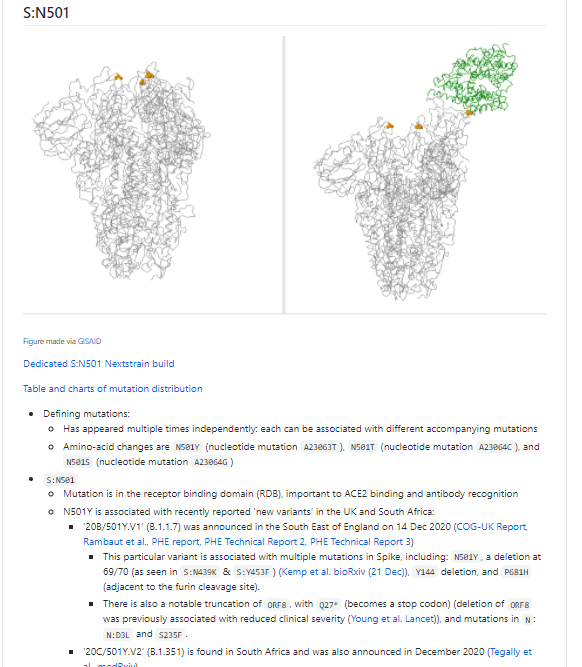
Happy Tuesday! The latest focal S:N501 build is now updated with sequences from 11 Jan.
There are 101 new sequences in the 501Y.V1 (B.1.1.7 #b117) & 501Y.V2 variants.

Additionally, I'll include some updates on S:E484K in this thread.

1/20

https://t.co/dXx6nk6Llz

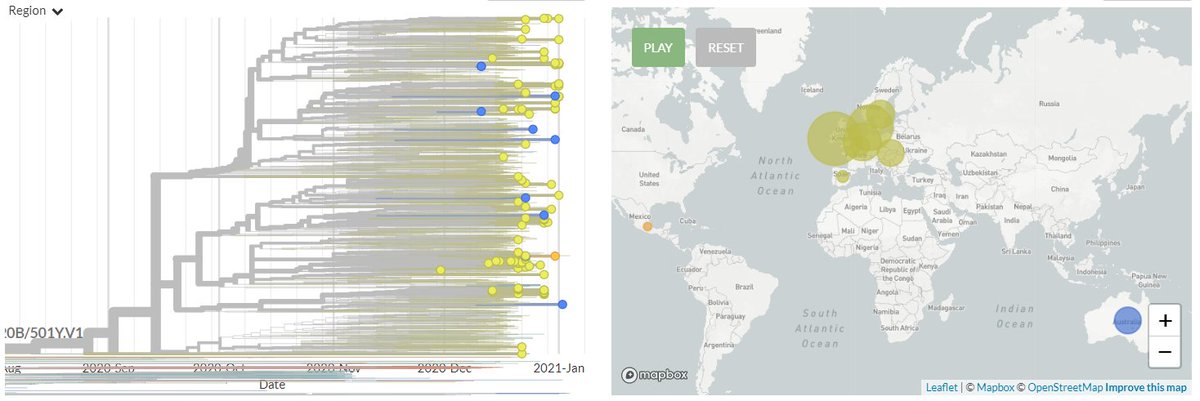
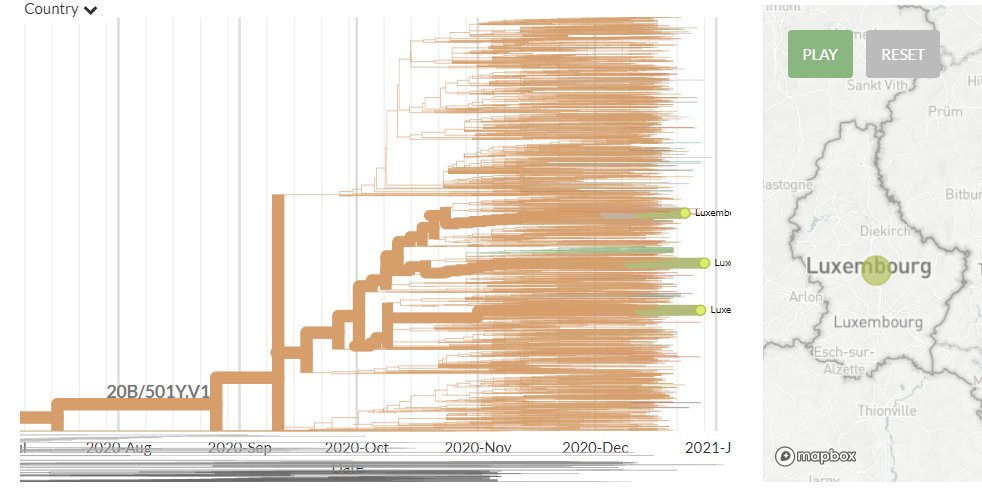
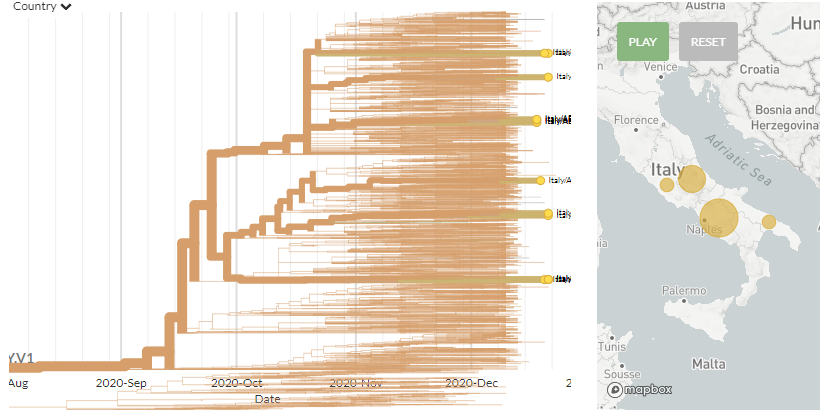
There are 97 new non-UK sequences in 501Y.V1, including the first sequences in the cluster from Slovakia, Mexico, & Belgium, plus additional sequences from the Netherlands, Denmark, Australia, Spain, Ireland, & Sweden.

2/20
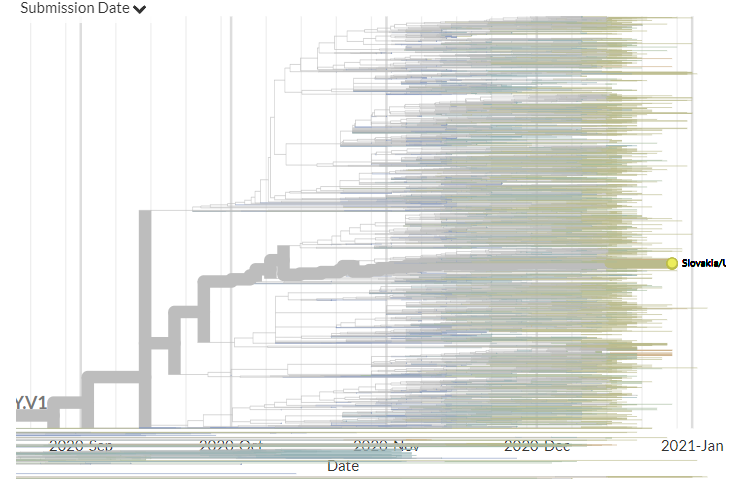
Slovakia has 10 sequences that fall in 501Y.V1 for the first time. These are closely linked, & likely indicate a single introduction and ongoing transmission (remember: vertical distance is not meaningful on the same branch - position of the 2 English samples is arbitrary).

3/20
Belgium has 5 sequences in 501Y.V1 for the 1st time, indicating 3 separate intros. 3 seqs cluster together (zoomed, divergence), indicating a single introduction. The connection to Netherlands might indicate transmission, or 2 transmissions from same diversity in the UK.

4/20
Mexico also has a sequence that falls into 501Y.V1 for the first time.

5/20
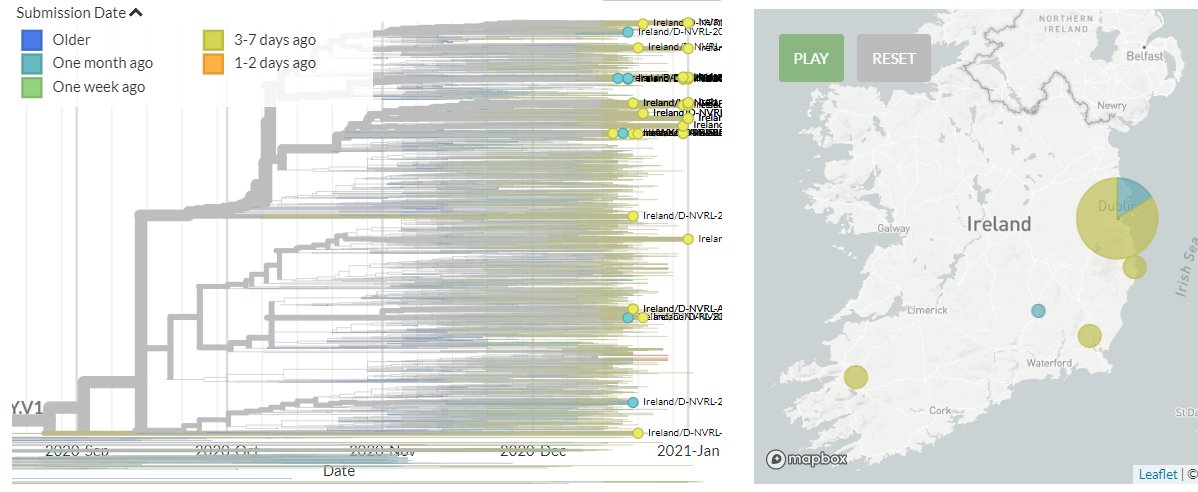
Ireland has 36 new sequences. Many represent separate introductions, but some do cluster with older sequences & may represent local transmission, or introductions from the same UK diversity.

6/20
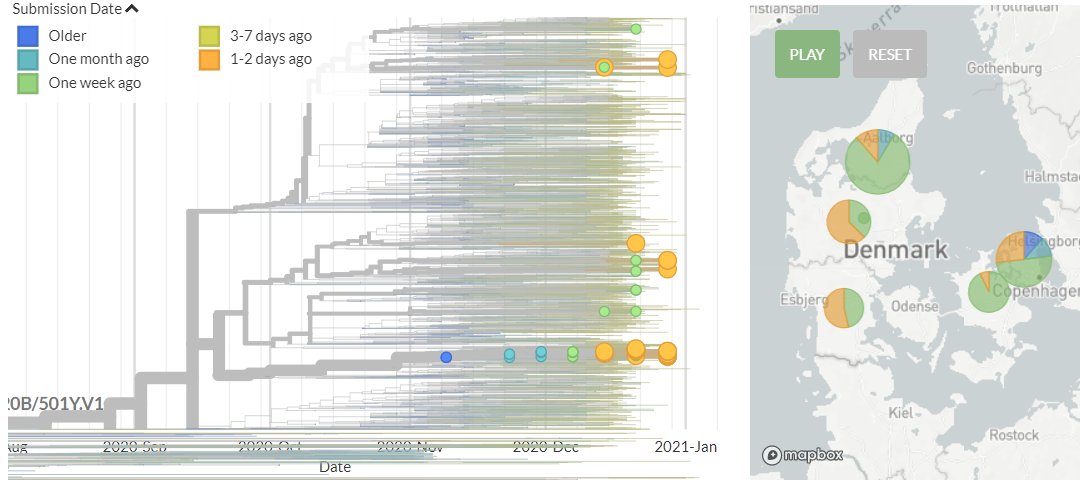
Denmark has 29 new sequences (orange). These represent both new introductions, and further expansion of the large cluster (zoomed view).

7/20
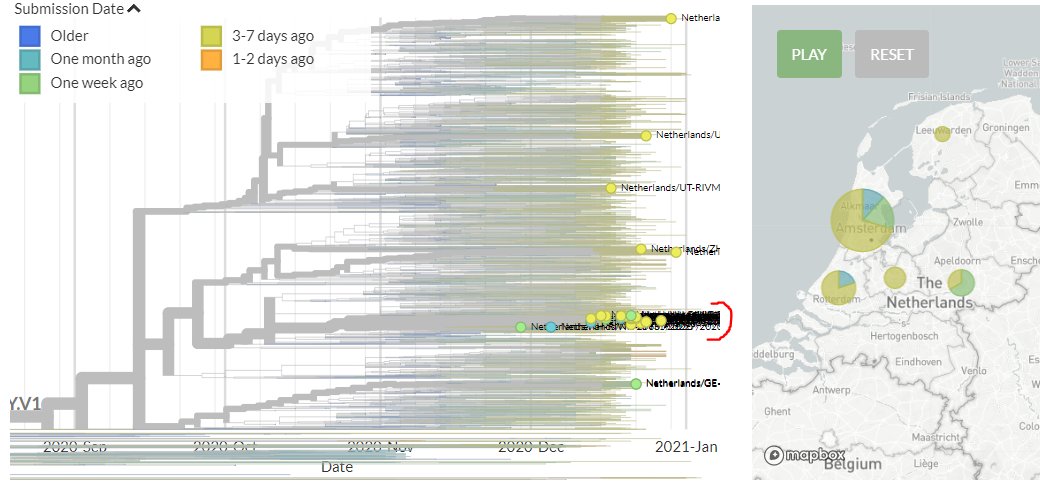
The Netherlands have 6 new sequences. All fall within the section of the tree marked in red.
Zooming in, the new sequences are marked in red: 2 are separate introductions. Zooming in further (divergence view), cluster at the top are identical to an older sequence.

8/20
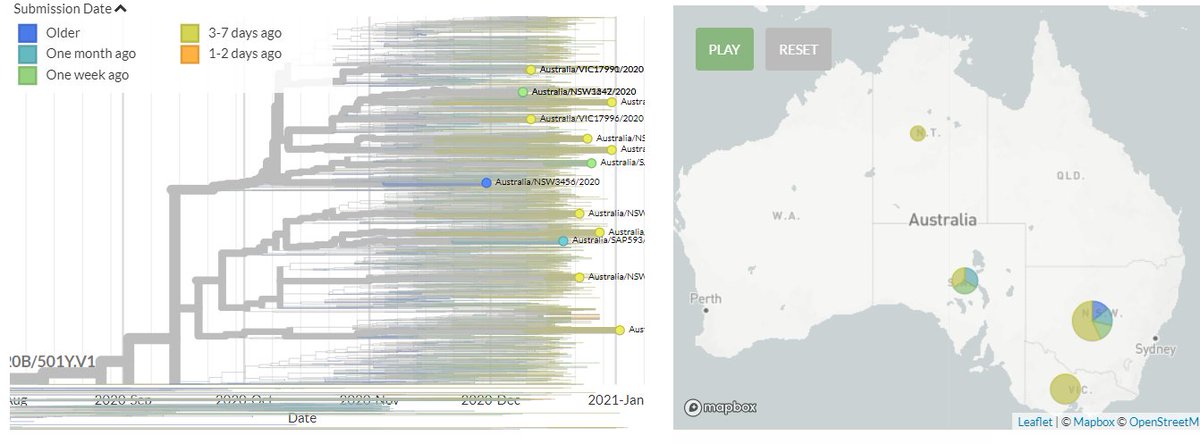
Australia has 6 new sequences, including the first from Northern Territory and Victoria. 1 pair of sequences from Victoria are identical to each other, representing one introduction.

9/20
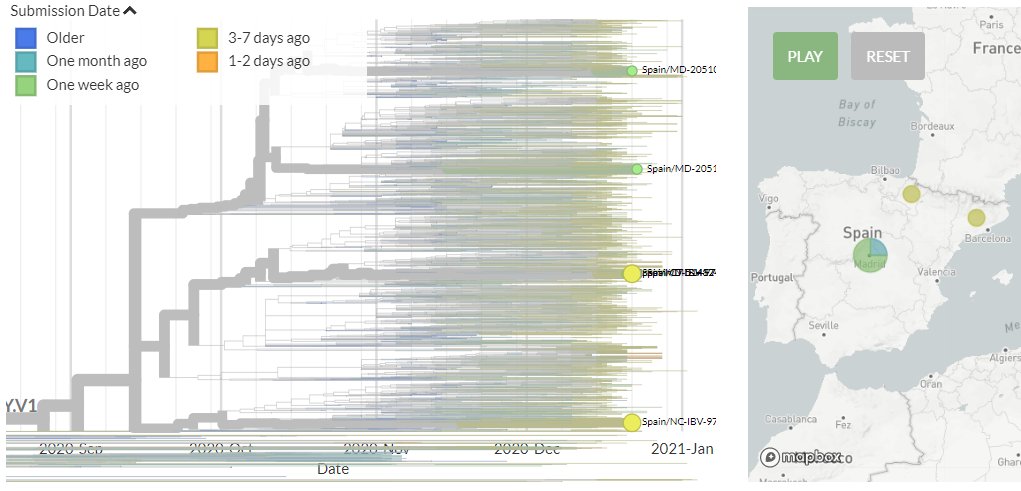
Spain has 2 new sequences (yellow). One represents a separate introduction. The other links to older Spanish sequences, but it's unclear from sequences alone if this is local transmission or transmissions from a common source.

10/20
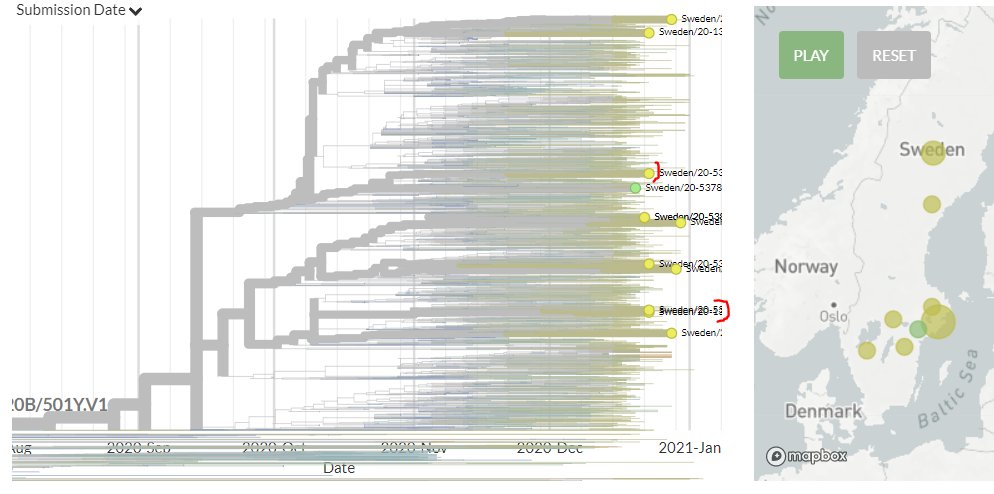
Sweden has 2 new sequences, marked in red. Both represent independent introductions. The second one is hard to see, but zooming in shows this more clearly.

11/20
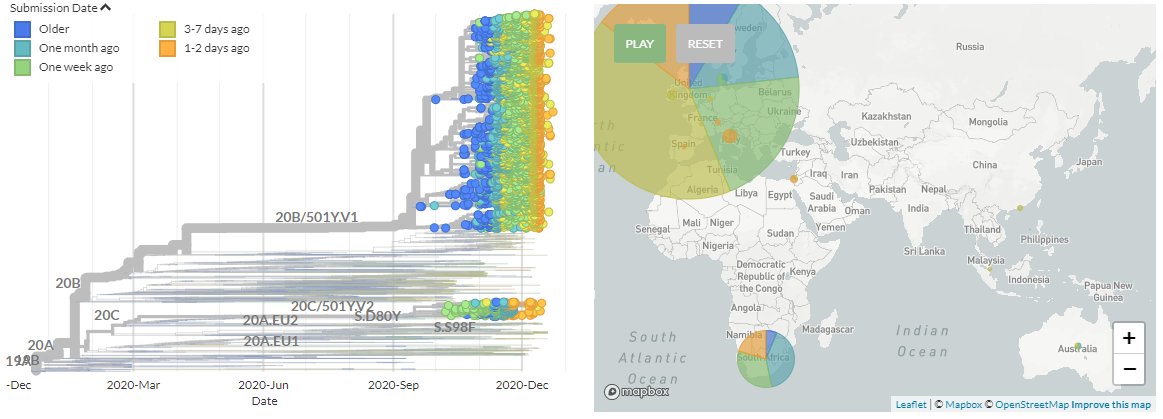
Now turning to 501Y.V2:

There are 4 new non-South African sequences in 501Y.V2, including the first from Ireland (3) and the Netherlands (1).

12/20
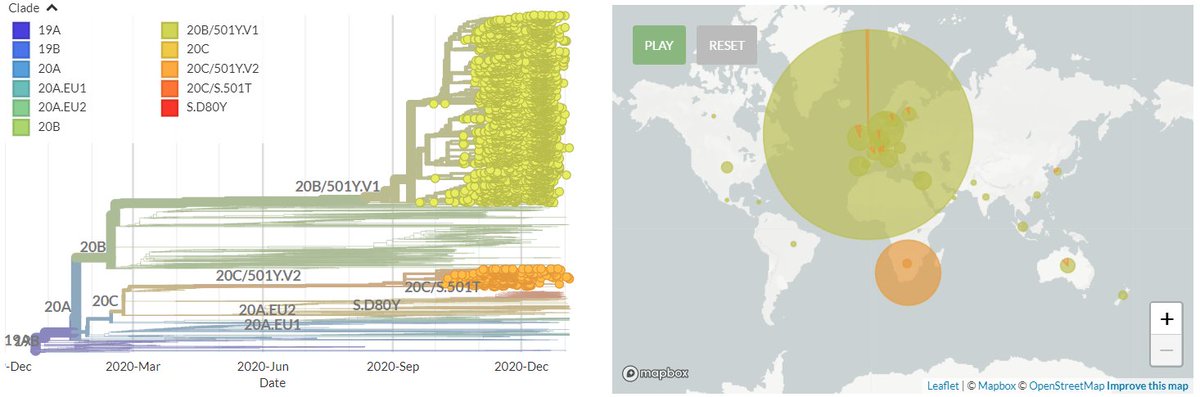
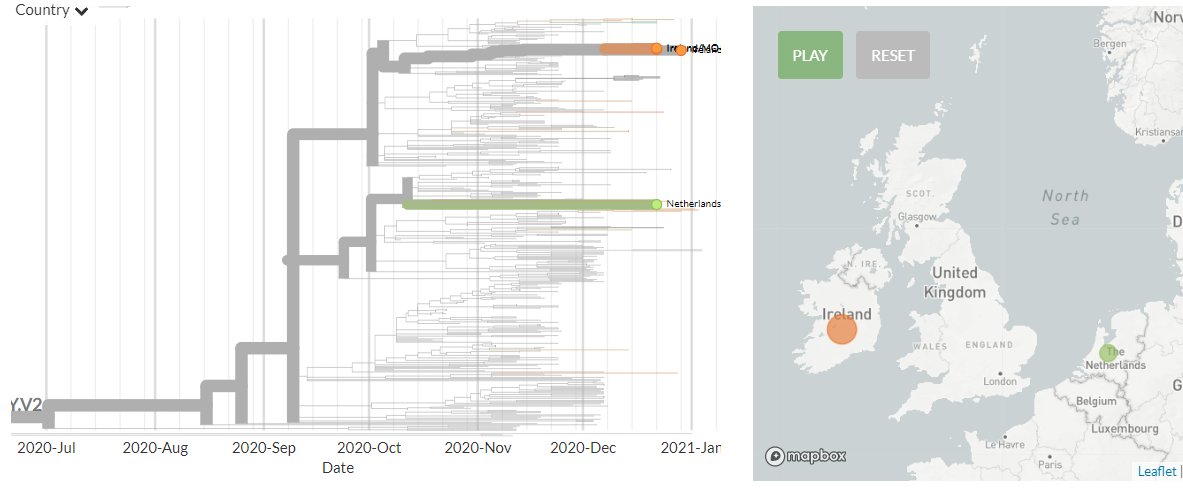
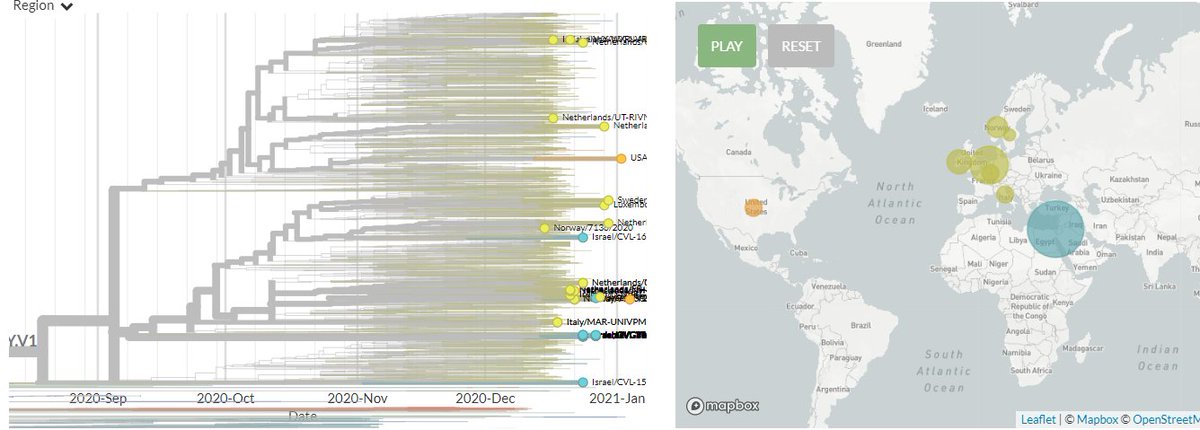
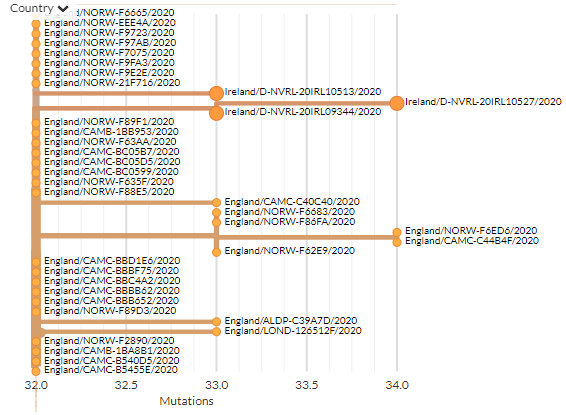
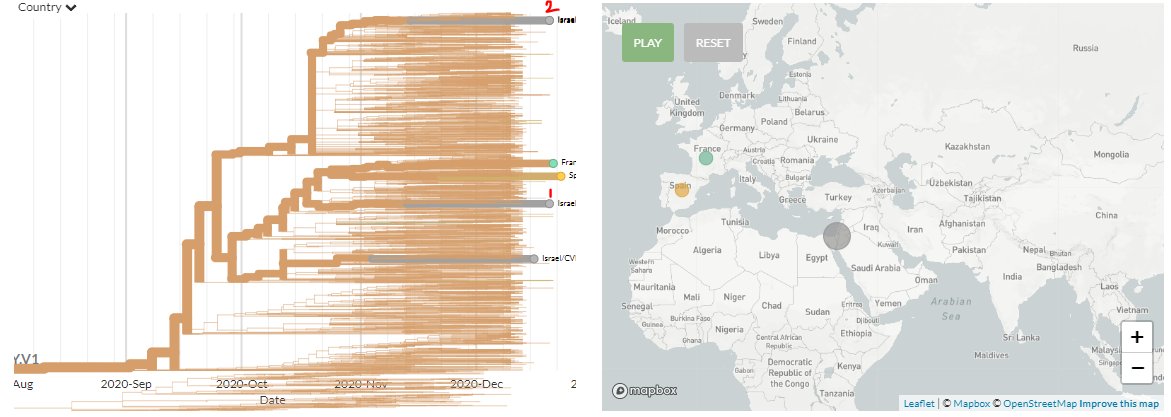
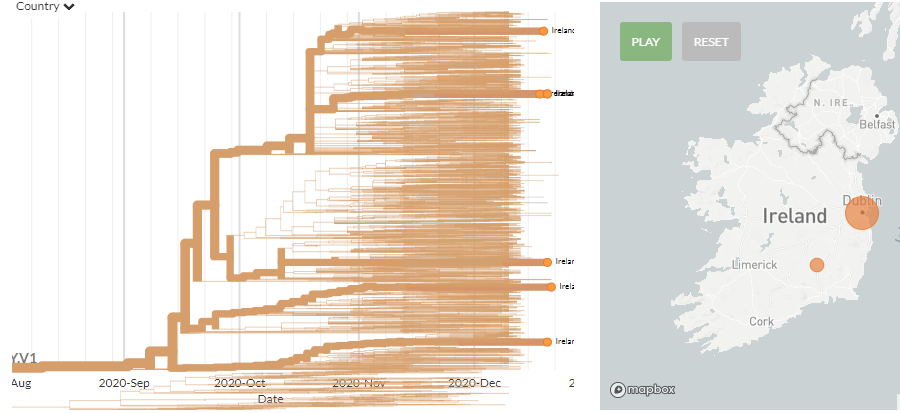
Ireland has 3 sequences in 501Y.V2 for the first time. They cluster together, and may indicate either local transmission, or a common exposure (pictures 1 & 2).

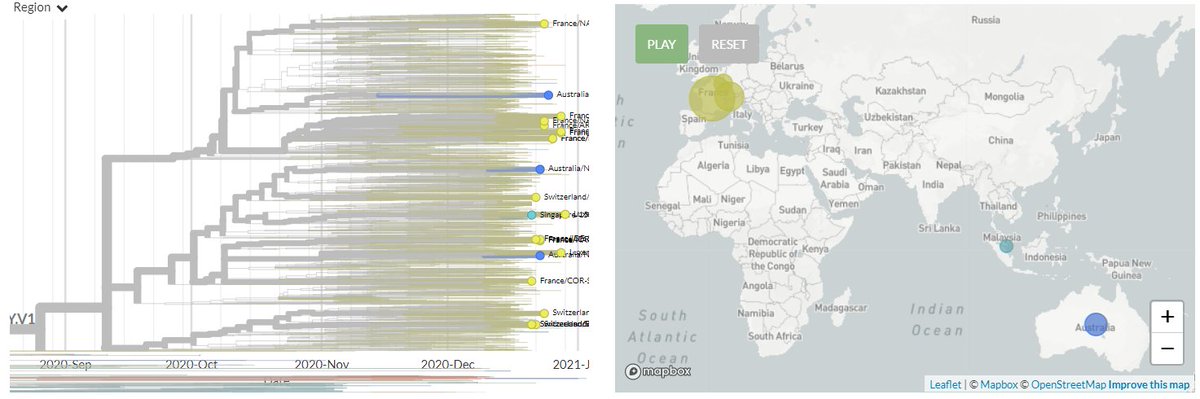
The Netherlands has its first sequence in 501Y.V2 (picture 3).

13/20
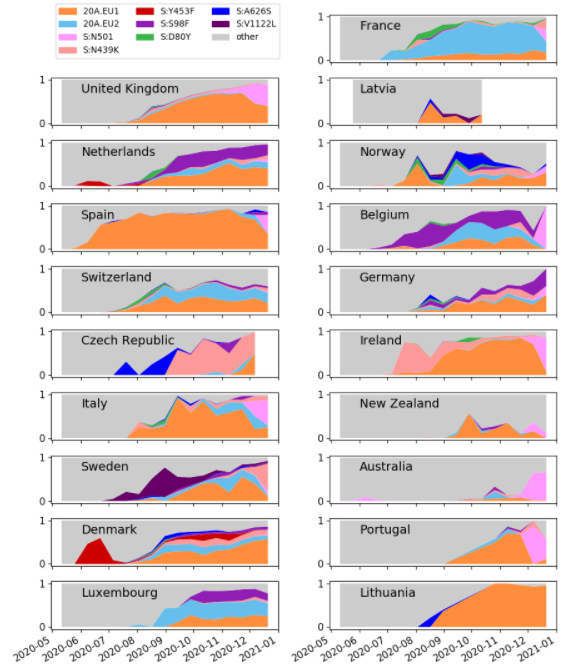
As usual, the updated country graphs are also available. As always, interpret with care: countries are selectively sequencing to track 501Y.V1, so proportions of sequences are not representative for many countries.

14/20

https://t.co/c7wlQOLRiq
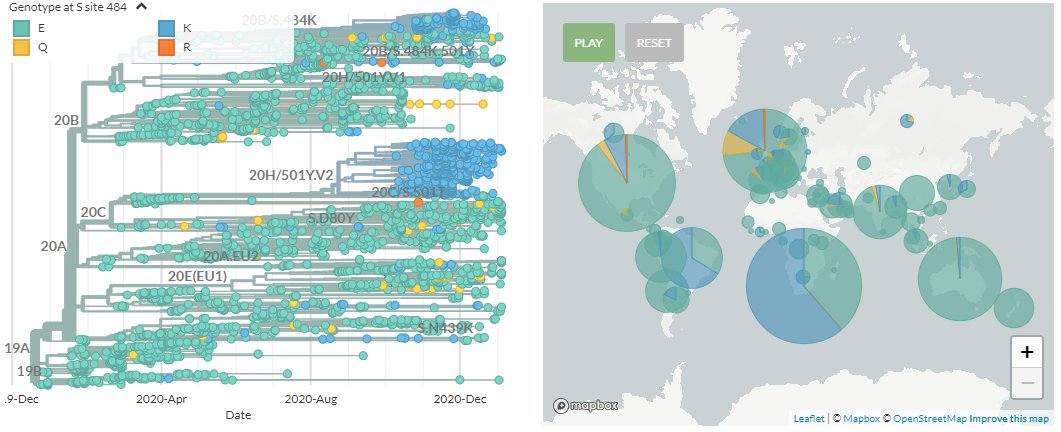
Finally, an updated focal S:E484 build is also up.

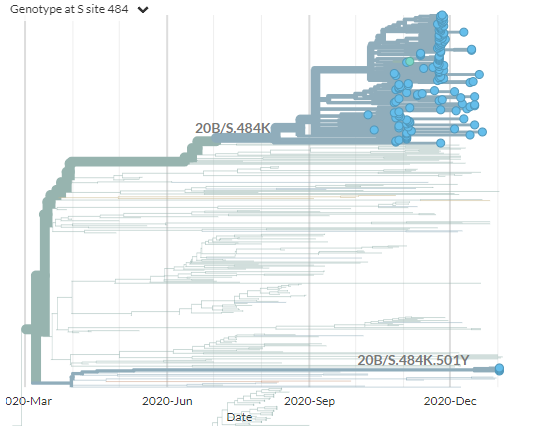
S:E484K is found predominantly in the 501Y.V2 variant, & in a cluster of sequences primarily in Brazil, though it has appeared numerous times in the past.

15/20

https://t.co/Od95D6DL74
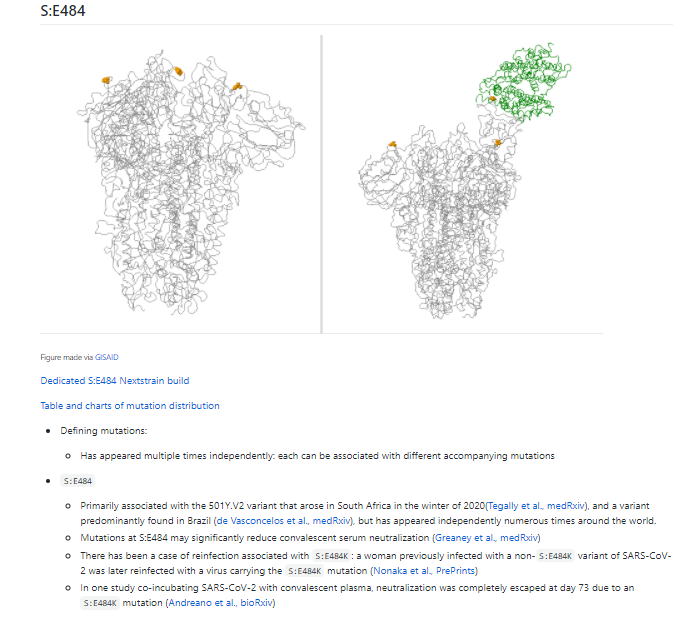
S:E484K has been discussed recently as there are suggestions it may impact how well the immune system can recognise the virus, particularly if you've been infected with SARS-CoV-2 before.

Links to the studies are on https://t.co/SmanZBHpse

16/20
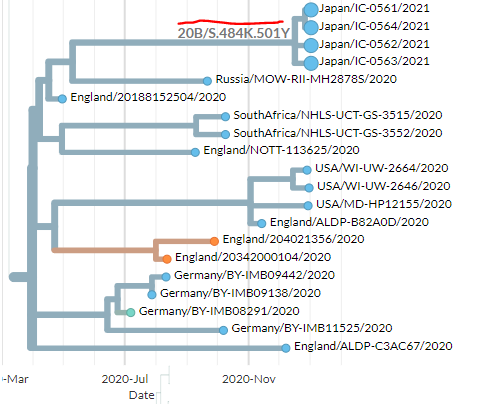
Additionally, over the weekend, travellers from Brazil to Japan were found to be infected with a novel variant with many mutations, including S:E484K & S:N501Y.
Translated report linked below.

17/20

https://t.co/G1ITeT3MoV
To help viewers identify these new samples from Japan, I've added a *temporarily* label to the S:E484K build: 20B/S.484K.501Y.

Additionally, I've added a *temporary* label to the Brazilian cluster with S:E484K: 20B/S.484K.

18/20
Interestingly, though the recent Japanese sequences carry S:E484K & seem to originate from Brazil, they do *not* branch from the larger 484K cluster in Brazil, but instead sit on a long branch separately within the 20B Clade.

19/20
Getting case numbers down saves #LivesAndLivelihoods, and reduces #SARSCoV2's opportunities to explore situations with unique selection pressures, potentially resulting in mutations expanding that we'd rather not see.

Help make my updates more boring: bring cases down!

20/20
PS - For related but slightly-different-angle updates on 501Y.V1 (B.1.1.7) & 501Y.V2 (B.1.351), you should follow @AineToole & keep an eye on her tweets about updated reports!

https://t.co/fZDQqwvJmr

21/20

More from Dr Emma Hodcroft

Each day brings new challenges, but here's an update to the dedicated S.N501 build, using data from 6 Jan 2021 to keep you going.

There are 42 new non-UK sequences in 501Y.V1 (B.1.1.7) & 7 new non-South-African sequences in 501Y.V2.

1/14

https://t.co/kT1gFsSZn0


There are 42 new non-UK sequences in 501Y.V1 from the Netherlands, Italy, Hong Kong, Finland, Sweden, Germany, USA, Switzerland, Brazil, and the first sequence from 501Y.V1 in Oman.

https://t.co/XA8VR8HiEq

2/14


Oman has their first sequence which falls into 501Y.V1:

3/14


Finland has 12 new sequences (orange), which mostly represent separate introductions. Zooming in (divergence view), we can see 3 of the new sequences are identical (red), which may indicate the cases are connected.

4/14


Sweden has 8 new sequences (orange), which indicate separate introductions.

5/14
Lots of tweets about this today!
Let's see what we can see in the focal S:E484 build!

Phylogenetics (what I do - making 'family trees' from virus genetics) can be very informative to see how different variants are spreading, and how cases

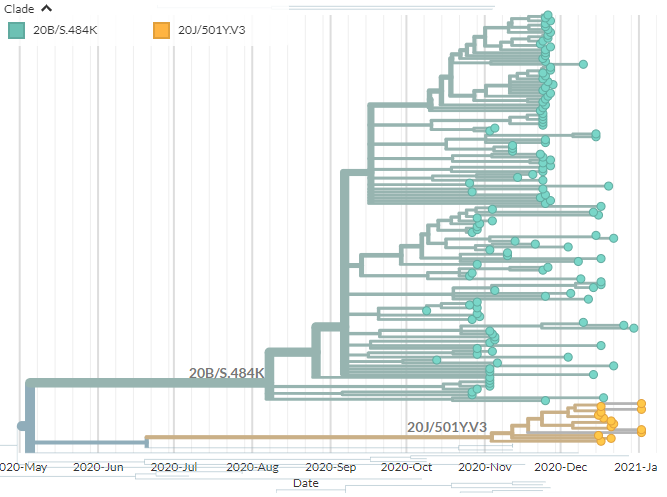
There are two variants circulating predominantly in Brazil:
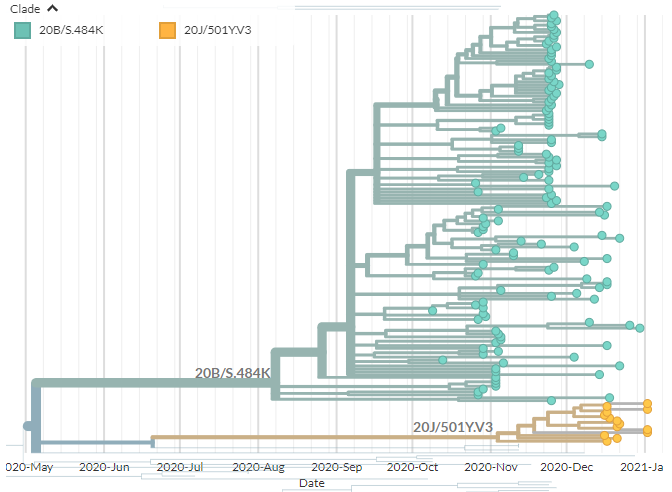
- 20B/S.484K seems to be older & more widespread. It has (among others) a mutation at position 484
- 20J/501Y.V3 is smaller & detected recently. It has mutations at 501 *and* 484.

2/10

https://t.co/Cw5u2kuATa


The variant predominantly in the UK (501Y.V1 / B.1.1.7) and the variant predominantly in South Africa (501Y.V2) also both have 501. 501Y.V2 *also* has the 484K mutation.

Why are there concerns about these mutations? You can read more at https://t.co/wVE7ubYBoy!

3/10


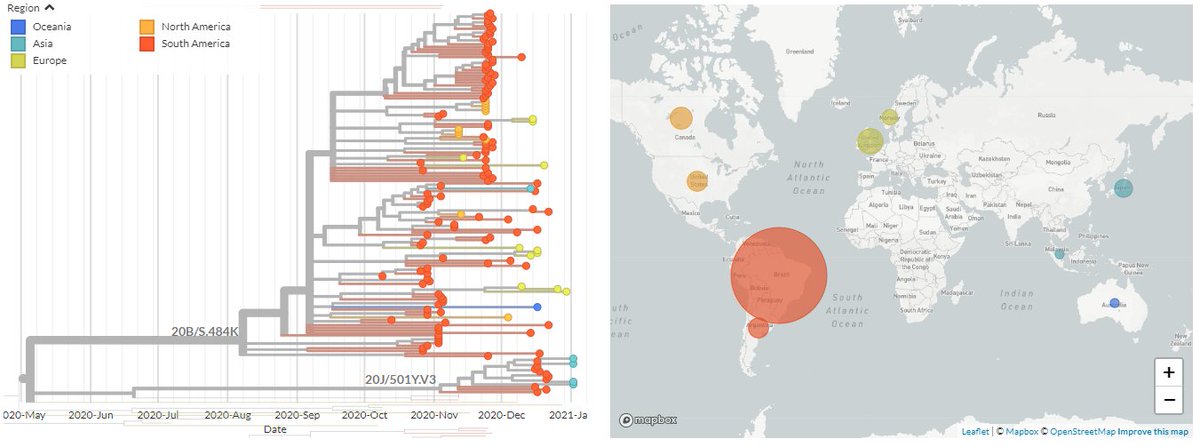
The view below is from an analysis focusing on sequences with a mutation at 484. It shows all the samples in the 2 variants (20B/S.484K & 20J/501Y.V3) & how they're related. More closely related = closer together (very, very roughly).

4/10


We can colour these samples by region to see where they're from. As we expect - most are in Brazil! A few are in Argentina (also red).

5/10

https://t.co/Cw5u2kuATa

More from For later read

How I created content in 2020
A thread...

Back in Aug 2016, I started creating content to share my experiences as an entrepreneur.
Over 3 years I had put out 1,200+ hours of content - posting every week without


Little did I know that something I started almost 4 years back would give my life an entirely new direction.

At the end of 2019, my biggest platform was LinkedIn with ~700K followers.

In Jan 2020, I decided to build a team that would help me with the content.

I ran a month long recruitment drive to hire a team of interns.

It comprised 4 detailed rounds - starting with my loved 20 questions, then an assignment, then a WhatsApp video round and finally F2F.
Through 1,200+ applications, I finally selected 6 profiles, starting March.

I am a firm believer in @peterthiel's one task, one person philosophy
So the team was structured such that everyone was responsible for ONLY one task

1. Content ideas
2. Videography
3. Video editing
4. LinkedIn (+TikTok) distribution
5. FB+IG distribution
6. YouTube distribution
The #worldwildlifeday2021 theme is Forests and Livelihoods: Sustaining People and Planet aligning with UN Sustainable Development Goals 1, 12, 13 and 15. So, what are the UN Sustainable Development Goals (SDGs) & how can children begin to learn about them & get involved ?

https://t.co/8ICvHxE9QL is easy & fun to follow for our smallest of people #EYFS. Early childhood is the perfect stage to introduce the core concepts of what it means to be a global citizen. For our reception & KS1 children please take a look at this fabulous free resource

https://t.co/tZx8UIS58Q Storytelling is a powerful communications tool and helps children remember lessons and virtues that they will use in everyday life. The idea is to simplify the lessons of the (SDGs) so young children can relate to – and better understand – the SDGs.

For older children here’s a board game that aims to help teach children around the world about the Sustainable Development Goals in a simple and child-friendly way

This is a lovely free book for children to enjoy flicking through themselves https://t.co/ScMbQCfpjl Elyx, the United Nations’ digital ambassador, uses various expressions and actions to help demonstrate the meaning of each Sustainable Development Goal.

You May Also Like

“We don’t negotiate salaries” is a negotiation tactic.

Always. No, your company is not an exception.

A tactic I don’t appreciate at all because of how unfairly it penalizes low-leverage, junior employees, and those loyal enough not to question it, but that’s negotiation for you after all. Weaponized information asymmetry.

Listen to Aditya


And by the way, you should never be worried that an offer would be withdrawn if you politely negotiate.

I have seen this happen *extremely* rarely, mostly to women, and anyway is a giant red flag. It suggests you probably didn’t want to work there.

You wish there was no negotiating so it would all be more fair? I feel you, but it’s not happening.

Instead, negotiate hard, use your privilege, and then go and share numbers with your underrepresented and underpaid colleagues. […]
"I lied about my basic beliefs in order to keep a prestigious job. Now that it will be zero-cost to me, I have a few things to say."


We know that elite institutions like the one Flier was in (partial) charge of rely on irrelevant status markers like private school education, whiteness, legacy, and ability to charm an old white guy at an interview.

Harvard's discriminatory policies are becoming increasingly well known, across the political spectrum (see, e.g., the recent lawsuit on discrimination against East Asian applications.)

It's refreshing to hear a senior administrator admits to personally opposing policies that attempt to remedy these basic flaws. These are flaws that harm his institution's ability to do cutting-edge research and to serve the public.

Harvard is being eclipsed by institutions that have different ideas about how to run a 21st Century institution. Stanford, for one; the UC system; the "public Ivys".