10 machine learning YouTube videos.

On libraries, algorithms, and tools.

(If you want to start with machine learning, having a comprehensive set of hands-on tutorials you can always refer to is fundamental.)

🧵👇

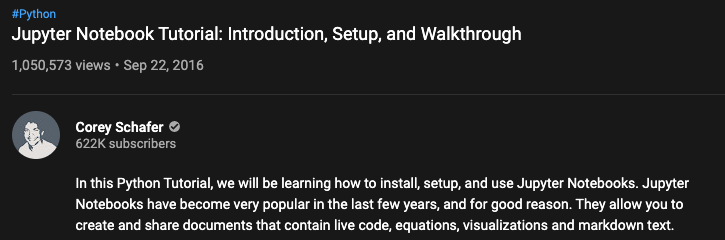
1⃣ Notebooks are a fantastic way to code, experiment, and communicate your results.

Take a look at @CoreyMSchafer's fantastic 30-minute tutorial on Jupyter Notebooks.

https://t.co/HqE9yt8TkB
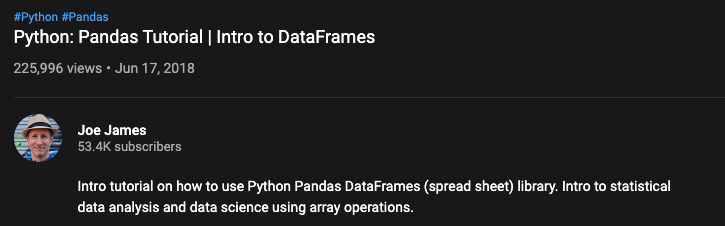
2⃣ The Pandas library is the gold-standard to manipulate structured data.

Check out @joejamesusa's "Pandas Tutorial. Intro to DataFrames."

https://t.co/aOLh0dcGF5
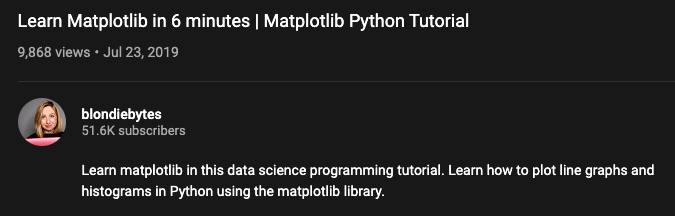
3⃣ Data visualization is key for anyone practicing machine learning.

Check out @blondiebytes's "Learn Matplotlib in 6 minutes" tutorial.

https://t.co/QxjsODI1HB
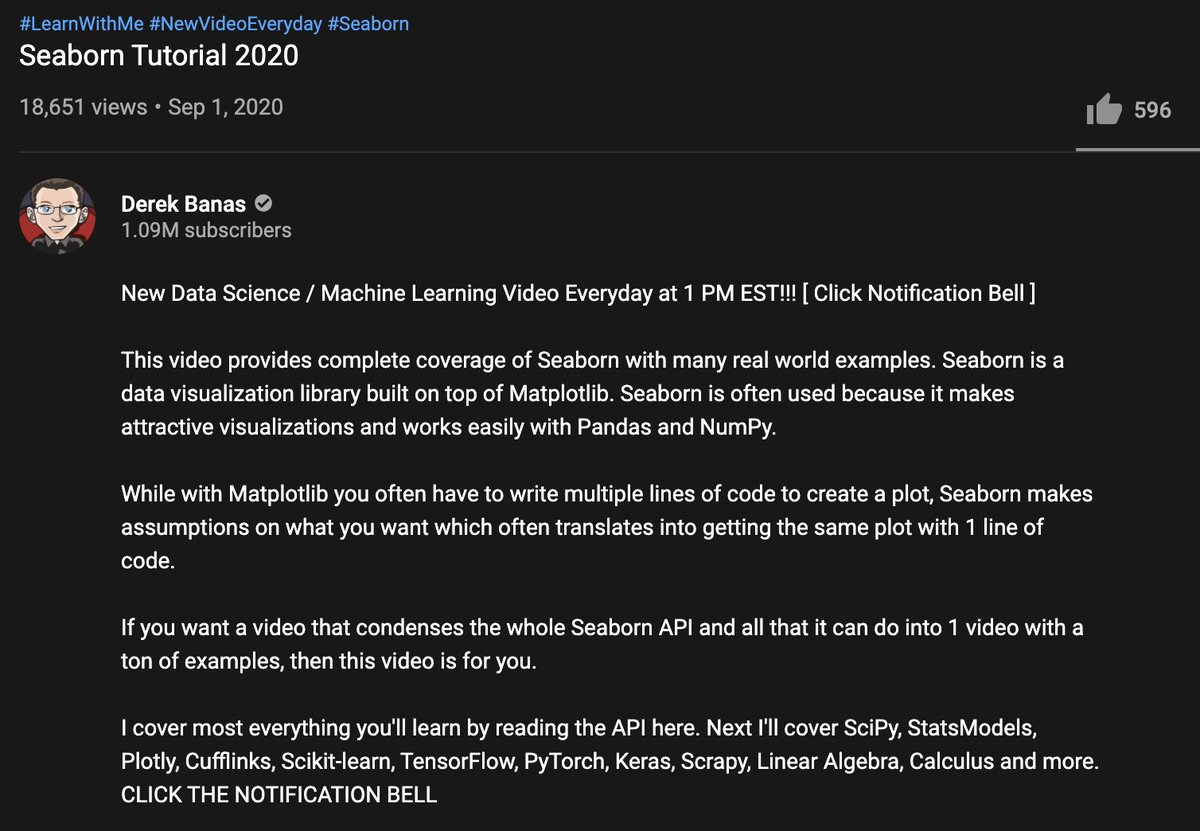
4⃣ Another trendy data visualization library is Seaborn.

@NewThinkTank put together "Seaborn Tutorial 2020," which I highly recommend.

https://t.co/eAU5NBucbm
5⃣ Numpy is another Python library that you will use every single day.

@keithgalli's "Complete Python NumPy Tutorial" is a great start.

https://t.co/Xg0YbuR8fz
6⃣ One of the most basic algorithms that you can learn is Decision Trees.

Watch @random_forests' video where he builds a decision tree from scratch:

https://t.co/tKtUpO1K3l
7⃣ It's hard to talk about machine learning without touching on neural networks.

Probably the best video out there that explains how neural networks work is @3blue1brown's:

https://t.co/OMJHiG7PIu
8⃣ Scikit-Learn is one of the most popular machine learning libraries out there.

@simplilearn's "Scikit-Learn Tutorial" is a great place to start.

https://t.co/efd1kmz07c
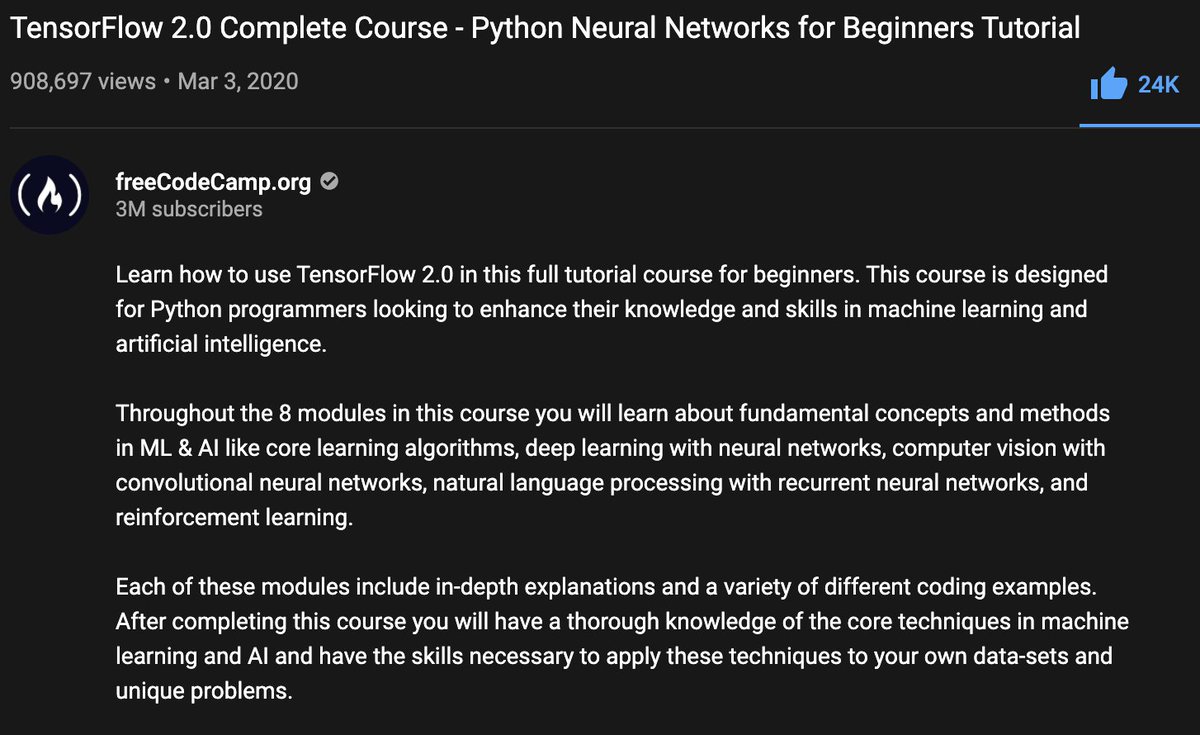
9⃣ TensorFlow is the most popular deep learning library that's currently used in the industry.

Here is a massive 7-hour tutorial of TensorFlow 2.0 produced by @freeCodeCamp.

https://t.co/BYUoAQJEeu
🔟 Finally, a great way to start getting familiar with machine learning is the bite-sized recipes published by Google.

This series is worth every minute.

Playlist: https://t.co/xDqhmNQoWg
If you are looking for real-life, hands-on information related to machine learning, follow me.

✌️

If you have questions or suggestions about topics you'd like to hear about, let me know.

More from Santiago

More from Machine learning

This is a Twitter series on #FoundationsOfML.

❓ Today, I want to start discussing the different types of Machine Learning flavors we can find.

This is a very high-level overview. In later threads, we'll dive deeper into each paradigm... 👇🧵

Last time we talked about how Machine Learning works.

Basically, it's about having some source of experience E for solving a given task T, that allows us to find a program P which is (hopefully) optimal w.r.t. some metric


According to the nature of that experience, we can define different formulations, or flavors, of the learning process.

A useful distinction is whether we have an explicit goal or desired output, which gives rise to the definitions of 1️⃣ Supervised and 2️⃣ Unsupervised Learning 👇

1️⃣ Supervised Learning

In this formulation, the experience E is a collection of input/output pairs, and the task T is defined as a function that produces the right output for any given input.

👉 The underlying assumption is that there is some correlation (or, in general, a computable relation) between the structure of an input and its corresponding output and that it is possible to infer that function or mapping from a sufficiently large number of examples.

You May Also Like