Categories For later read



Source say Michel Barnier has told EU ambassadors that there has been no breakthrough on the fisheries question, and that reports to that effect were \u201ccompletely untrue\u201d
— Tony Connelly (@tconnellyRTE) December 7, 2020
Some useful threads will follow, first on the Northern Ireland protocol, where unfettered is still being defined...
The trouble with \u2018unfettered access\u2019...
— JPCampbellBiz - Wash your hands keep your distance (@JP_Biz) December 6, 2020
And on fish and level playing field. The latter seems, has always seemed, the most problematic, because the UK has apparently ruled out any compromise on shared minumum levels even if not automatic. That would be a deal breaker, but seems... unnecessary.
1/ On fish, both sides are far apart, but it sounds like the UK wants the EU to jump first before it, in turn, shows flexibility. The UK is offering a three year phase in but with an upfront payment of \u20ac300m in demersal fish (ie, out of the \u20ac650m EU boats catch in UK waters)
— Tony Connelly (@tconnellyRTE) December 6, 2020
Your reminder closing complex deals is never easy. But there are ways to facilitate and EU is good at doing this if you meet their red lines. But still the biggest concern that the UK never understood level playing field terms are fundamental to the EU.
In case it wasn't obvious the final choreography of a complex trade deal is complex. The big issues, and potentially some smallprint / related matters of relevance to both sides (for example I wonder if soon after a deal we hear about data or financial services equivalence?)
— David Henig (@DavidHenigUK) December 6, 2020
In the UK, one man's decision. Allegedly backed by a Cabinet who in reality will be quite happy to blame the PM either way. The temptation to send Michael Gove to seal the deal and end his leadership ambitions must be there...
Fact is: EU objectives/focus unlikely to change much in remaining 24-48 hours: fish, non-regression & ability to retaliate across sectors/entire agreement in case of systematic divergence by HMG
— Mujtaba Rahman (@Mij_Europe) December 7, 2020
Most in Cabinet want a deal. @BorisJohnson has big decision he now needs to make https://t.co/mJ49WLt3Qd


“HAGENS BERMAN, NATIONAL TRIAL ATTORNEYS, Investigating SolarWinds (SWI) $285 Million Insider Stock Sales, Knowledge of Hack in Orion Products, Encourages SWI Investors with Losses to Contact Firm Now”
SolarWinds report (Feb 2020): “2020 Key Findings
For the fifth year in a row, careless and untrained insiders are the leading source of security threats for public sector organizations”
https://t.co/TjgcuaBzUb

“‘Security is everyone’s job, but holding the team accountable is lacking. Until there are real individual accountability regimens in place, the network will remain at risk.’
- Division Chief, Federal Civilian”
Again insiders are the top threat, why ignoring in public rhetoric?
https://t.co/603WejHoYG





Long-term expectations do not change as frequently as daily market fluctuations would make it seem.
A quick update on Treasury rates through the lens of the DKW model
*As of Dec. 31*
1/
In previous threads, I made the distinction between long-term secular trends in growth and inflation and shorter-term (2-6 quarters) trends in nGDP
Consensus continues to conflate the inflation story, mixing and matching long-term and short-term charts to fit what is generally a secular inflation narrative.
— Eric Basmajian (@EPBResearch) January 4, 2021
Here are my two cents to make the distinction clear.
1)
Right now, the long-term trends are unaltered because long-term trends just don't change that fast but we have a very strong cyclical upturn in the economy, centered primarily on the shift to goods consumption bolstering the manufacturing sector and industrial commodities.
3/
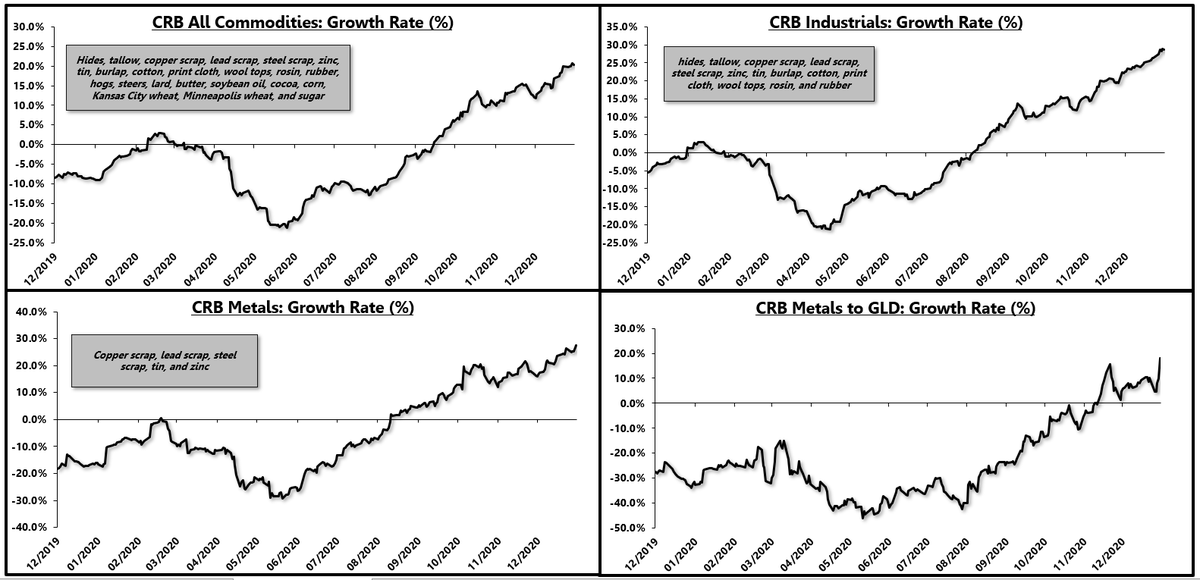
As long as the industrial sector continues to roar, TSY rates will have an upward bias as rates generally follow the trend in nGDP growth
A 10yr TSY has longterm expectations embedded in the rate so several qrters, while important, won't necessarily change the longterm trend
4/
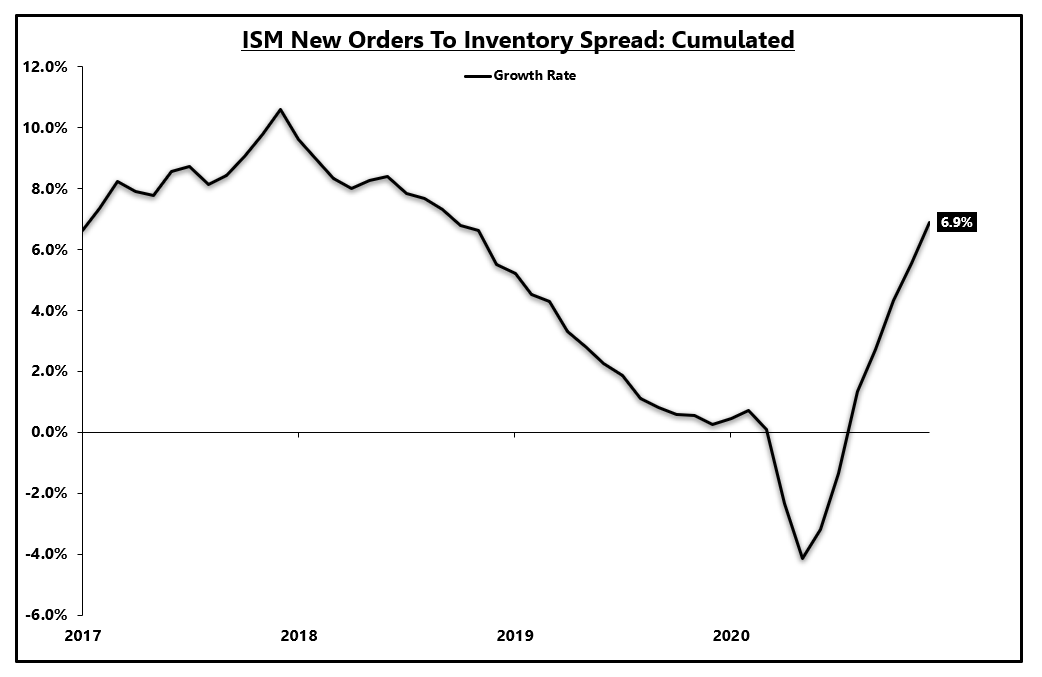
This is confirmed by the Dec update to the DKW model which breaks down *actual* inflation expectations, the expected real short-term rate (real growth), term premium, liquidity premium etc.
The DKW model is one of many models that is useful but has many limitations.
5/