Reading my own old writing from 10+ years ago is rarely pleasant. It’s not that the ideas and techniques are worse/embarrassing by current tastes (though they often are), but that they have a brash energy I can’t vibe with anymore even where I can still stand by the content.
2014-20: Angry-anxious energy. Everybody lost the plot. Winners and losers alike. Great Weirding.
2021 - : Mellow sadder-and-wiser energy on macro, brrr energy on micro.

SV pre-2015 was pretty unique. It was a huge ball of solutionism fusion energy.
Problemist energy sources = cultural command economy that can fail by producing overwrought incestuous taste-swamp slime
IMO It is easier to do good work in the former
More from Venkatesh Rao
Both this thread and the outraged response threads are... something.
This is why I never wanted kids. Way too much responsibility for another human’s development. Depending on the child, this might either be the day they discovered who they were or the day that traumatized them into a lifelong fuckup. Either way I don’t want to direct the show.
As far as the can opener goes, it wouldn’t even occur to me to try and turn it into a teachable moment. That sounds vaguely quixotic. I’d just show them how immediately. I think my default is to try and instruct clearly but not demonstrate unless the person is truly disoriented.
I think there’s basically a right answer here: show the kid. If the kid has the aptitude they’ll enjoy the mechanism so much they’ll develop the figure-it-out skill with other devices. If not, it’s a training data point that will build remedial levels of intuition more slowly.
I think perseverance is both misframed and over-rated as a virtue. Misframed as in: everybody has potential for it in some areas and lacks it in others. Aptitude is those areas where perseverance comes easily to you. Meta-skill of knowing where/why you persist is more important.
So, yesterday my daughter (9) was hungry and I was doing a jigsaw puzzle so I said over my shoulder \u201cmake some baked beans.\u201d She said, \u201cHow?\u201d like all kids do when they want YOU to do it, so I said, \u201cOpen a can and put it in pot.\u201d She brought me the can and said \u201cOpen it how?\u201d
— john roderick (@johnroderick) January 2, 2021
This is why I never wanted kids. Way too much responsibility for another human’s development. Depending on the child, this might either be the day they discovered who they were or the day that traumatized them into a lifelong fuckup. Either way I don’t want to direct the show.
As far as the can opener goes, it wouldn’t even occur to me to try and turn it into a teachable moment. That sounds vaguely quixotic. I’d just show them how immediately. I think my default is to try and instruct clearly but not demonstrate unless the person is truly disoriented.
I think there’s basically a right answer here: show the kid. If the kid has the aptitude they’ll enjoy the mechanism so much they’ll develop the figure-it-out skill with other devices. If not, it’s a training data point that will build remedial levels of intuition more slowly.
I think perseverance is both misframed and over-rated as a virtue. Misframed as in: everybody has potential for it in some areas and lacks it in others. Aptitude is those areas where perseverance comes easily to you. Meta-skill of knowing where/why you persist is more important.
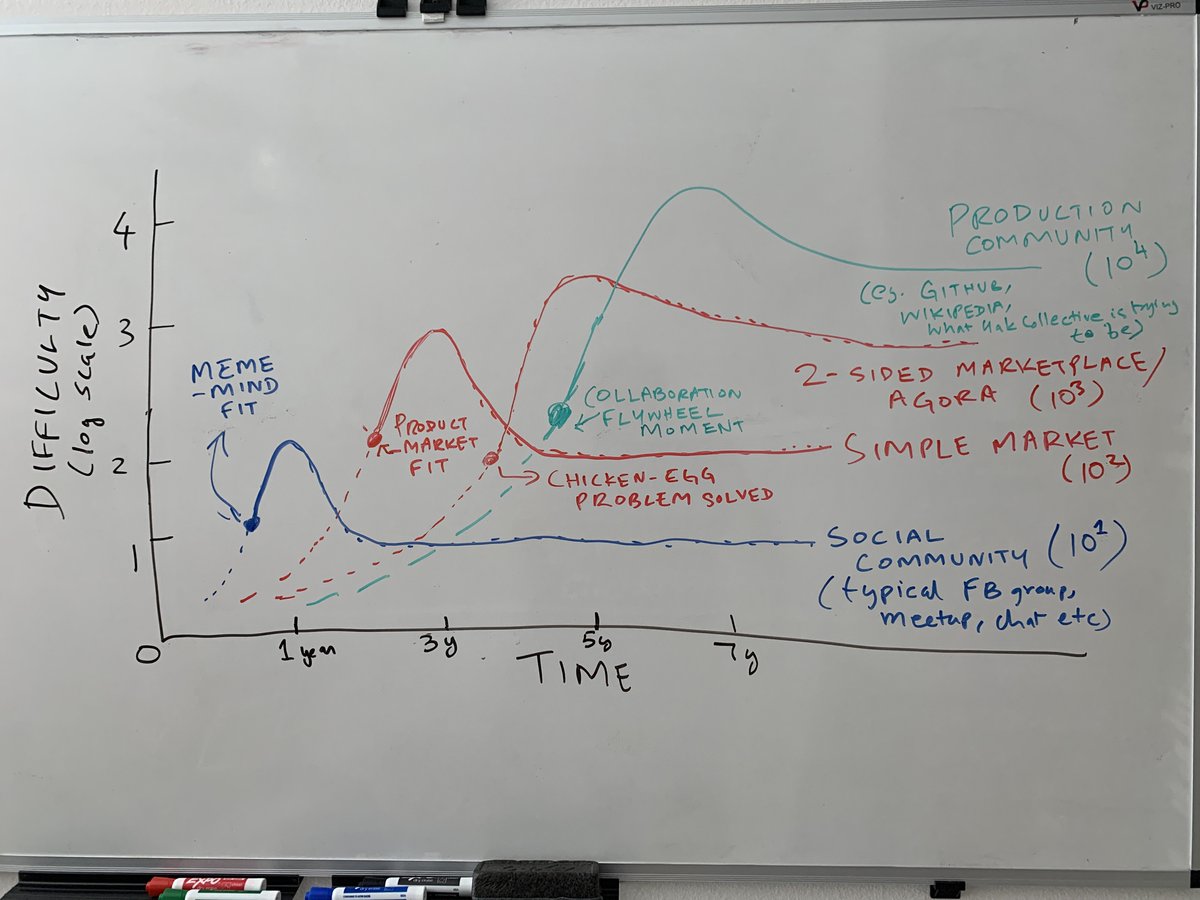
Heh, one thing the nyt piece managed was to do a Cunningham's law nerdsnipe-wmd at newspaper scale... now a bunch of people are energetically trying to post the right answer.
IMO trying to correct whatever the NYT writer thought he knew/understood is futile. "Willing to be misunderstood by the NYT" should be the default stance unless you want to waste a lot of time correcting an obsolete 2013 map for people who don't care.
The thing is, the NYT still has enough normative cultural power, even as it has fallen from newspaper-of-record, that it takes a particular sort of heretical self-confidence to sort of ignore whatever they happen to be wrong about on any given week, whether or not it concerns you
A subtle shift has occurred in the workings of the Gell-Mann amnesia effect. It used to be an individual private amnesia re: media ("I'll believe myself when I am certain they got it wrong because I'm an expert, but still believe them when I am not"). Now it's a collective effect
A sort of common-knowledge threshold has been crossed lately. "Everybody knows that everybody knows the NYT is wrong on X across largish subcultures." It's no longer mutual beliefs being validated occasionally 1:1.
One other thing I should really clarify and that the @nytimes piece got *severely* wrong: while I believe there are very strong sociological and even causal links between rationalism and NRx (especially in the Silicon Valley homes bases) their ideological and methodological
— (((E. Glen Weyl))) (@glenweyl) February 14, 2021
IMO trying to correct whatever the NYT writer thought he knew/understood is futile. "Willing to be misunderstood by the NYT" should be the default stance unless you want to waste a lot of time correcting an obsolete 2013 map for people who don't care.
The thing is, the NYT still has enough normative cultural power, even as it has fallen from newspaper-of-record, that it takes a particular sort of heretical self-confidence to sort of ignore whatever they happen to be wrong about on any given week, whether or not it concerns you
A subtle shift has occurred in the workings of the Gell-Mann amnesia effect. It used to be an individual private amnesia re: media ("I'll believe myself when I am certain they got it wrong because I'm an expert, but still believe them when I am not"). Now it's a collective effect
A sort of common-knowledge threshold has been crossed lately. "Everybody knows that everybody knows the NYT is wrong on X across largish subcultures." It's no longer mutual beliefs being validated occasionally 1:1.
More from For later read


A name has caught the radar of agencies investigating #GretaToolkit- FRIEDRICH PIETER. Delhi Police expressed shock over the appearance of Pieter's name as "Who to Follow" in g-doc as he is under cops' scanner since 2006 for his Anti-India activities. Some shocking details..
1/9

Pieter is close associate (read hired by) Bhajan Singh Bhindar, founder of OFMI (Org for Minorities of India) that considers itself an anti-Gandhi 'crusader' & is Pro-Khalistan. They also campaigned to free Bhullar (convicted Khalistani terr0r!st) & lobby against Modi in US.
2/9
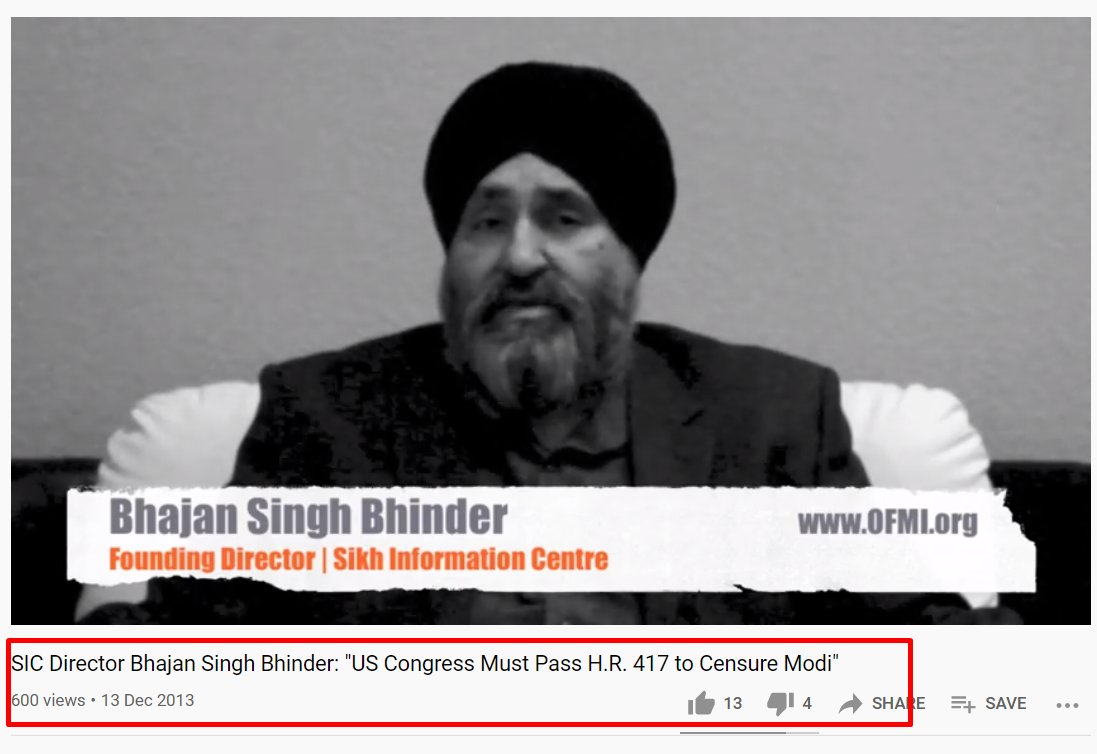
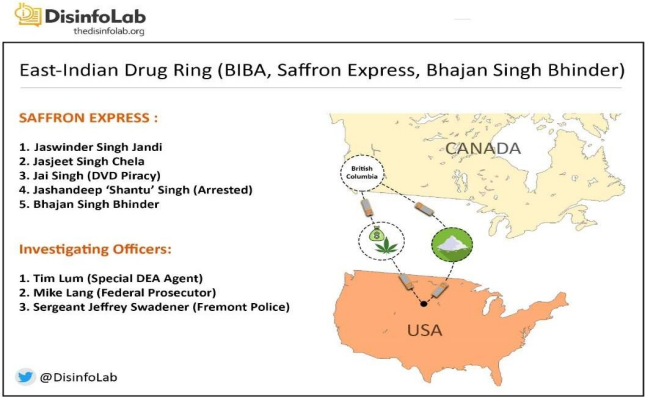
Bhinder has alleged connection with ISI & had records of owning inter-state drugs cartel & DVD piracy for terr0r funding. They also took control Fremont Gurudwara, US back in 2003 for millions of donation. Details of this 'Info-War' by @DisinfoLab
https://t.co/oIDFSoaDX2
3/9
Back to Pieter. Take a glance at his work. His TL is filled with anti-BJP/RSS/Modi propaganda. From his speeches to articles, everything have few keywords in common- RSS/Fascism/gen0c!de/k!ll!ing/Kashmir/Hindutva, as if running a non-stop unrest in India is his bread & butter
4/9
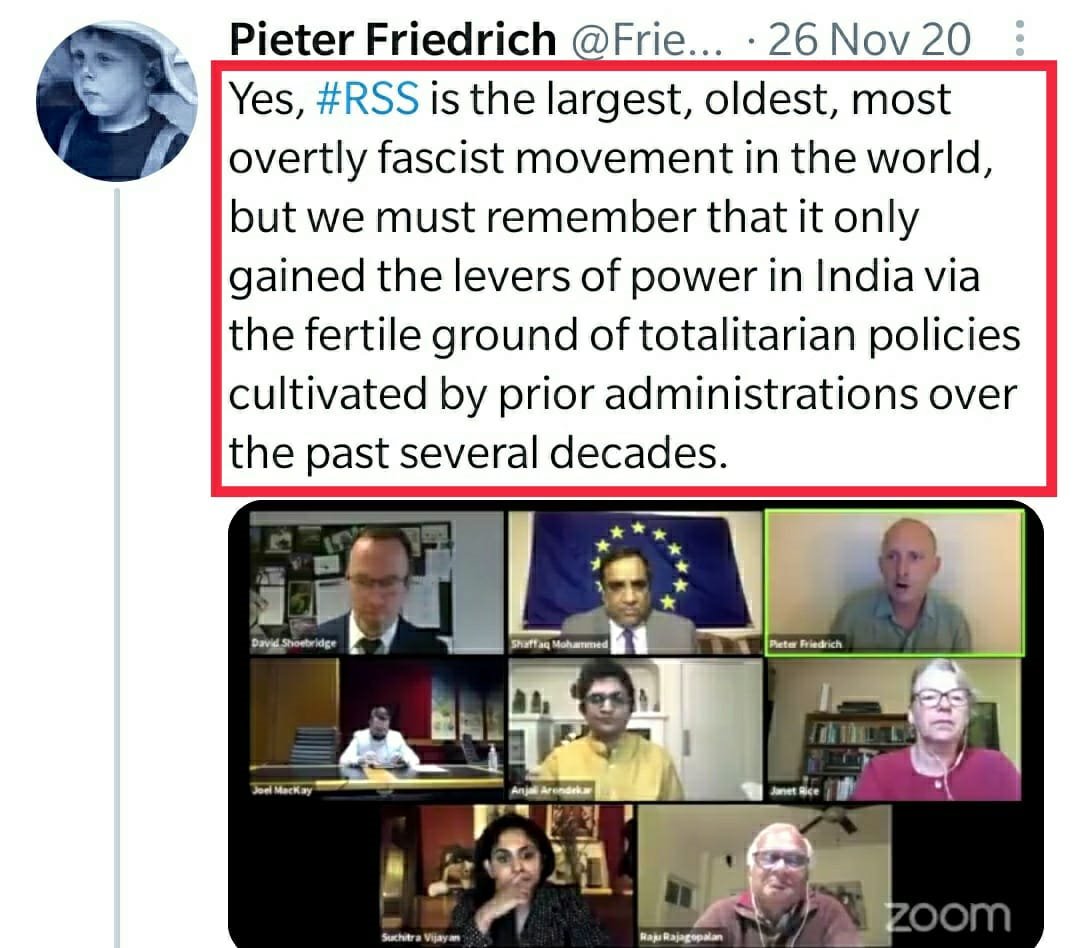
He picks every topic with an extreme narrative that potentially hurts integrity of nation, be it Kashmir,CAA,1984 & with his recent projects- Farmer protest & campaigning heavily against Sri Kulkarni. Despite all, Kulkarni appointed as Chief of Ext Affairs at Biden admin.
5/9
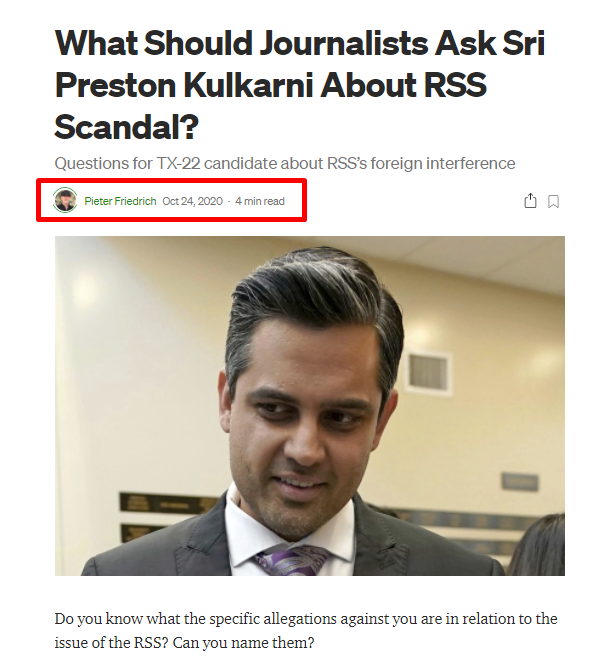
1/9
Pieter is close associate (read hired by) Bhajan Singh Bhindar, founder of OFMI (Org for Minorities of India) that considers itself an anti-Gandhi 'crusader' & is Pro-Khalistan. They also campaigned to free Bhullar (convicted Khalistani terr0r!st) & lobby against Modi in US.
2/9
Bhinder has alleged connection with ISI & had records of owning inter-state drugs cartel & DVD piracy for terr0r funding. They also took control Fremont Gurudwara, US back in 2003 for millions of donation. Details of this 'Info-War' by @DisinfoLab
https://t.co/oIDFSoaDX2
3/9
Back to Pieter. Take a glance at his work. His TL is filled with anti-BJP/RSS/Modi propaganda. From his speeches to articles, everything have few keywords in common- RSS/Fascism/gen0c!de/k!ll!ing/Kashmir/Hindutva, as if running a non-stop unrest in India is his bread & butter
4/9
He picks every topic with an extreme narrative that potentially hurts integrity of nation, be it Kashmir,CAA,1984 & with his recent projects- Farmer protest & campaigning heavily against Sri Kulkarni. Despite all, Kulkarni appointed as Chief of Ext Affairs at Biden admin.
5/9

the whole point of Dunks was you could go cop them at VIM whenever you wanted for $65. this shit is like having to enter a raffle to buy milk.
like seriously why not make a ton more of them if they're gonna be so sought-after? they land at outlets? so? nike still makes money off that.
the only reason to keep making them so limited is that they KNOW all that matters is the profit on the flip and if they were readily available FEWER people would want them, not more
the whole system is super broken, but it's just gonna go the way it goes, because at this point it all caters to the secondary market. the only reason Nike can sell Jordan 1s for $200 is because the people buying them can flip them for $500
adjusted for inflation, a $65 AJ1 in 1985 is like $160—and modern-day AJ1s are made from cheaper materials in factories staffed by cheaper workers. they don't HAVE to be $200 retail. but the secondary market nuked the whole concept of what sneakers are "worth"
\U0001f91e ONLINE RAFFLE is available from @bodega for the upcoming "UNLV" Nike Dunk Low Retro. Open until 5 PM ET on 2/16.
— Kicks Deals (@KicksDeals) February 15, 2021
\u27a1\ufe0f\u27a1\ufe0f https://t.co/JxJlyPuJVo pic.twitter.com/zenWOCDg4L
like seriously why not make a ton more of them if they're gonna be so sought-after? they land at outlets? so? nike still makes money off that.
the only reason to keep making them so limited is that they KNOW all that matters is the profit on the flip and if they were readily available FEWER people would want them, not more
the whole system is super broken, but it's just gonna go the way it goes, because at this point it all caters to the secondary market. the only reason Nike can sell Jordan 1s for $200 is because the people buying them can flip them for $500
adjusted for inflation, a $65 AJ1 in 1985 is like $160—and modern-day AJ1s are made from cheaper materials in factories staffed by cheaper workers. they don't HAVE to be $200 retail. but the secondary market nuked the whole concept of what sneakers are "worth"