Standard deviation should be ~average/3 maybe, so distribution spreads as you age and accumulate projects and get better at them.
I’m guessing these responses really reflect people’s weighted averages (age*current average effort fraction) though I kept it simple and asked for just averages.
Poll: where is the temporal center of gravity of all your live projects based on average age of start-dates?
— Venkatesh Rao (@vgr) January 17, 2021
Standard deviation should be ~average/3 maybe, so distribution spreads as you age and accumulate projects and get better at them.
No point learning food follow through until you’ve found a few good starts to bet on. No point getting good at finishing until a few projects have aged gracefully.
Second oldest is ribbonfarm at 13 years old.
Then sparring-style consulting-fu, 10 years old.
Breaking smart, 6 years old.
My portfolio is getting long in the tooth
This sounds like yet another sermon about long-term thinking, but it isn't. It's a sermon about long-term *commitment.* It doesn't take much upfront thinking. I mean, fairly dim people seem to get married at 22 without much thought and make a successful 30-40 marriage out of it.
— Venkatesh Rao (@vgr) January 15, 2021
More from Venkatesh Rao
Both this thread and the outraged response threads are... something.
This is why I never wanted kids. Way too much responsibility for another human’s development. Depending on the child, this might either be the day they discovered who they were or the day that traumatized them into a lifelong fuckup. Either way I don’t want to direct the show.
As far as the can opener goes, it wouldn’t even occur to me to try and turn it into a teachable moment. That sounds vaguely quixotic. I’d just show them how immediately. I think my default is to try and instruct clearly but not demonstrate unless the person is truly disoriented.
I think there’s basically a right answer here: show the kid. If the kid has the aptitude they’ll enjoy the mechanism so much they’ll develop the figure-it-out skill with other devices. If not, it’s a training data point that will build remedial levels of intuition more slowly.
I think perseverance is both misframed and over-rated as a virtue. Misframed as in: everybody has potential for it in some areas and lacks it in others. Aptitude is those areas where perseverance comes easily to you. Meta-skill of knowing where/why you persist is more important.
So, yesterday my daughter (9) was hungry and I was doing a jigsaw puzzle so I said over my shoulder \u201cmake some baked beans.\u201d She said, \u201cHow?\u201d like all kids do when they want YOU to do it, so I said, \u201cOpen a can and put it in pot.\u201d She brought me the can and said \u201cOpen it how?\u201d
— john roderick (@johnroderick) January 2, 2021
This is why I never wanted kids. Way too much responsibility for another human’s development. Depending on the child, this might either be the day they discovered who they were or the day that traumatized them into a lifelong fuckup. Either way I don’t want to direct the show.
As far as the can opener goes, it wouldn’t even occur to me to try and turn it into a teachable moment. That sounds vaguely quixotic. I’d just show them how immediately. I think my default is to try and instruct clearly but not demonstrate unless the person is truly disoriented.
I think there’s basically a right answer here: show the kid. If the kid has the aptitude they’ll enjoy the mechanism so much they’ll develop the figure-it-out skill with other devices. If not, it’s a training data point that will build remedial levels of intuition more slowly.
I think perseverance is both misframed and over-rated as a virtue. Misframed as in: everybody has potential for it in some areas and lacks it in others. Aptitude is those areas where perseverance comes easily to you. Meta-skill of knowing where/why you persist is more important.
Heh, one thing the nyt piece managed was to do a Cunningham's law nerdsnipe-wmd at newspaper scale... now a bunch of people are energetically trying to post the right answer.
IMO trying to correct whatever the NYT writer thought he knew/understood is futile. "Willing to be misunderstood by the NYT" should be the default stance unless you want to waste a lot of time correcting an obsolete 2013 map for people who don't care.
The thing is, the NYT still has enough normative cultural power, even as it has fallen from newspaper-of-record, that it takes a particular sort of heretical self-confidence to sort of ignore whatever they happen to be wrong about on any given week, whether or not it concerns you
A subtle shift has occurred in the workings of the Gell-Mann amnesia effect. It used to be an individual private amnesia re: media ("I'll believe myself when I am certain they got it wrong because I'm an expert, but still believe them when I am not"). Now it's a collective effect
A sort of common-knowledge threshold has been crossed lately. "Everybody knows that everybody knows the NYT is wrong on X across largish subcultures." It's no longer mutual beliefs being validated occasionally 1:1.
One other thing I should really clarify and that the @nytimes piece got *severely* wrong: while I believe there are very strong sociological and even causal links between rationalism and NRx (especially in the Silicon Valley homes bases) their ideological and methodological
— (((E. Glen Weyl))) (@glenweyl) February 14, 2021
IMO trying to correct whatever the NYT writer thought he knew/understood is futile. "Willing to be misunderstood by the NYT" should be the default stance unless you want to waste a lot of time correcting an obsolete 2013 map for people who don't care.
The thing is, the NYT still has enough normative cultural power, even as it has fallen from newspaper-of-record, that it takes a particular sort of heretical self-confidence to sort of ignore whatever they happen to be wrong about on any given week, whether or not it concerns you
A subtle shift has occurred in the workings of the Gell-Mann amnesia effect. It used to be an individual private amnesia re: media ("I'll believe myself when I am certain they got it wrong because I'm an expert, but still believe them when I am not"). Now it's a collective effect
A sort of common-knowledge threshold has been crossed lately. "Everybody knows that everybody knows the NYT is wrong on X across largish subcultures." It's no longer mutual beliefs being validated occasionally 1:1.
More from For later read


You May Also Like

THE MEANING, SIGNIFICANCE AND HISTORY OF SWASTIK
The Swastik is a geometrical figure and an ancient religious icon. Swastik has been Sanatan Dharma’s symbol of auspiciousness – mangalya since time immemorial.

The name swastika comes from Sanskrit (Devanagari: स्वस्तिक, pronounced: swastik) &denotes “conducive to wellbeing or auspicious”.
The word Swastik has a definite etymological origin in Sanskrit. It is derived from the roots su – meaning “well or auspicious” & as meaning “being”.

"सु अस्ति येन तत स्वस्तिकं"
Swastik is de symbol through which everything auspicios occurs
Scholars believe word’s origin in Vedas,known as Swasti mantra;
"🕉स्वस्ति ना इन्द्रो वृधश्रवाहा
स्वस्ति ना पूषा विश्ववेदाहा
स्वस्तिनास्तरक्ष्यो अरिश्तनेमिही
स्वस्तिनो बृहस्पतिर्दधातु"

It translates to," O famed Indra, redeem us. O Pusha, the beholder of all knowledge, redeem us. Redeem us O Garudji, of limitless speed and O Bruhaspati, redeem us".
SWASTIK’s COSMIC ORIGIN
The Swastika represents the living creation in the whole Cosmos.

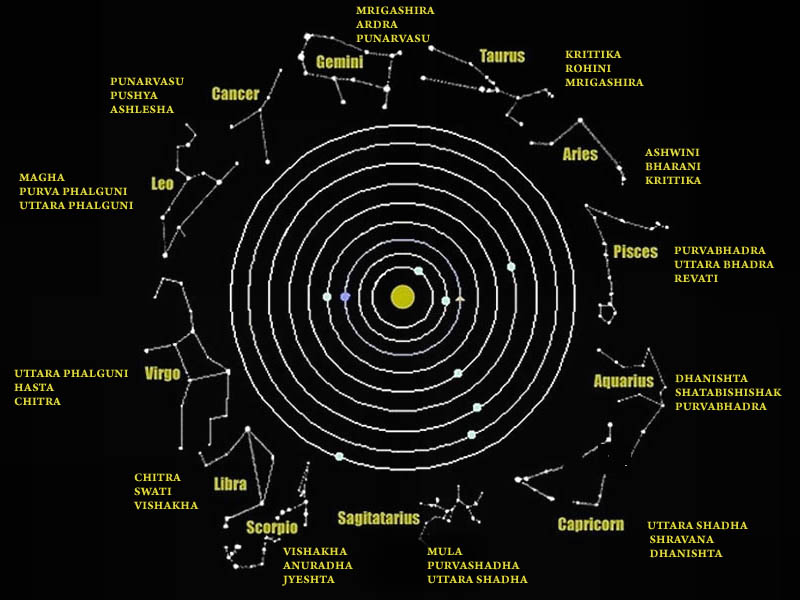
Hindu astronomers divide the ecliptic circle of cosmos in 27 divisions called https://t.co/sLeuV1R2eQ this manner a cross forms in 4 directions in the celestial sky. At centre of this cross is Dhruva(Polestar). In a line from Dhruva, the stars known as Saptarishi can be observed.
The Swastik is a geometrical figure and an ancient religious icon. Swastik has been Sanatan Dharma’s symbol of auspiciousness – mangalya since time immemorial.
The name swastika comes from Sanskrit (Devanagari: स्वस्तिक, pronounced: swastik) &denotes “conducive to wellbeing or auspicious”.
The word Swastik has a definite etymological origin in Sanskrit. It is derived from the roots su – meaning “well or auspicious” & as meaning “being”.
"सु अस्ति येन तत स्वस्तिकं"
Swastik is de symbol through which everything auspicios occurs
Scholars believe word’s origin in Vedas,known as Swasti mantra;
"🕉स्वस्ति ना इन्द्रो वृधश्रवाहा
स्वस्ति ना पूषा विश्ववेदाहा
स्वस्तिनास्तरक्ष्यो अरिश्तनेमिही
स्वस्तिनो बृहस्पतिर्दधातु"
It translates to," O famed Indra, redeem us. O Pusha, the beholder of all knowledge, redeem us. Redeem us O Garudji, of limitless speed and O Bruhaspati, redeem us".
SWASTIK’s COSMIC ORIGIN
The Swastika represents the living creation in the whole Cosmos.
Hindu astronomers divide the ecliptic circle of cosmos in 27 divisions called https://t.co/sLeuV1R2eQ this manner a cross forms in 4 directions in the celestial sky. At centre of this cross is Dhruva(Polestar). In a line from Dhruva, the stars known as Saptarishi can be observed.