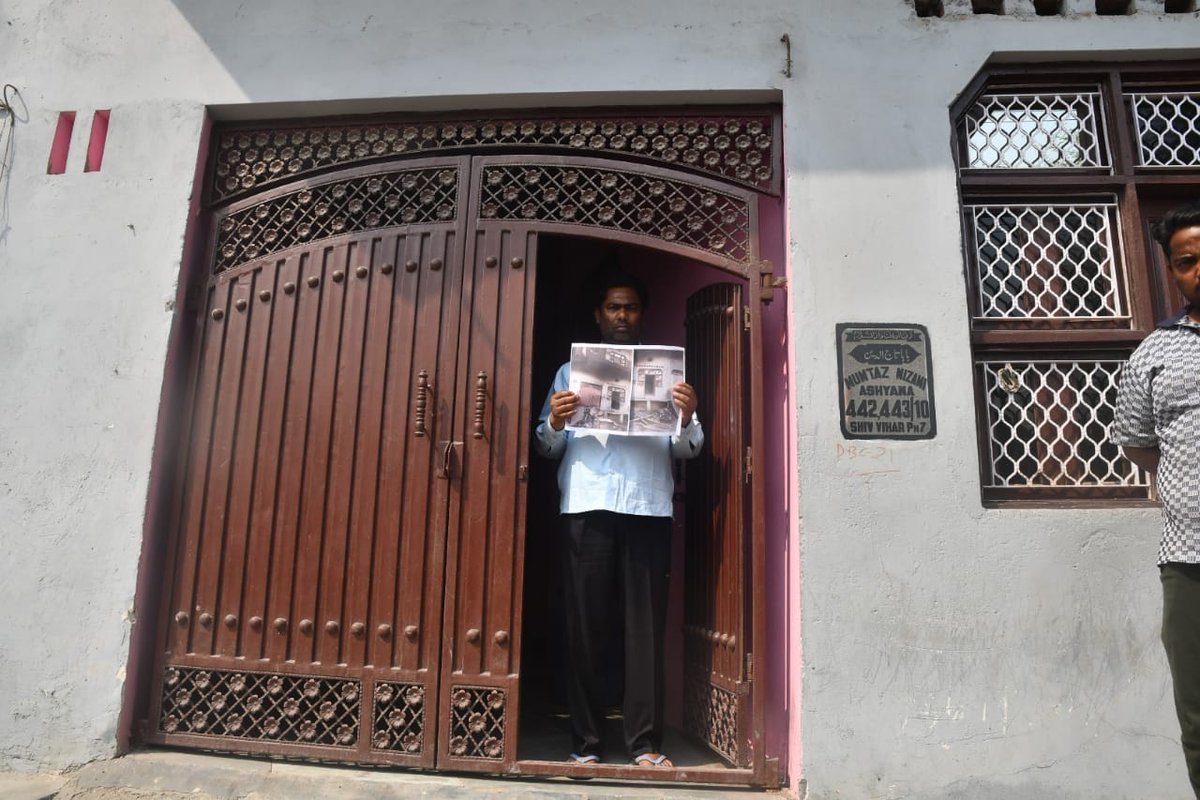
This is why I never wanted kids. Way too much responsibility for another human’s development. Depending on the child, this might either be the day they discovered who they were or the day that traumatized them into a lifelong fuckup. Either way I don’t want to direct the show.
As far as the can opener goes, it wouldn’t even occur to me to try and turn it into a teachable moment. That sounds vaguely quixotic. I’d just show them how immediately. I think my default is to try and instruct clearly but not demonstrate unless the person is truly disoriented.
I think there’s basically a right answer here: show the kid. If the kid has the aptitude they’ll enjoy the mechanism so much they’ll develop the figure-it-out skill with other devices. If not, it’s a training data point that will build remedial levels of intuition more slowly.
I think perseverance is both misframed and over-rated as a virtue. Misframed as in: everybody has potential for it in some areas and lacks it in others. Aptitude is those areas where perseverance comes easily to you. Meta-skill of knowing where/why you persist is more important.
I think of myself as a quitter overall. Across strong/weak areas I’m just not as persevering as the average person. I’ve just discovered a couple of high-value areas where I’m able to stay on a thing like a Terminator, and few other people can. One Weird Trick.
My wife is the opposite. She’s much more persevering than average across many domains. She’ll get mad but won’t quit till things get pyrrhic. The general part of perseverance is emotional self-regulation, including the ability to get mad and unreasonably invested.
Where I’ll go “this is not worth the trouble” she’ll go “I don’t care that this is not worth it, now it’s about winning” and keep at it.
Unpleasant regulatory emotions will make me quit but she’ll just vent a bit and keep at it.
Where I’ll recognize a skill barrier and decide learning it is beyond me or not worth it, she is likely to look for a skilled person to hire and drive *them* nuts until she gets it done. This is a superpower when it comes to dealing with high-skill third parties like doctors.
I think it comes down to raw energy. High-energy people tend to persevere across many domains, low-energy people (like me) tend to strategically identify a few areas where our skill/aptitude makes up for low perseverance energy and low tolerance for emotional regulation stress.
Also cultivating the ability to care about and want many things, which is a skill too. There’s almost nothing I care about enough to not quit at the first sign of trouble/challenges. I’ve improved a bit over the years, and am now dogged and caring in pursuit of more things.
There’s a resourcefulness component too. In the OP the child wanted to simply use a hammer at one point rather than figure it out. People who want the outcome don’t care about the means as much. They’re willing to try many ways and are not attached to prowess in one way.
I’m more resourceful than I am energetic or caring, but sometimes that feels wrong to persevering types. Resourcefulness can go too far and change the goal. For eg. proving you’re right and winning over another person. If you hack the thing too weirdly, you may quit that goal.
Still overall, I think perseverance is over-rated as a virtue. We don’t quit enough or focus our perseverance narrowly enough as a species. We’ve built ourselves a frustrating world that feels like that 6-hours-to-open can must have to that little girl. This feels... unnecessary.
Ie we’ve designed the world to be way more frustrating than it needs to be. It can be much less frustrating if we choose instead to be less deterministic in outlook (go left when going right is too hard etc). Healthy quitterism is really comfort with many ways things could be.
While there is a risk to becoming low-energy/path of least resistance, I think the industrial world trained humans too far in the direction of thinking quitting is a vice, and perseverance a virtue. Because industrial logic is deterministic.
In a way perseverance as a virtue is the flip side of bureaucracy as the primary machine of civilization. The pre-moderns had the fatalist-faith/religion as their primary virtue/mechanism pair, while ours has flexibility/computation as the primary pair.
The thing about bureaucracies is that they are just smart enough to be the preferred problem-solving mechanism where available, by covering a few default cases well, but not smart enough to run the world without human intelligence working relentlessly as a backstop.
Here I mean bureaucracy generally, as in open-loop, formulaic, procedural decision-making and problem-solving that is basically primitive algorithms running on bad computers with humans-as-robots parts. Covers both public and private, market and planned institutions.
Even the dad in the OP clearly has a bureaucratic conception of the intelligence required to “learn” a can opener that he’s trying to inculcate. He’s not wrong. The skill in question is essentially internalizing the logic of a bureaucratic machine (clamp-puncture-rotate-cut).
https://t.co/QFW6Hq2dEm
It’s not a bad or worthless way of looking at the world. Nature is full of machines (DNA transcription is clearly related to TPS report filing). But it’s not the *only* way.
“Perseverance” is basically “getting this dumb machine to do what I want done is frustrating but the least-bad option.” As a mode of being civilized perseverance+bureaucracy (Ie a Kafkaesque unopened-can world of Trials) only looks good relative to outrunning lions in the wild.
This is why “software eating the world” is such a powerful thing. Imagine a can opener that is just slightly smarter. A Young Lady’s Can-Opening Primer. Enough silicon to make it smart-tinkerable.
It’s easy to make fun of internet-of-crap things, but when making something smart works, it *really* works. I make both pourover coffee and use a Nespresso vertuo machine. They have different frustration profiles, but both make good coffee.
Pourover is pre-modern, Vertuo is postmodern. In between you have bureaucratic coffee machines that just make bad coffee.
Pourover has the natural frustrations: percolation physics, temperature, wetting, diffusion.
The Vertuo has digital frustrations: googling for instructions.