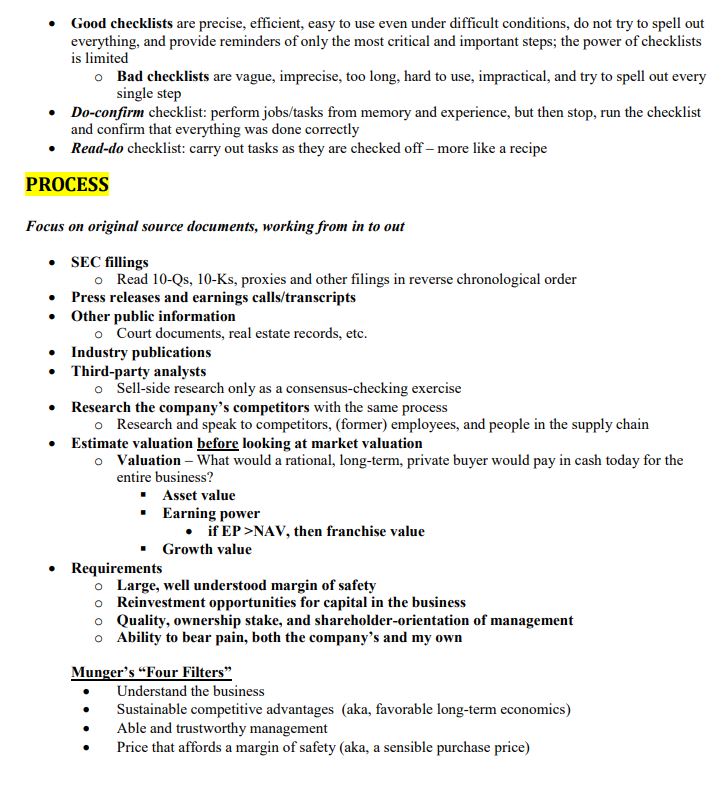
One of my fav docs to come back to during all market cycles. Covering Investment principles, checklists, economic cycles/bubbles, value traps & more. Phenomenal compilation by @pcordway👏
cc: @dmuthuk @Gautam__Baid @saxena_puru
Some of my fav content.⬇️
https://t.co/TIkvktVoJC
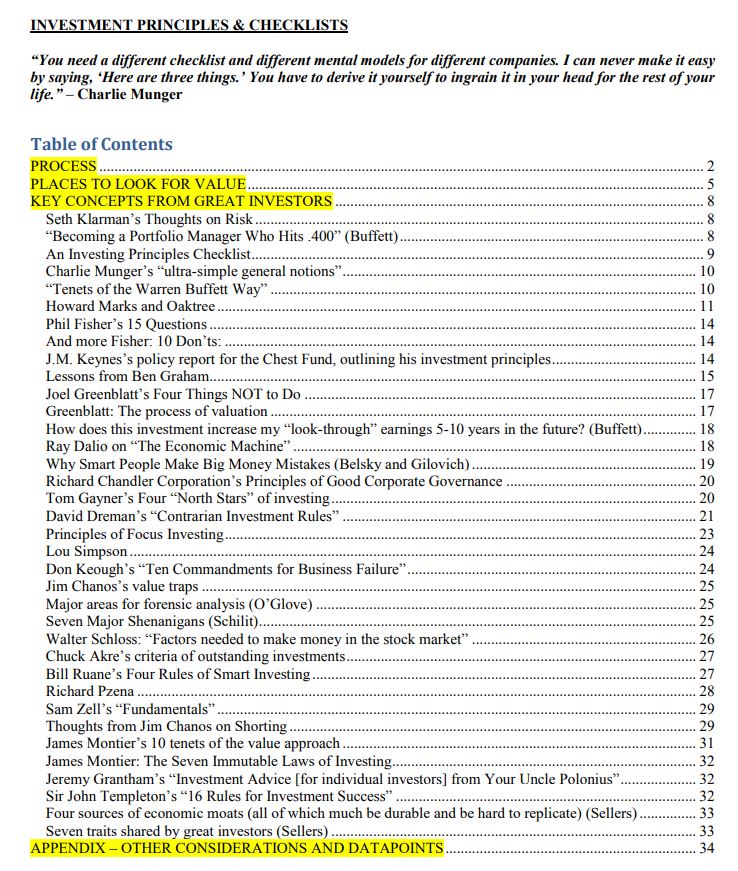


The 2nd pic with "Investment and Credit Cycles" is an essential understanding.
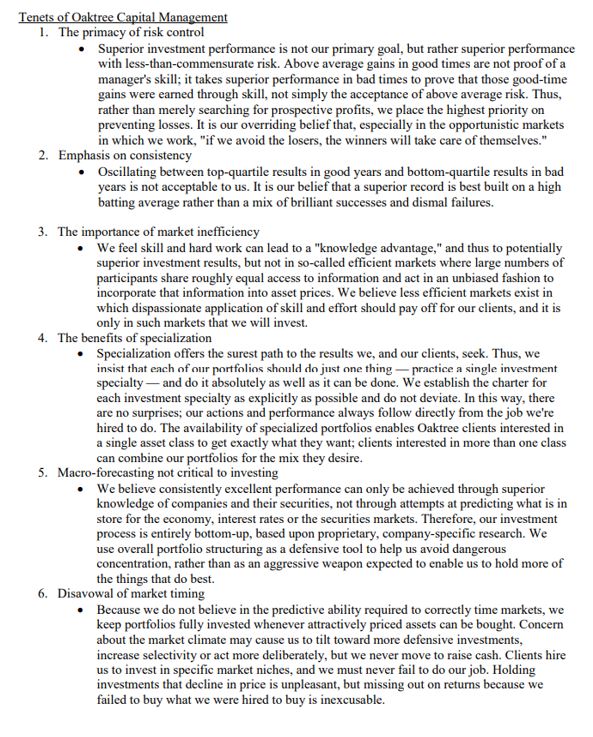
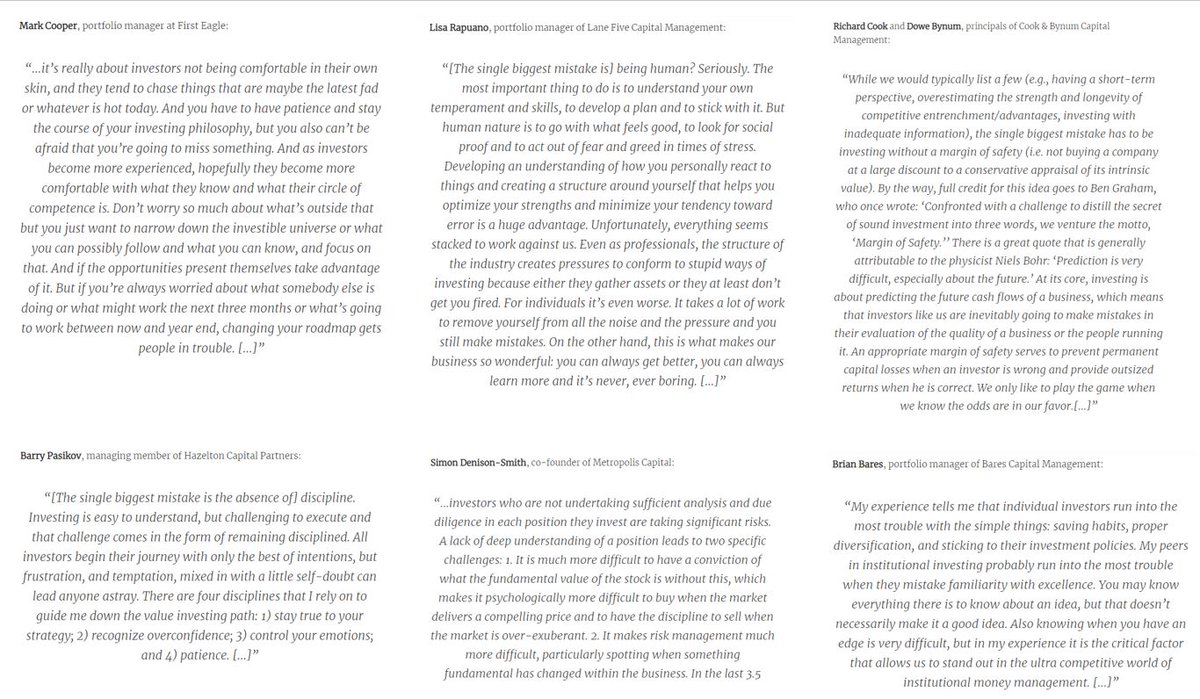
✔️Principles of Focused Investing
✔️Bill Ruane's Four Rules of Smart Investing


More from Ram Bhupatiraju



The "Financial Terms Dictionary" on @Investopedia is such a great resource to learn or quickly re-check major Financial terms and concepts. One of the most useful investing bookmark pages. 👏
cc: @dmuthuk @Gautam__Baid
Few samples
✔️Business Cycle
https://t.co/E4Ukh94yi3
✔️Business Model
https://t.co/zCe1CIfMCA
✔️Economic
✔️Real Estate Investment Trust (REITs)
https://t.co/yMXlps6rtz
✔️Master Limited Partnership (MLPs)
https://t.co/M3mD37H8x4
✔️Venture
✔️Accounting Equation
https://t.co/Oix0I3wA5j
✔️Quality of
cc: @dmuthuk @Gautam__Baid
Few samples
✔️Business Cycle
https://t.co/E4Ukh94yi3
✔️Business Model
https://t.co/zCe1CIfMCA
✔️Economic
✔️Real Estate Investment Trust (REITs)
https://t.co/yMXlps6rtz
✔️Master Limited Partnership (MLPs)
https://t.co/M3mD37H8x4
✔️Venture
✔️Accounting Equation
https://t.co/Oix0I3wA5j
✔️Quality of
More from Finance





You May Also Like

"I really want to break into Product Management"
make products.
"If only someone would tell me how I can get a startup to notice me."
Make Products.
"I guess it's impossible and I'll never break into the industry."
MAKE PRODUCTS.
Courtesy of @edbrisson's wonderful thread on breaking into comics – https://t.co/TgNblNSCBj – here is why the same applies to Product Management, too.
There is no better way of learning the craft of product, or proving your potential to employers, than just doing it.
You do not need anybody's permission. We don't have diplomas, nor doctorates. We can barely agree on a single standard of what a Product Manager is supposed to do.
But – there is at least one blindingly obvious industry consensus – a Product Manager makes Products.
And they don't need to be kept at the exact right temperature, given endless resource, or carefully protected in order to do this.
They find their own way.
make products.
"If only someone would tell me how I can get a startup to notice me."
Make Products.
"I guess it's impossible and I'll never break into the industry."
MAKE PRODUCTS.
Courtesy of @edbrisson's wonderful thread on breaking into comics – https://t.co/TgNblNSCBj – here is why the same applies to Product Management, too.
"I really want to break into comics"
— Ed Brisson (@edbrisson) December 4, 2018
make comics.
"If only someone would tell me how I can get an editor to notice me."
Make Comics.
"I guess it's impossible and I'll never break into the industry."
MAKE COMICS.
There is no better way of learning the craft of product, or proving your potential to employers, than just doing it.
You do not need anybody's permission. We don't have diplomas, nor doctorates. We can barely agree on a single standard of what a Product Manager is supposed to do.
But – there is at least one blindingly obvious industry consensus – a Product Manager makes Products.
And they don't need to be kept at the exact right temperature, given endless resource, or carefully protected in order to do this.
They find their own way.

My top 10 tweets of the year
A thread 👇
https://t.co/xj4js6shhy
https://t.co/b81zoW6u1d
https://t.co/1147it02zs
https://t.co/A7XCU5fC2m
A thread 👇
https://t.co/xj4js6shhy
Entrepreneur\u2019s mind.
— James Clear (@JamesClear) August 22, 2020
Athlete\u2019s body.
Artist\u2019s soul.
https://t.co/b81zoW6u1d
When you choose who to follow on Twitter, you are choosing your future thoughts.
— James Clear (@JamesClear) October 3, 2020
https://t.co/1147it02zs
Working on a problem reduces the fear of it.
— James Clear (@JamesClear) August 30, 2020
It\u2019s hard to fear a problem when you are making progress on it\u2014even if progress is imperfect and slow.
Action relieves anxiety.
https://t.co/A7XCU5fC2m
We often avoid taking action because we think "I need to learn more," but the best way to learn is often by taking action.
— James Clear (@JamesClear) September 23, 2020