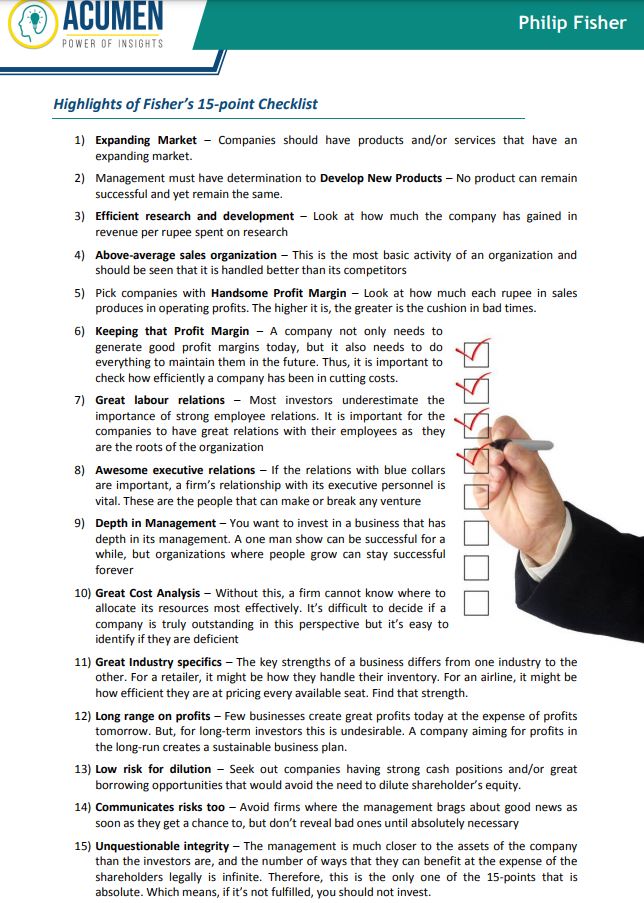
Insights from Philip Fisher. One of the best docs I came across for individual investors.
Phenomenal effort by @SiddharthVoraPL @PLIndiaOnline 👏👏
cc: @dmuthuk @Gautam__Baid @saxena_puru
https://t.co/K19gWk9TFO
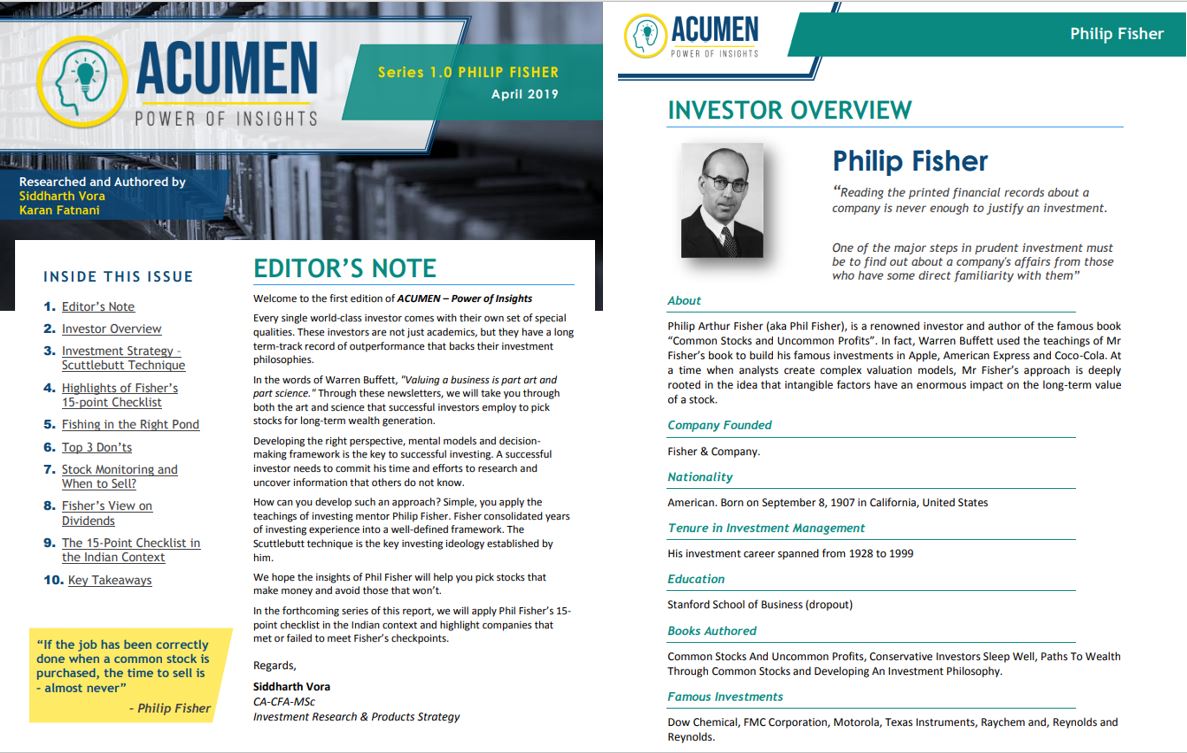
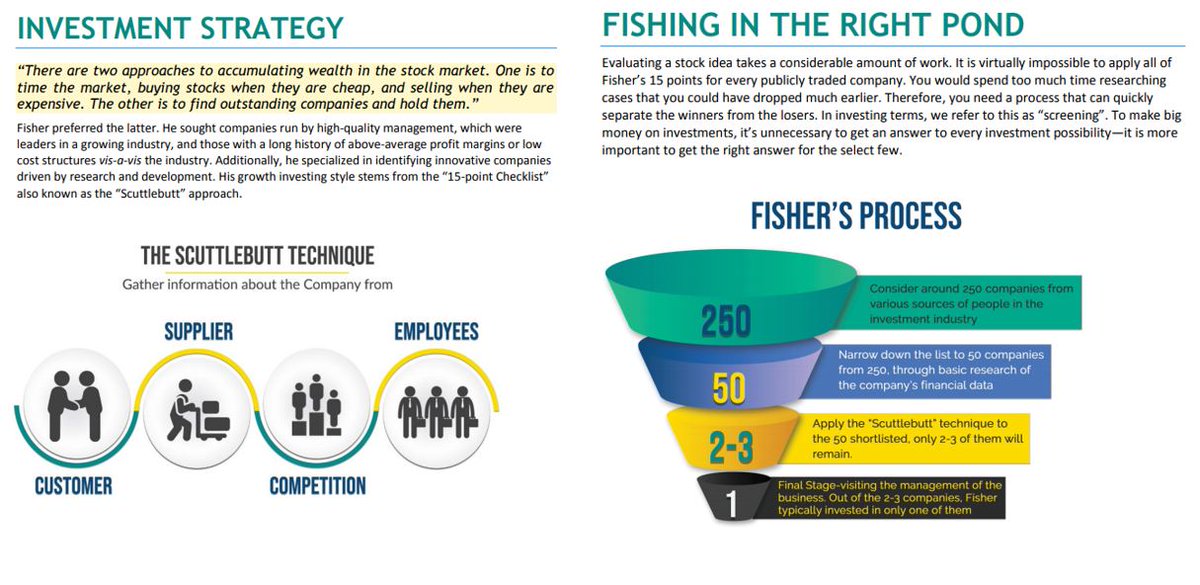
Full scale scuttlebutt is not possible for individual investors (lack of time, resources, contacts), but with efficient search & communication online (tuning out the noise), there are still some ways to do good research.


More from Ram Bhupatiraju
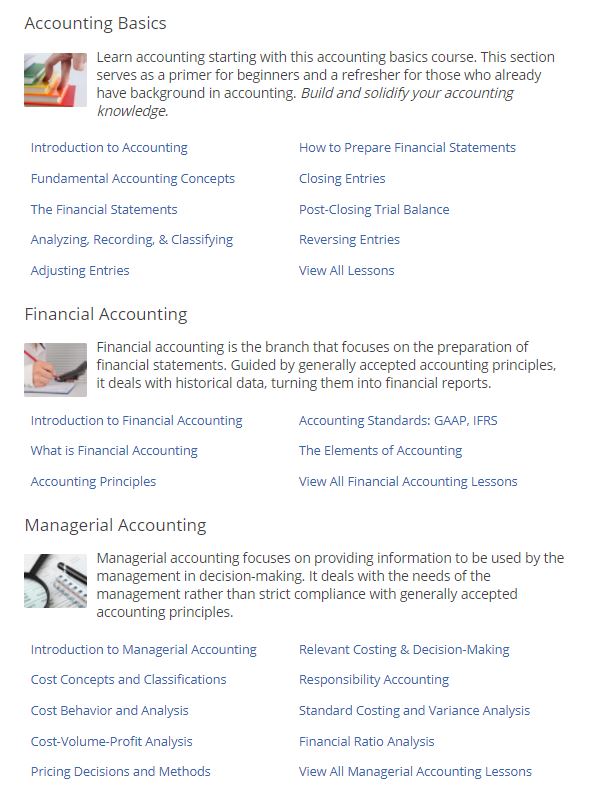
The "Financial Terms Dictionary" on @Investopedia is such a great resource to learn or quickly re-check major Financial terms and concepts. One of the most useful investing bookmark pages. 👏
cc: @dmuthuk @Gautam__Baid
Few samples
✔️Business Cycle
https://t.co/E4Ukh94yi3
✔️Business Model
https://t.co/zCe1CIfMCA
✔️Economic
✔️Real Estate Investment Trust (REITs)
https://t.co/yMXlps6rtz
✔️Master Limited Partnership (MLPs)
https://t.co/M3mD37H8x4
✔️Venture
✔️Accounting Equation
https://t.co/Oix0I3wA5j
✔️Quality of
cc: @dmuthuk @Gautam__Baid
Few samples
✔️Business Cycle
https://t.co/E4Ukh94yi3
✔️Business Model
https://t.co/zCe1CIfMCA
✔️Economic
✔️Real Estate Investment Trust (REITs)
https://t.co/yMXlps6rtz
✔️Master Limited Partnership (MLPs)
https://t.co/M3mD37H8x4
✔️Venture
✔️Accounting Equation
https://t.co/Oix0I3wA5j
✔️Quality of
Excellent short summaries of many good investing books. 👏
cc: @dmuthuk @Gautam__Baid
(Some of the pages might open in German. Use the Translate to English option on the
List 👇
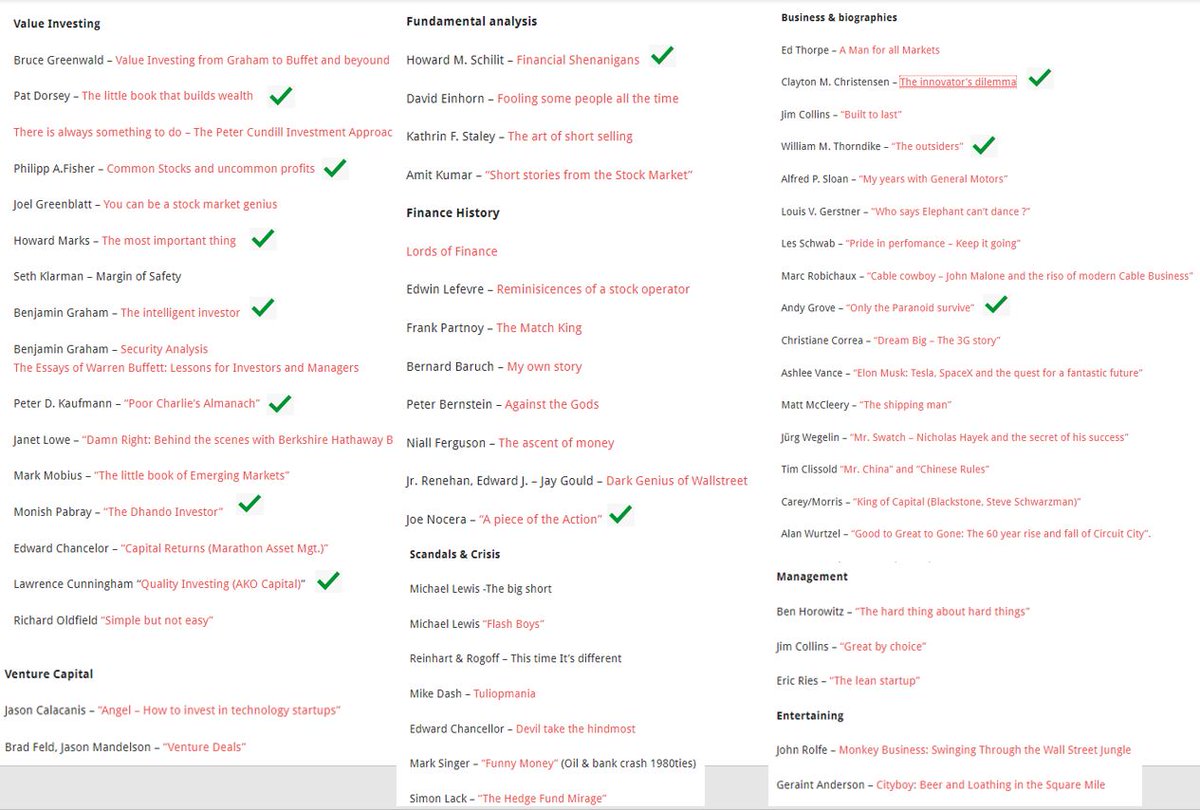
Some of my fav summaries from the list.
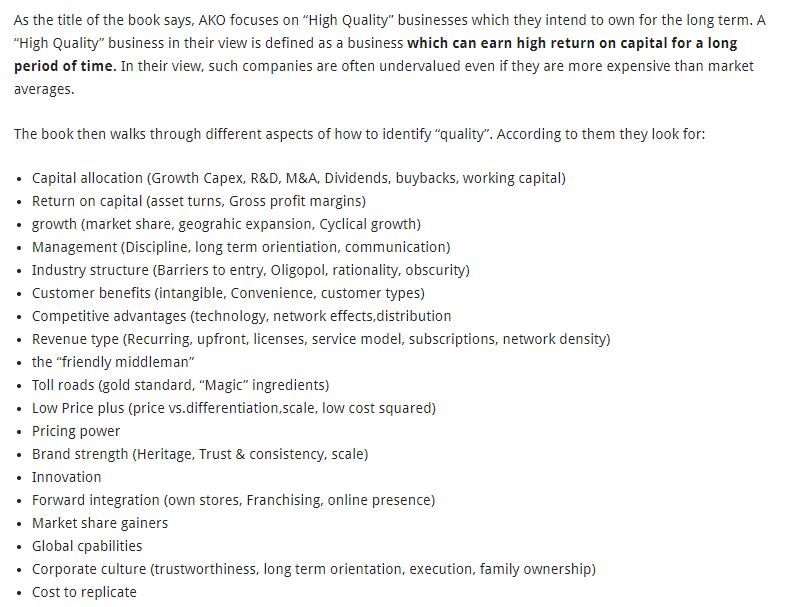
✔️Quality Investing - Lawrence Cunningham
https://t.co/pmVQFPlWby
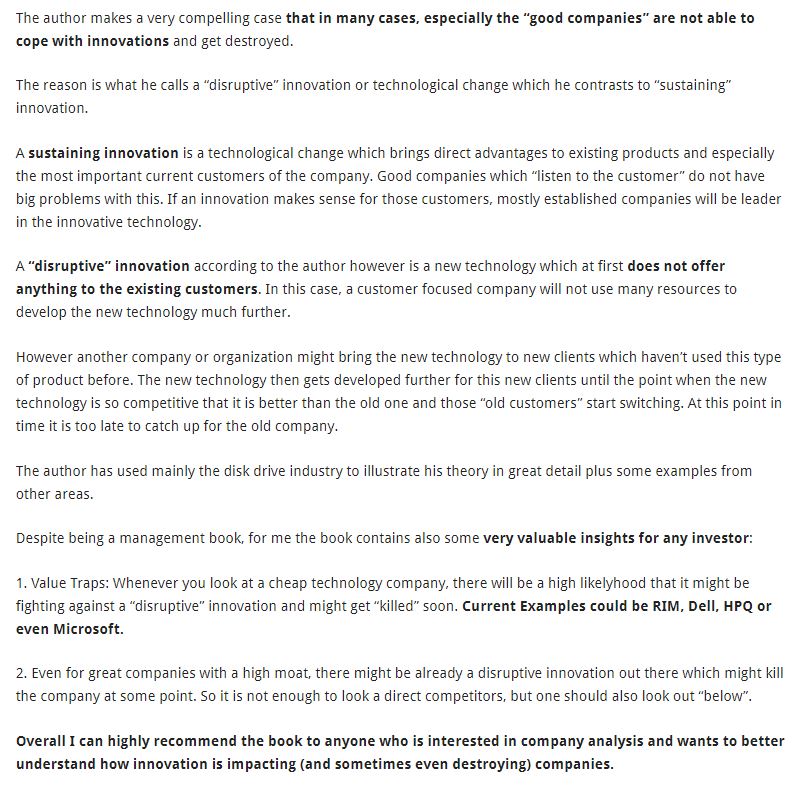
✔️The Innovator's Dilemma – Clayton Christensen
https://t.co/VazvMPEE7D
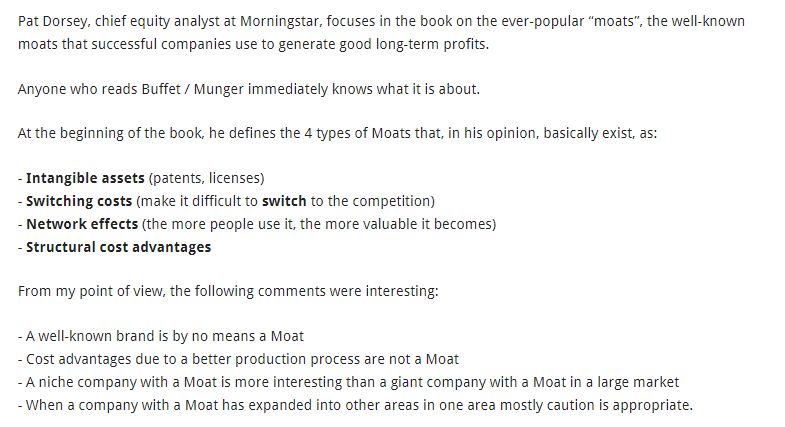
✔️The Little Book That Builds Wealth - Pat Dorsey
https://t.co/sMJspTTQcA
cc: @dmuthuk @Gautam__Baid
(Some of the pages might open in German. Use the Translate to English option on the
List 👇
Some of my fav summaries from the list.
✔️Quality Investing - Lawrence Cunningham
https://t.co/pmVQFPlWby
✔️The Innovator's Dilemma – Clayton Christensen
https://t.co/VazvMPEE7D
✔️The Little Book That Builds Wealth - Pat Dorsey
https://t.co/sMJspTTQcA
More from Equity




Trading view scanner process -
1 - open trading view in your browser and select stock scanner in left corner down side .
2 - touch the percentage% gain change ( and u can see higest gainer of today)
3. Then, start with 6% gainer to 20% gainer and look charts of everyone in daily Timeframe . (For fno selection u can choose 1% to 4% )
4. Then manually select the stocks which are going to give all time high BO or 52 high BO or already given.
5. U can also select those stocks which are going to give range breakout or already given range BO
6 . If in 15 min chart📊 any stock sustaing near BO zone or after BO then select it on your watchlist
7 . Now next day if any stock show momentum u can take trade in it with RM
This looks very easy & simple but,
U will amazed to see it's result if you follow proper risk management.
I did 4x my capital by trading in only momentum stocks.
I will keep sharing such learning thread 🧵 for you 🙏💞🙏
Keep learning / keep sharing 🙏
@AdityaTodmal
1 - open trading view in your browser and select stock scanner in left corner down side .
2 - touch the percentage% gain change ( and u can see higest gainer of today)
Making thread \U0001f9f5 on trading view scanner by which you can select intraday and btst stocks .
— Vikrant (@Trading0secrets) October 22, 2021
In just few hours (Without any watchlist)
Some manual efforts u have to put on it.
Soon going to share the process with u whenever it will be ready .
"How's the josh?"guys \U0001f57a\U0001f3b7\U0001f483
3. Then, start with 6% gainer to 20% gainer and look charts of everyone in daily Timeframe . (For fno selection u can choose 1% to 4% )
4. Then manually select the stocks which are going to give all time high BO or 52 high BO or already given.
5. U can also select those stocks which are going to give range breakout or already given range BO
6 . If in 15 min chart📊 any stock sustaing near BO zone or after BO then select it on your watchlist
7 . Now next day if any stock show momentum u can take trade in it with RM
This looks very easy & simple but,
U will amazed to see it's result if you follow proper risk management.
I did 4x my capital by trading in only momentum stocks.
I will keep sharing such learning thread 🧵 for you 🙏💞🙏
Keep learning / keep sharing 🙏
@AdityaTodmal