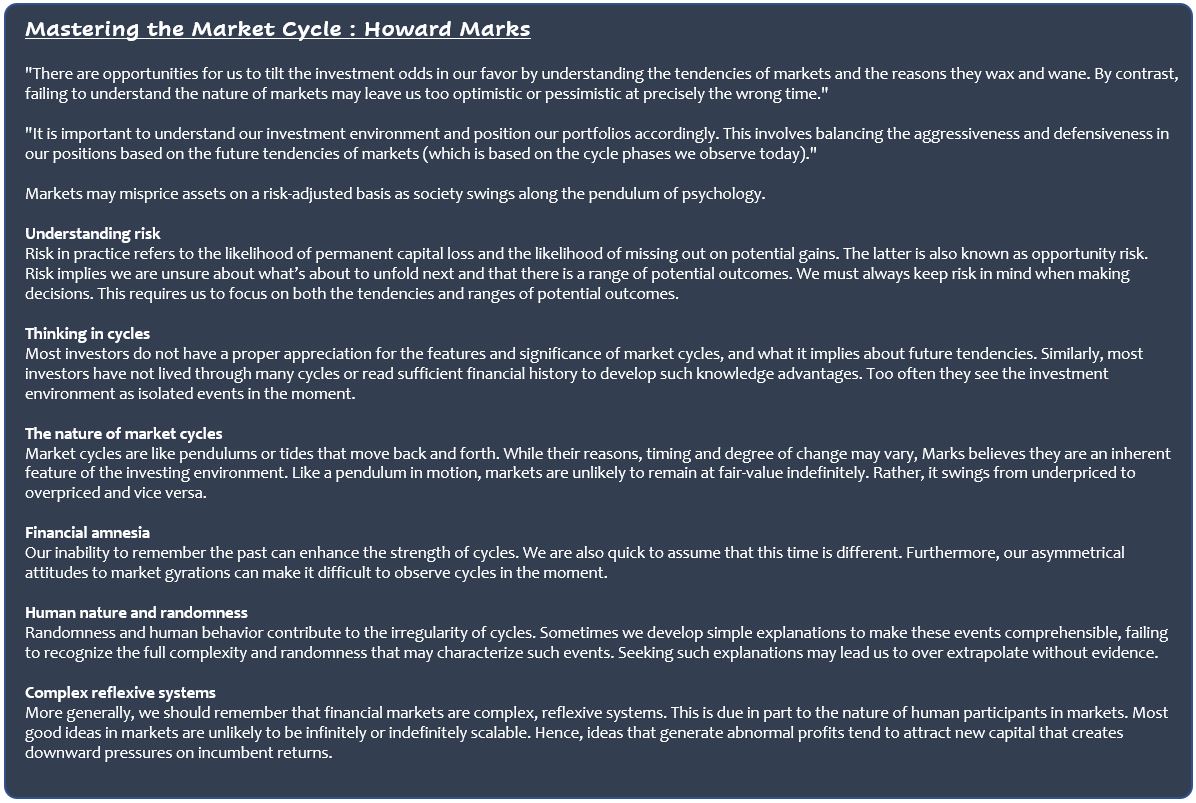
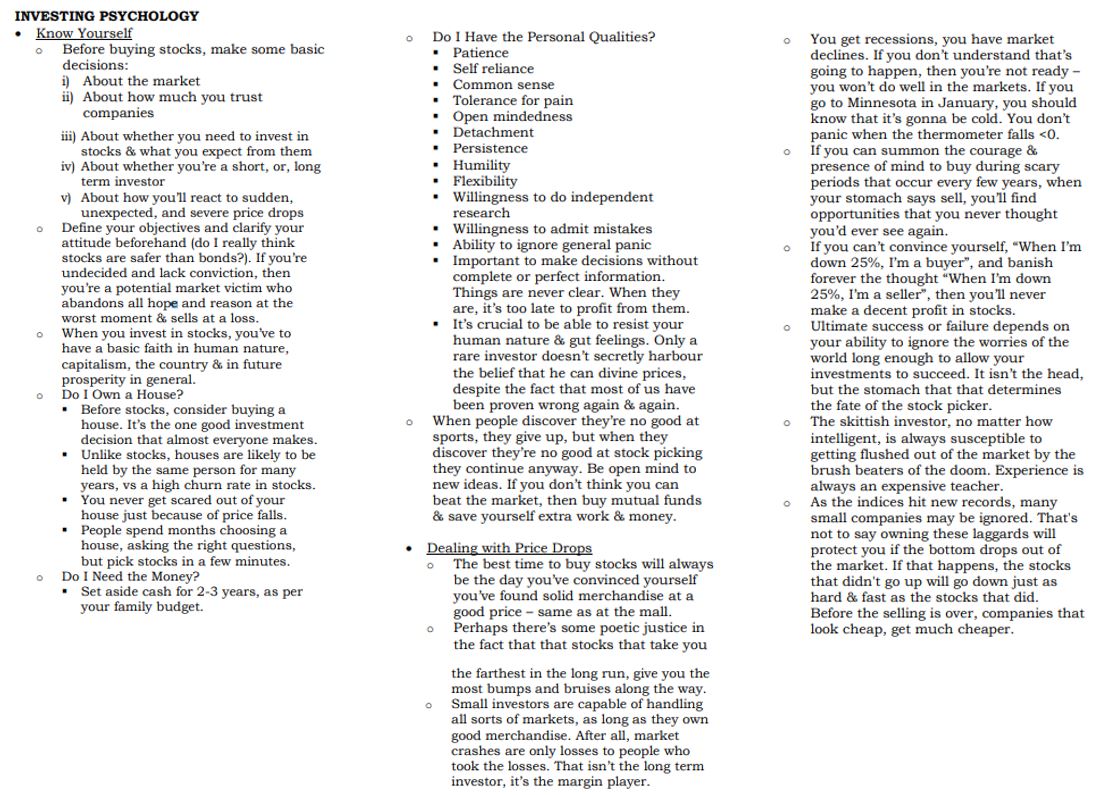
Excellent article on Investor psychology & Market cycles based on Howard Marks' "Mastering the Market Cycle".
cc: @dmuthuk @Gautam__Baid
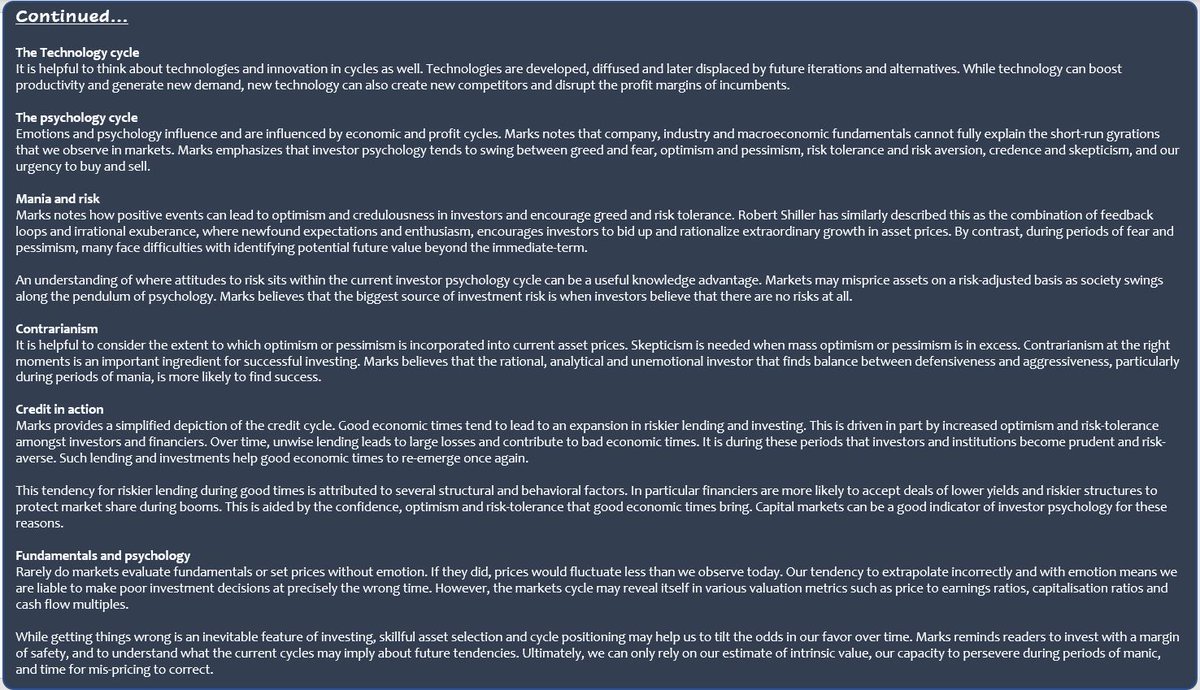
✔️Mania and risk
"The combination of feedback loops and irrational exuberance, where newfound expectations and enthusiasm, encourages investors to bid up and rationalize extraordinary growth in asset prices.
An understanding of where attitudes to risk sits within the current investor psychology cycle can be a useful knowledge advantage.
Marks believes that the biggest source of investment risk is when investors believe that there are no risks at all.
It is helpful to consider the extent to which optimism or pessimism is incorporated into current asset prices. Skepticism is needed when mass optimism or pessimism is in excess. Contrarianism at the right moments is an important ingredient for successful investing
More from Ram Bhupatiraju
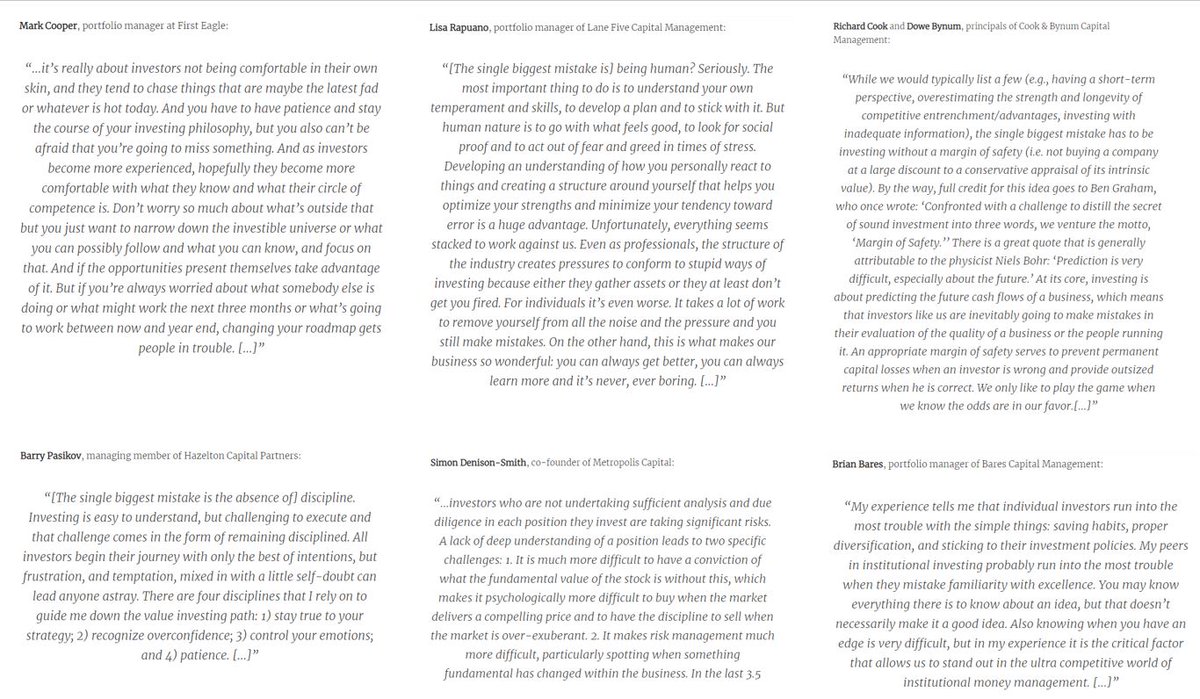



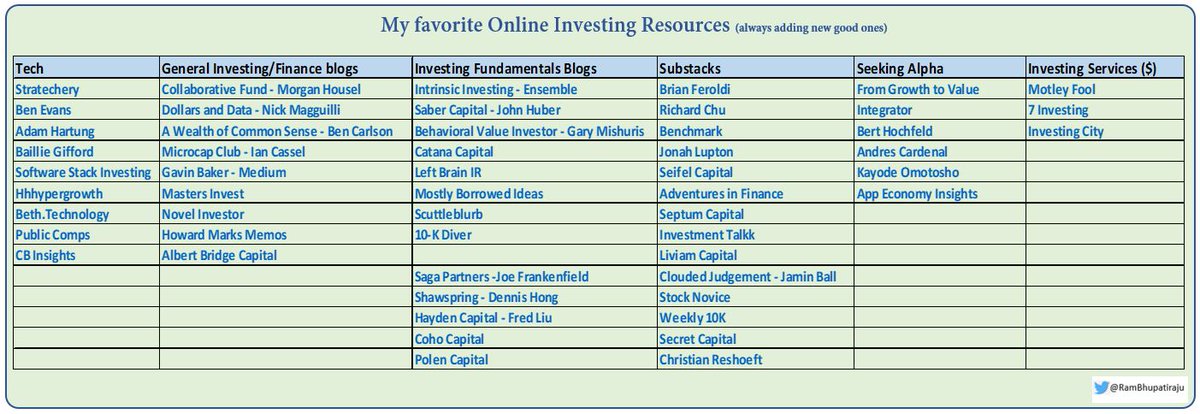
The (investing) world is full of noise📢. Tune that out and find your signal.🗼
Investing websites/blogs that I shared during the @FintwitSummit last weekend. With some minor changes and lot of additional commentary in the thread below. ⬇️⬇️
My investing diet 🗒️
✔️Zero Financial TV.
✔️Very little Market & Stock prices commentary/content.
✔️Lot of Company produced presentations/statements.
✔️ Lot of Investing Podcasts (thread some other time).
✔️Lot of below awesome content whenever I find time.
Tech : Have to start with my favorite sector
✅ @stratechery
For deeper understanding of Platforms and Aggregators.
https://t.co/VsNwRStY9C
✅ @benedictevans
Phenomenal essays related to
✅ @adam_hartung
Extremely good if you are into following & investing in strong/durable trends.
https://t.co/IOE1pmkqbi
✅ @BaillieGifford
Mind blowing, if you're into extremely patient and visionary style of
✅ @StackInvesting
Must read if you love the combination of Software + Investing
https://t.co/WQ1yBYzT2m
✅ @hhhypergrowth
Phenomenal writing if you love technical deep dives into SaaS
https://t.co/kcLKITRLz1
✅ @Beth_Kindig
Sharp Tech focused
Investing websites/blogs that I shared during the @FintwitSummit last weekend. With some minor changes and lot of additional commentary in the thread below. ⬇️⬇️
My investing diet 🗒️
✔️Zero Financial TV.
✔️Very little Market & Stock prices commentary/content.
✔️Lot of Company produced presentations/statements.
✔️ Lot of Investing Podcasts (thread some other time).
✔️Lot of below awesome content whenever I find time.
Tech : Have to start with my favorite sector
✅ @stratechery
For deeper understanding of Platforms and Aggregators.
https://t.co/VsNwRStY9C
✅ @benedictevans
Phenomenal essays related to
✅ @adam_hartung
Extremely good if you are into following & investing in strong/durable trends.
https://t.co/IOE1pmkqbi
✅ @BaillieGifford
Mind blowing, if you're into extremely patient and visionary style of
✅ @StackInvesting
Must read if you love the combination of Software + Investing
https://t.co/WQ1yBYzT2m
✅ @hhhypergrowth
Phenomenal writing if you love technical deep dives into SaaS
https://t.co/kcLKITRLz1
✅ @Beth_Kindig
Sharp Tech focused
Phenomenal book summaries of "The Best Investment Books Ever". h/t @Investbythebook 👏👏
cc: @dmuthuk @Gautam__Baid
I would add
@chriswmayer's 100 Baggers,
@Gautam__Baid's The Joys of Compounding and @morganhousel's The Psychology of Money
and this list would be near perfect.

Few of my favs from the list
✅Classics
✔️Common Stocks Uncommon Profits by Philip Fisher
https://t.co/E937mMZ5gH
✔️One Up On Wall Street by Peter Lynch
https://t.co/KwFObdEDvX
✔️The Intelligent Investor by Benjamin
✔️The Most Important Thing by Howard Marks
https://t.co/NSMlErGnxM
✔️The Essays of Warren Buffett by Lawrence Cunningham
https://t.co/IAdVxIn54d
✔️Poor Charlies Almanack by Charlie Munger
https://t.co/NPIXqociQQ
✔️Margin of Safety by Seth
✅Psychology
✔️Reminiscences of a Stock Operator by Edwin Lefèvre
https://t.co/RxOo45NZor
✔️The Crowd by Gustave Le Bon
https://t.co/paZKS8pQYr
✔️Thinking fast and slow by Daniel
cc: @dmuthuk @Gautam__Baid
I would add
@chriswmayer's 100 Baggers,
@Gautam__Baid's The Joys of Compounding and @morganhousel's The Psychology of Money
and this list would be near perfect.
Few of my favs from the list
✅Classics
✔️Common Stocks Uncommon Profits by Philip Fisher
https://t.co/E937mMZ5gH
✔️One Up On Wall Street by Peter Lynch
https://t.co/KwFObdEDvX
✔️The Intelligent Investor by Benjamin
✔️The Most Important Thing by Howard Marks
https://t.co/NSMlErGnxM
✔️The Essays of Warren Buffett by Lawrence Cunningham
https://t.co/IAdVxIn54d
✔️Poor Charlies Almanack by Charlie Munger
https://t.co/NPIXqociQQ
✔️Margin of Safety by Seth
✅Psychology
✔️Reminiscences of a Stock Operator by Edwin Lefèvre
https://t.co/RxOo45NZor
✔️The Crowd by Gustave Le Bon
https://t.co/paZKS8pQYr
✔️Thinking fast and slow by Daniel
More from Investing


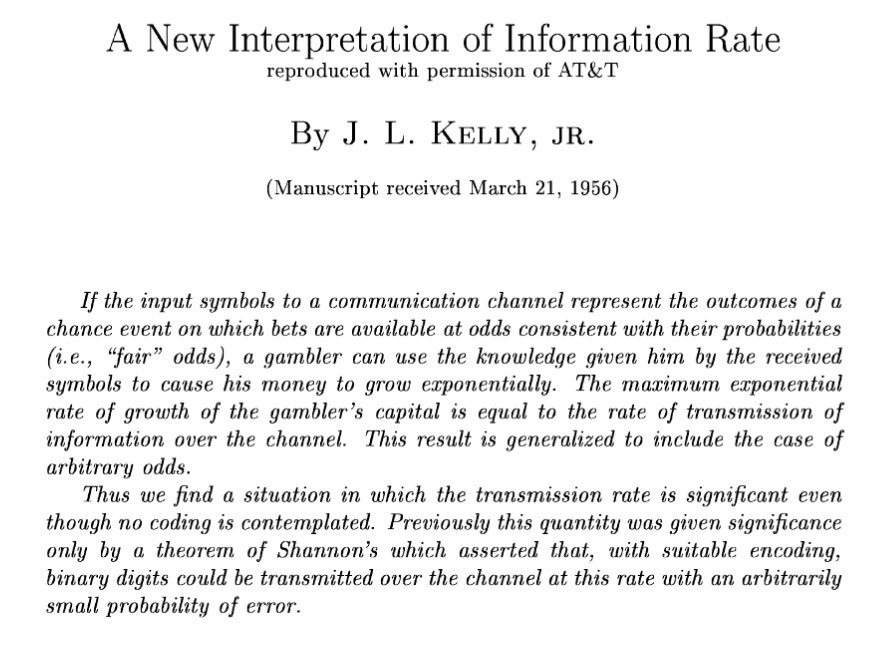




Having a finance degree did not make me a better investor.
Rather, I learned 10x more about investing from Twitter University.
🧵 Here are 5 threads from world-class Fintwitters.
What you learn: Build an investing checklist.
From: @BrianFeroldi, writer at Motley
What you learn: Read 10Ks like a Hedge Fund
From: @FabiusMercurius
What you learn: Perform a DCF analysis.
From: @10kdiver
What you learn: When to sell your stocks
From: @borrowed_ideas, founder at
Rather, I learned 10x more about investing from Twitter University.
🧵 Here are 5 threads from world-class Fintwitters.
What you learn: Build an investing checklist.
From: @BrianFeroldi, writer at Motley
1/ How to create an investment checklist (thread)
— Brian Feroldi (@BrianFeroldi) December 8, 2020
Checklists are an amazing, FREE, underutilized investing tool
Here's the step-by-step process for how to create your own
\u2b07\ufe0f\u2b07\ufe0f\u2b07\ufe0f\u2b07\ufe0f\u2b07\ufe0f\u2b07\ufe0f\u2b07\ufe0f\u2b07\ufe0f\u2b07\ufe0f
What you learn: Read 10Ks like a Hedge Fund
From: @FabiusMercurius
\U0001f9d0How to Read 10Ks Like a Hedge Fund\U0001f9d0
— Ming Zhao (@FabiusMercurius) May 7, 2021
\u201cFundamentals don\u2019t matter anymore!\u201d I\u2019ve heard this a lot lately on Fintwit.\U0001f644
But, for those who\u2019ve diversify beyond $GME and $DOGE, here\u2019s a primer on what metrics fundamental buy-side PMs look at and why:
(real examples outlined)
\U0001f447 pic.twitter.com/tLlNRvpnDK
What you learn: Perform a DCF analysis.
From: @10kdiver
1/
— 10-K Diver (@10kdiver) August 8, 2020
Get a cup of coffee.
In this thread, I'll show you how to do a DCF analysis.
For those unfamiliar, DCF = Discounted Cash Flow.
What you learn: When to sell your stocks
From: @borrowed_ideas, founder at

You May Also Like





A brief analysis and comparison of the CSS for Twitter's PWA vs Twitter's legacy desktop website. The difference is dramatic and I'll touch on some reasons why.
Legacy site *downloads* ~630 KB CSS per theme and writing direction.
6,769 rules
9,252 selectors
16.7k declarations
3,370 unique declarations
44 media queries
36 unique colors
50 unique background colors
46 unique font sizes
39 unique z-indices
https://t.co/qyl4Bt1i5x

PWA *incrementally generates* ~30 KB CSS that handles all themes and writing directions.
735 rules
740 selectors
757 declarations
730 unique declarations
0 media queries
11 unique colors
32 unique background colors
15 unique font sizes
7 unique z-indices
https://t.co/w7oNG5KUkJ

The legacy site's CSS is what happens when hundreds of people directly write CSS over many years. Specificity wars, redundancy, a house of cards that can't be fixed. The result is extremely inefficient and error-prone styling that punishes users and developers.
The PWA's CSS is generated on-demand by a JS framework that manages styles and outputs "atomic CSS". The framework can enforce strict constraints and perform optimisations, which is why the CSS is so much smaller and safer. Style conflicts and unbounded CSS growth are avoided.
Legacy site *downloads* ~630 KB CSS per theme and writing direction.
6,769 rules
9,252 selectors
16.7k declarations
3,370 unique declarations
44 media queries
36 unique colors
50 unique background colors
46 unique font sizes
39 unique z-indices
https://t.co/qyl4Bt1i5x
PWA *incrementally generates* ~30 KB CSS that handles all themes and writing directions.
735 rules
740 selectors
757 declarations
730 unique declarations
0 media queries
11 unique colors
32 unique background colors
15 unique font sizes
7 unique z-indices
https://t.co/w7oNG5KUkJ
The legacy site's CSS is what happens when hundreds of people directly write CSS over many years. Specificity wars, redundancy, a house of cards that can't be fixed. The result is extremely inefficient and error-prone styling that punishes users and developers.
The PWA's CSS is generated on-demand by a JS framework that manages styles and outputs "atomic CSS". The framework can enforce strict constraints and perform optimisations, which is why the CSS is so much smaller and safer. Style conflicts and unbounded CSS growth are avoided.