It outlines and reinforces the fact that business, negotiation and any human interaction is inherently very emotional. Mirroring, tactical empathy, starting with no and labeling are all phenomenal.
Time for a BOOK LIST.
I've read over 250 self-help and business books..
Heres a list of the ones that have had the largest influence on my life and career.
A thread:
It outlines and reinforces the fact that business, negotiation and any human interaction is inherently very emotional. Mirroring, tactical empathy, starting with no and labeling are all phenomenal.
The first stop for any beginner. This is a great book about the importance of creating a business that can thrive without you. Preaches a lot of my favorite business principles like working on the things that are important but not urgent.
This book just has non stop quality advice about how to build a business the right way. Dave doesn’t preach about politics or religion. He just tells it like it is and tells the stories of what worked for him. Phenomenal read.
Ryan preaches stoicism and how to handle emotions, rejection and stress. Managing that split second between an event and your reaction is what life is all about. It shows the importance of remaining humble and the dangers of overconfidence.
My main takeaway is the discussion on strategic decision making. “Radical Open-mindedness”. It’s human nature to want to be right and appear right in the eyes of others. People who make the best decisions know they don’t have all the answers.
This book talks about how to get your life back once your business takes over. How to specialize in your niche and do it really well. Make it scalable and take yourself out of the equation so that it is valuable to a potential buyer. Story format.
Also in story format this is all about removing bottlenecks from your business. Find out what is holding you back and really focus on fixing that issue so you can break through and expand. The owner of the small business is almost always the bottleneck.
Large scalable companies aren’t likely and aren’t the goal of many entrepreneurs. Starting small and specializing is the key to building a great lifestyle business and then an asset that produces money while you live the life you want to be living.
This approach to sales is to frame the situation so that customers SELL YOU and the deals close themselves. He came on the podcast and outlined this framework.
Life is all about being comfortable in uncomfortable situations. Everyone is a salesman and sales is uncomfortable. This book is a pump up about determination and perseverance and its importance. Its not always going to be fun.
I read this book when I was 21 and it has saved me hundreds of thousands of dollars. It reads like a textbook but its insanely valuable.
What traits, skills or routines are most likely to lead to success? A study backed book full of stories and great insights into what it really takes to win at life and business.
Release date March 2022. All about small biz and real estate mindset and strategy.
Get notified here: https://t.co/FEt1sBoSWS
This is a short book (75 pages) and it only took me a few hours to read. Its meant to get you thinking and the real works when you apply the concepts to your life and your business. My summary here.
How to be interesting, tell stories and tug and folks' heartstrings. A great book on sales, copywriting, and building deeper relationships. Highly recommend.
A story of NYC in the 70s and 80s and how a real estate empire was built and the city was rejuvenated. I can't help but think about all the similarities we could be seeing in our cities soon. An amazing read for anyone interested in RE.
A story of how a man came from nothing and built up a huge empire of banana farms. Corruption, business, it has it all! I'll never look at a banana the same way.
The autobiography of Ted Turner. Unbelievable story of how he took back his fathers small business when he passed away and turned it into an EMPIRE.
All while spending 3+ mo a year on a sailboat as a pro racer.
Life and business advice wrapped into an amazing book. Corny name, great content.
As good as it gets when it comes to doing the right work and not just setting the right goals. Life is about systems and processes, not goals and dreams.
How to Win Friends & Influence People
7 Habits of Highly Effective People
Rich Dad / Poor Dad
Shoe Dog
4 Hour Workweek
The Pearl - Steinbeck
Titan - Rockefeller
Traction
Hypomanic Edge
Can't Hurt Me
More from Nick Huber

More from Culture


I just finished Eric Adler's The Battle of the Classics, and wanted to say something about Joel Christiansen's review linked below. I am not sure what motivates the review (I speculate a bit below), but it gives a very misleading impression of the book. 1/x
The meat of the criticism is that the history Adler gives is insufficiently critical. Adler describes a few figures who had a great influence on how the modern US university was formed. It's certainly critical: it focuses on the social Darwinism of these figures. 2/x
Other insinuations and suggestions in the review seem wildly off the mark, distorted, or inappropriate-- for example, that the book is clickbaity (it is scholarly) or conservative (hardly) or connected to the events at the Capitol (give me a break). 3/x
The core question: in what sense is classics inherently racist? Classics is old. On Adler's account, it begins in ancient Rome and is revived in the Renaissance. Slavery (Christiansen's primary concern) is also very old. Let's say classics is an education for slaveowners. 4/x
It's worth remembering that literacy itself is elite throughout most of this history. Literacy is, then, also the education of slaveowners. We can honor oral and musical traditions without denying that literacy is, generally, good. 5/x
As someone\u2019s who\u2019s read the book, this review strikes me as tremendously unfair. It mostly faults Adler for not writing the book the reviewer wishes he had! https://t.co/pqpt5Ziivj
— Teresa M. Bejan (@tmbejan) January 12, 2021
The meat of the criticism is that the history Adler gives is insufficiently critical. Adler describes a few figures who had a great influence on how the modern US university was formed. It's certainly critical: it focuses on the social Darwinism of these figures. 2/x
Other insinuations and suggestions in the review seem wildly off the mark, distorted, or inappropriate-- for example, that the book is clickbaity (it is scholarly) or conservative (hardly) or connected to the events at the Capitol (give me a break). 3/x
The core question: in what sense is classics inherently racist? Classics is old. On Adler's account, it begins in ancient Rome and is revived in the Renaissance. Slavery (Christiansen's primary concern) is also very old. Let's say classics is an education for slaveowners. 4/x
It's worth remembering that literacy itself is elite throughout most of this history. Literacy is, then, also the education of slaveowners. We can honor oral and musical traditions without denying that literacy is, generally, good. 5/x


You May Also Like


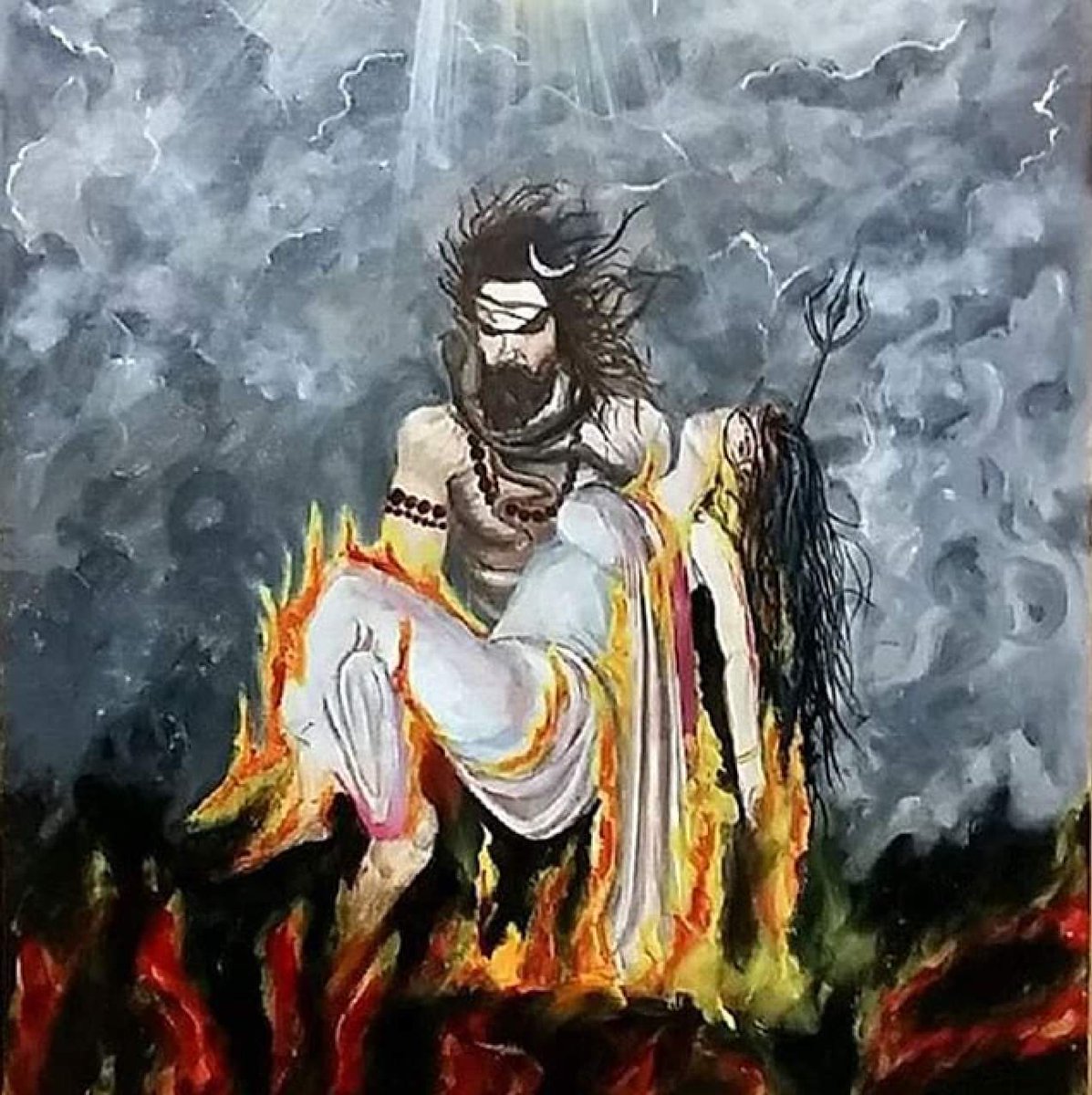





First thread of the year because I have time during MCO. As requested, a thread on the gods and spirits of Malay folk religion. Some are indigenous, some are of Indian origin, some have Islamic
Before I begin, it might be worth explaining the Malay conception of the spirit world. At its deepest level, Malay religious belief is animist. All living beings and even certain objects are said to have a soul. Natural phenomena are either controlled by or personified as spirits
Although these beings had to be respected, not all of them were powerful enough to be considered gods. Offerings would be made to the spirits that had greater influence on human life. Spells and incantations would invoke their
Two known examples of such elemental spirits that had god-like status are Raja Angin (king of the wind) and Mambang Tali Arus (spirit of river currents). There were undoubtedly many more which have been lost to time
Contact with ancient India brought the influence of Hinduism and Buddhism to SEA. What we now call Hinduism similarly developed in India out of native animism and the more formal Vedic tradition. This can be seen in the multitude of sacred animals and location-specific Hindu gods
i wonder if you can make a thread bout witchcraft in malaysia.. or list of our own local gods/deites..
— r a y a \U0001f319 (@lcvelylilith) February 20, 2020
Before I begin, it might be worth explaining the Malay conception of the spirit world. At its deepest level, Malay religious belief is animist. All living beings and even certain objects are said to have a soul. Natural phenomena are either controlled by or personified as spirits
Although these beings had to be respected, not all of them were powerful enough to be considered gods. Offerings would be made to the spirits that had greater influence on human life. Spells and incantations would invoke their
Animist ceremonies of a religious or magical nature were normally held for the purpose of divination or making a request. This would either be done at a keramat or at a shrine similar to the Thai spirit houses or Chinese roadside shrines pic.twitter.com/I1hliyi0x3
— \u2745\u1710\u170b\u1713\u170e (@uglyluhan) June 16, 2019
Two known examples of such elemental spirits that had god-like status are Raja Angin (king of the wind) and Mambang Tali Arus (spirit of river currents). There were undoubtedly many more which have been lost to time
Contact with ancient India brought the influence of Hinduism and Buddhism to SEA. What we now call Hinduism similarly developed in India out of native animism and the more formal Vedic tradition. This can be seen in the multitude of sacred animals and location-specific Hindu gods