The Blank Sheet Method that will 10x your reading comprehension.
Here is how it works.
The blank sheet primes your brain for what you’re about to read. At the start you’re forced to search your memory and put on paper what you know (or what you think you know) about a subject. As you read, you put new things on top of the foundation.
Over 300k people read. See what you're missing.
https://t.co/DoOg6Mli3N
More from Culture






One of the authors of the Policy Exchange report on academic free speech thinks it is "ridiculous" to expect him to accurately portray an incident at Cardiff University in his study, both in the reporting and in a question put to a student sample.
Here is the incident Kaufmann incorporated into his study, as told by a Cardiff professor who was there. As you can see, the incident involved the university intervening to *uphold* free speech principles:
Here is the first mention of the Greer at Cardiff incident in Kaufmann's report. It refers to the "concrete case" of the "no-platforming of Germaine Greer". Any reasonable reader would assume that refers to an incident of no-platforming instead of its opposite.

Here is the next mention of Greer in the report. The text asks whether the University "should have overruled protestors" and "stepped in...and guaranteed Greer the right to speak". Again the strong implication is that this did not happen and Greer was "no platformed".
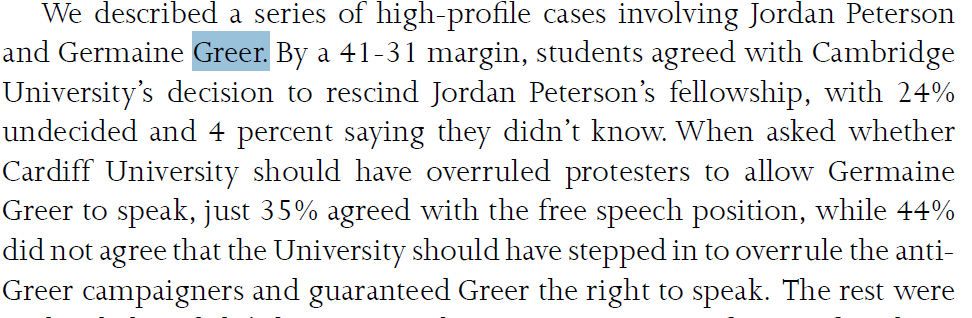
The authors could easily have added a footnote at this point explaining what actually happened in Cardiff. They did not.
This is ridiculous. Students were asked for their views on this example and several others. The study findings and conclusions were about student responses not the substance of each case. Could\u2019ve used hypotheticals. The responses not the cases were the basis of the conclusions.
— Eric Kaufmann (@epkaufm) February 17, 2021
Here is the incident Kaufmann incorporated into his study, as told by a Cardiff professor who was there. As you can see, the incident involved the university intervening to *uphold* free speech principles:
The UK govt\u2019s paper on free speech in Unis (with implications for Wales) is getting a lot of attention.
— Richard Wyn Jones (@RWynJones) February 16, 2021
Worth noting then that an important part of the evidence-base on which it rests relates to (demonstrably false) claims about my own institution
1/https://t.co/buoGE7ocG7
Here is the first mention of the Greer at Cardiff incident in Kaufmann's report. It refers to the "concrete case" of the "no-platforming of Germaine Greer". Any reasonable reader would assume that refers to an incident of no-platforming instead of its opposite.
Here is the next mention of Greer in the report. The text asks whether the University "should have overruled protestors" and "stepped in...and guaranteed Greer the right to speak". Again the strong implication is that this did not happen and Greer was "no platformed".
The authors could easily have added a footnote at this point explaining what actually happened in Cardiff. They did not.


You May Also Like



THREAD PART 1.
On Sunday 21st June, 14 year old Noah Donohoe left his home to meet his friends at Cave Hill Belfast to study for school. #RememberMyNoah💙
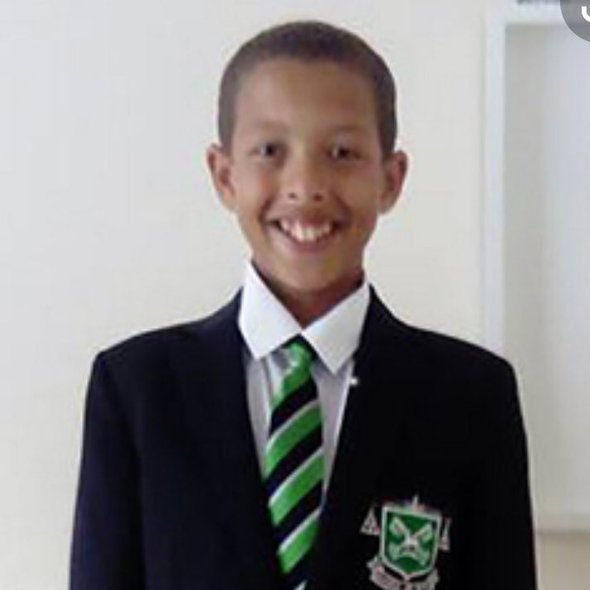
He was on his black Apollo mountain bike, fully dressed, wearing a helmet and carrying a backpack containing his laptop and 2 books with his name on them. He also had his mobile phone with him.
On the 27th of June. Noah's naked body was sadly discovered 950m inside a storm drain, between access points. This storm drain was accessible through an area completely unfamiliar to him, behind houses at Northwood Road. https://t.co/bpz3Rmc0wq
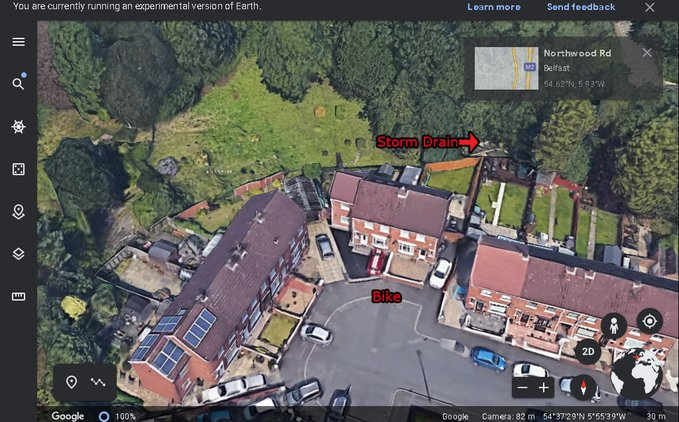
"Noah's body was found by specially trained police officers between two drain access points within a section of the tunnel running under the Translink access road," said Mr McCrisken."
Noah's bike was also found near a house, behind a car, in the same area. It had been there for more than 24 hours before a member of public who lived in the street said she read reports of a missing child and checked the bike and phoned the police.
On Sunday 21st June, 14 year old Noah Donohoe left his home to meet his friends at Cave Hill Belfast to study for school. #RememberMyNoah💙
He was on his black Apollo mountain bike, fully dressed, wearing a helmet and carrying a backpack containing his laptop and 2 books with his name on them. He also had his mobile phone with him.
On the 27th of June. Noah's naked body was sadly discovered 950m inside a storm drain, between access points. This storm drain was accessible through an area completely unfamiliar to him, behind houses at Northwood Road. https://t.co/bpz3Rmc0wq
"Noah's body was found by specially trained police officers between two drain access points within a section of the tunnel running under the Translink access road," said Mr McCrisken."
Noah's bike was also found near a house, behind a car, in the same area. It had been there for more than 24 hours before a member of public who lived in the street said she read reports of a missing child and checked the bike and phoned the police.