https://t.co/QhTuuDsVwL
I have studied the pandemic response of many countries. One of them got a key element right, which resulted in very few deaths: Japan. Their response was to keep people OUT of hospitals. A policy of early home treatment works best, hospitals only for severe cases & NO INTUBATIONS
https://t.co/QhTuuDsVwL
More from Robin Monotti FRSA
The problem with meta-analysis like this is that it obfuscates the most important issue of treatment, which is timing.
This meta-analysis of controlled trials only looks at hospitalized patients. How long were the patients ill for before being hospitalized? One week? Two? Three? Too late for zinc ionophores (HCQ) (+ZINC? No zinc no point..) to work. Severe illness becomes bacterial in nature.
Was azythromycin administered when the bacterial infections were also too advanced? I have seen Azythromycin work with my very own eyes but that's not to say that if administered too late it may not save the patient. How many patients were given AZT & ventilated? It's all timing.
All the meta-analysis is telling us is if you leave it too late you may have missed the early window for antiviral zinc treatment (Zn+HCQ) & that if you are given AZT when you are ventilated or very severe it may too late for it to save you & corticosteroids may be last resort.
And of course antibiotics need also probiotics, or they may harm the bacterial flora which is part of the immune response. Difficult to tell from a meta-analysis how this problem was managed.
#BMJResearch update: Corticosteroids probably reduce mortality and mechanical ventilation in patients with covid-19 compared with standard care, whereas azithromycin, hydroxychloroquine, interferon-beta, and tocilizumab may not reduce either https://t.co/oQ3lTWUqaz
— The BMJ (@bmj_latest) December 18, 2020
This meta-analysis of controlled trials only looks at hospitalized patients. How long were the patients ill for before being hospitalized? One week? Two? Three? Too late for zinc ionophores (HCQ) (+ZINC? No zinc no point..) to work. Severe illness becomes bacterial in nature.
Was azythromycin administered when the bacterial infections were also too advanced? I have seen Azythromycin work with my very own eyes but that's not to say that if administered too late it may not save the patient. How many patients were given AZT & ventilated? It's all timing.
All the meta-analysis is telling us is if you leave it too late you may have missed the early window for antiviral zinc treatment (Zn+HCQ) & that if you are given AZT when you are ventilated or very severe it may too late for it to save you & corticosteroids may be last resort.
And of course antibiotics need also probiotics, or they may harm the bacterial flora which is part of the immune response. Difficult to tell from a meta-analysis how this problem was managed.
I’m not just a lockdown sceptic. I know lockdowns increase infections rather than decrease them because I read research first hand. I’m a citizen in a democracy who wants Government policy to be evidence-based, not epidemiological modelling based. Crazy, I know.
Lockdowns increase infections because they lower immunity & therefore increase the disease. After hospitals & care homes households account for the largest number of transmissions. Schools/universities act as a break in transmission of the disease. All evidence based.
Transmission does not mean infection. I can transmit SARSCoV2 but I can't transmit Covid19. Whether SARSCoV2 develops at all into mild or severe Covid19 depends entirely on the immune system of the recipient. Early treatment prevents severe Covid19, the right treatment cures it.
"Children act more as a brake on infection," said Prof. Reinhard Berner, the head of pediatric medicine at Dresden University Hospital and leader of the study. "Not every infection that reaches them is passed
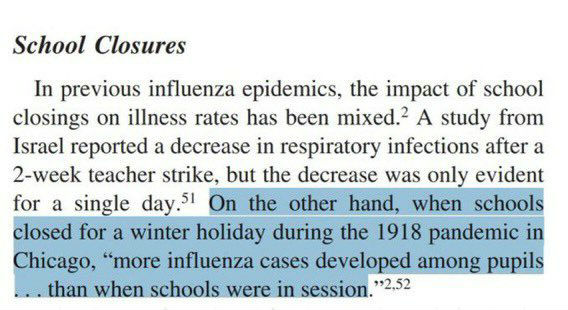
Closing schools increases transmission of respiratory viral infection because children act as a break on the community transmission of the virus. We have known this since 1918:
https://t.co/TPRYQ1LAAJ
Lockdowns increase infections because they lower immunity & therefore increase the disease. After hospitals & care homes households account for the largest number of transmissions. Schools/universities act as a break in transmission of the disease. All evidence based.
Transmission does not mean infection. I can transmit SARSCoV2 but I can't transmit Covid19. Whether SARSCoV2 develops at all into mild or severe Covid19 depends entirely on the immune system of the recipient. Early treatment prevents severe Covid19, the right treatment cures it.
"Children act more as a brake on infection," said Prof. Reinhard Berner, the head of pediatric medicine at Dresden University Hospital and leader of the study. "Not every infection that reaches them is passed
Closing schools increases transmission of respiratory viral infection because children act as a break on the community transmission of the virus. We have known this since 1918:
https://t.co/TPRYQ1LAAJ
The evidence based science shows that medical face masks for the healthy do not alter rates of community transmission of SARSCoV2 while they contribute to the plastic pollution of planet. Cloth & masks of other materials increase rates of infection through nebulization spread.
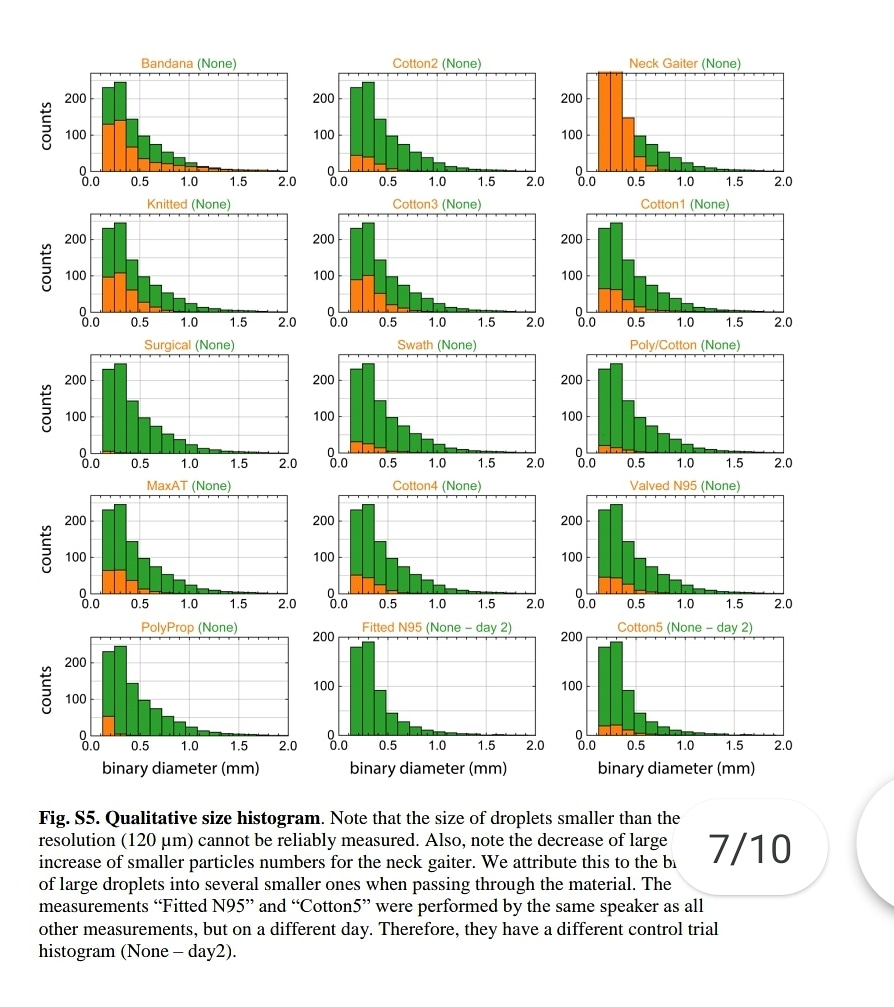
"Speaking through some masks dispersed largest droplets into a multitude of smaller droplets..smaller particles are airborne longer than large droplets (larger droplets sink faster), a mask might be counterproductive."
https://t.co/jBQlWRxcEL
Influenza like illness rates 3 times higher with cloth masks when compared to control group:
https://t.co/djT0mfutv9
Prof. Carl Heneghan, Oxford University: "The high quality trial evidence for cloth masks suggest they increase your rate of reinfection."

Please note, droplets smaller than 120 microns can't be measured. SARSCoV2 is 0.14 microns. This means that the nebulization effect of medical masks could not be measured, not that it does not happen. ⬇️
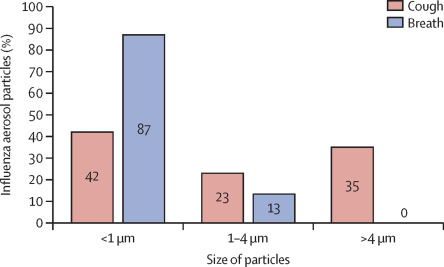
The really small aerosols <1 μm [the ones that pass through ALL surgical masks] can penetrate all the way to the alveoli - the basic units for gas exchange
"Speaking through some masks dispersed largest droplets into a multitude of smaller droplets..smaller particles are airborne longer than large droplets (larger droplets sink faster), a mask might be counterproductive."
https://t.co/jBQlWRxcEL
Influenza like illness rates 3 times higher with cloth masks when compared to control group:
https://t.co/djT0mfutv9
Prof. Carl Heneghan, Oxford University: "The high quality trial evidence for cloth masks suggest they increase your rate of reinfection."
Please note, droplets smaller than 120 microns can't be measured. SARSCoV2 is 0.14 microns. This means that the nebulization effect of medical masks could not be measured, not that it does not happen. ⬇️
"Speaking through some masks dispersed largest droplets into a multitude of smaller droplets..smaller particles are airborne longer than large droplets (larger droplets sink faster), a mask might be counterproductive."https://t.co/jBQlWRxcEL pic.twitter.com/XeKYFmjsGs
— Robin Monotti (@robinmonotti) January 15, 2021
The really small aerosols <1 μm [the ones that pass through ALL surgical masks] can penetrate all the way to the alveoli - the basic units for gas exchange
4/In humans, larger aerosols deposit in upper throat, nose, & tracheobronchial region of the lung. Medium-sized aerosols mostly deposit in small airways further down. The really small aerosols <1 \u03bcm can penetrate all the way to the alveoli - the basic units for gas exchange. 4/7 pic.twitter.com/9ZJb4JrZqI
— Dr. Ali Nouri (@AliNouriPhD) December 29, 2020
More from Category c19

1/: Avicenna was a Persian scientist, who lived 1000 years ago. He put two lambs in separate cages, which had the same health conditions. But only one lamb could see a wolf that was put in a third cage. The observations were astounding. (h/t @farmer_student) ⬇️a thread⬇️
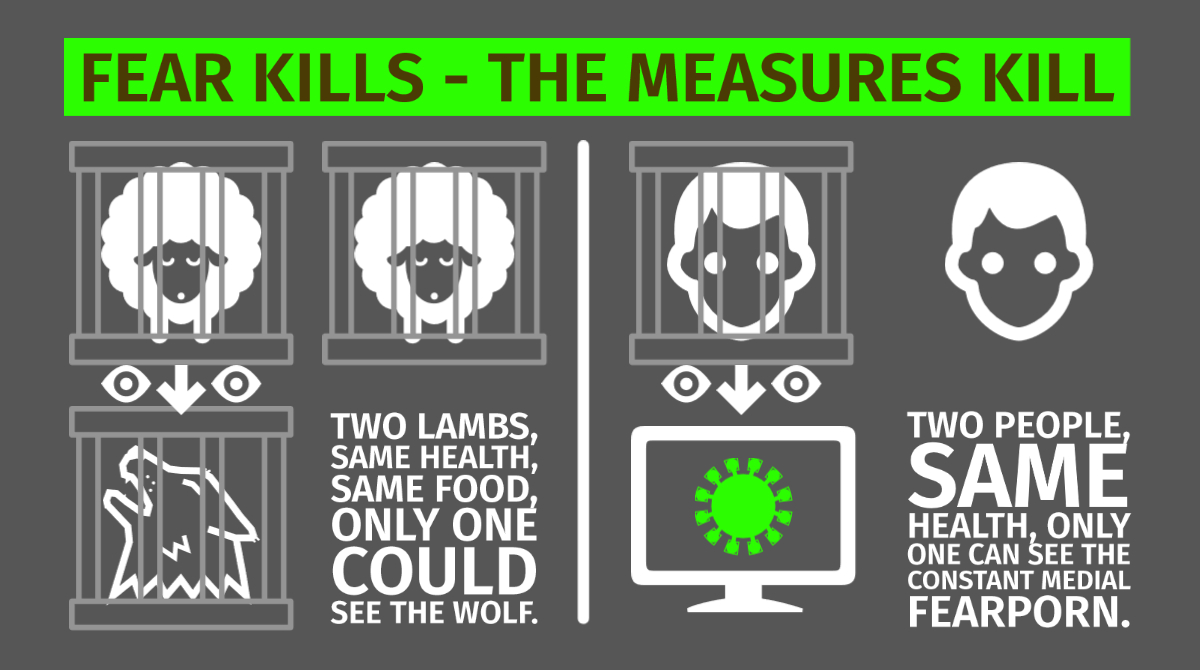
2/: Both lambs were provided with the same feed. Also, the weight was exactly the same when the experiment started. Several months later, the lamb with sight on the wolf became cranky, restless, weak, and showed a significant weight loss and signs of poor development.
3/: The lamb that was under chronic stress as it was placed in a situation of constant apparent danger died eventually. 🐑🪦 In fact, the wolf did not pose a danger at all, but this was beyond the lamb's perception.
4/: This experiment showed that increased levels of the stress hormone cortisol have a bad impact on the metabolism of mammals. And 1000 years after this experiment, we are facing a similar situation again but with the difference that we are aware of the impact of stress.
5/: Currently, we are overwhelmed with medial and governmental propaganda with respect to a common cold virus (that might hypothetically be more lethal though) that doesn't do harm to the majority of the people. Extreme global measures are taken.
2/: Both lambs were provided with the same feed. Also, the weight was exactly the same when the experiment started. Several months later, the lamb with sight on the wolf became cranky, restless, weak, and showed a significant weight loss and signs of poor development.
3/: The lamb that was under chronic stress as it was placed in a situation of constant apparent danger died eventually. 🐑🪦 In fact, the wolf did not pose a danger at all, but this was beyond the lamb's perception.
4/: This experiment showed that increased levels of the stress hormone cortisol have a bad impact on the metabolism of mammals. And 1000 years after this experiment, we are facing a similar situation again but with the difference that we are aware of the impact of stress.
5/: Currently, we are overwhelmed with medial and governmental propaganda with respect to a common cold virus (that might hypothetically be more lethal though) that doesn't do harm to the majority of the people. Extreme global measures are taken.
Cortisol is known as the 'stress hormone' and is a silent killer. Cortisol levels are increased by:
— Dr. Simon \u30c4 (@goddeketal) February 17, 2021
\U0001f449\U0001f3fc Fear & anxiety
\U0001f449\U0001f3fc Constant stress
\U0001f449\U0001f3fc Social isolation
The media propagated fear and political measures are counterproductive. They shorten our lives. https://t.co/6BZ34pVBjw


All you need to know about COVID19
FACTS NOT FEAR
Covid 19 is a disease caused by the SARS-CoV-2 virus. SARS-CoV-2 is one of 7 coronaviruses known to man. 1/n
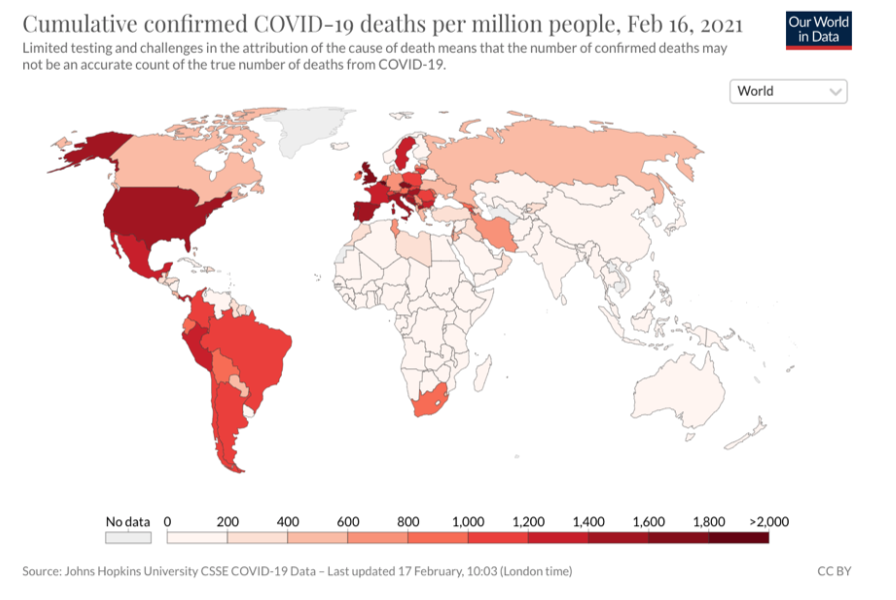
The pandemic is real. Excess deaths were observed in many countries. Not all countries were affected in the same way due to pre-existing immunity, the health status of the population and demographics (the proportion of elderly in the population) 2/n
https://t.co/65elPq3gp5
COVID 19 presents a high risk for the very few and negligible risk for the many.
The infection fatality rate in different age groups:
<19 y, IFR= 0.003%
20-49 y: IFR= 0.02%
50-69 y: 0.5%
>70y, IFR=
Not everybody is susceptible to the virus. If reinfected, pre-existing immunity from related viruses gives protection from developing the disease or from developing serious symptoms.
4/n
“The evidence that a subset of people has a cross-reactive T cell repertoire through exposure to related coronaviruses is
FACTS NOT FEAR
Covid 19 is a disease caused by the SARS-CoV-2 virus. SARS-CoV-2 is one of 7 coronaviruses known to man. 1/n
The pandemic is real. Excess deaths were observed in many countries. Not all countries were affected in the same way due to pre-existing immunity, the health status of the population and demographics (the proportion of elderly in the population) 2/n
https://t.co/65elPq3gp5
COVID 19 presents a high risk for the very few and negligible risk for the many.
The infection fatality rate in different age groups:
<19 y, IFR= 0.003%
20-49 y: IFR= 0.02%
50-69 y: 0.5%
>70y, IFR=
Not everybody is susceptible to the virus. If reinfected, pre-existing immunity from related viruses gives protection from developing the disease or from developing serious symptoms.
4/n
“The evidence that a subset of people has a cross-reactive T cell repertoire through exposure to related coronaviruses is

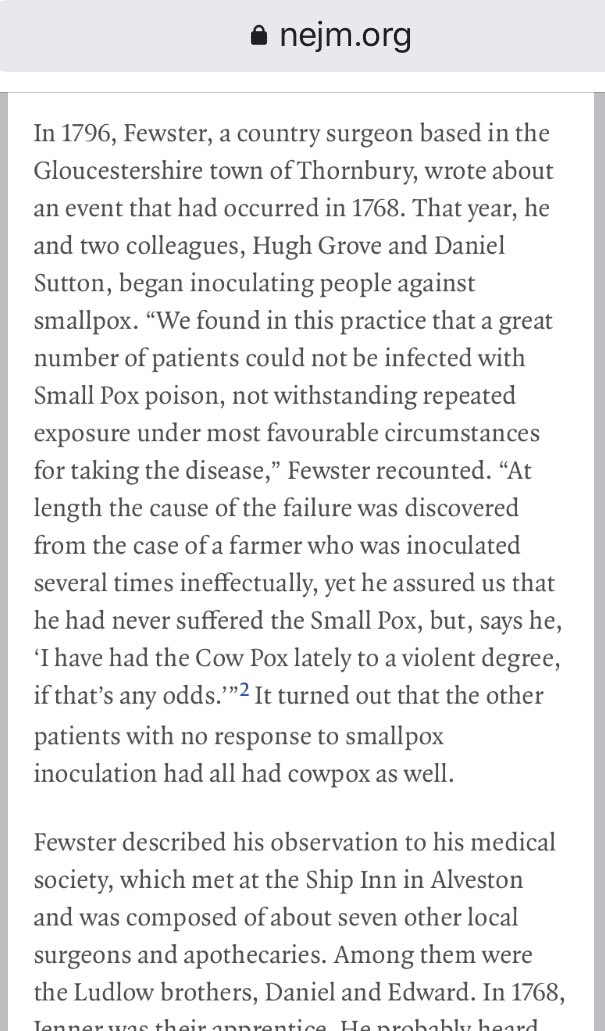
I am puzzled as to what the greatest medical scholar found in his research of smallpox vaccination.
/1
Legends and myths in medicine. Debunked. Not that but few care.
https://t.co/3Hu2D9Un0J
/2
https://t.co/xnZ2EXO1f5
/3
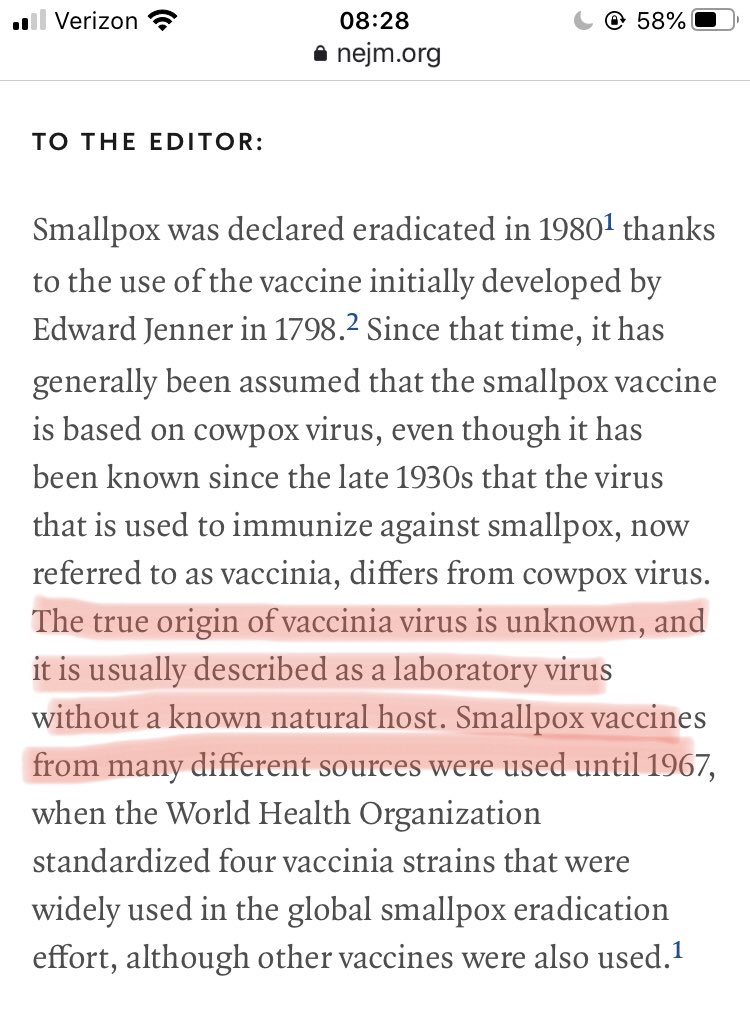
Open access.
Where have we seen this before? 🤔
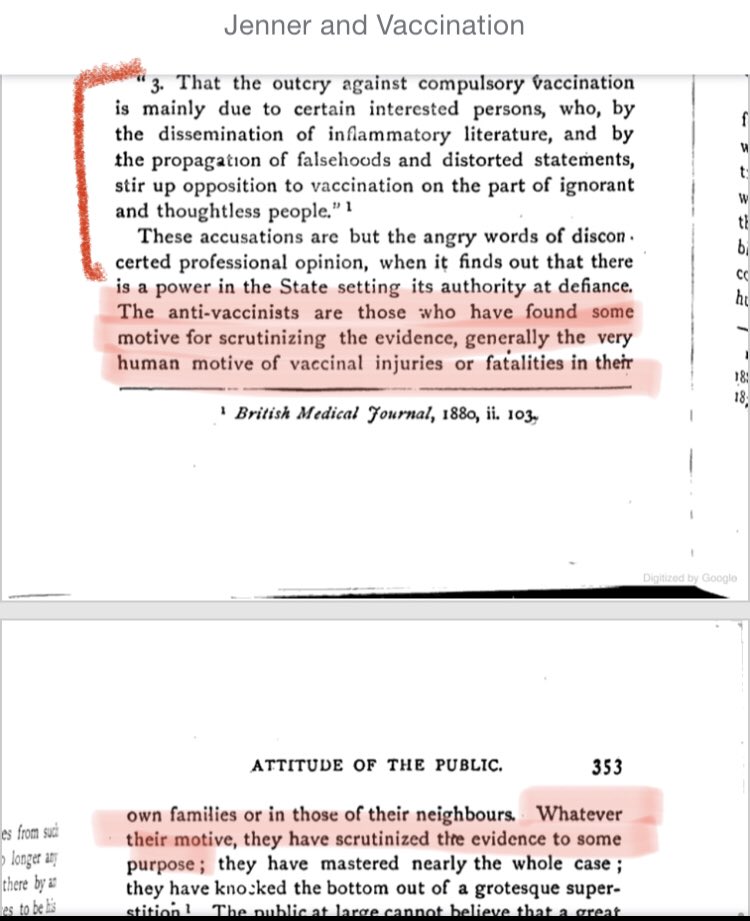
/1
https://t.co/qwQS3b2NPq pic.twitter.com/TqW1K3oC60
— Medical Nemesis (@Medical_Nemesis) February 20, 2021
Legends and myths in medicine. Debunked. Not that but few care.
https://t.co/3Hu2D9Un0J
/2
https://t.co/xnZ2EXO1f5
/3
Open access.
Where have we seen this before? 🤔

1/ Thread – THE YEAR OF THE RAT
“15 days to slow the spread” began one year ago. It was March 2020, the Year of the Rat. Never was any year more fitting of the name. Never in history have the people been betrayed so callously, flagrantly and absolutely by their alleged leaders.

2/ They were betrayed by their WHO
3/ and their national health
4/ They were betrayed by medical
5/ and their peer
“15 days to slow the spread” began one year ago. It was March 2020, the Year of the Rat. Never was any year more fitting of the name. Never in history have the people been betrayed so callously, flagrantly and absolutely by their alleged leaders.
2/ They were betrayed by their WHO
3/ and their national health
4/ They were betrayed by medical
Despite ignorance by many in the West, this article by The Lancet is a powerful endorsement of China\u2019s successful pandemic response. Hate to read stories by those paparazzi journalists who are experts at spinning but have little knowledge of science. https://t.co/Q8rKwwTPsI pic.twitter.com/436BEmx9nl
— Chen Weihua \uff08\u9648\u536b\u534e\uff09 (@chenweihua) October 16, 2020
5/ and their peer
6/ Eurosurveillance, a journal whose editors coincidentally includes Mr. Drosten, takes only a single day for the peer review process and publishes the hastily compiled PCR protocol on January 22. https://t.co/cWX3UdKeID
— Pace \U0001f642 (@theotherphilipp) February 25, 2021