Ireland's foreign min @SimonCoveney says there will be no breakthru at the #euco this wk, that EU fishermen will not be "sold out" in order to secure a future relationship deal, and that if there is a deal it will not be ratified unless the UK "remove" Internal Mkt Bill clauses
More from Tony Connelly
Irish foreign min Simon Coveney says he is "more optimistic" about progress in the EU UK Joint Committee over implementing the Northern Ireland Protocol.
2/ Last night @rtenews reported that if a free trade deal were to be concluded, a sequence would be put in place at the end of which the UK would drop the clauses in the Internal Market Bill which breach the Protocol.
3/ This morning, the EU’s representative on the Joint Committee, which implements the Protocol, said he would be meeting his counterpart Michael Gove in Brussels today.
4/ Mr Coveney said: “There is more cause to be optimistic and positive in the context of the Joint Committee and its work in terms of implementing the Withdrawal Agreement and the Protocol on Ireland and Northern Ireland.
5/ “Maros Sefcovic and Michael Gove have made really practical progress on many of the outstanding issues that were not resolved up until a few weeks ago.
2/ Last night @rtenews reported that if a free trade deal were to be concluded, a sequence would be put in place at the end of which the UK would drop the clauses in the Internal Market Bill which breach the Protocol.
3/ This morning, the EU’s representative on the Joint Committee, which implements the Protocol, said he would be meeting his counterpart Michael Gove in Brussels today.
\U0001f1ea\U0001f1fa\U0001f1ec\U0001f1e7 I will meet @michaelgove today in Brussels to discuss the implementation of the Withdrawal Agreement, including the Protocol on Ireland and Northern Ireland. We are working hard to make sure it is fully operational as of 1 January 2021.
— Maro\u0161 \u0160ef\u010dovi\u010d\U0001f1ea\U0001f1fa (@MarosSefcovic) December 7, 2020
4/ Mr Coveney said: “There is more cause to be optimistic and positive in the context of the Joint Committee and its work in terms of implementing the Withdrawal Agreement and the Protocol on Ireland and Northern Ireland.
5/ “Maros Sefcovic and Michael Gove have made really practical progress on many of the outstanding issues that were not resolved up until a few weeks ago.
More from Brexit

Two excellent questions at the end of a very sensible thread summarising the post-Brexit UK FP debate. My own take at attempting to offer an answer - ahead of the IR is as follow:
1. The two versions have a converging point: a tilt to the Indo-pacific doesn’t preclude a role as a convening power on global issues;
2. On the contrary, it underwrites the credibility for leadership on global issues, by seeking to strike two points:
A. Engaging with a part of the world in which world order and global issues are central to security, prosperity, and - not least - values;
B. Propelling the UK towards a more diversified set of economic, political, and security ties;
3. The tilt towards the Indo-Pacific whilst structurally based on a realist perception of the world, it is also deeply multilateral. Central to it is the notion of a Britain that is a convening power.
4. It is as a result a notion that stands on the ability to renew diplomacy;
5. It puts in relation to this a premium on under-utilised formats such as FPDA, 5Eyes, and indeed the Commonwealth - especially South Pacific islands;
6. It equally puts a premium on exploring new bilateral and multilateral formats. On former, Japan, Australia. On latter, Quad;
Both the @ChathamHouse and @Policy_Exchange reports are excellent and leave a healthy tension to the UK foreign policy debate. I\u2019m left with two questions that won\u2019t go away. Is the first underestimating how the world has changed. Is the second overestimating Britain\u2019s capacity?
— Ben Judah (@b_judah) January 11, 2021
1. The two versions have a converging point: a tilt to the Indo-pacific doesn’t preclude a role as a convening power on global issues;
2. On the contrary, it underwrites the credibility for leadership on global issues, by seeking to strike two points:
A. Engaging with a part of the world in which world order and global issues are central to security, prosperity, and - not least - values;
B. Propelling the UK towards a more diversified set of economic, political, and security ties;
3. The tilt towards the Indo-Pacific whilst structurally based on a realist perception of the world, it is also deeply multilateral. Central to it is the notion of a Britain that is a convening power.
4. It is as a result a notion that stands on the ability to renew diplomacy;
5. It puts in relation to this a premium on under-utilised formats such as FPDA, 5Eyes, and indeed the Commonwealth - especially South Pacific islands;
6. It equally puts a premium on exploring new bilateral and multilateral formats. On former, Japan, Australia. On latter, Quad;





Brexit also brings UK pork sector to standstill. Surprise eh? @RichardAENorth 🙄
UK pork processors are experiencing significant issues in exporting products to the EU, which has already brought part of the industry to a complete standstill, risking knock-on impacts on farm.
The widely seen footage of overzealous Dutch (*my edit: "no they were not"*) inspection officials confiscating ham sandwiches transported by British hauliers is just the tip of the iceberg as far as the UK pig sector is concerned.
The NPA’s processor members have reported that
excessive (*my edit: only for non-EU members*) bureaucracy associated with paperwork requirements are causing delays at Dover, Calais and other ports. With pork being a perishable product, these delays are making UK shipments unattractive to buyers in the EU, forcing processors
to reject shipments and cancel future orders.
Despite the trade deal agreed between the EU & UK just before Christmas, the UK’s formal departure from the EU Customs Union and Single Market was always going to mean additional checks, new labelling and certification requirements
and delays at ports. While the full overall impact of the new rules is yet to be felt, as UK export volumes remain lower than normal for the time of year, the UK pig sector is already feeling the effect. Processors have reported a number of issues, including:
UK pork processors are experiencing significant issues in exporting products to the EU, which has already brought part of the industry to a complete standstill, risking knock-on impacts on farm.
Sector by sector falling overhttps://t.co/6HIXzf8qq8
— Morgan Leahy (@MorganLeahy) January 14, 2021
The widely seen footage of overzealous Dutch (*my edit: "no they were not"*) inspection officials confiscating ham sandwiches transported by British hauliers is just the tip of the iceberg as far as the UK pig sector is concerned.
The NPA’s processor members have reported that
excessive (*my edit: only for non-EU members*) bureaucracy associated with paperwork requirements are causing delays at Dover, Calais and other ports. With pork being a perishable product, these delays are making UK shipments unattractive to buyers in the EU, forcing processors
to reject shipments and cancel future orders.
Despite the trade deal agreed between the EU & UK just before Christmas, the UK’s formal departure from the EU Customs Union and Single Market was always going to mean additional checks, new labelling and certification requirements
and delays at ports. While the full overall impact of the new rules is yet to be felt, as UK export volumes remain lower than normal for the time of year, the UK pig sector is already feeling the effect. Processors have reported a number of issues, including:
You May Also Like


Stan Lee’s fictional superheroes lived in the real New York. Here’s where they lived, and why. https://t.co/oV1IGGN8R6
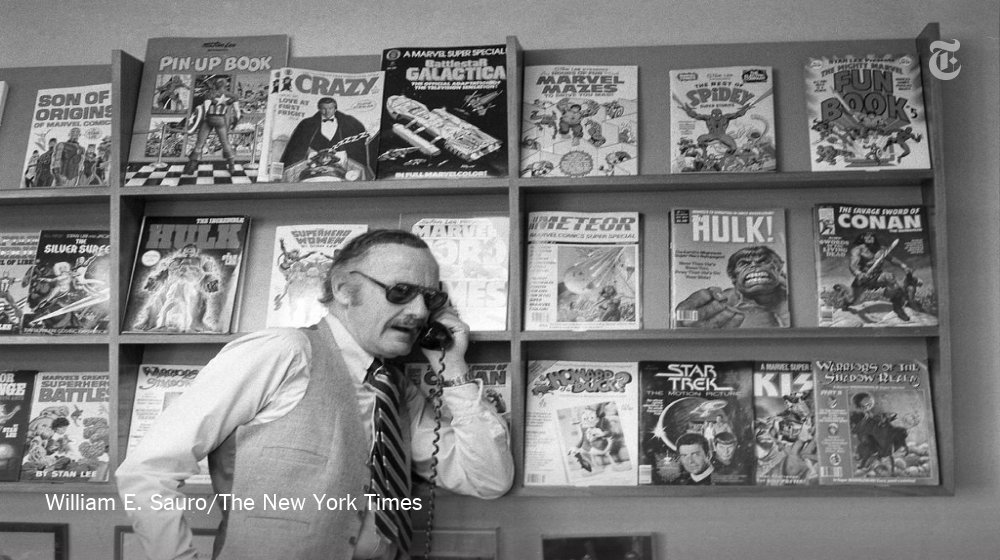
Stan Lee, who died Monday at 95, was born in Manhattan and graduated from DeWitt Clinton High School in the Bronx. His pulp-fiction heroes have come to define much of popular culture in the early 21st century.
Tying Marvel’s stable of pulp-fiction heroes to a real place — New York — served a counterbalance to the sometimes gravity-challenged action and the improbability of the stories. That was just what Stan Lee wanted. https://t.co/rDosqzpP8i
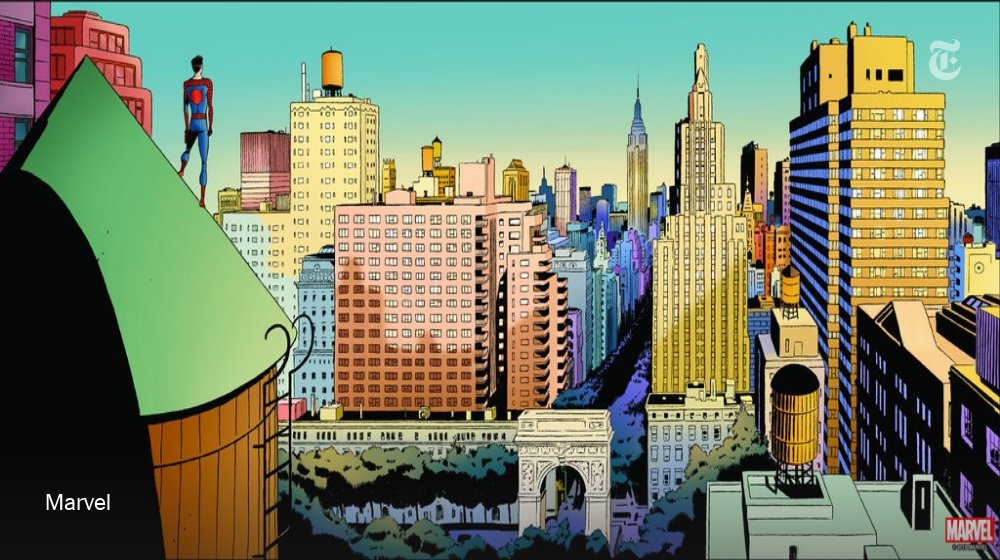
The New York universe hooked readers. And the artists drew what they were familiar with, which made the Marvel universe authentic-looking, down to the water towers atop many of the buildings. https://t.co/rDosqzpP8i
The Avengers Mansion was a Beaux-Arts palace. Fans know it as 890 Fifth Avenue. The Frick Collection, which now occupies the place, uses the address of the front door: 1 East 70th Street.
Stan Lee, who died Monday at 95, was born in Manhattan and graduated from DeWitt Clinton High School in the Bronx. His pulp-fiction heroes have come to define much of popular culture in the early 21st century.
Tying Marvel’s stable of pulp-fiction heroes to a real place — New York — served a counterbalance to the sometimes gravity-challenged action and the improbability of the stories. That was just what Stan Lee wanted. https://t.co/rDosqzpP8i
The New York universe hooked readers. And the artists drew what they were familiar with, which made the Marvel universe authentic-looking, down to the water towers atop many of the buildings. https://t.co/rDosqzpP8i
The Avengers Mansion was a Beaux-Arts palace. Fans know it as 890 Fifth Avenue. The Frick Collection, which now occupies the place, uses the address of the front door: 1 East 70th Street.