As @michaelgove admitted yesterday we are expecting significant disruption in our #trade flows with the EU in coming days. The fact he is willing to say this confirms what most of us feel, that problems are building. This thread is a summary of what I have learnt in the past week

DISCLAIMER I run a trade body and spent the week in my back bedroom on the phone to members, reading the media and on zoom calls. I’m not on the ground and I am not in the operation rooms. So my info is second hand and partial. No one has a complete view. IT IS HIDEOUSLY COMPLEX
The first obvious problem is the number of different actors involved. On the commercial side - within 1 exporter there are multiple depts. There is also the buying company and the logistics company. They all have to sync. 1 load of goods involves multiple commercial actors.
On the government side its even more complex. In UK there are dozens of departments and agencies involved, and the same if not more in every member state of the EU. there are hundreds of thousands of decision makers involved.
They all have the same rule book though - YES true but its 1200 pages long and it's 15 days old - also - here's the thing with red tape, it's open to interpretation. (It's why lawyers tend to drive nice cars) and so being BORDER READY means different things to different actors.
Millions of people, working to the policies and objectives of thousands of organisations, learning how to meet and enforce rules for the first time.

Also when it comes to border paperwork - it is not one piece of paper or process it can be dozens.
One major thing from this week is seeing in practice the reality we knew in theory, that the border isn't one physical place.

1/ Hauliers are now a 'border' having to refuse to carry loads for unready customers

2/ customs agents are a 'border' - not enough and overworked
3/ vets are now a 'border' having to complete complex paperwork

4/gov agencies like APHA are now a 'border' as they have to issue paperwork

Everyone has either got a new job, or one that is exponentially bigger than it was last week - each one can stop or slow goods
The reality of this week is that people have done their best and have learnt a lot, but in many cases they haven't got it 100% and that will have been masked because 'non-compliant' loads has been waved through with a warning (did the warning get back to the right people?)
As the pressure mounts, the ‘get through the news cycle’ approach of UK ministers will be to play things down, (see the first 12 hours of the covid French border crisis – 172 lorries 😡) and if and when that is not possible the shift will be to blame non-ready traders
They will be right to this extent - a business choosing to sell into a foreign market must meet the rules of the market they want to sell to. UK Gov can advise, but as has been proven many times recently there is a point where gov admits that the trader is on their own.
I admit to have made a mistake myself. I have spent endless hours debating and finetuning government advice and policy approaches with UK authorities. I have gone through the Border Operating Model (BOM) with a fine tooth comb…. but https://t.co/oQLuvFhEO7
the reality is that the UK BOM - comprehensive, daunting and complex read that it is - is essentially the UK Government’s hope of how things will work.

My briefing to members yesterday relied on documents like this
https://t.co/rjEWfpiC8V
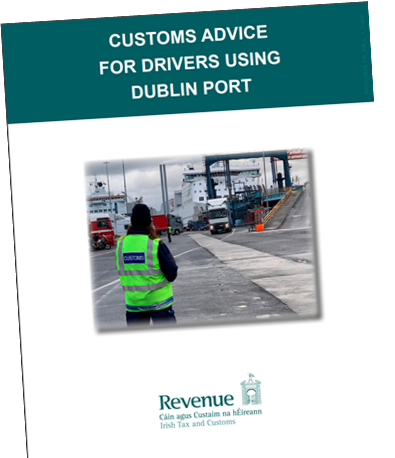
and this from French authorities https://t.co/dZ2XvXL2YK
For trade bodies like ours our focus has to shift fast to a practical dialogue with the EU authorities on the ground. We have to (1) understand what they want, (2) where possible persuade them on interpretation changes and (3) help members do what they want.
Hopefully that will be enough and we will get through the next fortnight. However if not we are going to have to essentially plead for more unilateral action by EU authorities to extend informal 'grace periods'. like this one from Irish Customs https://t.co/lKuvTrUxLu
Again I know they don't have to - I know it's the law - and I know it was the UKs choice to leave. But this type of time limited, grace period on the enforcement of the rules will lead to better compliance and better outcomes for EU business too. Grey areas present all the time
Over the next few weeks we will see the birthpangs of our new trading reality. Boris Johnson is fond of the Australia model of trade. A core part of that is a business culture focused on opening up markets it requires responsiveness, persuasion, empathy and humility
The negative political relationship we inherit from the negotiations, goes deep into the regulatory and commercial links between UK and EU. It's not going to be easy and our ministers can probably do more harm than good right now.
So in coming days, as the blame game kicks in, we will have to work hard not to rise to the bait. A row with UK Ministers won't move a single lorry.

Our overriding question from here - what does the EU require and how do we make it happen?

That's what control looks like.

More from Brexit

#Brexitadventcalendar

31 liars & hypocrites who facilitated brexit

Some are mad, some are bad

All are millionaires, some are billionaires

They’ll profit from UK companies failing, keep their money abroad to avoid UK tax and travel freely with their EU passports

#RejoinEU


https://t.co/mZRr9u1RPb


https://t.co/BY6hKloR9d


https://t.co/NdC0ltLeSM


https://t.co/BLnRLotso7
A further thread on the EU/UK musicians/visa for paid work issue (the issue is paid work: travelling to sing or play at eg a charity event for free can be done without a visa).


The position that we now have now (no relevant provisions under the TCA) is complicated. For EU musicians visiting the UK see


In essence the UK permits foreign (including EU) nationals to stay up to 30 days to carry out paid engagements, but they must (a) prove they are a professional musician and (b) be invited by an established UK business.

Either condition could be tricky for a young musician starting out and wanting to play gigs. And 30 days isn’t long enough for a part in a show with a run.

Longer stays require a T5 visa - which generally requires you to be in a shortage occupation (play an instrument not played in the UK?) or to have an established international reputation.

You May Also Like

"I really want to break into Product Management"

make products.

"If only someone would tell me how I can get a startup to notice me."

Make Products.

"I guess it's impossible and I'll never break into the industry."

MAKE PRODUCTS.

Courtesy of @edbrisson's wonderful thread on breaking into comics –
https://t.co/TgNblNSCBj – here is why the same applies to Product Management, too.


There is no better way of learning the craft of product, or proving your potential to employers, than just doing it.

You do not need anybody's permission. We don't have diplomas, nor doctorates. We can barely agree on a single standard of what a Product Manager is supposed to do.

But – there is at least one blindingly obvious industry consensus – a Product Manager makes Products.

And they don't need to be kept at the exact right temperature, given endless resource, or carefully protected in order to do this.

They find their own way.