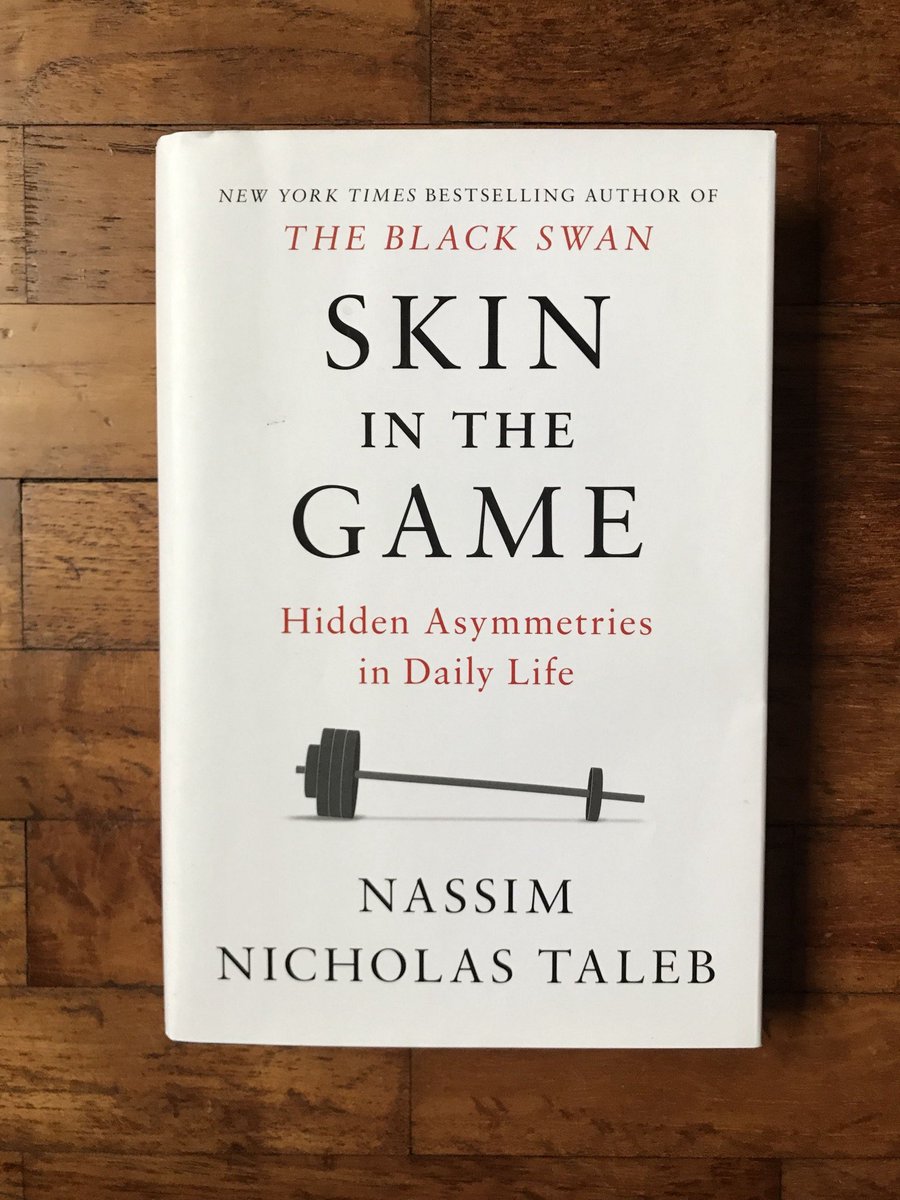
8 Powerful Lessons from the book "Antifragile"

1. The book is about decision-making under uncertainty/volatility.

- EVERYTHING either benefits or is harmed by volatility
- The FRAGILE is harmed (think a glass)
- The ROBUST is unchanged (think The Phoenix)
- The ANTIFRAGILE gets better (think The Hydra)
2. Via Negativa:

Removing is superior to Adding

- Less can be More
- Don't add, subtract
- Eliminate the Artificial
- Eliminate the Unnatural
- Eliminate the Unnecessary
Apply these in all areas of your life.
When in doubt, SUBTRACT
3. Absence of evidence is NOT evidence of absence"

Just because...
- you can't see something doesn't mean it's not there
- something is unintelligible doesn't mean it's unintelligent
- you can't explain something doesn't mean it's not important

-->Have HUMILITY
4. If you have more than one reason to do something, just don’t do it.

It does not mean that one reason is better than two, just that by invoking more than one reason you are trying to convince yourself to do something. Obvious decisions require no more than a single reason.
5. We need randomness, mess, adventures, uncertainty, self-discovery, near-traumatic episodes, all those things that make life worth living, compared to the structured, fake, and ineffective life of an empty-suit CEO with a preset schedule and an alarm clock.
6. Wind extinguishes a candle and energizes fire.

Likewise with randomness, uncertainty, chaos: you want to use them, not hide from them.

You want to be the fire and wish for the wind.
7. Tragedy of modernity: as with neurotically overprotective parents, those trying to help are often hurting us the most.
8. My characterization of a loser is someone who, after making a mistake, doesn’t introspect, doesn’t exploit it, feels embarrassed & defensive rather than enriched with a new piece of information.

These types often consider themselves the “victims” of some large plot.
Control your MIND.
Control your life.
Work on Mental Models:

- learn big ideas
- study bug disciplines
- practice critical thinking
- strengthen your vision and leverage
Think in a multidisciplinary way.
Think differently.
Grab your copy here:

https://t.co/QrIrAvRFwk
Thanks for reading. If you find this thread valuable follow me (@Strong_Mindd) for more content like this. And retweet the first tweet to share with others:

https://t.co/p3TgMGPmR1

More from Book Quotes

More from Books

You May Also Like

1/“What would need to be true for you to….X”

Why is this the most powerful question you can ask when attempting to reach an agreement with another human being or organization?

A thread, co-written by @deanmbrody:


2/ First, “X” could be lots of things. Examples: What would need to be true for you to

- “Feel it's in our best interest for me to be CMO"
- “Feel that we’re in a good place as a company”
- “Feel that we’re on the same page”
- “Feel that we both got what we wanted from this deal

3/ Normally, we aren’t that direct. Example from startup/VC land:

Founders leave VC meetings thinking that every VC will invest, but they rarely do.

Worse over, the founders don’t know what they need to do in order to be fundable.

4/ So why should you ask the magic Q?

To get clarity.

You want to know where you stand, and what it takes to get what you want in a way that also gets them what they want.

It also holds them (mentally) accountable once the thing they need becomes true.
5/ Staying in the context of soliciting investors, the question is “what would need to be true for you to want to invest (or partner with us on this journey, etc)?”

Multiple responses to this question are likely to deliver a positive result.