2/
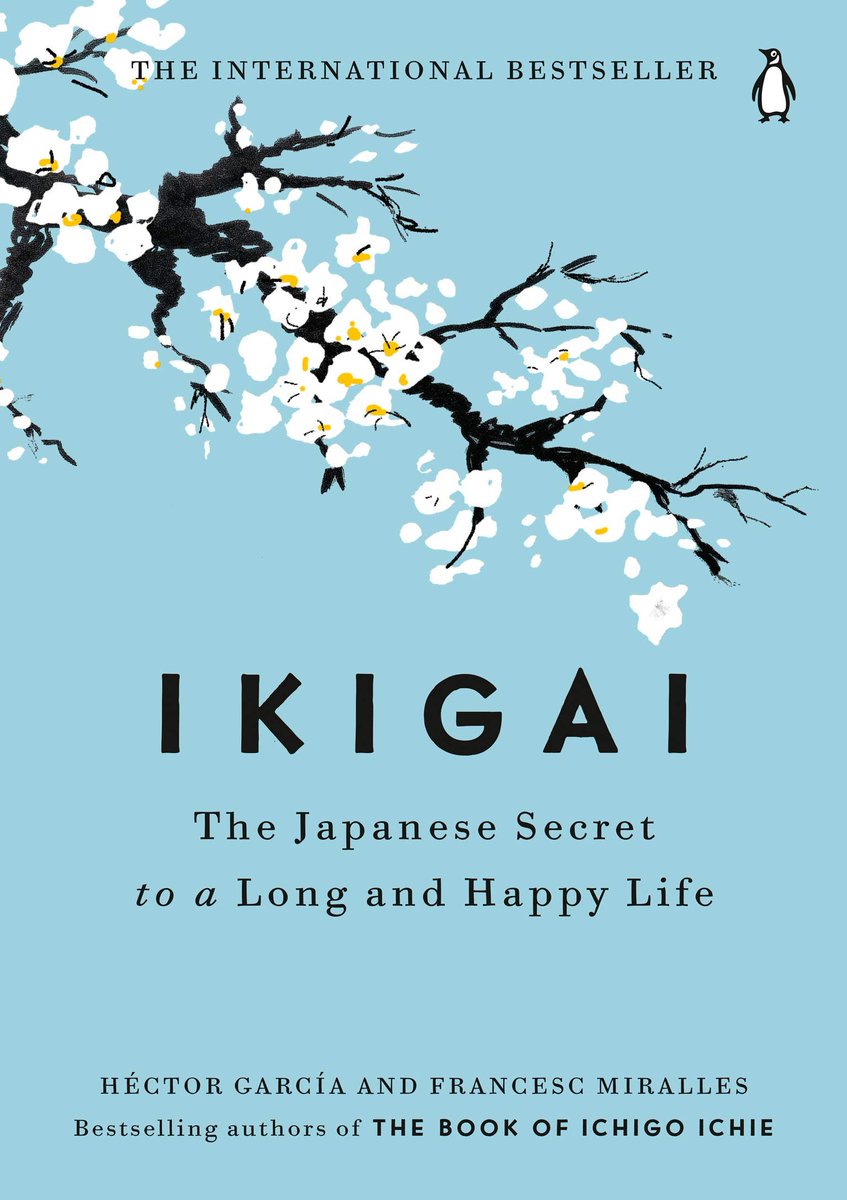
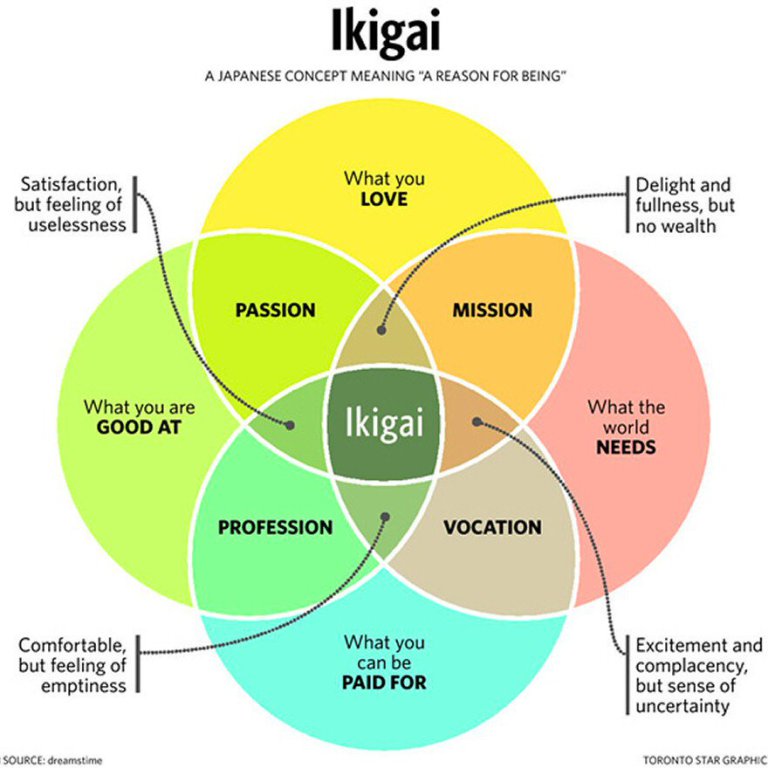
Firstly what is #IKIGAI ?
The Japanese call it - A REASON TO JUMP OUT OF BED EACH MORNING.
It's a convergence of 4 things .
*What you love
*What you are good at
*What you can get paid for
*What the world needs .
We need to find our Ikigai in life!
(Pic from the net)
3/
Let's begin with DAILY HEALTH HABITS.
A SOUND MIND IN A SOUND BODY .
Both our MIND & BODY must be exercised well to avoid deterioration in latter years of life .
Have a mental workout routinely by stepping out of your COMFORT ZONE.
Expose yourself to CHANGE.
#RewireBrain
4/
For a sound body there's no need to exercise relentlessly . Regular Yoga, Surya namaskar and Gardening is more than enough.
Don't be a couch potato! 🤷 Keep moving !
Our metabolism slows down just after 30 min of sitting sedentary.
#KeepMoving
5/
#StressKills
Most health problems are STRESS INDUCED.
Hence TAKE TIME OFF every now & then .
SLOW DOWN !!
Life isn't a race .So stop running all the time.
Condition your mind to enjoy each moment by practising #Mindfulness.
Be Self aware & aware of your surroundings!
6/
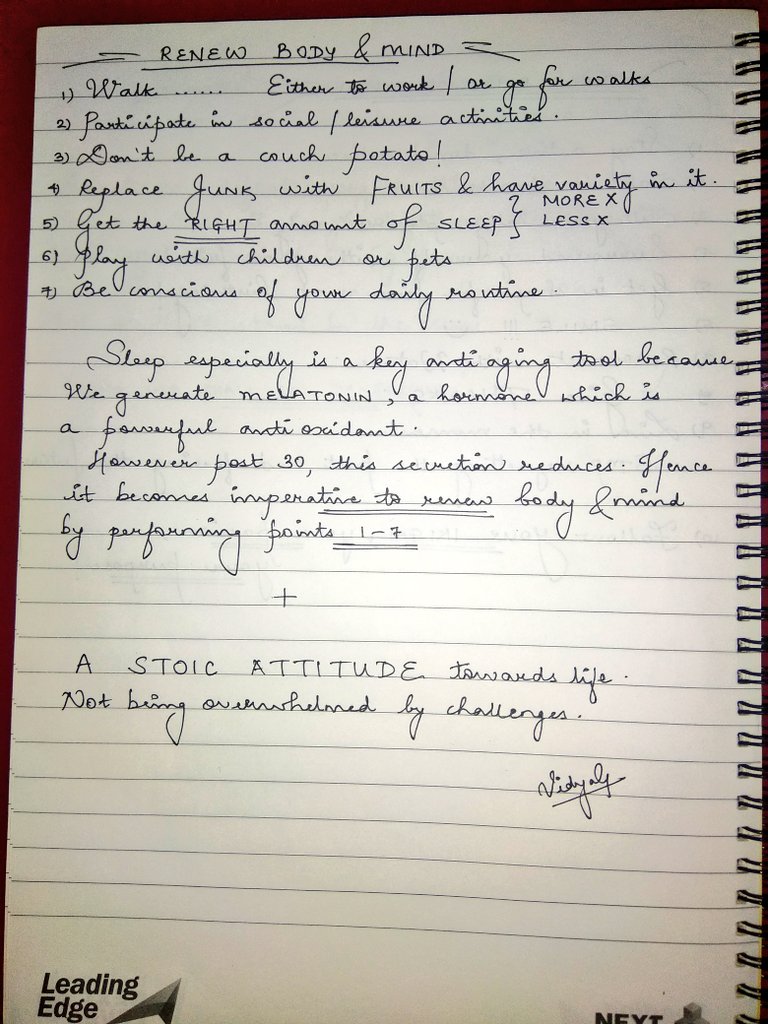
*SLOW DOWN THE AGEING PROCESS
2 dispositional traits found in people living a long and healthy life:
* A positive #ATTITUDE .
* A high degree of #EmotionalAwareness
A few pointers on How to Keep our Mind & Body from ageing overtly
👇
7/
Work hard but don't get overworked about it .
Enjoy the process & the learnings!!
Results shall follow.
Variety is the spice of life.
Learn to take price and thereby enjoy even mundane chores aka daily movements of #microflow
#EnjoyingEverydayLife
8/
🙂🙃🙂🙃🙂🙃🙂🙃 !
Smile a lot and learn to celebrate the little things in life .
Someday you shall look back to realise those formed the biggest part of your life .
Practise Contentment & Gratitude.
Be Curious always!
#LittleThingsMatterTheMost
9/
Learn something new each day .
Laugh out loud . Never take yourself seriously !!
Humour is much needed to reduce anxiety.
Don't worry too much . Extra worrying shall not change anything!
Do something constructive for the community & create things of value.
#BeOfValue
10/
SOME INTERESTING CONCEPTS
*WABI SABI*
There lies such beauty in the imperfections , fleetings of nature all around us .
Choose to see beauty in the flaws, in the incompleteness of things and people.
Each one of us is unique!!
Embrace this uniqueness.
#BeUnique
11/
* ICHI - GO ICHI - E *
This moment exists only NOW and won't come again .
Stay in the moment. ENJOY the present that life brings us.
Don't dwell in the past .
Don't predict the future .
12/
LOGO THERAPY.
Popularised by Victor Frankl who believed that everything can be taken from a human ,except THE WILL to live .
That becomes the reason to live.
We just need to DISCOVER it .
For he who has a WHY to live for, can bear with almost any HOW .😇
13/
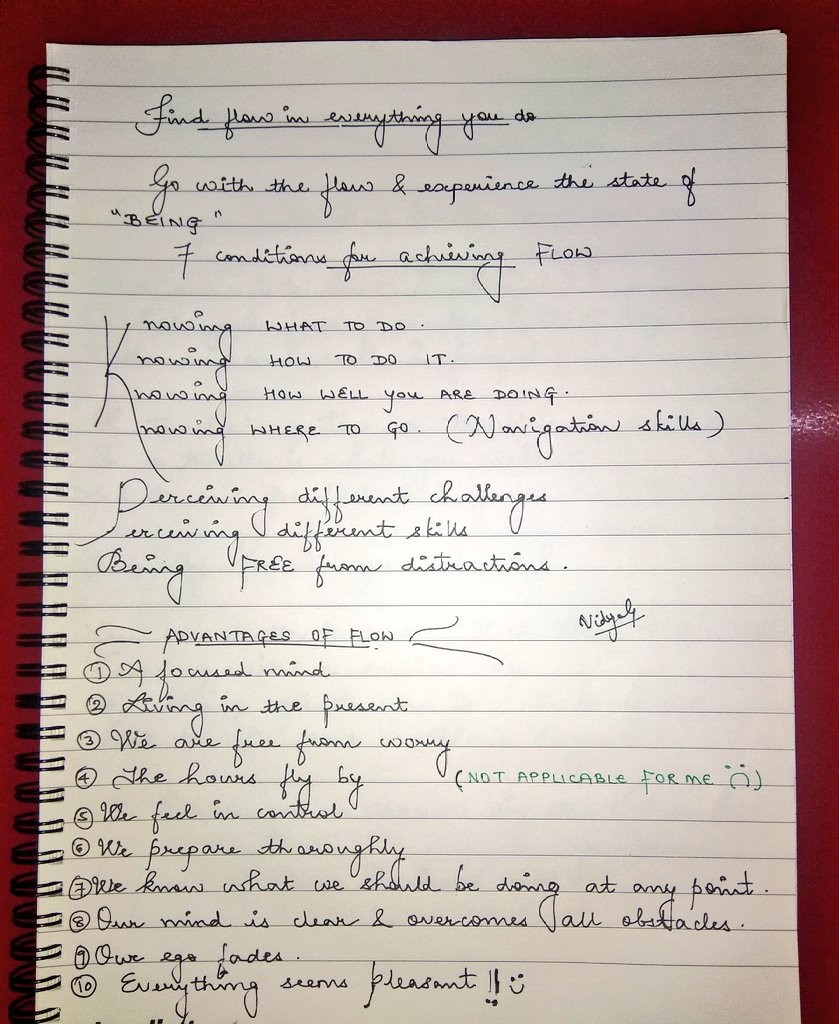
GO WITH THE FLOW IN WHATEVER YOU DO .
Why is this necessary?
When we flow we are focused on the task at hand . NO DISTRACTIONS.
Helps keep mind in order & ensures quality output.
#GoWithTheFlow
Elaborated in these notes .
👇
14/
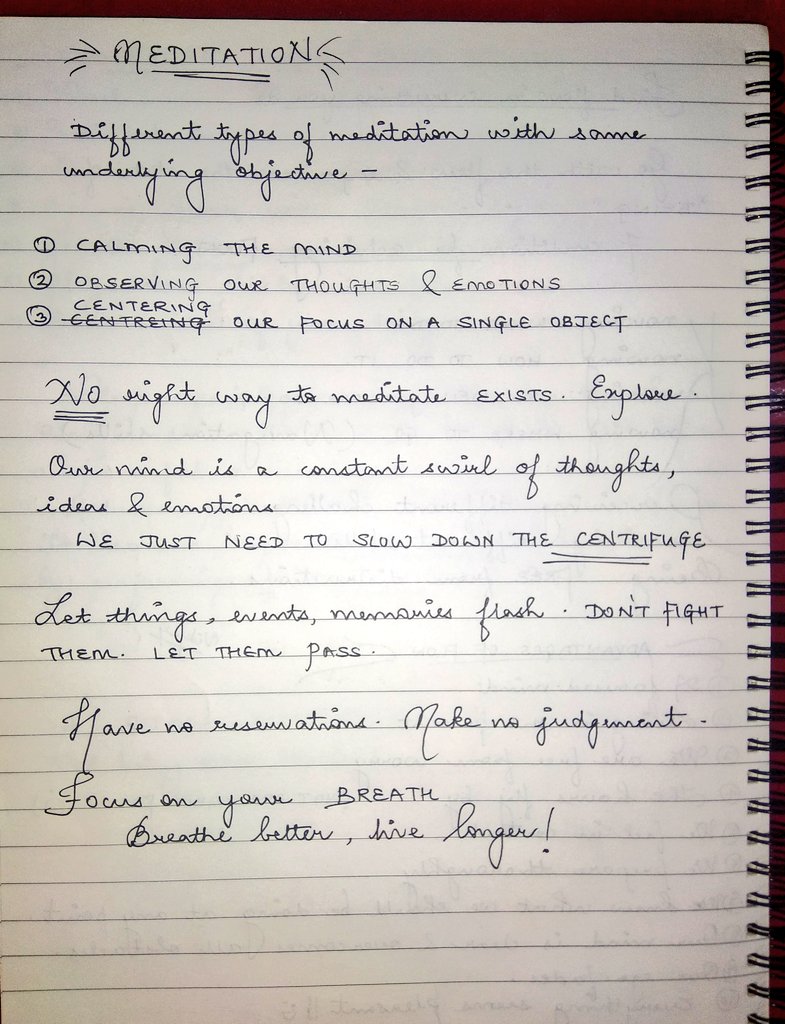
Meditation is recommended always for a calmer mind .
But we are often confused / clueless as to how to meditate !
Often we give up as we find our mind straying when we try to meditate . 🤷
The trick lies in "NOT TRYING " . :))
👇
#meditation
15/
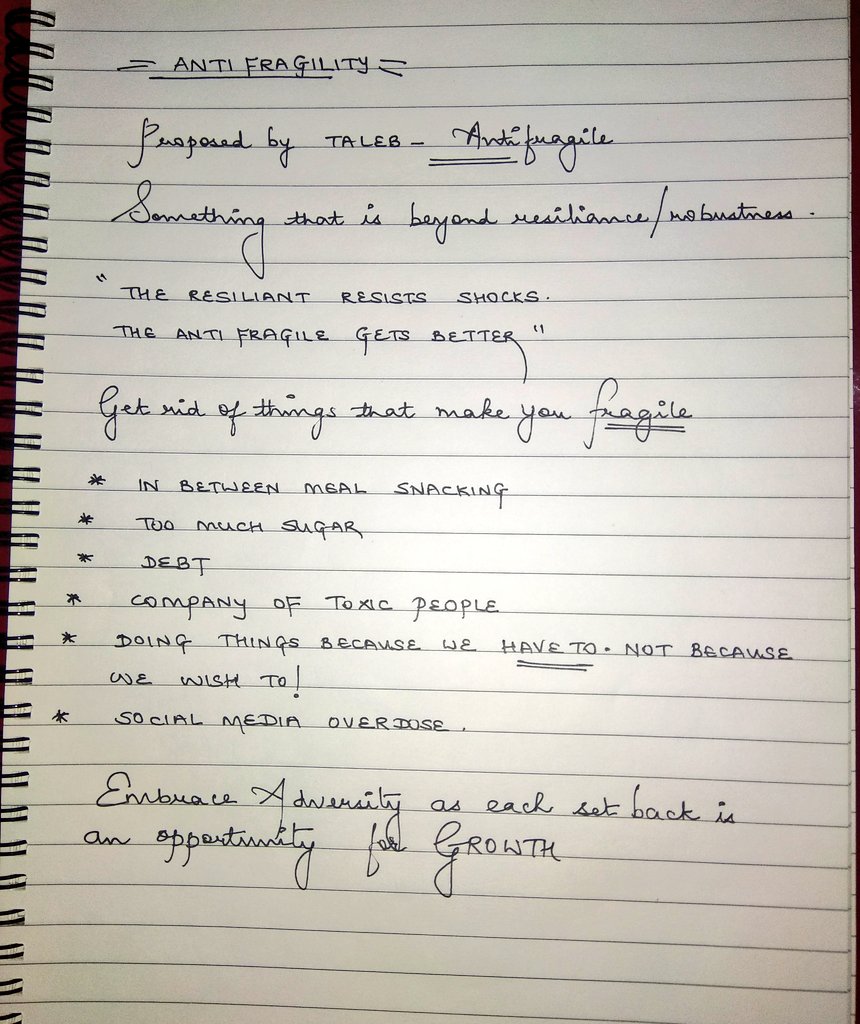
*ANTI FRAGILITY *
As Taleb says , we need randomness, mess , adventures. uncertainty , self discovery and trauma - All of it ; to make life worth living .
Let's become Anti fragile by
learning to get rid of things that make us Fragile .
HOW ?
👇
16/
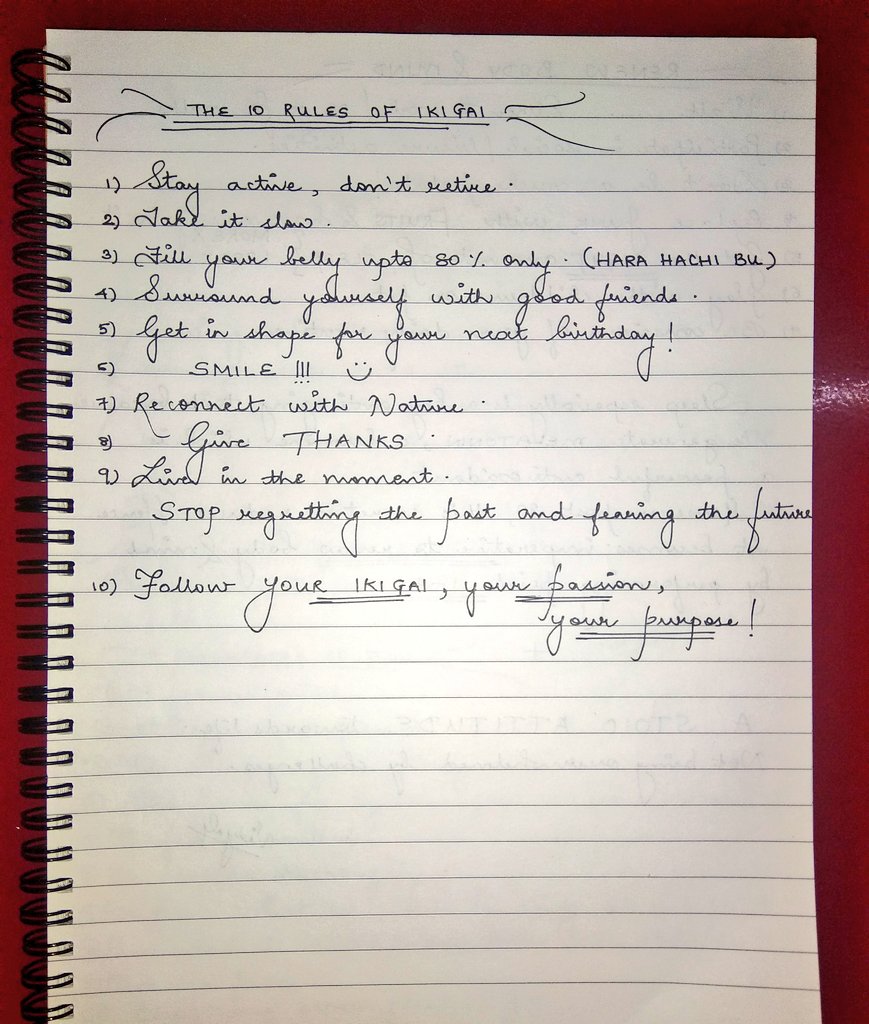
To sum it up ,
These are the 10 Rules of Ikigai.
ALL SEEMINGLY OBVIOUS.
But ultimately we need to delve deep within ourselves to find OUR IKIGAI - Our purpose .
The book just emphasises on certain aspects and approaches that help us on our self discovery journey.
17/17
We all have the capacity to do noble or terrible things.
The side of the equation we end up on depends on OUR DECISIONS , NOT ON THE CONDITIONS in which we find ourselves.
That's IKIGAI for you . :))
* THE END *
#booklovers
#TwitterBookCommunity