Everything you need to know about useState hook of React

A beginner's guide

Thread🧵👇

Hey👋

Hooks are powerful but confusing. Don't worry, I'll try to explain each hook in the easiest way in this thread series of React hooks

Let's start with useState, the most useful and simple hook in my opinion
Working with React hooks, first thing you need to do is to import the particular hook

It's quite easy👇

📌 import { useState } from "react";
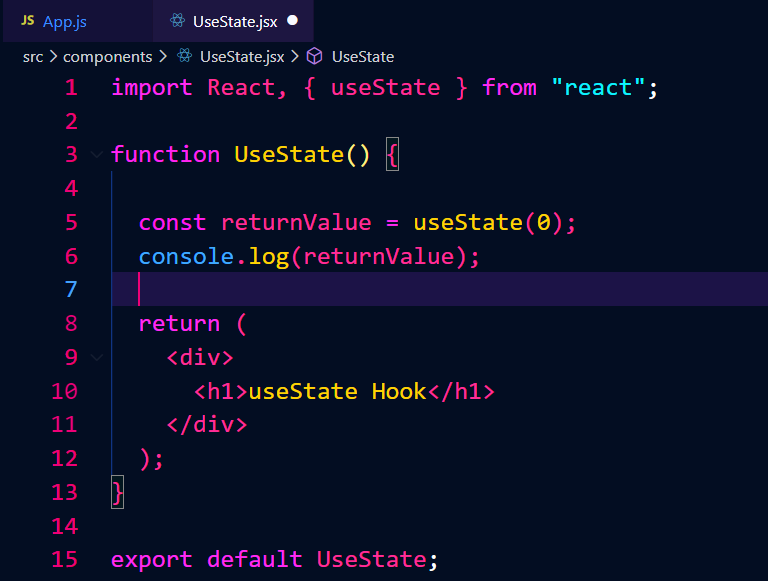
useState hook takes a parameter as initial value of state and return an array having two values

- The first value is the current state
- The second value is the function that allow us to change our state

Let me show you the return value by printing it out on console👇
Now we know what useState hook return, it's time to destruct our value

const [currentState, setCurrentState] = useState(0);

🔹 currentState is the value of our state
🔹 setCurrentState is the function using which we can change our state value
Let's build a simple counter so that we can understand it effectively.
Though, useState has a very powerful use from this small counters to handling the large forms

Basic boilerplate code for counter👇
Now we want to increase our counter by one by user clicks on the "PLUS" button and decrease the value by one when user clicks on the "MINUS" button

Here value/counter is nothing but our current state which we want to change accordingly
Here setCurrentState function comes into play

- We will write a handlePlusButton function in order to increase the counter by 1 every time user click plus button

This is pretty easy just call the setCurrentState function and increase counter value just like this👇
As now you can see, everytime I click the "PLUS" button my counter increases by one (see attached video)

Here we are changing our counter(state) using setCurrentState(setState) function
The other way of updating our state is passing a function inside setCurrentState function.

The function that we pass inside setCurrentState will take one param which is nothing but the previous value of counter

Something like this👇
Similarly we can write function for "MINUS" button
Though there is a problem with updating our state like this 👇

setCurrentState(currentState + 1);

If you call setCurrentState function two times like this, it will still increase our counter by 1 (see attached image)
There is an other way to passing our initial state inside useState hook. Like this👇

📌useState(() => 0);

This prevent running our useState hook every single time we render our component. Hence by passing the value like this can speed up our app performance
I think that's pretty much it for useState hook . I hope you get some idea and basic overview.

Feel free to drop your doubts and suggestion❤️

Next I'll catch you with the useEffect thread

More from Pratham

If you start with the right course then the process becomes a little easier

I found some amazing YouTube videos and courses that will help you start your Web Development journey

🧵👇🏻

HTML and CSS

- A great way to arouse your web dev journey with Gary's (@designcoursecom) course on YouTube

🔗
https://t.co/xjm7nfV2L2


JavaScript

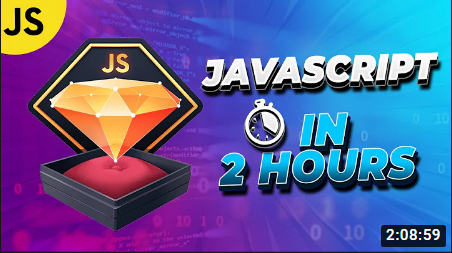
- Although it's impossible to learn JavaScript in 2 hours but JavaScript mastery is one the best YouTube chanel for JavaScript. This 2 hours long crash course will help you start your journey and gives you quick overview.

🔗 https://t.co/1zcSeu4zKE


Git and GitHub

Git is an essential tool. And after learning JavaScript, I think one should go for Git and GitHub. Check out this free great course on Udemy

🔗 https://t.co/E14cibOLXb


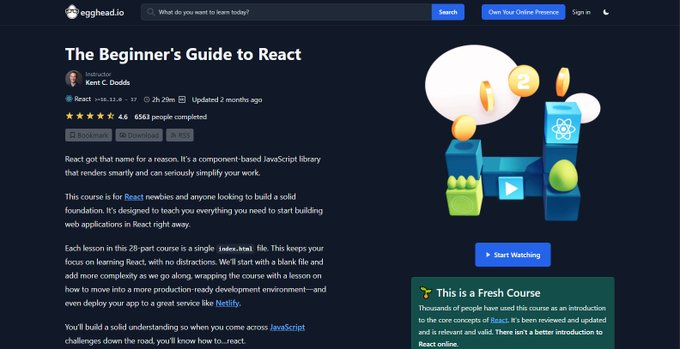
React

What you'll learn
- what problems React can solve
- how React solves those problems under the hood
- what JSX is and how it translates to regular JavaScript function calls and objects
- manage state with hooks
- build forms

🔗 https://t.co/3z22aeVQFc
5 great gradient background sites for every web developer and designer 🎨

🧵👇🏻


1️⃣ uiGradients

- A handpicked collection of beautiful color gradients for designers and developers.

🔗
https://t.co/EainhiePop


2️⃣ Eggradient

- Ready to use gradient background colors. ✓ Cool Gradients are prepared according to the latest design trends

🔗 https://t.co/F0uYVsZbA4


3️⃣ Mesh Gradients

- Create beautiful gradient like aurora UI in few clicks

🔗 https://t.co/MV8PT7q3Kz


4️⃣ CSS Gradient

- Create beatiful gradeint either linear or radial on different angles

🔗 https://t.co/dlCExilHAT
Six tools that will change the way your write code: 🧵

1️⃣ HarperDB

Deciding between SQL and NoSQL? Use HarperDB as it provides you the functionality of both.

Access data using API endpoint.

🔗
https://t.co/qf5CalexfA


2️⃣ Visual Go

Visualizing data structures and algorithms

🔗 https://t.co/b8YeMYdOaf


3️⃣ Extends Class

Syntax validators, code formatter, testers, HTTP clients, mock server, and much more.

🔗 https://t.co/GlKjoBnzqg


4️⃣ Codeshare

Share Code in Real-time with Developers. An online editor for teaching and interviewing.

🔗 https://t.co/2m1Ne3KJRK

You May Also Like

Great article from @AsheSchow. I lived thru the 'Satanic Panic' of the 1980's/early 1990's asking myself "Has eveyrbody lost their GODDAMN MINDS?!"


The 3 big things that made the 1980's/early 1990's surreal for me.

1) Satanic Panic - satanism in the day cares ahhhh!

2) "Repressed memory" syndrome

3) Facilitated Communication [FC]

All 3 led to massive abuse.

"Therapists" -and I use the term to describe these quacks loosely - would hypnotize people & convince they they were 'reliving' past memories of Mom & Dad killing babies in Satanic rituals in the basement while they were growing up.

Other 'therapists' would badger kids until they invented stories about watching alligators eat babies dropped into a lake from a hot air balloon. Kids would deny anything happened for hours until the therapist 'broke through' and 'found' the 'truth'.

FC was a movement that started with the claim severely handicapped individuals were able to 'type' legible sentences & communicate if a 'helper' guided their hands over a keyboard.