Circle of Competence 101:

@SahilBloom x @jackbutcher

1/

A Circle of Competence is the set of topic areas that align with a person's expertise.

If the entire world of information were to be expressed in a circle, an individual's Circle of Competence is the small sub-circle that represents their expertise.
2/

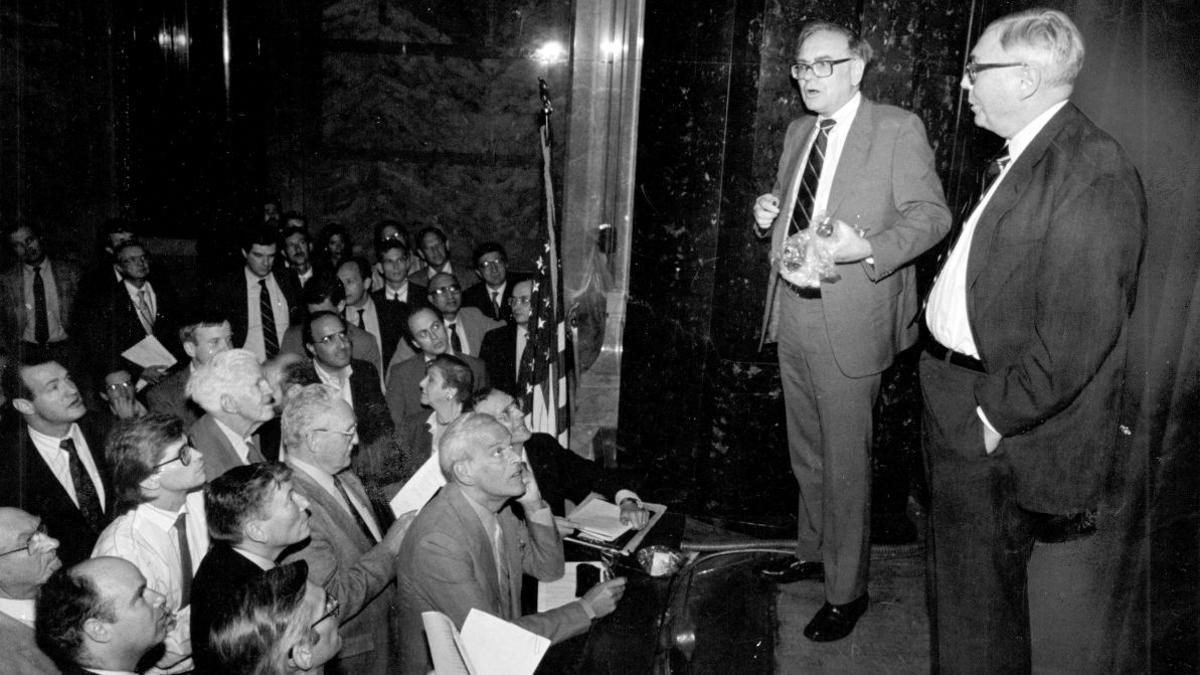
The idea surfaced in the 1996 BH annual letter.

"You don’t have to be an expert on every company...you only have to be able to evaluate companies within your circle of competence. The size of that circle is not very important; knowing its boundaries, however, is vital."
3/

A Circle of Competence is built over time.

It is built through experience, reading, dedicated study, and effort.

It is dynamic, not static.

It can expand as you deepen your knowledge in new areas. It can contract if you fail to nurture your existing areas of expertise.
4/

To engage this mental model in your life, there are two key processes to go through:

(1) Identify what falls within your circle
(2) Identify the boundaries of your circle

(1) is all about figuring out what you know, while (2) is about humbly admitting what you don’t.
5/

Let’s look at a few examples of where we see the Circle of Competence in action and how it can help you win.

In investing?

Berkshire Hathaway provides the classic example of investing success from sticking within the boundaries of your Circle of Competence.
6/

Warren Buffett and Charlie Munger have consistently passed on investment opportunities that fell outside of their respective Circles of Competence.

At times, it led to what might look like big misses, including failing to see the potential and invest in Google and Amazon.
7/

But while you hear about these misses (“the anti-portfolio”), you don’t read about all of the bad decisions it saved them from making.

As Munger once said, you can become a consistent winner by “trying to be consistently not stupid, instead of trying to be very intelligent."
8/

In business?

The best operators know their core competencies and are honest about their incompetencies.

The visionary CEOs hire field general, execution-focused COOs.

The field general CEOs hire visionary product leaders.

Own your competencies, outsource the rest.
9/

So how can you implement the Circle of Competence model into your life?

First, identify your circle and its boundaries.

What topics do you know more about than most people?

What topics do others look to you on?

What are you constantly excited by and learning more about?
10/

Next, be ruthlessly honest with yourself about that circle and its boundaries.

Build checks into your decision process that pressure test whether you are remaining true to your Circle of Competence.

Consistently sticking to your circle will lead to good long-term outcomes.
11/

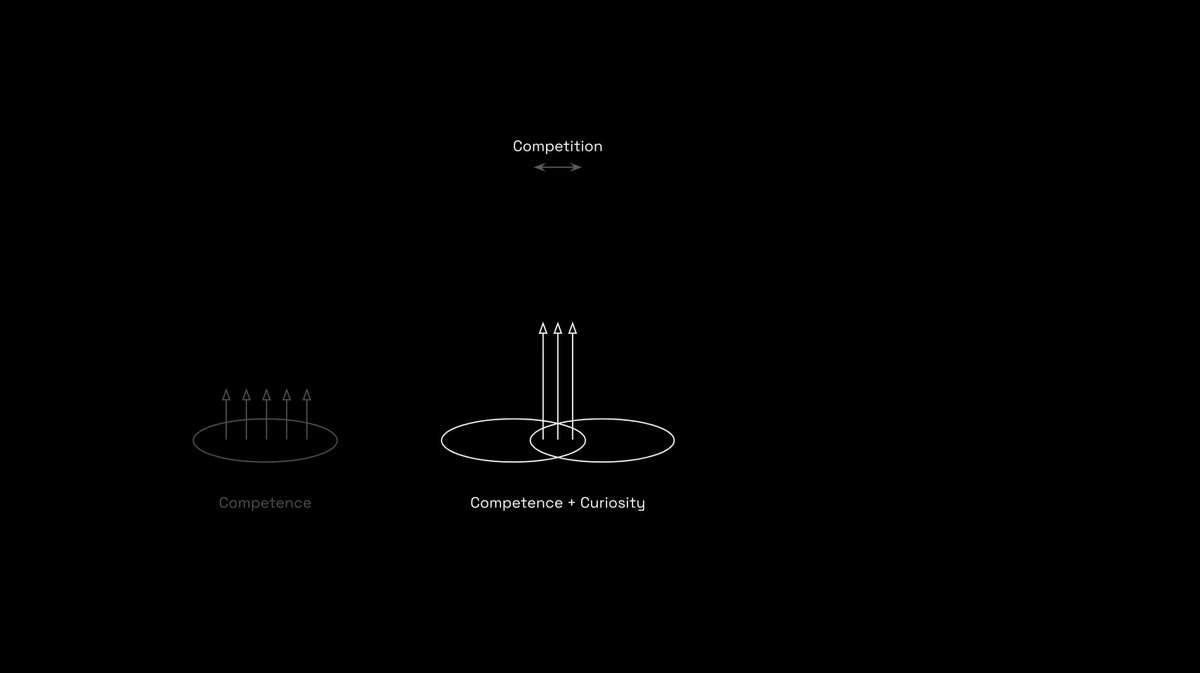
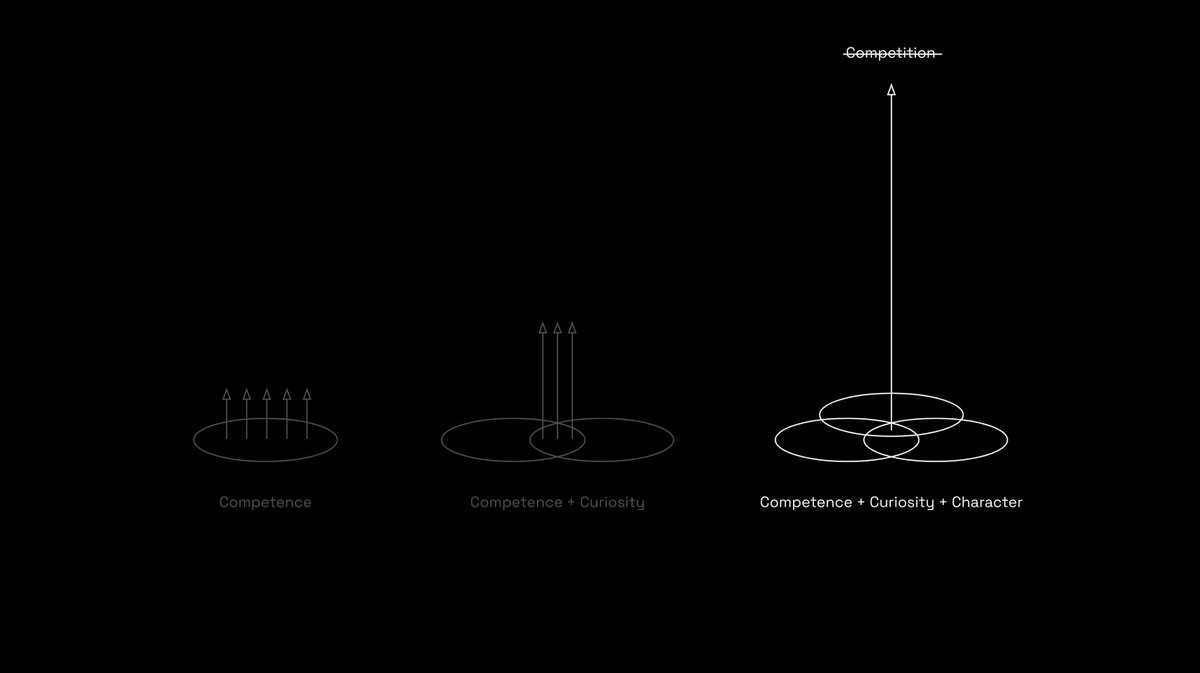
Finally, keep expanding and deepening your Circle of Competence.

Embrace intellectual curiosity!

Is there a new topic you are excited about? Read everything you can get your hands on.

We live in an unprecedented era of access to information.
12/ You no longer need to pay a big tuition bill to learn something new.

You can seek out thought leaders, ask them questions, read their articles, listen to them speak.

It is truly remarkable. Take advantage!

You may just find that your Circle of Competence begins to grow.
Words by @SahilBloom
Visuals by @visualizevalue

More from Jack Butcher

More from Trading

Option Trading is very difficult to master as there are so many things to understand.

Here is a master thread related that will help a beginner to understand about Options Trading.

A complete course worth Rs 50K for free.

1/ A detailed thread on basics of Option Greeks and how it impacts Options


2/ Basic Option Trading Strategies:

There are many option strategies to trade. But keeping your strategy simple is the key.

In this thread, all the basic option trading strategies are being


3/ What are the things that you should look at before taking any Option


4/ Is Option Selling Possible with Rs 1 Lakh Capital?

Even a beginner can start trading in option selling with capital as low as Rs 1 Lakh.

What are the techniques one can use and how to mitigate the infinite loss risk is shared in this

You May Also Like

Ivor Cummins has been wrong (or lying) almost entirely throughout this pandemic and got paid handsomly for it.

He has been wrong (or lying) so often that it will be nearly impossible for me to track every grift, lie, deceit, manipulation he has pulled. I will use...


... other sources who have been trying to shine on light on this grifter (as I have tried to do, time and again:


Example #1: "Still not seeing Sweden signal versus Denmark really"... There it was (Images attached).
19 to 80 is an over 300% difference.

Tweet: https://t.co/36FnYnsRT9


Example #2 - "Yes, I'm comparing the Noridcs / No, you cannot compare the Nordics."

I wonder why...

Tweets: https://t.co/XLfoX4rpck / https://t.co/vjE1ctLU5x


Example #3 - "I'm only looking at what makes the data fit in my favour" a.k.a moving the goalposts.

Tweets: https://t.co/vcDpTu3qyj / https://t.co/CA3N6hC2Lq
MASTER THREAD on Short Strangles.

Curated the best tweets from the best traders who are exceptional at managing strangles.

• Positional Strangles
• Intraday Strangles
• Position Sizing
• How to do Adjustments
• Plenty of Examples
• When to avoid
• Exit Criteria

How to sell Strangles in weekly expiry as explained by boss himself. @Mitesh_Engr

• When to sell
• How to do Adjustments
• Exit


Beautiful explanation on positional option selling by @Mitesh_Engr
Sir on how to sell low premium strangles yourself without paying anyone. This is a free mini course in


1st Live example of managing a strangle by Mitesh Sir. @Mitesh_Engr

• Sold Strangles 20% cap used
• Added 20% cap more when in profit
• Booked profitable leg and rolled up
• Kept rolling up profitable leg
• Booked loss in calls
• Sold only


2nd example by @Mitesh_Engr Sir on converting a directional trade into strangles. Option Sellers can use this for consistent profit.

• Identified a reversal and sold puts

• Puts decayed a lot

• When achieved 2% profit through puts then sold
"I lied about my basic beliefs in order to keep a prestigious job. Now that it will be zero-cost to me, I have a few things to say."


We know that elite institutions like the one Flier was in (partial) charge of rely on irrelevant status markers like private school education, whiteness, legacy, and ability to charm an old white guy at an interview.

Harvard's discriminatory policies are becoming increasingly well known, across the political spectrum (see, e.g., the recent lawsuit on discrimination against East Asian applications.)

It's refreshing to hear a senior administrator admits to personally opposing policies that attempt to remedy these basic flaws. These are flaws that harm his institution's ability to do cutting-edge research and to serve the public.

Harvard is being eclipsed by institutions that have different ideas about how to run a 21st Century institution. Stanford, for one; the UC system; the "public Ivys".