
Before we discuss the indicator, let us understand an important concept.
Thread: Alligator indicator
#Alligator #Indicators #Definedge

Before we discuss the indicator, let us understand an important concept.
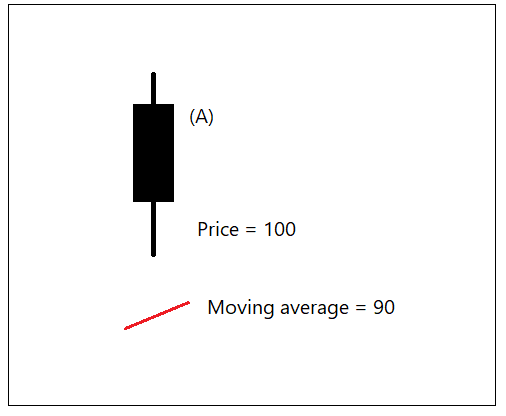
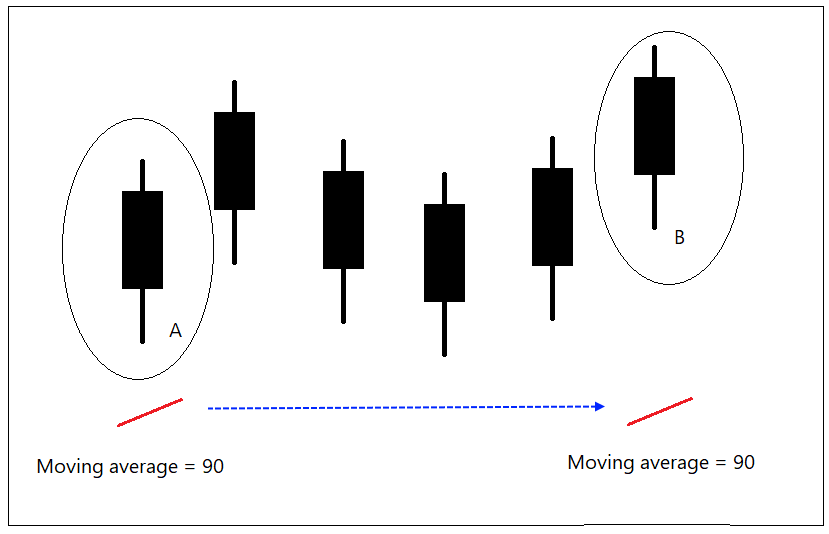
Moving average at bar B is moving average price of bar A (5 candles behind). This is shifting of moving average price. What does it mean?
https://t.co/WkNxKU9n8u
Let us discuss the Alligator indicator.
Thread:- How Ichimoku indicator is calculated. pic.twitter.com/pM7AZvJjMj
— Prashant Shah (@Prashantshah267) April 15, 2020
Williams suggested Fib numbers 13, 8 and 5 period averages.
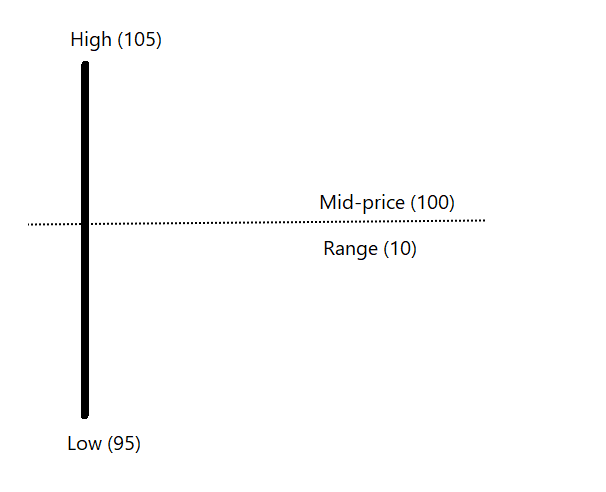
The averages are calculated on median price.
Median price = (High + low) / 2.
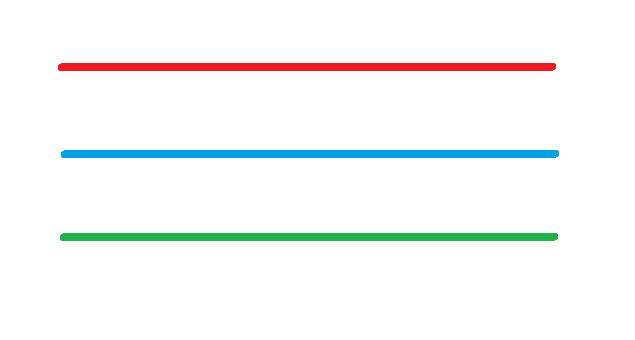
So, there are three lines plotted on the chart.
13-period MA is shifted by 8 bars
8-period MA is shifted by 5 bars
5-period MA is shifted by 3 bars
So, default parameters of Alligator indicator are 13,8,5 and 8,5,3.
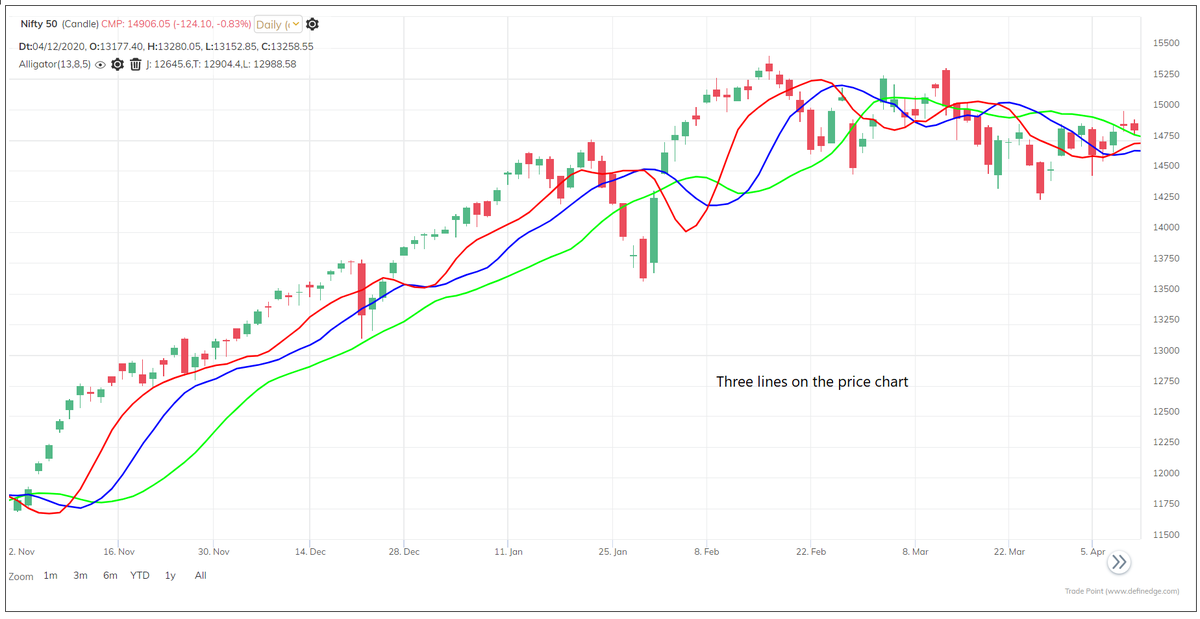
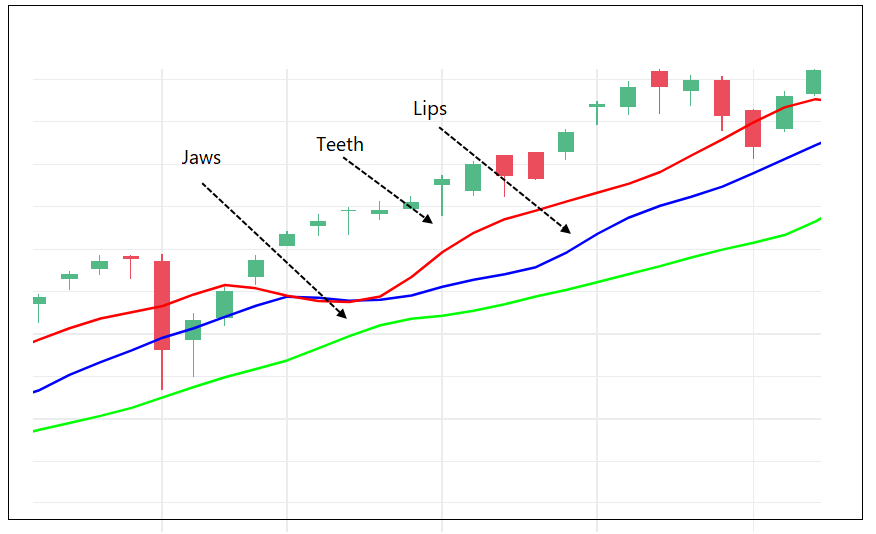
The 13-period MA to 8 (13,8) is called as Alligator’s Jaws.
8-period MA to 5, the Teeth and
5-period MA to 3, the Lips.
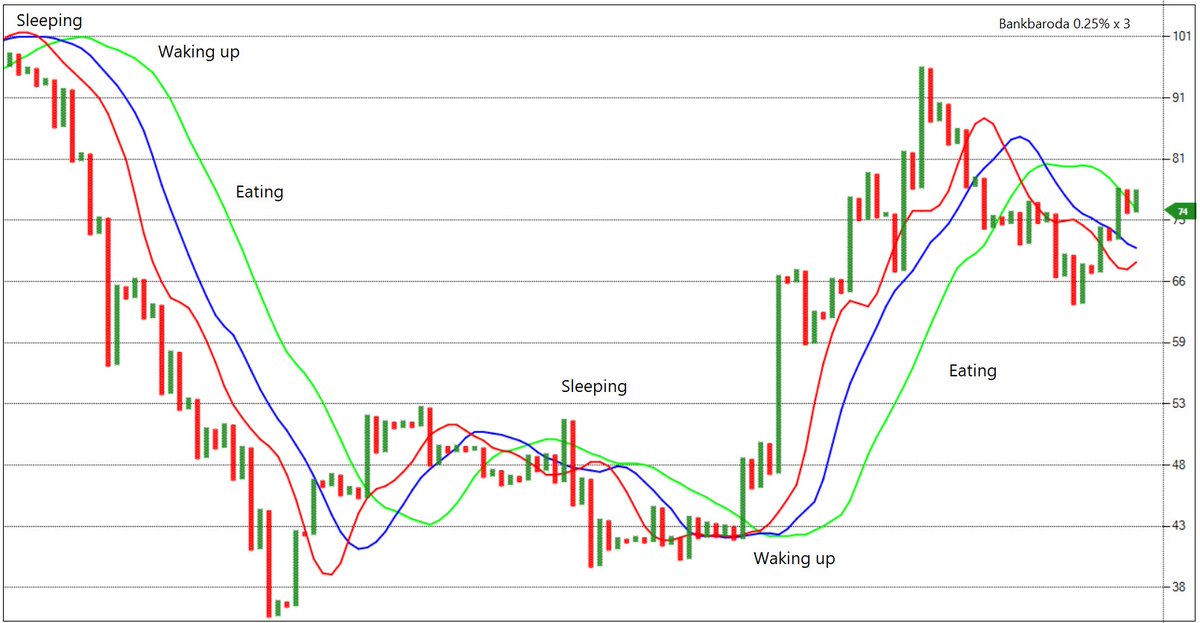
When three lines are close to each other, the Alligator is sleeping.
If the Lips crosses the Teeth and Jaws upward or downward, the Alligator is waking up.
If Price crosses above or below the three lines, the Alligator is eating.
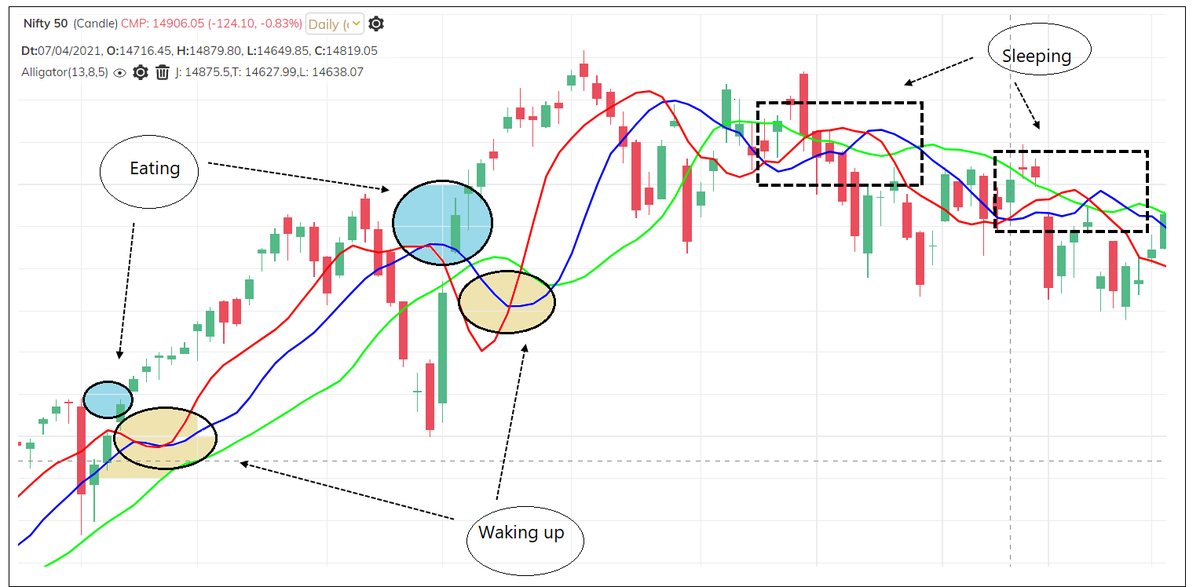
When three lines are close to each other, there is no clear trend.
When short-term average crosses other two upward or downward, the trend might emerge.
When three lines are trending, and price is above them, then it indicates strong uptrend.
Over a period, market trends roughly 20% – 30% times, it remains in a range rest of the time.
If Alligator sleeps more (long consolidation), it will become hungrier and eat more (Strong trend).
There are two important observations on this indicator which I found useful:
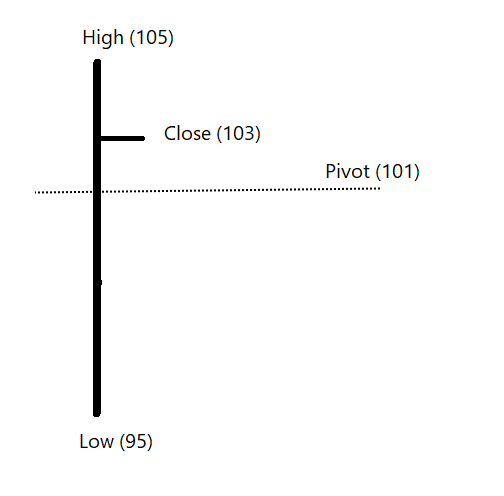
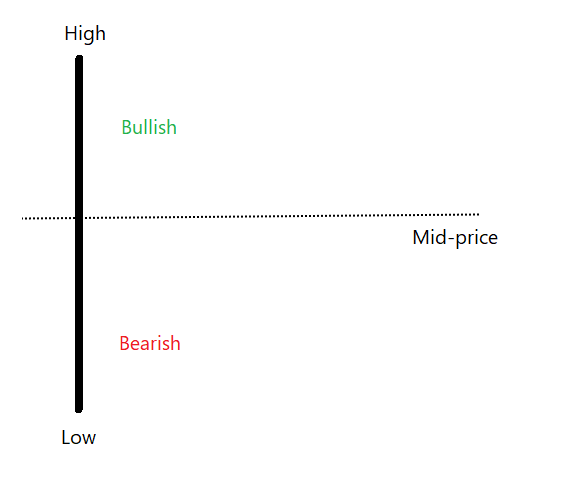
2 – Price low is above three averages and all averages are rising = Strong up trend. Price high is below averages and all averages are falling = strong downtrend.
These readings are also possible using other indicators and charts. Idea was to talk about the concept.

More from Prashant Shah


More from Stockslearnings







You May Also Like





Keep dwelling on this:
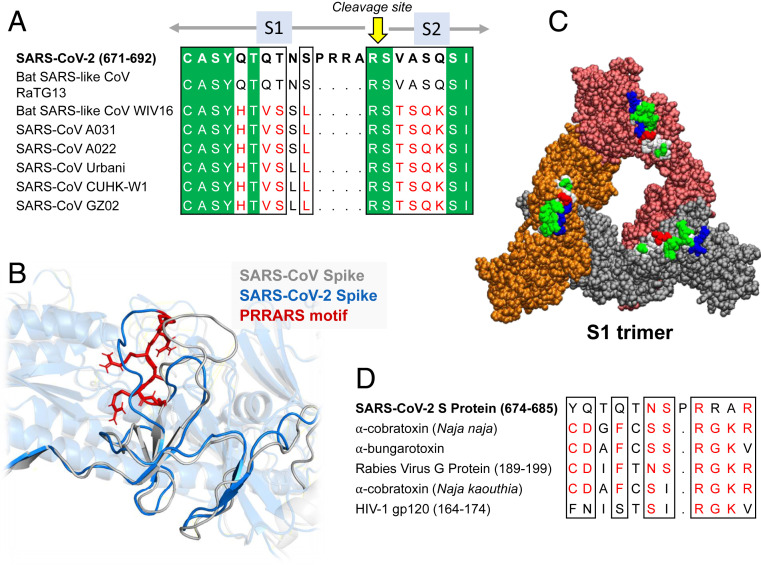
Further Examination of the Motif near PRRA Reveals Close Structural Similarity to the SEB Superantigen as well as Sequence Similarities to Neurotoxins and a Viral SAg.
The insertion PRRA together with 7 sequentially preceding residues & succeeding R685 (conserved in β-CoVs) form a motif, Y674QTQTNSPRRAR685, homologous to those of neurotoxins from Ophiophagus (cobra) and Bungarus genera, as well as neurotoxin-like regions from three RABV strains
(20) (Fig. 2D). We further noticed that the same segment bears close similarity to the HIV-1 glycoprotein gp120 SAg motif F164 to V174.
https://t.co/EwwJOSa8RK
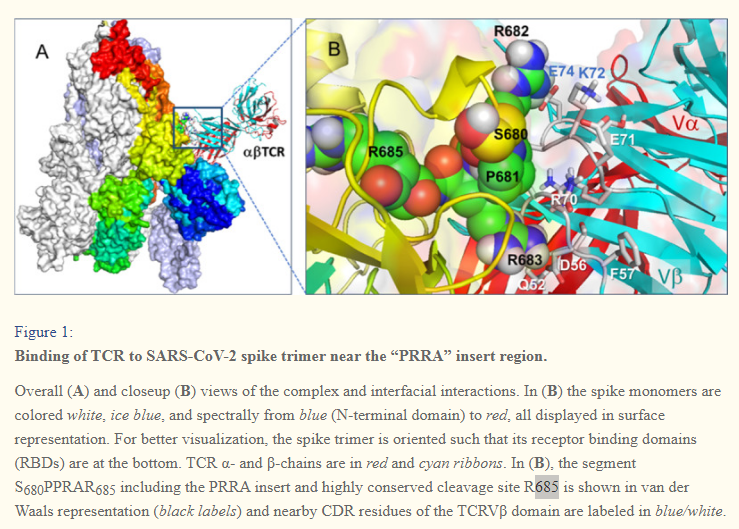
In (B), the segment S680PPRAR685 including the PRRA insert and highly conserved cleavage site *R685* is shown in van der Waals representation (black labels) and nearby CDR residues of the TCRVβ domain are labeled in blue/white
https://t.co/BsY8BAIzDa
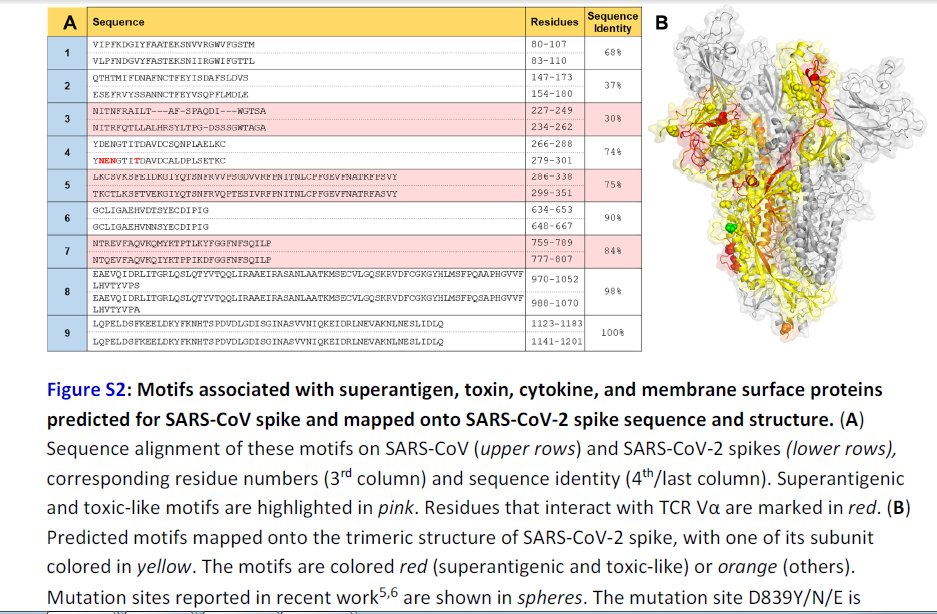
Sequence Identity %
https://t.co/BsY8BAIzDa
Y674 - QTQTNSPRRA - R685
Similar to neurotoxins from Ophiophagus (cobra) & Bungarus genera & neurotoxin-like regions from three RABV strains
T678 - NSPRRA- R685
Superantigenic core, consistently aligned against bacterial or viral SAgs
Further Examination of the Motif near PRRA Reveals Close Structural Similarity to the SEB Superantigen as well as Sequence Similarities to Neurotoxins and a Viral SAg.
The insertion PRRA together with 7 sequentially preceding residues & succeeding R685 (conserved in β-CoVs) form a motif, Y674QTQTNSPRRAR685, homologous to those of neurotoxins from Ophiophagus (cobra) and Bungarus genera, as well as neurotoxin-like regions from three RABV strains
(20) (Fig. 2D). We further noticed that the same segment bears close similarity to the HIV-1 glycoprotein gp120 SAg motif F164 to V174.
https://t.co/EwwJOSa8RK
In (B), the segment S680PPRAR685 including the PRRA insert and highly conserved cleavage site *R685* is shown in van der Waals representation (black labels) and nearby CDR residues of the TCRVβ domain are labeled in blue/white
https://t.co/BsY8BAIzDa
Sequence Identity %
https://t.co/BsY8BAIzDa
Y674 - QTQTNSPRRA - R685
Similar to neurotoxins from Ophiophagus (cobra) & Bungarus genera & neurotoxin-like regions from three RABV strains
T678 - NSPRRA- R685
Superantigenic core, consistently aligned against bacterial or viral SAgs