Categories Society
7 days
30 days
All time
Recent
Popular


This is a good thread, and I am not criticizing it in saying my experience is a bit different, in large part because I'm aware my experience is the anomalous one. :)
That said, there are reasons for this: some are good, some aren't, and by their nature they point to alternatives
The two most critical points of this are as follows:
* This problem mirrors fiction
* There is a structural information load issue at work
Let's dive in.
Fictional protagonists are usually reactive. Antagonists (villains!) drive events and push for change, and protagonists stop them. This is not universally true, but it's so common as so be expected. It's one of the reasons playing villains is fun for reasons other than EEEVIL.
One of the easiest ways to address this in play is with a nominal villains/actual heroes model, which is to say, games of rebels and revolutionaries. This is a popular, very playable model that works in many games.
But it's not quite enough.
If that was all there was to it, then every star wars game would be an example of player driven agendas. But, in practice, Star Wars games tend to be as reactive as anything else, even though the agenda is nominally proactive. Why is that?
That said, there are reasons for this: some are good, some aren't, and by their nature they point to alternatives
I had a bit of a realization about tabletop RPGs recently, and I wanna float it by all ya'll in an overly long thread, because I think it's an interesting problem that stretches to both the culture and design within TTRPGs.
— Ruby Soleil-Raine (@IronsparkSyris) January 26, 2021
Player characters are way too reactive.
The two most critical points of this are as follows:
* This problem mirrors fiction
* There is a structural information load issue at work
Let's dive in.
Fictional protagonists are usually reactive. Antagonists (villains!) drive events and push for change, and protagonists stop them. This is not universally true, but it's so common as so be expected. It's one of the reasons playing villains is fun for reasons other than EEEVIL.
One of the easiest ways to address this in play is with a nominal villains/actual heroes model, which is to say, games of rebels and revolutionaries. This is a popular, very playable model that works in many games.
But it's not quite enough.
If that was all there was to it, then every star wars game would be an example of player driven agendas. But, in practice, Star Wars games tend to be as reactive as anything else, even though the agenda is nominally proactive. Why is that?


Hello, gentrified farm & food media.
Get your shit together. Clean up your house.
There are thousands of BIPOC and working-class activists doing the real work of building viable, accessible, long-term food systems.
And y'all prefer to work with actual crackpots over them.
This isn't an isolated event. Joel Salatin has been completely candid about his white supremacy, and the food movement kept platforming him for years. Here's just one journalist talking about how he did so despite Black women repeatedly asking him not
Baker Creek kept platforming very special militant white dude Cliven Bundy until their own customers boycotted them out of
In today's food & justice world: Latine meat plant workers are one of, if not the hardest-hit demographic in the pandemic.
Indigenous communities are scrambling to vaccinate older tribe members to keep their languages from going extinct.
More than 1 in 750 Indigenous & Black Americans have already died from COVID.
https://t.co/yFq67WLZxL
And your response to this horror is… horse around with a dude who makes movies about how it's fake? And tries to overturn free and fair elections?
*That's* what you've got?
Get your shit together. Clean up your house.
There are thousands of BIPOC and working-class activists doing the real work of building viable, accessible, long-term food systems.
And y'all prefer to work with actual crackpots over them.
Just your reminder that Mikki Willis - a COVID conspiracy theorist who was photographed storming the U.S. Capitol - was on the advisory board for @kissthegroundoc until like five minutes ago.
— SOMETHING ELSE. (@SylvanaquaFarms) January 11, 2021
This isn't an isolated event. Joel Salatin has been completely candid about his white supremacy, and the food movement kept platforming him for years. Here's just one journalist talking about how he did so despite Black women repeatedly asking him not
Baker Creek kept platforming very special militant white dude Cliven Bundy until their own customers boycotted them out of
In today's food & justice world: Latine meat plant workers are one of, if not the hardest-hit demographic in the pandemic.
Indigenous communities are scrambling to vaccinate older tribe members to keep their languages from going extinct.
More than 1 in 750 Indigenous & Black Americans have already died from COVID.
https://t.co/yFq67WLZxL
And your response to this horror is… horse around with a dude who makes movies about how it's fake? And tries to overturn free and fair elections?
*That's* what you've got?


The whole idea of Alphas, Betas etc is stupid. It doesn't exist. It doesn't even exist for wolves! It's just nonsense.
I can't believe straight cis men are so brainwashed by patriarchy that they voluntary believe in false hierarchies.
Tell your local budding incel: Wolf packs do NOT have alphas. The entire idea came from scientists who imposed their own ideas of toxic masculinity on animal behavior. All animal communities are inherently cooperative.
If men want to learn the lessons of wolf packs, they should learn the real lessons: Cooperation, tending to the weak and small, showing help and being of service to others.
https://t.co/z5qQ07vMG5

How many men reading this are so brainwashed by the lifelong propaganda of toxic masculinity that instead of changing their "alpha" ideas because wolves are not like that --- will just look for another kind of animal pack that has alphas? NONE DO. ALL communities are cooperative.
While we're here: Human communities are not like animal communities anyway.
We have the power to reason, the ability to behave morally, opposable thumbs, and advanced civilizations. You don't need animal examples for your behavior. You can just...be human.
I can't believe straight cis men are so brainwashed by patriarchy that they voluntary believe in false hierarchies.
The Sigma Male idea is stupid, pseudoscientific and reveals the flexibility of the pick-up artist grift, telling clients that they're basically John Wick because they have commitment issues, but can also explain away their own failings to meet 'alpha' standards.1/? pic.twitter.com/j4cZKGTvK9
— Siddharth Venkataramakrishnan (@SVR13) January 26, 2021
Tell your local budding incel: Wolf packs do NOT have alphas. The entire idea came from scientists who imposed their own ideas of toxic masculinity on animal behavior. All animal communities are inherently cooperative.
If men want to learn the lessons of wolf packs, they should learn the real lessons: Cooperation, tending to the weak and small, showing help and being of service to others.
https://t.co/z5qQ07vMG5
How many men reading this are so brainwashed by the lifelong propaganda of toxic masculinity that instead of changing their "alpha" ideas because wolves are not like that --- will just look for another kind of animal pack that has alphas? NONE DO. ALL communities are cooperative.
While we're here: Human communities are not like animal communities anyway.
We have the power to reason, the ability to behave morally, opposable thumbs, and advanced civilizations. You don't need animal examples for your behavior. You can just...be human.

So, When Was Slavery Or Involuntary Servitude Finally Abolished?
Contrary To The Common Belief, The Emancipation Proclamations Of 1863 A.D. Freed Only The “Slaves” In The South Or The Slaves Of The Union Or United States,

https://t.co/qFEXMswwRs

Where The “Slaves” In The North From Canada To The Mason Dixon Were Still Being Treated And Called “Slaves”.

It Wasn’t Until December 18, 1865 A.D. That The Thirteenth Amendment Was Ratified And Passed. It Reads:

Contrary To The Common Belief, The Emancipation Proclamations Of 1863 A.D. Freed Only The “Slaves” In The South Or The Slaves Of The Union Or United States,
https://t.co/qFEXMswwRs
Where The “Slaves” In The North From Canada To The Mason Dixon Were Still Being Treated And Called “Slaves”.
It Wasn’t Until December 18, 1865 A.D. That The Thirteenth Amendment Was Ratified And Passed. It Reads:


The most critical flaw in this piece imo is a fundamental misunderstanding of the nature of sexual offending by men, particularly voyeurism and indecent exposure. Self-declaration is a MUCH lower barrier than current requirements for these motivated offenders (who are not rare)
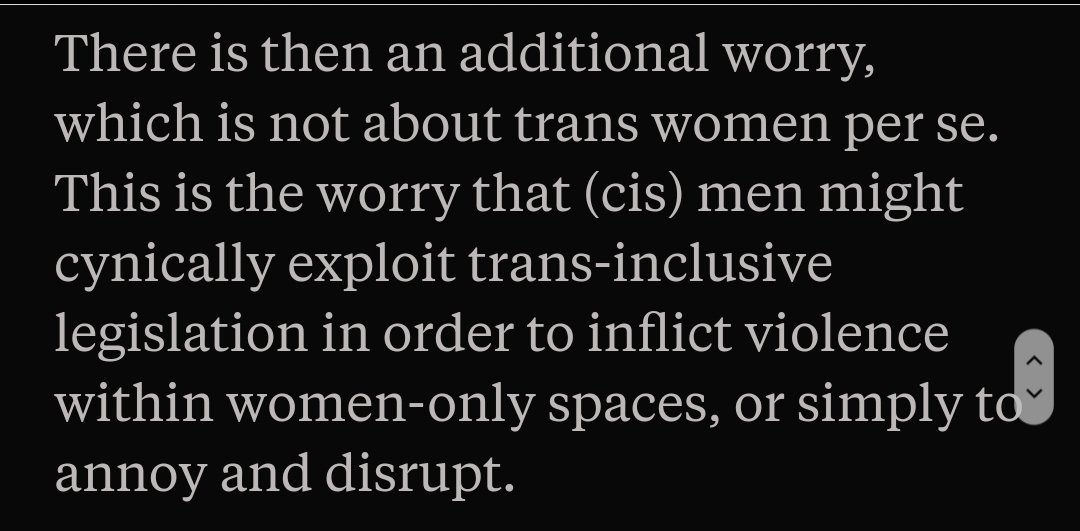
Recent experience with historical sex offence cases show how far the most motivated serious offenders are prepared to go- including getting specific lifetime jobs and volunteering positions. These are a relatively small number of men. Indecent exposure however 2/
Is a crime that roughly 3 MILLION women have experienced since age 16. Well over 100 THOUSAND offences were committed in the last year (official gov stats https://t.co/FxTUosXaFj )
3/
What percentage of these offenders would pretend to be trans in order to offend? Well, you might argue that a very large proportion won't, but what is the barrier proposed under self-ID? Filling in a form. There's no commitment to a process required 4/
And (this is key) there are women's spaces where it is normal to be unclothed. So these men can indulge their offending without any realistic possibility of conviction, AND 5/
Recent experience with historical sex offence cases show how far the most motivated serious offenders are prepared to go- including getting specific lifetime jobs and volunteering positions. These are a relatively small number of men. Indecent exposure however 2/
Is a crime that roughly 3 MILLION women have experienced since age 16. Well over 100 THOUSAND offences were committed in the last year (official gov stats https://t.co/FxTUosXaFj )
3/
What percentage of these offenders would pretend to be trans in order to offend? Well, you might argue that a very large proportion won't, but what is the barrier proposed under self-ID? Filling in a form. There's no commitment to a process required 4/
And (this is key) there are women's spaces where it is normal to be unclothed. So these men can indulge their offending without any realistic possibility of conviction, AND 5/


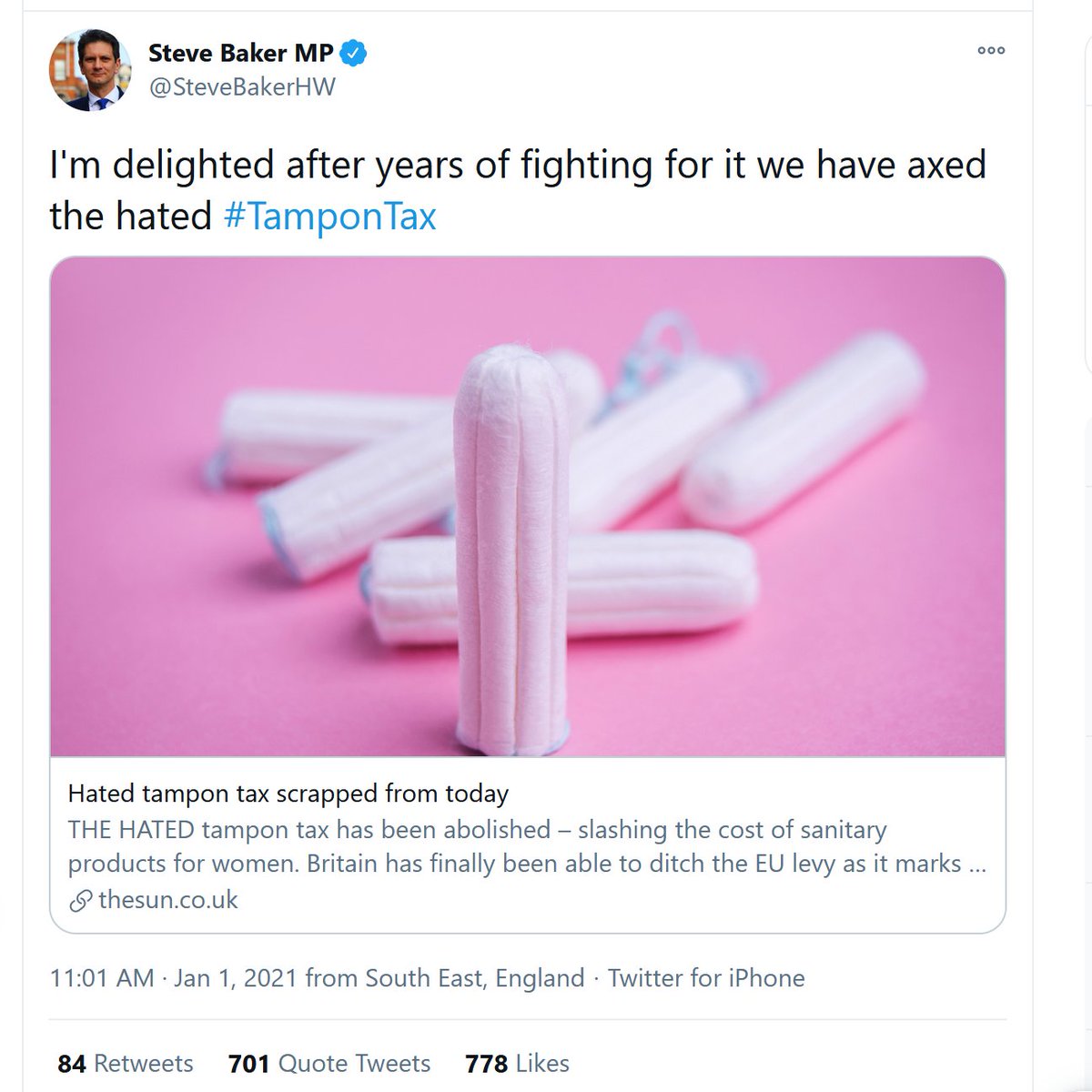
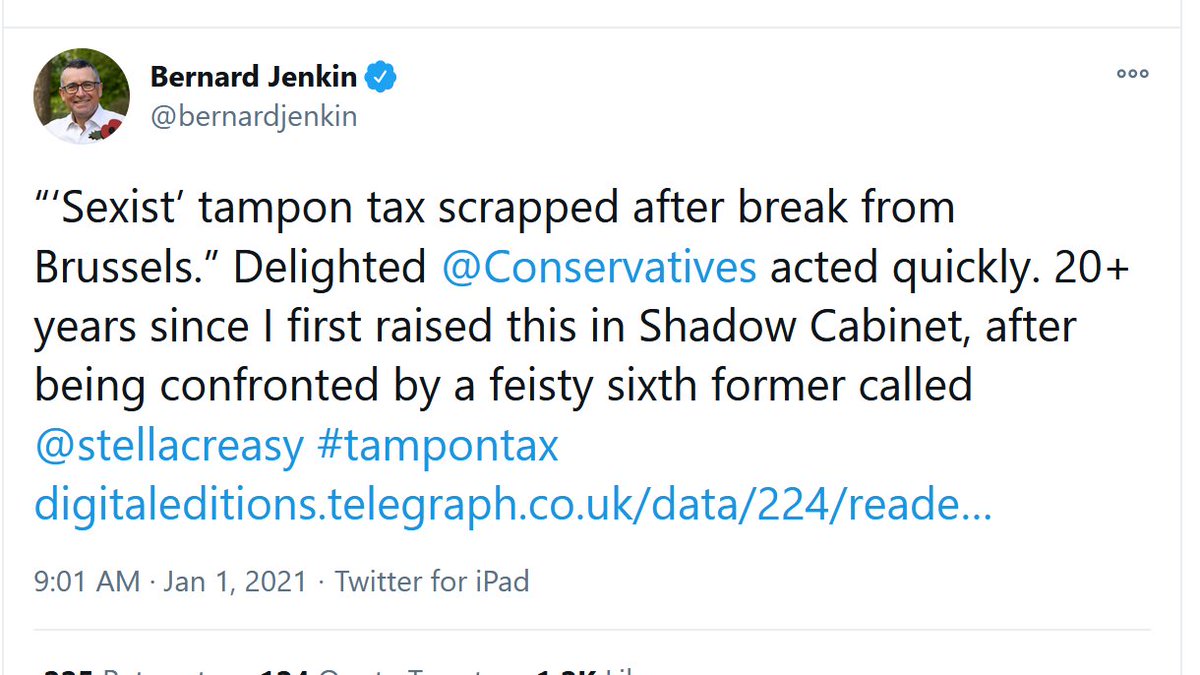
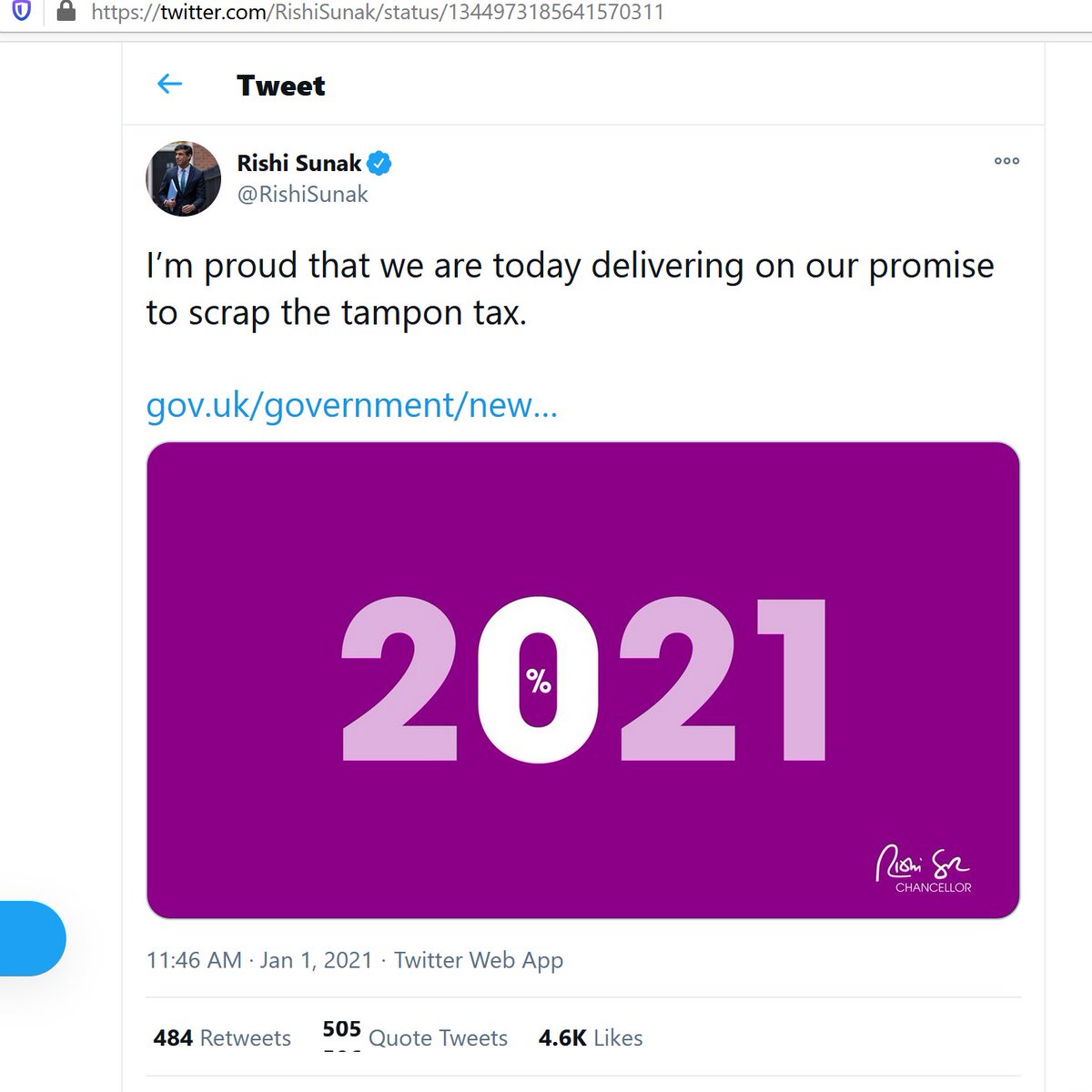
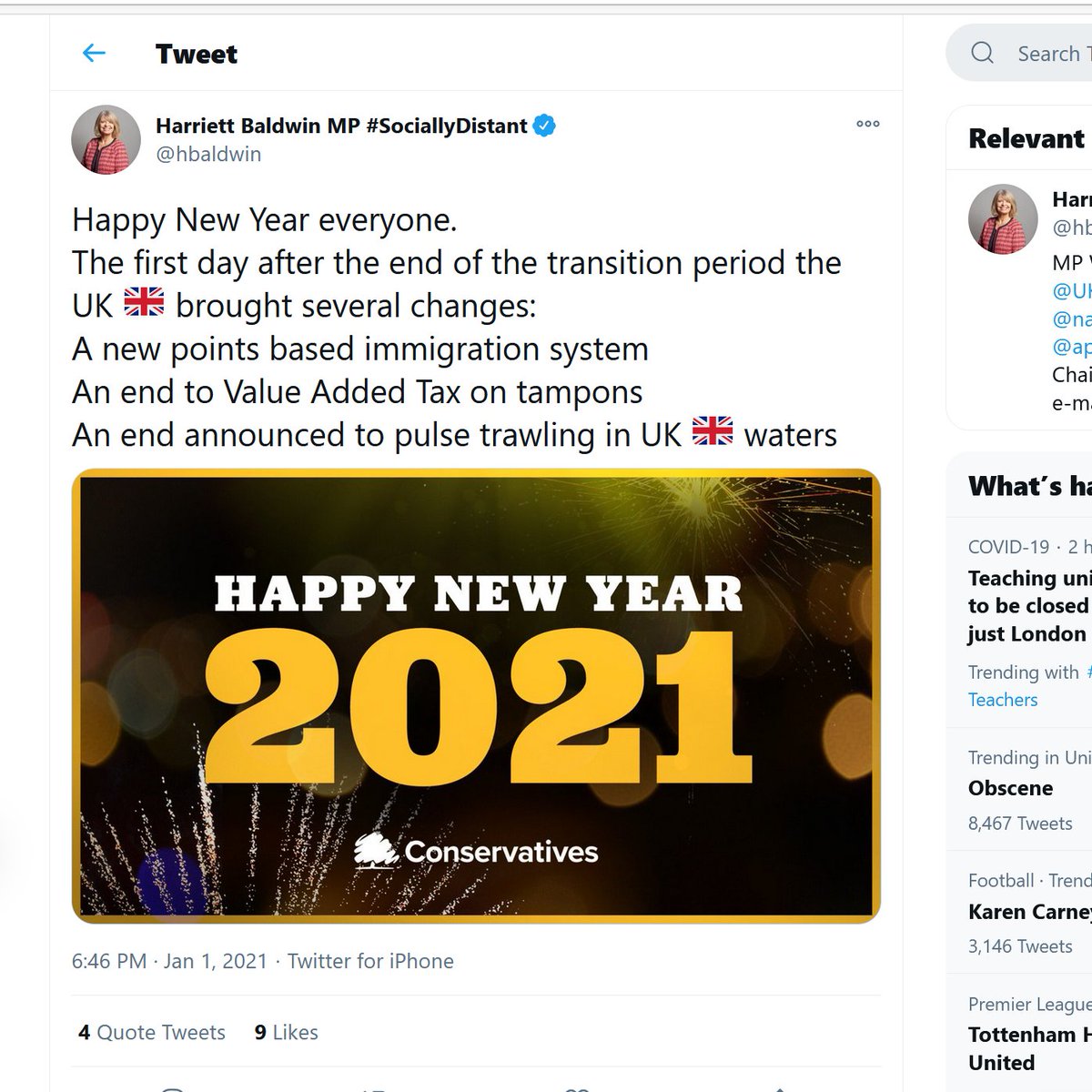
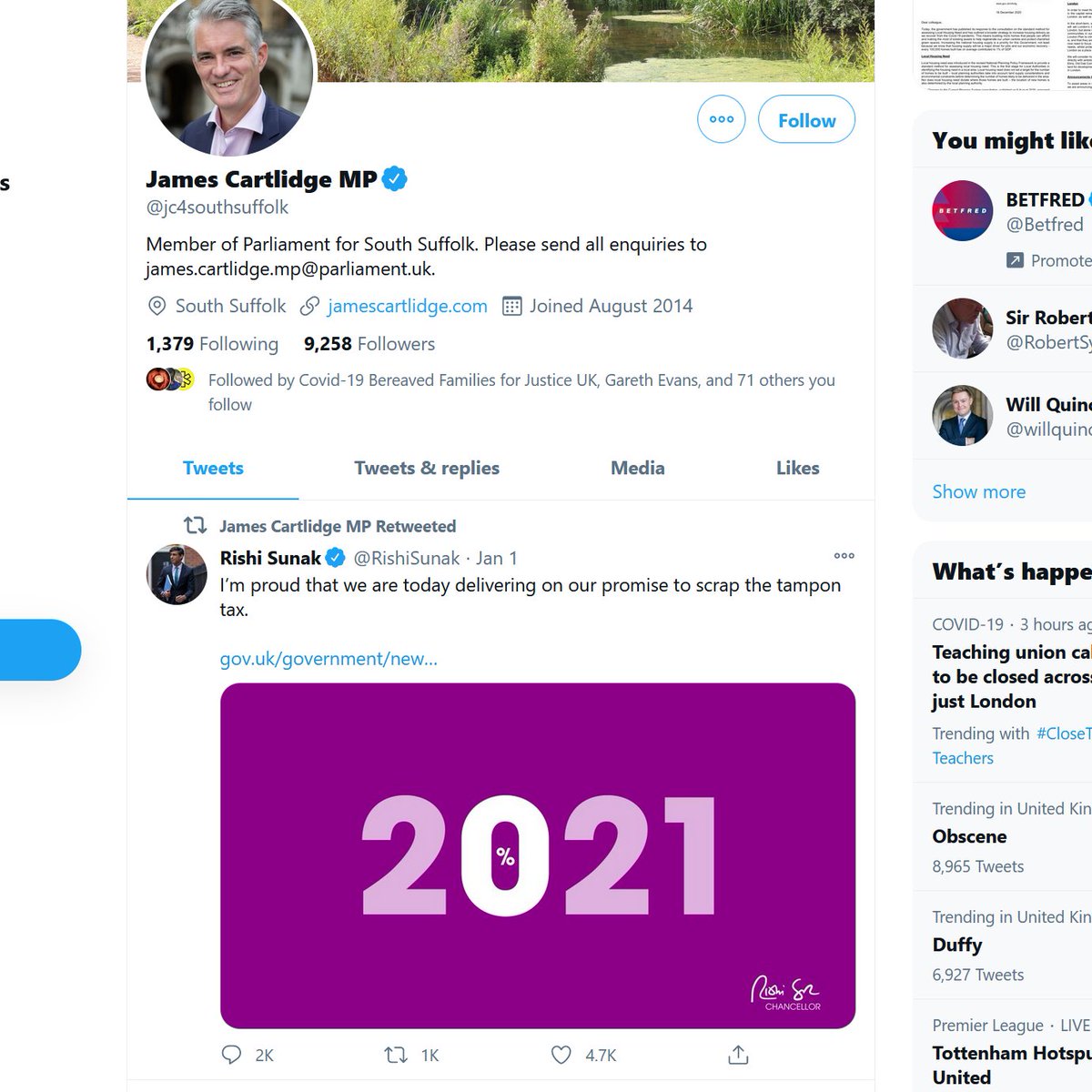

Dear @theSNP,
If you are serious about tackling transphobia within your party, perhaps you should begin by talking to actual trans people, and the organisations who represent them.
Your own NEC is really not the place to start, it's part of the problem.
I mean your Conduct Committee is a joke. Here is a small sample of tweets from Neale Hanvey's campaign guy. This is what is going on in the name of the SNP.
https://t.co/RRuwNAAeUB
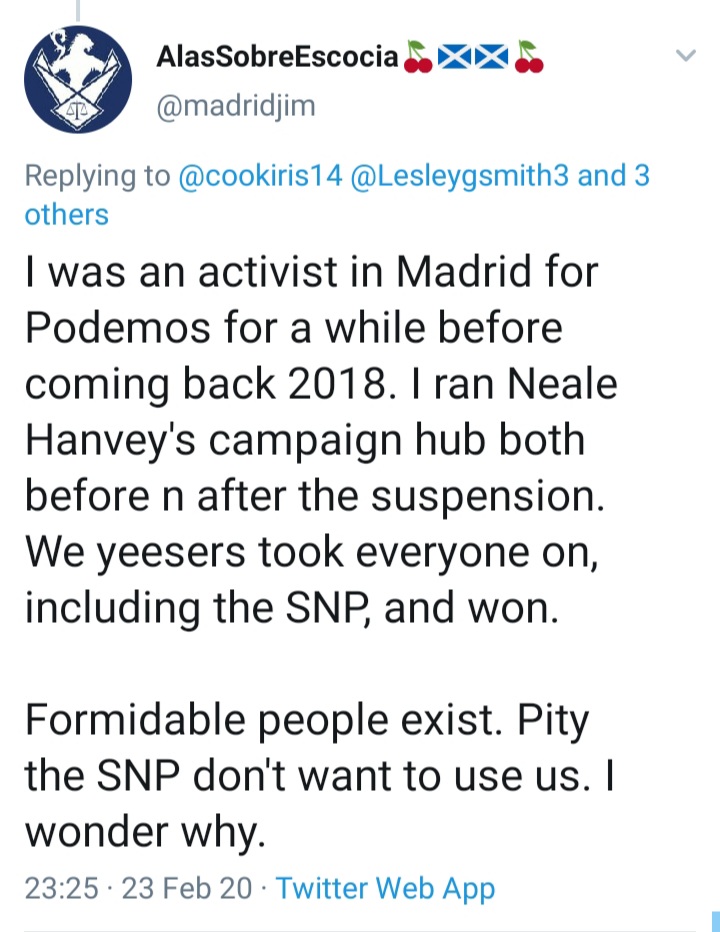
Hanvey appears to have deleted his own tweets equating trans people with paedophiles, but the damage is already done.
You will never regain trust, members, or member subs, until you tackle this effectively.
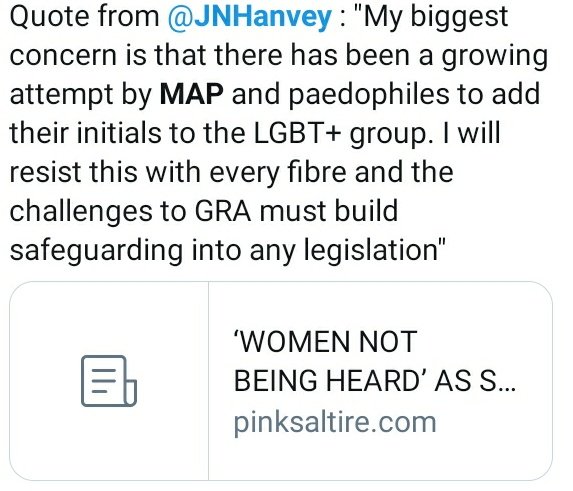
Hanvey deleted his tweet, but here's a quote of the tweet, where he conflated paedophilia with GRA reform, and perpetuates the far-right conspiracy theory about paedophiles "adding letters" to the LGBTQ+ grouping.
If you are serious about tackling transphobia within your party, perhaps you should begin by talking to actual trans people, and the organisations who represent them.
Your own NEC is really not the place to start, it's part of the problem.
I mean your Conduct Committee is a joke. Here is a small sample of tweets from Neale Hanvey's campaign guy. This is what is going on in the name of the SNP.
https://t.co/RRuwNAAeUB
Hanvey appears to have deleted his own tweets equating trans people with paedophiles, but the damage is already done.
You will never regain trust, members, or member subs, until you tackle this effectively.
Hanvey deleted his tweet, but here's a quote of the tweet, where he conflated paedophilia with GRA reform, and perpetuates the far-right conspiracy theory about paedophiles "adding letters" to the LGBTQ+ grouping.
