It's odd that 2020 is almost over and I've not seen one person the whole year go viral for using astrology to predict how shit a year it would be this time last year.
Kinda disproves that whole thing, huh.
Not even preppers got out of it. They were the first people to start proudly coughing in each other's mouths to own the libs upon their fantasized biological disaster finally occurring.
You saw a tall dark stranger, but not the fact he hasn't left his house in 9 months?
Academic success, but not that the school's been via zoom?
I *can* predict people will have an increased fervor for divination, of all sorts, next year, even though literally none of it worked for this year
Pretty hard to pull a Shaun of the Dead and go "oh damn, I forgot to look to the left. Yup, there's the catastrophically mishandled pandemic that killed 1 out of 1,000 Black americans"
More from Anosognosiogenesis


Look at some historical examples of mass psychogenic illnesses: dancing plagues, laughing plagues, meowing nuns,
Here's a video on them:
They are interesting, but what is more interesting to me is Culture Bound Syndrome. https://t.co/hMKaApUMZn
Basically: mass psychogenic illness, and presentation of various mental illnesses, do not occur in a vacuum. Cultures shape them.
For instance, Koro.
There have been several mass outbreaks of men completely convinced their penises are shrinking, anchoring them with string at night so they don't get sucked back inside.
Almost all in Southeast
Here's a description of one outbreak in Hainan in 1984:
Here's a video on them:
They are interesting, but what is more interesting to me is Culture Bound Syndrome. https://t.co/hMKaApUMZn
Basically: mass psychogenic illness, and presentation of various mental illnesses, do not occur in a vacuum. Cultures shape them.
For instance, Koro.
There have been several mass outbreaks of men completely convinced their penises are shrinking, anchoring them with string at night so they don't get sucked back inside.
Almost all in Southeast
Here's a description of one outbreak in Hainan in 1984:
More from Society


Tomorrow, January 6th, MAGA chuds, Proud Boys, and white supremacists are planned to descend on Washington D.C. to contest the election. Among them will be NSC-131, a New England based neo-Nazi organization. Let's welcome them by saying hi to one of their members, Eddie Stuart!
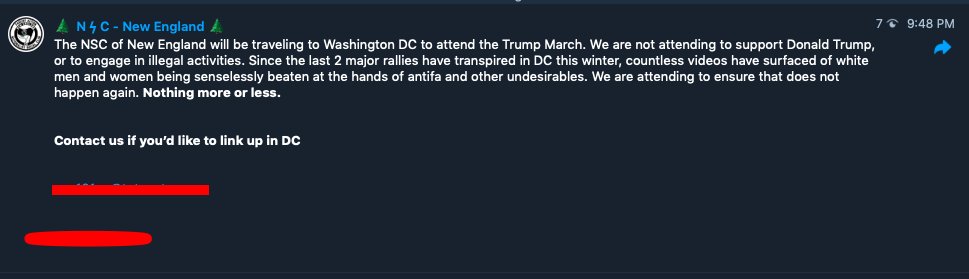
Edward Stuart, from Chester, New Hampshire, has been a member of Nationalist Social Club (NSC) since the very beginning and is a staple participant in their actions. He is known in NSC chats as "Carl Jung" and is well connected in the New England Nazi scene.
2/

NSC-131 is a neo-Nazi group that was started in Massachusetts in early 2020 by Chris Hood. You can learn more about NSC and it's members in these threads:
Eddie describes his ideology as "Esoteric Hitlerism" which is an occult form of Nazism that literally worships Adolf Hitler as a god, or, specifically, as an incarnation of the Hindu God Vishnu. Here is Ed holding the RigVeda with some of his occult Nazi pals. Interesting Ed!
4/
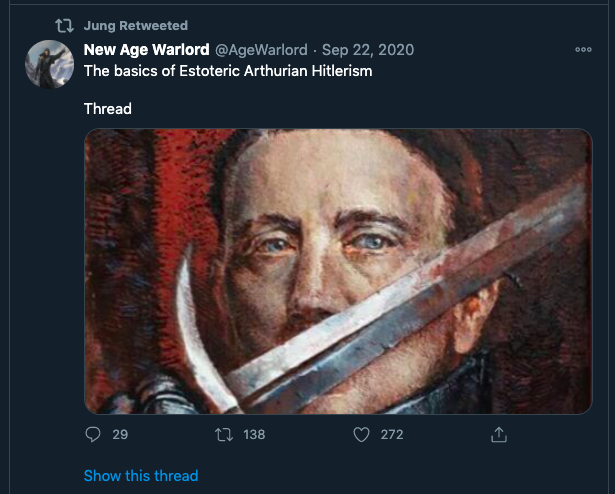
Much of this ideological insight was gained from Eddie's Twitter, where he originally used his "Carl Jung" persona and reposts explicit neo-fascist content and racist memes. In one edited picture, Eddie can be seen at an NSC event in late June 2020 holding a Nazi Sonnenrad flag
5
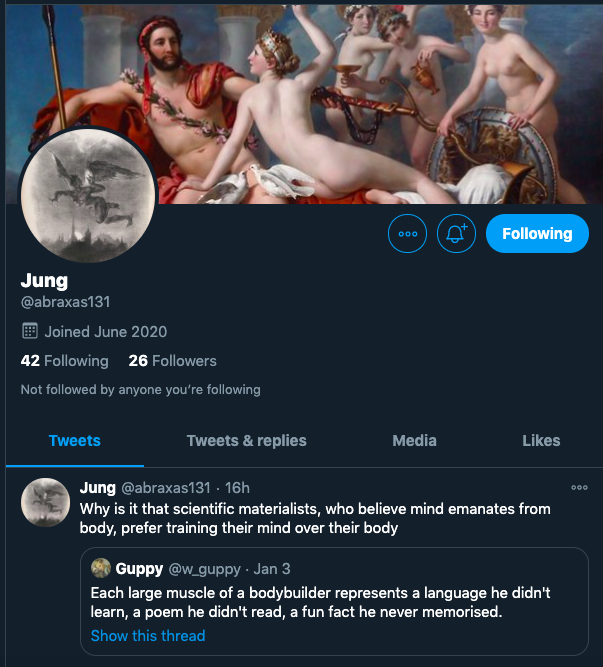
Edward Stuart, from Chester, New Hampshire, has been a member of Nationalist Social Club (NSC) since the very beginning and is a staple participant in their actions. He is known in NSC chats as "Carl Jung" and is well connected in the New England Nazi scene.
2/
NSC-131 is a neo-Nazi group that was started in Massachusetts in early 2020 by Chris Hood. You can learn more about NSC and it's members in these threads:
1/ Let\u2019s talk about a III%er turned Proud Boy turned Resist Marxism turned Patriot Front turned The Base affiliate.
— AntiFash Gordon (@AntiFashGordon) April 10, 2020
He now runs a new crew, the National Socialist Club, based on football hooliganism.\u2070\u2070
Some of you already know him.\u2070\u2070
His name is Chris Hood, of Boston, MA. pic.twitter.com/nXAxWugHcu
Eddie describes his ideology as "Esoteric Hitlerism" which is an occult form of Nazism that literally worships Adolf Hitler as a god, or, specifically, as an incarnation of the Hindu God Vishnu. Here is Ed holding the RigVeda with some of his occult Nazi pals. Interesting Ed!
4/
Much of this ideological insight was gained from Eddie's Twitter, where he originally used his "Carl Jung" persona and reposts explicit neo-fascist content and racist memes. In one edited picture, Eddie can be seen at an NSC event in late June 2020 holding a Nazi Sonnenrad flag
5



You May Also Like


Krugman is, of course, right about this. BUT, note that universities can do a lot to revitalize declining and rural regions.
See this thing that @lymanstoneky wrote:
And see this thing that I wrote:
And see this book that @JamesFallows wrote:
And see this other thing that I wrote:
One thing I've been noticing about responses to today's column is that many people still don't get how strong the forces behind regional divergence are, and how hard to reverse 1/ https://t.co/Ft2aH1NcQt
— Paul Krugman (@paulkrugman) November 20, 2018
See this thing that @lymanstoneky wrote:
And see this thing that I wrote:
And see this book that @JamesFallows wrote:
And see this other thing that I wrote: