The pre CISION tech is simply an attempt to improve the safety profile... 2/10
AVA6000 approved by MHRA. Superb news. First dosing 'around mid-year'; first data to come within 3-4 months after that.
A summary thread on the significance of AVA6000 - and #AVCT's pre CISION platform as a whole - to both the oncology industry and to AVCT itself. 1/10
The pre CISION tech is simply an attempt to improve the safety profile... 2/10
Most therapeutics going through clinical trials look for an improvement of at least 20% over the existing industry-standard drug. A 50% increase in efficacy would usually be considered an astonishing result.
In pre-clinical mouse models for #AVCT's AVA6000 3/10
What this means is that the pre CISION tech could be used to enable the giving of doses to patients that are multiple times more potent... 4/10
For example, in #AVCT's pre-clinical trials, pro-dox (AVA6000) doses were 6x more potent than the standard dox doses.
The results? The...5/10
#AVCT isn't looking to improve chemotherapies by 25-30%, like most drugs in clinical trials.
Its pre CISION has the potential to improve the safety profile - and thus the... 6/10
https://t.co/XOEE45CBtZ
AVCT holds the global exclusive licence over...8/10
TMAC will produce Affimer Drug Conjugates - a potentially more powerful class of oncology treatment than Antibody Drug Conjugates. 9/10
First though, success for AVA6000 please!
Then hopefully @avacta's first TMAC drug to enter Phase I next year 10/10
More from Society


You May Also Like



Fake chats claiming to be from the Irish African community are being disseminated by the far right in order to suggest that violence is imminent from #BLM supporters. This is straight out of the QAnon and Proud Boys playbook. Spread the word. Protest safely. #georgenkencho

There is co-ordination across the far right in Ireland now to stir both left and right in the hopes of creating a race war. Think critically! Fascists see the tragic killing of #georgenkencho, the grief of his community and pending investigation as a flashpoint for action.
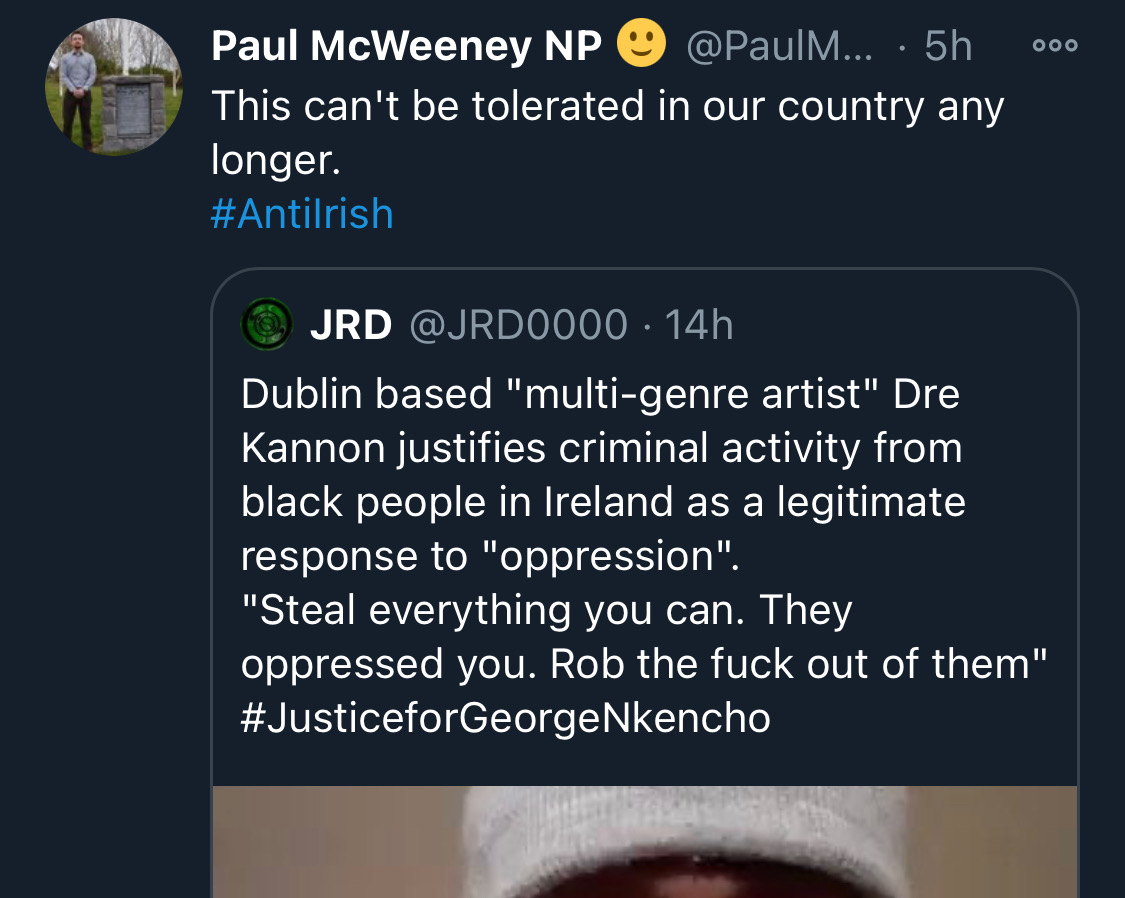
Across Telegram, Twitter and Facebook disinformation is being peddled on the back of these tragic events. From false photographs to the tactics ofwhite supremacy, the far right is clumsily trying to drive hate against minority groups and figureheads.
Declan Ganley’s Burkean group and the incel wing of National Party (Gearóid Murphy, Mick O’Keeffe & Co.) as well as all the usuals are concerted in their efforts to demonstrate their white supremacist cred. The quiet parts are today being said out loud.
The best thing you can do is challenge disinformation and report posts where engagement isn’t appropriate. Many of these are blatantly racist posts designed to drive recruitment to NP and other Nationalist groups. By all means protest but stay safe.
There is co-ordination across the far right in Ireland now to stir both left and right in the hopes of creating a race war. Think critically! Fascists see the tragic killing of #georgenkencho, the grief of his community and pending investigation as a flashpoint for action.
Across Telegram, Twitter and Facebook disinformation is being peddled on the back of these tragic events. From false photographs to the tactics ofwhite supremacy, the far right is clumsily trying to drive hate against minority groups and figureheads.
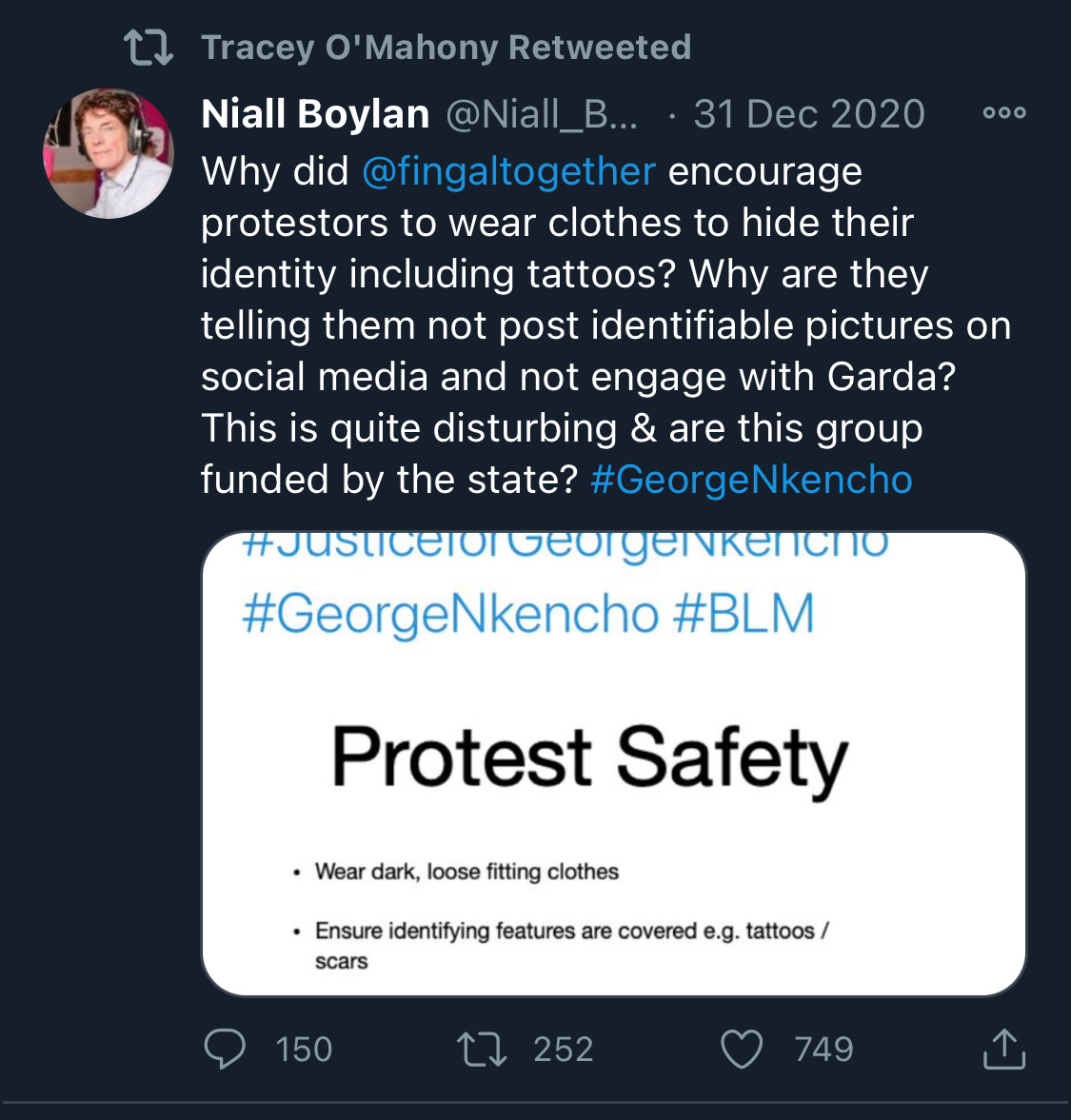
Be aware, the images the #farright are sharing in the hopes of starting a race war, are not of the SPAR employee that was punched. They\u2019re older photos of a Everton fan. Be aware of the information you\u2019re sharing and that it may be false. Always #factcheck #GeorgeNkencho pic.twitter.com/4c9w4CMk5h
— antifa.drone (@antifa_drone) December 31, 2020
Declan Ganley’s Burkean group and the incel wing of National Party (Gearóid Murphy, Mick O’Keeffe & Co.) as well as all the usuals are concerted in their efforts to demonstrate their white supremacist cred. The quiet parts are today being said out loud.
There is a concerted effort in far-right Telegram groups to try and incite violence on street by targetting people for racist online abuse following the killing of George Nkencho
— Mark Malone (@soundmigration) January 1, 2021
This follows on and is part of a misinformation campaign to polarise communities at this time.
The best thing you can do is challenge disinformation and report posts where engagement isn’t appropriate. Many of these are blatantly racist posts designed to drive recruitment to NP and other Nationalist groups. By all means protest but stay safe.