
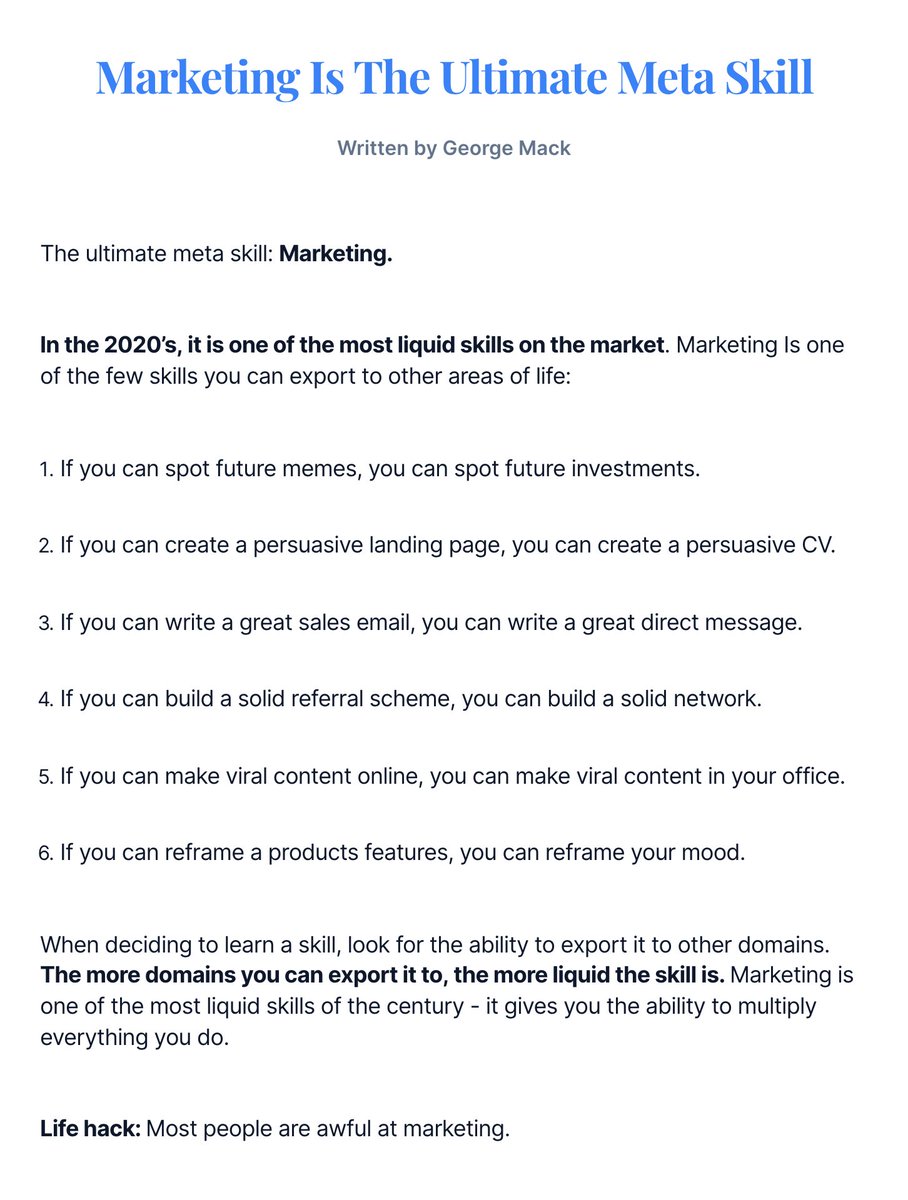
Marketing is the ultimate meta skill.
Lifehack: Most people are awful at marketing.
More from George Mack
Here's a public list of marketing tools I recommend:
↓
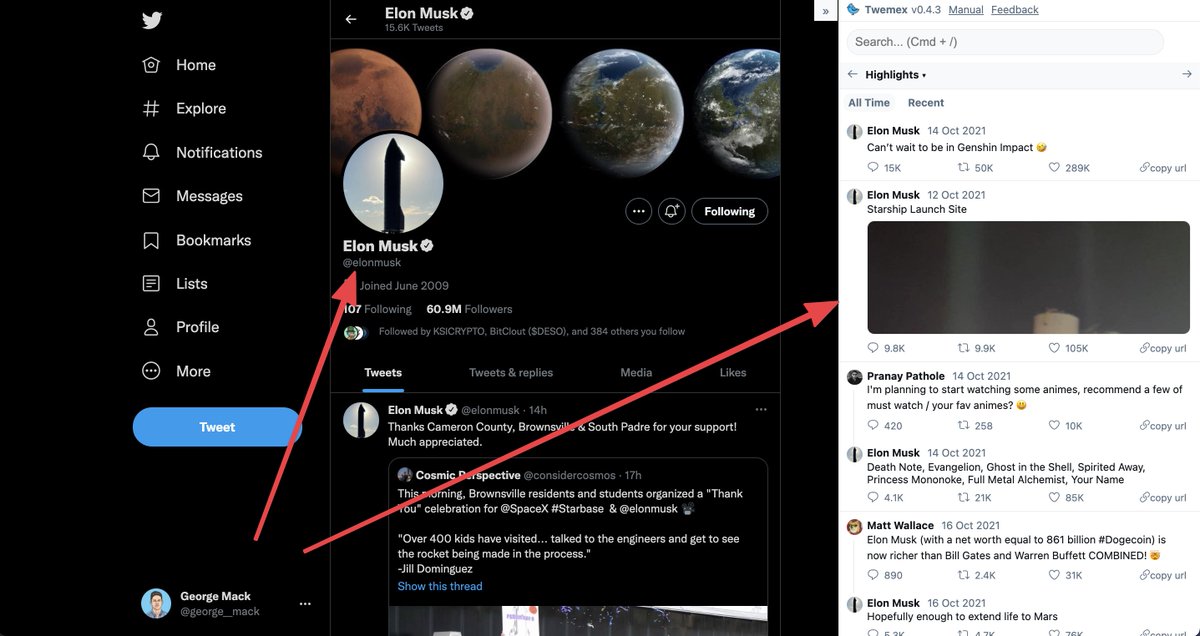
1. Twemex
Twitter Advanced search on steroids.
Whenever you visit someone's account, see their most popular Tweets of all time in order.
H/T @Julian for this
https://t.co/8P2YJ3Jrf0
2. Good UI
Historical log of successful and failed A/B tests from the likes of Amazon, Netflix, Google
3. Blisk
See how your website looks across every device.
Got an Android user complaining how your website looks but you only have an iPhone? Use Blisk.
4. Really Good Emails
Struggling with email ideas?
Library of thousands of quality emails to get inspo from.

More from Marketing


Want numbers like this?
I am going to show you exactly how to GUARANTEE your cold emails will convert.
// THREAD //

First, I am going to show you the structure of a killer cold email.
---
{{Quick Question about Company_Name}} <-- Subject line
Hey {{Name}}, [[first line}} <-- individual personalization is key
We just helped ___, a business like yours, do x in y days <-- Case study
I'm 100% certain we can do something similar for you.
Do you have time for a call this week? <-- CTA
--------
Let's break this down.
Our main goal is to not sound automated. (even though it was in a way)
How do we do that?
Highly Personalized First Lines.
We have their:
- Company Name
- First Name
- LinkedIn Profile
I use https://t.co/cotgiyqqLE to scrape this. (not aff)
The better the first line, the better the cold email will convert.
We need 10/10 first lines.
A good offer + a bad first line = 60% open & 8% reply rate
A good offer + a 10/10 first line = 80% open & 20% reply rate
Run the numbers.

You May Also Like

Decoded his way of analysis/logics for everyone to easily understand.
Have covered:
1. Analysis of volatility, how to foresee/signs.
2. Workbook
3. When to sell options
4. Diff category of days
5. How movement of option prices tell us what will happen
1. Keeps following volatility super closely.
Makes 7-8 different strategies to give him a sense of what's going on.
Whichever gives highest profit he trades in.
I am quite different from your style. I follow the market's volatility very closely. I have mock positions in 7-8 different strategies which allows me to stay connected. Whichever gives best profit is usually the one i trade in.
— Sarang Sood (@SarangSood) August 13, 2019
2. Theta falls when market moves.
Falls where market is headed towards not on our original position.
Anilji most of the time these days Theta only falls when market moves. So the Theta actually falls where market has moved to, not where our position was in the first place. By shifting we can come close to capturing the Theta fall but not always.
— Sarang Sood (@SarangSood) June 24, 2019
3. If you're an options seller then sell only when volatility is dropping, there is a high probability of you making the right trade and getting profit as a result
He believes in a market operator, if market mover sells volatility Sarang Sir joins him.
This week has been great so far. The main aim is to be in the right side of the volatility, rest the market will reward.
— Sarang Sood (@SarangSood) July 3, 2019
4. Theta decay vs Fall in vega
Sell when Vega is falling rather than for theta decay. You won't be trapped and higher probability of making profit.
There is a difference between theta decay & fall in vega. Decay is certain but there is no guaranteed profit as delta moves can increase cost. Fall in vega on the other hand is backed by a powerful force that sells options and gives handsome returns. Our job is to identify them.
— Sarang Sood (@SarangSood) February 12, 2020

The story doesn\u2019t say you were told not to... it says you did so without approval and they tried to obfuscate what you found. Is that true?
— Sarah Frier (@sarahfrier) November 15, 2018
In the spring and summer of 2016, as reported by the Times, activity we traced to GRU was reported to the FBI. This was the standard model of interaction companies used for nation-state attacks against likely US targeted.
In the Spring of 2017, after a deep dive into the Fake News phenomena, the security team wanted to publish an update that covered what we had learned. At this point, we didn’t have any advertising content or the big IRA cluster, but we did know about the GRU model.
This report when through dozens of edits as different equities were represented. I did not have any meetings with Sheryl on the paper, but I can’t speak to whether she was in the loop with my higher-ups.
In the end, the difficult question of attribution was settled by us pointing to the DNI report instead of saying Russia or GRU directly. In my pre-briefs with members of Congress, I made it clear that we believed this action was GRU.


