When I think about our historical, profound shifts in attitude and discourse, the model I apply is "peak indifference."

Say you have real, existential problem. More often than not, these are systemic problems, and those are the hardest problems.

https://t.co/US1YbwIikM

1/
Not just because systemic problems involve collective action (you can't recycle your way out of climate change), but because the cause-and-effect relationships of systemic problems can't be easily known, so it's hard to know what you need to do to avert the problem.

2/
Systemic problems pose a third difficulty: they enrich small minorities, and those minorities can exploit causal ambiguity to deliberately sow doubt.

To make that more concrete: think about cancer-tobacco denial.

3/
Not everyone who smokes gets cancer. When it does give you cancer, the tumor comes years after the puff that damages your genes. There's lots of social pressure to smoke, and getting your friends to quit is even harder than quitting yourself.

4/
And on top of all of it, the tobacco industry made tons of money from giving us cancer, and they could use some of that to fund doubt-merchants who deliberately worsened the difficulty in linking smoking and cancer.

https://t.co/716LbtZjkP

5/
But denial doesn't make problems disappear - it just incurs policy debt, and the interest on that debt is human suffering. Climate inaction, tobacco inaction, and inequality inaction only delay the day of reckoning, and make it worse when it arrives.

6/
That's where peak denial comes in. Over time, the mounting harms from policy debt make it harder and harder to deny the problem, At a certain point - long before we take action - the number of people who deny the problem starts to decline.

7/
This happens naturally, without any need for activist urging. The problem is that the natural peak denial point is often several steps beyond the point of no return. And that's when denial slides into nihilism:

8/
Here's what nihilism looks like:

"Well, I guess these things DID give me stage 4 lung cancer after all. No point in quitting now."

or

"You were right, rhino populations are in danger! But since there's only one left, let's find out what he tastes like?"

9/
That's why we can't wait for peak denial to arise on its own, why we must hasten its arrival - because we want people to engage with systemic problems BEFORE the point of no return.

That's where storytelling comes in.

10/
Stories are a fuggly hack, an illusion played on our empathy, wherein we're fooled into caring about the literally inconsequential fate of made-up people (your breakfast yogurt's death was more tragic than Romeo and Juliet's, for it was once alive).

https://t.co/W70UeVgPNQ

11/
But still, made up stories that make vivid and visceral the consequences of inaction can spur us into action, can create a vocabulary for discussing the lived experience of people in a future that has not yet arrived.

12/
Even better than stories, though, are HISTORIES, the real stories of real people who really suffered through real experiences comparable to those that we face on our horizon. Hence "those who forget history are doomed to repeat it."

13/
We're very good at forgetting history. The arrival of the covid pandemic was filled with stories of the dimly remembered 1918 influenza pandemic. Our failure to heed those warnings triggered tales of its brutal second wave the following winter.

Herp derp.

14/
Starting in 1968, successive US presidents began to dismantle Glass-Steigel, a corrective put in place after a horrendous finance sector collapse that triggered the Great Depression and WWII. Not one president heeded historians' warnings about the consequences.

Derp.

15/
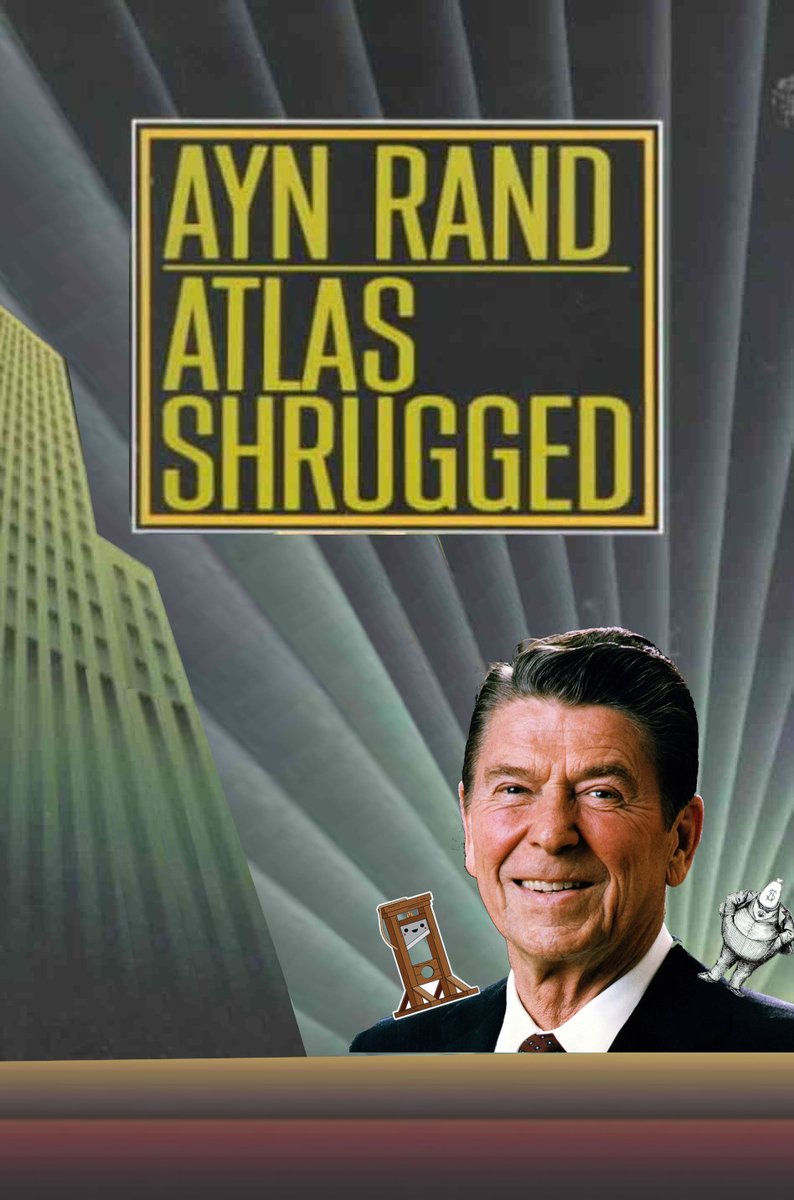
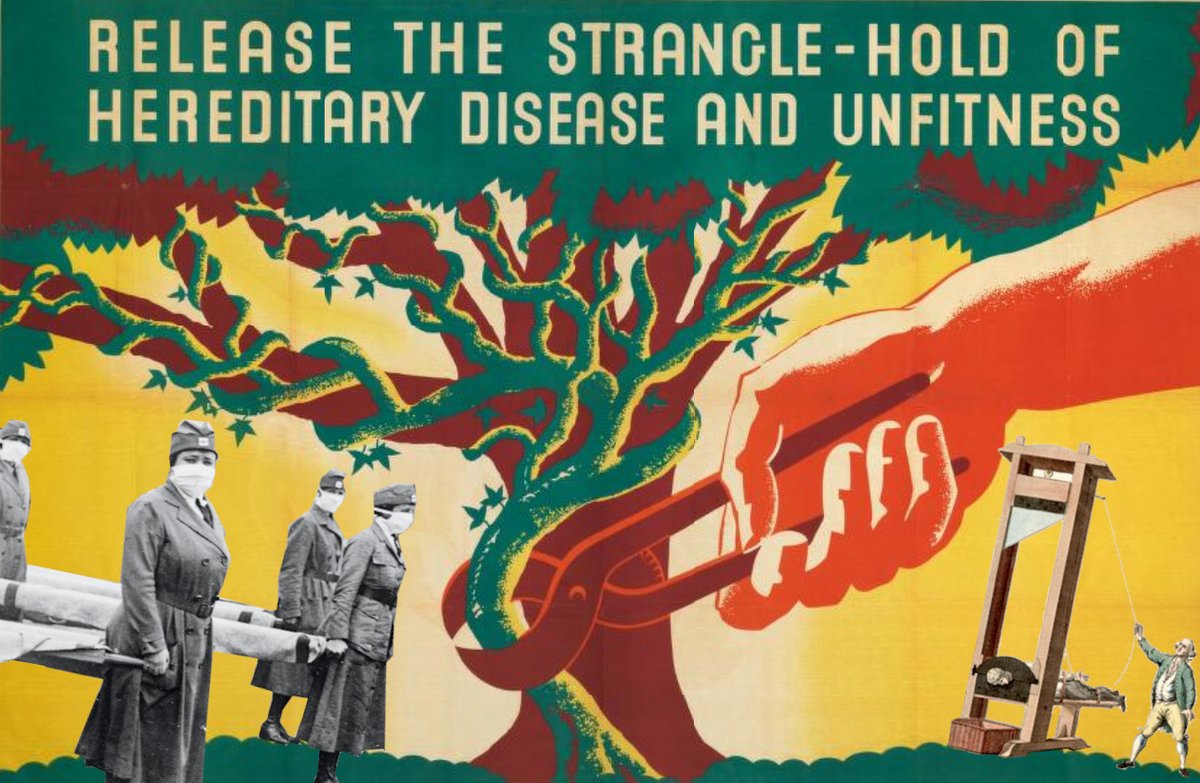
Dismantling the checks on finance led to successive, worsening crises followed by crushing austerity a deepening inequality. Historical warnings about how this cycle ends with guillotines and Reichstag fires were ignored.

Derp derp derp.

16/
The ideology of finance is a subset of right-wing thought, defined by @coreyrobin (in "The Reactionary Mind") as the belief that some people are born to rule, while the rest are born to be ruled over.

https://t.co/17jf9MVW8q

17/
This belief has many guises (Dominionism, imperialism, racism, monarchism, fascism, libertarianism) but they all boil down to one thing: eugenics.

It's one thing to believe that markets are meritocratic during a moment of dynamism, when the low-born can rise to riches.

18/
But when their offspring pull up the ladder and social mobility halts, "meritocracy" becomes hereditary: markets elevate the best people, and the best people are all descended from the wealthy, so the wealthy must be of better stock (cue Trump and his talk of "good blood").

19/
Eugenics was once a mainstream American doctrine, and American eugenicists inspired Nazi "race science." But after the Holocaust, eugenics fell into disrepute and we dropped it down the same memory hole that the 1918 flu disappeared into.

20/
But eugenics made a comeback under another guise: the "human capital theory," which holds that markets reward us in proportion to our value to society, and thus the CEO is paid 10,000x more than the janitor because the CEO provides 10,000x more value to the human project.

21/
Eugenics isn't just repugnant, it's also wrong. To understand why, you have to understand how desirable traits are social, not isolated in individuals.

@blair_fix's essay on the link between eugenics and human capitol theory is a must-read:

https://t.co/iGnwaRaITv

22/
By way of illustration, Fix describes geneticist William Muir's experiments with improving chicken egg-production through artificial selection, in which he only bred the best layers. The result? A disaster. Egg-laying plummeted.

23/
It plummeted because laying isn't an isolated trait. Chickens that produced the most eggs did so by bullying other chickens out of THEIR feed and resources. Selecting for laying selected for bullying and aggression and led to endless chicken-fights and no eggs.

24/
When Muir bred another flock of chickens based on a GROUP's ability to lay, THEN he got his eggs. Egg-laying is a social process.

This story will be familiar to anyone who's worked in a stack-ranked software development shop.

25/
Software managers have long noted that some coders can turn in 10X or even 100X more code than their median colleagues. But attempts to build "superstar" teams that fired all the median programmers end in chaos and destruction.

26/
If your 100X programmer is such a dick that no one can work with them, then their aptitude is irrelevant - you'll never ship.

I assume there are analogies to this in the sporting world, but I am vastly unqualified to discuss sports of any kind.

27/
Despite the bankruptcy of human capital theory, the systemic dangers it posed, and the obvious fact that it was just eugenics dressed up as economics, the theory festered for decades, poisoning our world.

28/
The C-suites of every major company are filled with hens whose egg-laying prowess is the result of their suppression of their peers' efficacy - while others whose social integration make them far more productive are relegated to worse jobs or forced out altogether.

29/
The lockdown provoked squeals of outrage from the world's wealthiest people, who insisted that the factories be re-opened. As the slogan of the day went, "If a billionaire needs you to go to work to maintain his fortune, then you are the source of that fortune - not him."

30/
We can't afford to be indifferent to any of our systemic problems any more: not climate science, nor inequality, nor monopoly, nor the lurking eugenics that justifies it all.

eof/

More from Cory Doctorow #BLM

More from History

Rush Catalog
Emotion Detector (1985, Power Windows)
https://t.co/3U3Ol6tMHU
#RushFamily
@RushFamTourneys
What's your grade of this song?

https://t.co/3U3Ol6Lo6u

Lyrics:

When we lift the covers from our feelings
We expose our insecure spots
Trust is just as rare as devotion —
Forgive us our cynical thoughts
If we need too much attention —
Not content with being cool
We must throw ourselves wide open
And start acting like a fool

If we need too much approval
Then the cuts can seem too cruel

Right to the heart of the matter
Right to the beautiful part
Illusions are painfully shattered
Right where discovery starts
In the secret wells of emotion
Buried deep in our hearts

It’s true that love can change us
But never quite enough
Sometimes we are too tender
Sometimes we’re too tough
If we get too much attention
It gets hard to overrule
So often fragile power turns
To scorn and ridicule
Sometimes our big splashes
Are just ripples in the pool

You May Also Like

Oh my Goodness!!!

I might have a panic attack due to excitement!!

Read this thread to the end...I just had an epiphany and my mind is blown. Actually, more than blown. More like OBLITERATED! This is the thing! This is the thing that will blow the entire thing out of the water!


Has this man been concealing his true identity?

Is this man a supposed 'dead' Seal Team Six soldier?

Witness protection to be kept safe until the right moment when all will be revealed?!

Who ELSE is alive that may have faked their death/gone into witness protection?


Were "golden tickets" inside the envelopes??


Are these "golden tickets" going to lead to their ultimate undoing?

Review crumbs on the board re: 'gold'.


#SEALTeam6 Trump re-tweeted this.