
Growing up, Hanuman was an adorable deity for us, who swallowed the sun, or who couldn’t figure out what was Sanjeevani booti so he picked up a whole mountain and came back with it. 2
'Tera mera rishta kya, hindu, hindu,hindutva' is a clear take on 'tera mera rishta kya,la ilaha illallah'. As much as Hindutva hates the monotheistic religions especially Islam, there's a strange wistfulness and subliminal need at display now, to BE that they hate. 1
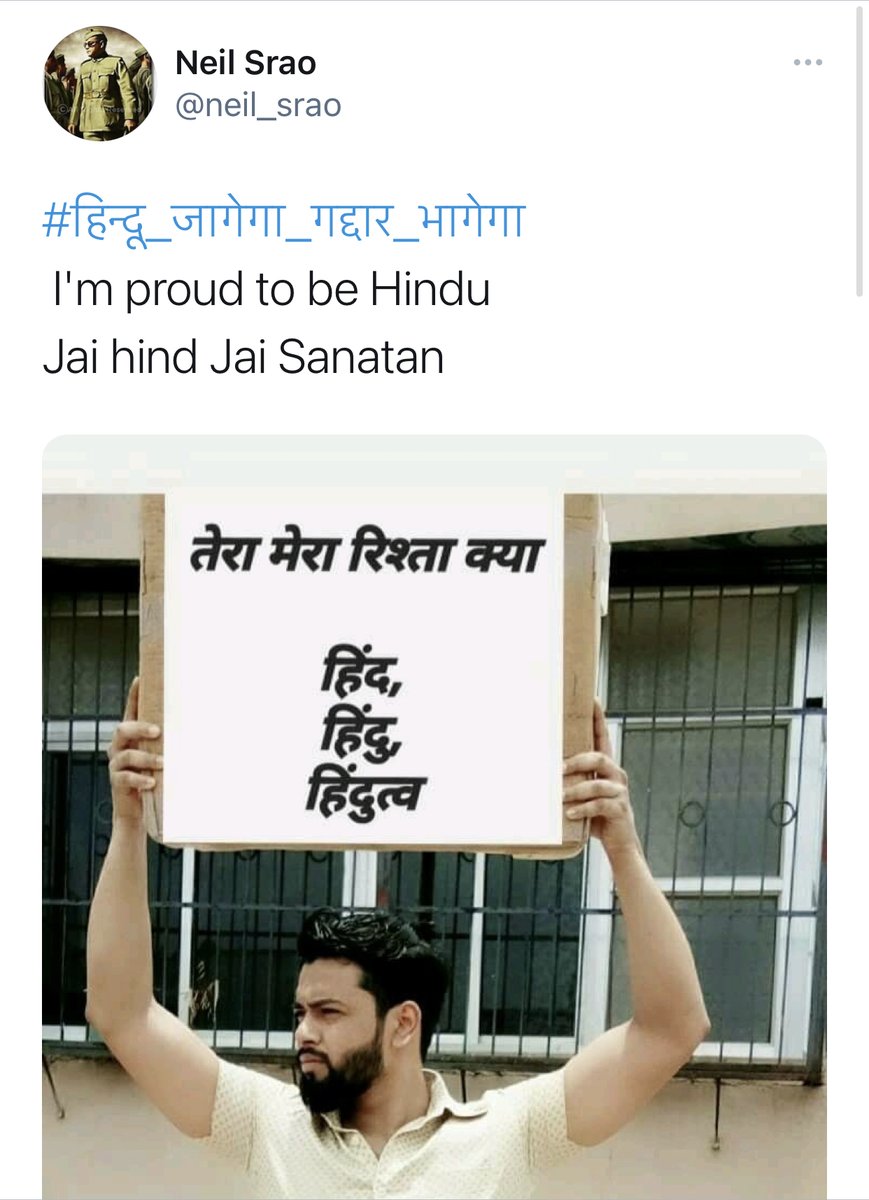
Growing up, Hanuman was an adorable deity for us, who swallowed the sun, or who couldn’t figure out what was Sanjeevani booti so he picked up a whole mountain and came back with it. 2
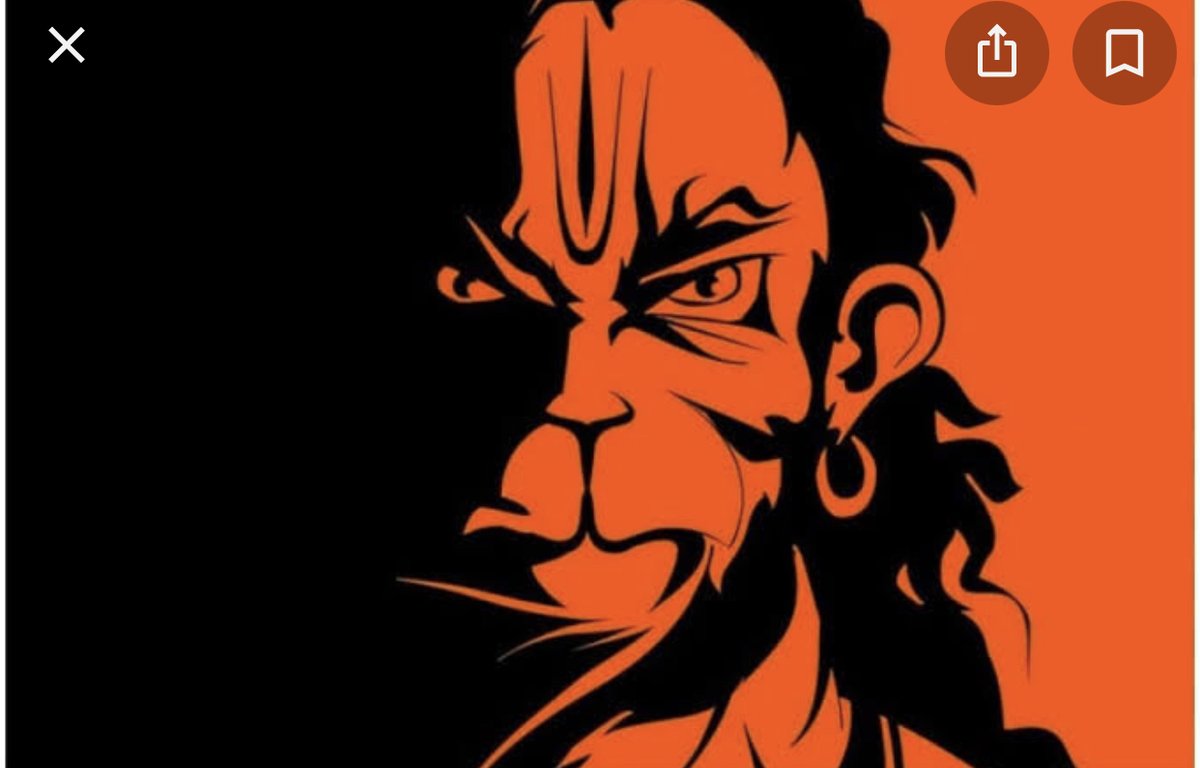
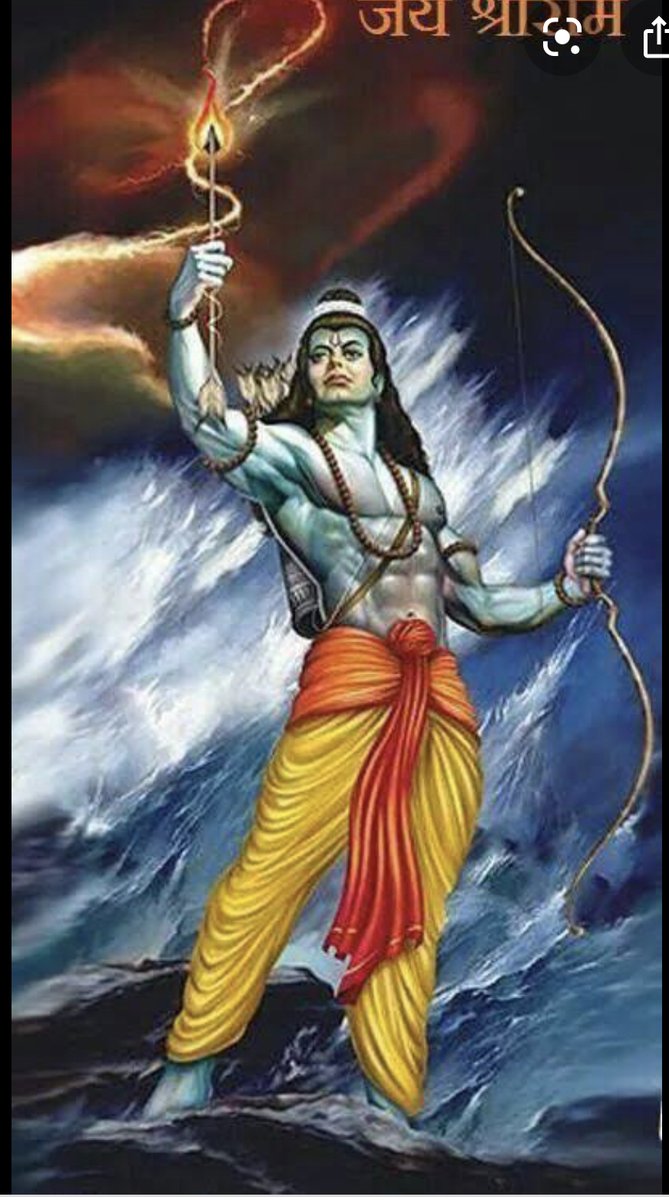
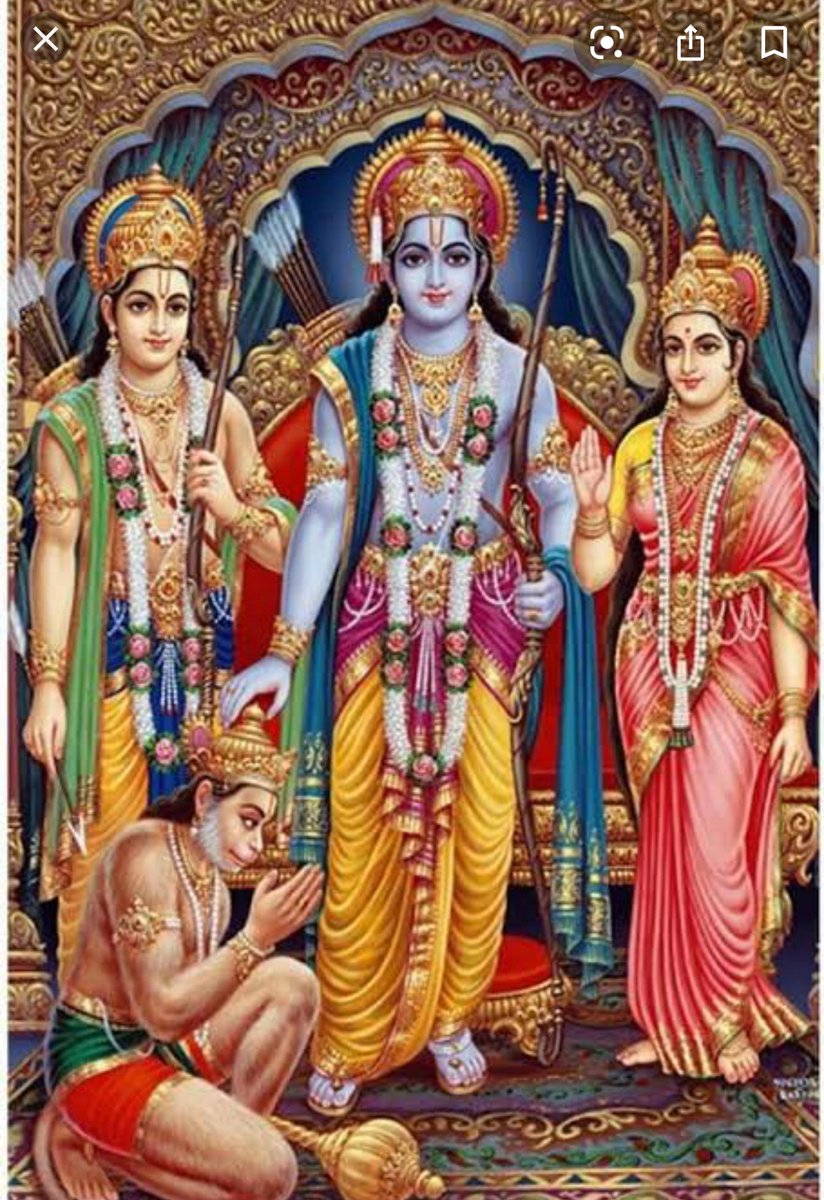
These are the people who say that it must be done. Hinduism must be militarized. 16
More from Religion


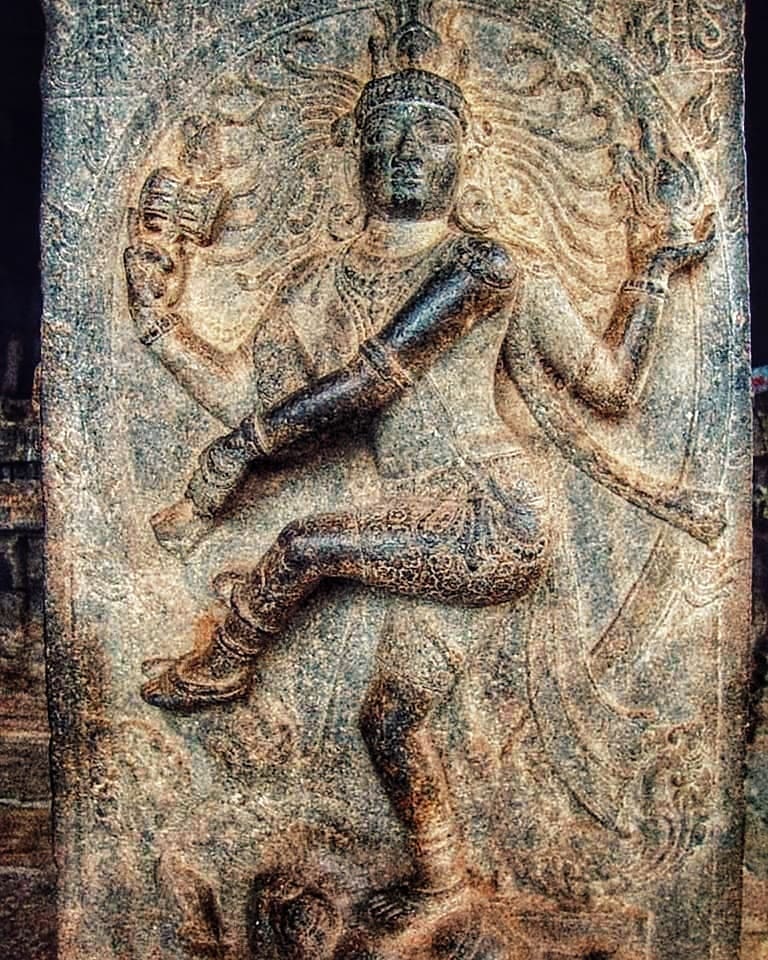


MDZS is laden with buddhist references. As a South Asian person, and history buff, it is so interesting to see how Buddhism, which originated from India, migrated, flourished & changed in the context of China. Here's some research (🙏🏼 @starkjeon for CN insight + citations)
1. LWJ’s sword Bichen ‘is likely an abbreviation for the term 躲避红尘 (duǒ bì hóng chén), which can be translated as such: 躲避: shunning or hiding away from 红尘 (worldly affairs; which is a buddhist teaching.) (https://t.co/zF65W3roJe) (abbrev. TWX)
2. Sandu (三 毒), Jiang Cheng’s sword, refers to the three poisons (triviṣa) in Buddhism; desire (kāma-taṇhā), delusion (bhava-taṇhā) and hatred (vibhava-taṇhā).
These 3 poisons represent the roots of craving (tanha) and are the cause of Dukkha (suffering, pain) and thus result in rebirth.
Interesting that MXTX used this name for one of the characters who suffers, arguably, the worst of these three emotions.
3. The Qian kun purse “乾坤袋 (qián kūn dài) – can be called “Heaven and Earth” Pouch. In Buddhism, Maitreya (मैत्रेय) owns this to store items. It was believed that there was a mythical space inside the bag that could absorb the world.” (TWX)
1. LWJ’s sword Bichen ‘is likely an abbreviation for the term 躲避红尘 (duǒ bì hóng chén), which can be translated as such: 躲避: shunning or hiding away from 红尘 (worldly affairs; which is a buddhist teaching.) (https://t.co/zF65W3roJe) (abbrev. TWX)
2. Sandu (三 毒), Jiang Cheng’s sword, refers to the three poisons (triviṣa) in Buddhism; desire (kāma-taṇhā), delusion (bhava-taṇhā) and hatred (vibhava-taṇhā).
These 3 poisons represent the roots of craving (tanha) and are the cause of Dukkha (suffering, pain) and thus result in rebirth.
Interesting that MXTX used this name for one of the characters who suffers, arguably, the worst of these three emotions.
3. The Qian kun purse “乾坤袋 (qián kūn dài) – can be called “Heaven and Earth” Pouch. In Buddhism, Maitreya (मैत्रेय) owns this to store items. It was believed that there was a mythical space inside the bag that could absorb the world.” (TWX)

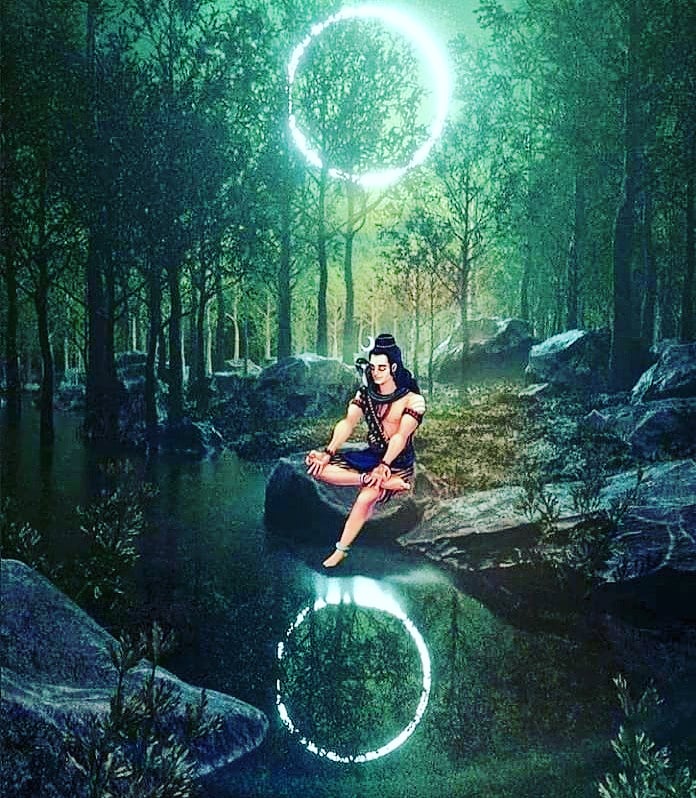

As the Fall of man was a consequence of the pursuit of our own good, this quest intrinsically contains the possibility of our return to The Good. The route back to The Good was only revealed by The Way [Jn. 14:6], so we might say that Christ incarnates to complete the Circle.

Each thing is moved by, implicitly converted or turned back to, its own good by its cause of procession - which is principally God.
"Via est nobis tendendi in Deum." - St. Thomas Aquinas, which is to say that:
Christ, who as a man, is the way of our tending (back) into God.

Ezekiel 10:6 | When the LORD commanded the man in linen, “Take fire from among the wheels, from among the cherubim,” the man went in and stood beside a wheel.
"So I saw the glorious wheel move." - Dante, Paradiso 10.145

As Scripture and Dante see God's providence in circles, so did Boethius and Platonists more
Aquinas with, "Eadem est via qua descenditur et ascenditur." [SCG 4.1.3], brings back Heraclitus to the medievals, "The way up and the way down is the same." [Diels, B60]
The way up and the way down are the same.
Each thing is moved by, implicitly converted or turned back to, its own good by its cause of procession - which is principally God.
"Via est nobis tendendi in Deum." - St. Thomas Aquinas, which is to say that:
Christ, who as a man, is the way of our tending (back) into God.
Ezekiel 10:6 | When the LORD commanded the man in linen, “Take fire from among the wheels, from among the cherubim,” the man went in and stood beside a wheel.
"So I saw the glorious wheel move." - Dante, Paradiso 10.145
As Scripture and Dante see God's providence in circles, so did Boethius and Platonists more
Imagine a set of concentric circles. The inmost one comes closest to the simplicity of the centre, while forming itself a kind of centre around which revolve those which are set outside it. The circle furthest out rotates through a wider orbit.
— \u300e\U0001d622\U0001d633\U0001d633\U0001d636\U0001d634\u300f (@arrus_kacchi) December 26, 2020
Aquinas with, "Eadem est via qua descenditur et ascenditur." [SCG 4.1.3], brings back Heraclitus to the medievals, "The way up and the way down is the same." [Diels, B60]
The way up and the way down are the same.

1. A)Yes , monotheism does mean there is one God & all other gods are false.
But your statement that it also mean " that God is my God " is misleading . It depends on the doctrine of that monotheistic religion .
From Islamic monotheism , Allah never said that he is Creator of Arabs . He is Creator if all in creation . So from a doctrinal pov your statement doens't hold up .
B ) how did u write Advaita = hindu philosophy ? Do u want me to mention difference between Advaita and dvaita ?
" There is no concept of shirk in Hinduism " . This is a red hearing , No One claimed Hinduism also has concept of shirk .
2. Tribal God ? In Islamic doctrine . No where it says Allah is Only God of Quraish tribe .
It was always " ilahi n Naas " , not to mention islamic was always about one's belief & not race/ethnicity , So it was never tribalistic in its Nature
& If someone's doctrine is to be Questioned for being tribalistic , It's Hinduism . It's a ethnico religion . Originated on the banks of Indus river , With special mentions to " Aryans " in 4 vedas.
Even after 4000 yrs , 95% of it's followers live in India .
But your statement that it also mean " that God is my God " is misleading . It depends on the doctrine of that monotheistic religion .
\u201cMonotheism\u201d does not mean \u201cGod is one.\u201d It means \u201cthere is one God, that god is MY god, all others are FALSE gods.\u201d
— Sankrant Sanu \u0938\u093e\u0928\u0941 \u0938\u0902\u0915\u094d\u0930\u093e\u0928\u094d\u0924 \u0a38\u0a70\u0a15\u0a4d\u0a30\u0a3e\u0a02\u0a24 \u0a38\u0a3e\u0a28\u0a41 (@sankrant) January 27, 2021
There is no concept of \u201cfalse gods\u201d in Advaita or Hindu philosophy, no concept of \u201cshirk.\u201d
Monotheism is an imperialist ideology of intolerance and erasure. https://t.co/WsDX6pzK5R
From Islamic monotheism , Allah never said that he is Creator of Arabs . He is Creator if all in creation . So from a doctrinal pov your statement doens't hold up .
B ) how did u write Advaita = hindu philosophy ? Do u want me to mention difference between Advaita and dvaita ?
" There is no concept of shirk in Hinduism " . This is a red hearing , No One claimed Hinduism also has concept of shirk .
2. Tribal God ? In Islamic doctrine . No where it says Allah is Only God of Quraish tribe .
It was always " ilahi n Naas " , not to mention islamic was always about one's belief & not race/ethnicity , So it was never tribalistic in its Nature
Most Hindus don\u2019t understand this (Sikhs do even less).
— Sankrant Sanu \u0938\u093e\u0928\u0941 \u0938\u0902\u0915\u094d\u0930\u093e\u0928\u094d\u0924 \u0a38\u0a70\u0a15\u0a4d\u0a30\u0a3e\u0a02\u0a24 \u0a38\u0a3e\u0a28\u0a41 (@sankrant) January 27, 2021
Neither Sanatan nor Sikhi is \u201cmonotheistic.\u201d Monotheism is an ideology of supremacy, the elevation of a petty tribal god to the pretense of the Universal. It is ignorant tribalism universalized.https://t.co/yZkdxr7emP https://t.co/JDhOHnmGIT
& If someone's doctrine is to be Questioned for being tribalistic , It's Hinduism . It's a ethnico religion . Originated on the banks of Indus river , With special mentions to " Aryans " in 4 vedas.
Even after 4000 yrs , 95% of it's followers live in India .
You May Also Like


🌿𝑻𝒉𝒆 𝒔𝒕𝒐𝒓𝒚 𝒐𝒇 𝒂 𝑺𝒕𝒂𝒓 : 𝑫𝒉𝒓𝒖𝒗𝒂 & 𝑽𝒊𝒔𝒉𝒏𝒖
Once upon a time there was a Raja named Uttānapāda born of Svayambhuva Manu,1st man on earth.He had 2 beautiful wives - Suniti & Suruchi & two sons were born of them Dhruva & Uttama respectively.
#talesofkrishna https://t.co/E85MTPkF9W
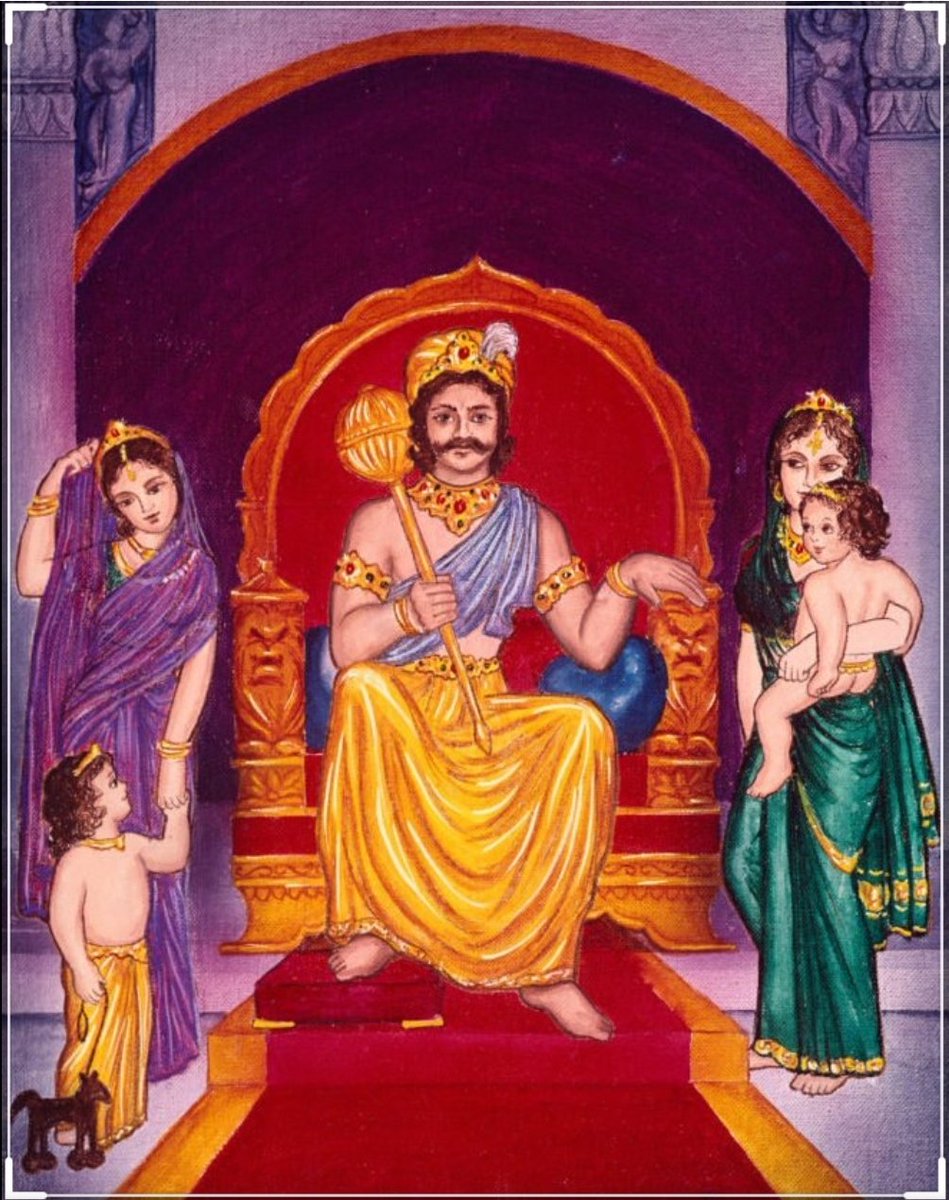
Now Suniti was the daughter of a tribal chief while Suruchi was the daughter of a rich king. Hence Suruchi was always favored the most by Raja while Suniti was ignored. But while Suniti was gentle & kind hearted by nature Suruchi was venomous inside.
#KrishnaLeela
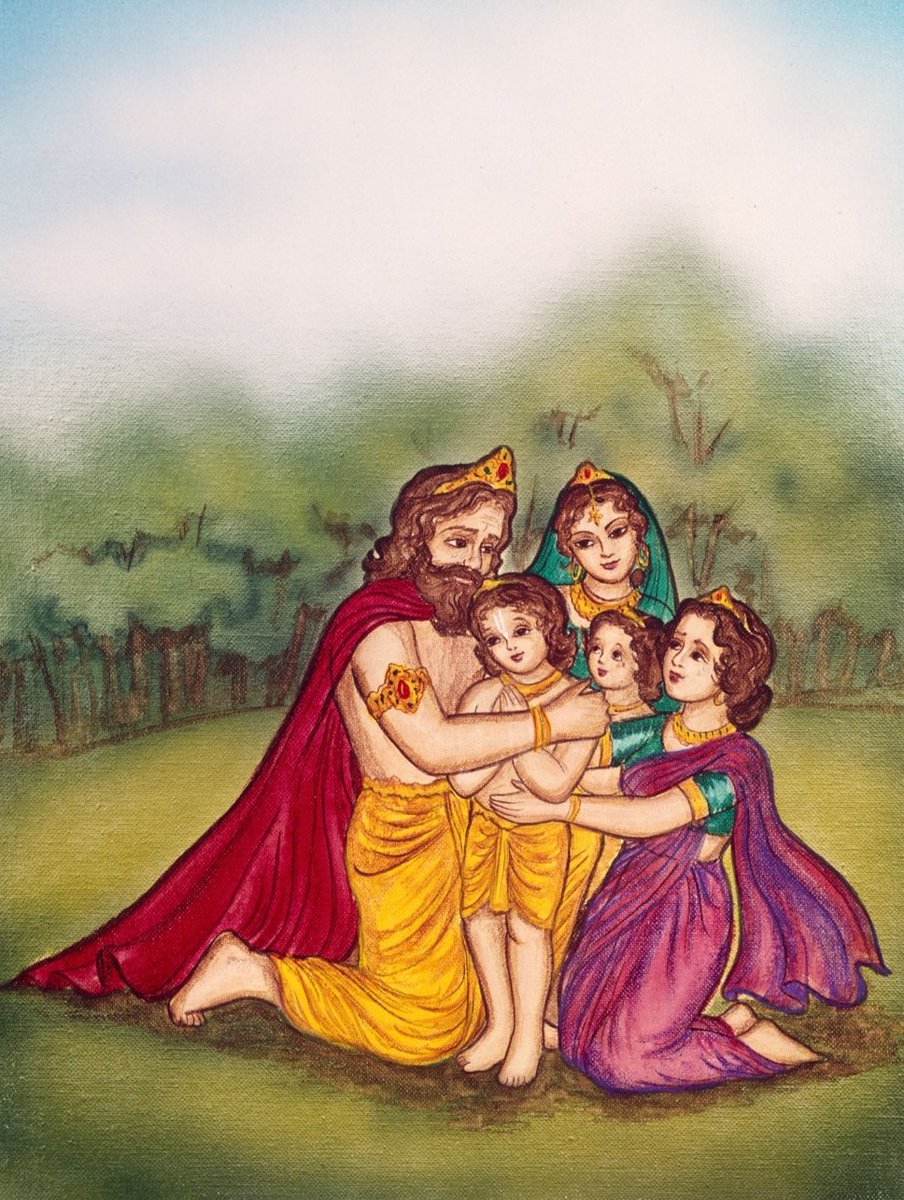
The story is of a time when ideally the eldest son of the king becomes the heir to the throne. Hence the sinhasan of the Raja belonged to Dhruva.This is why Suruchi who was the 2nd wife nourished poison in her heart for Dhruva as she knew her son will never get the throne.
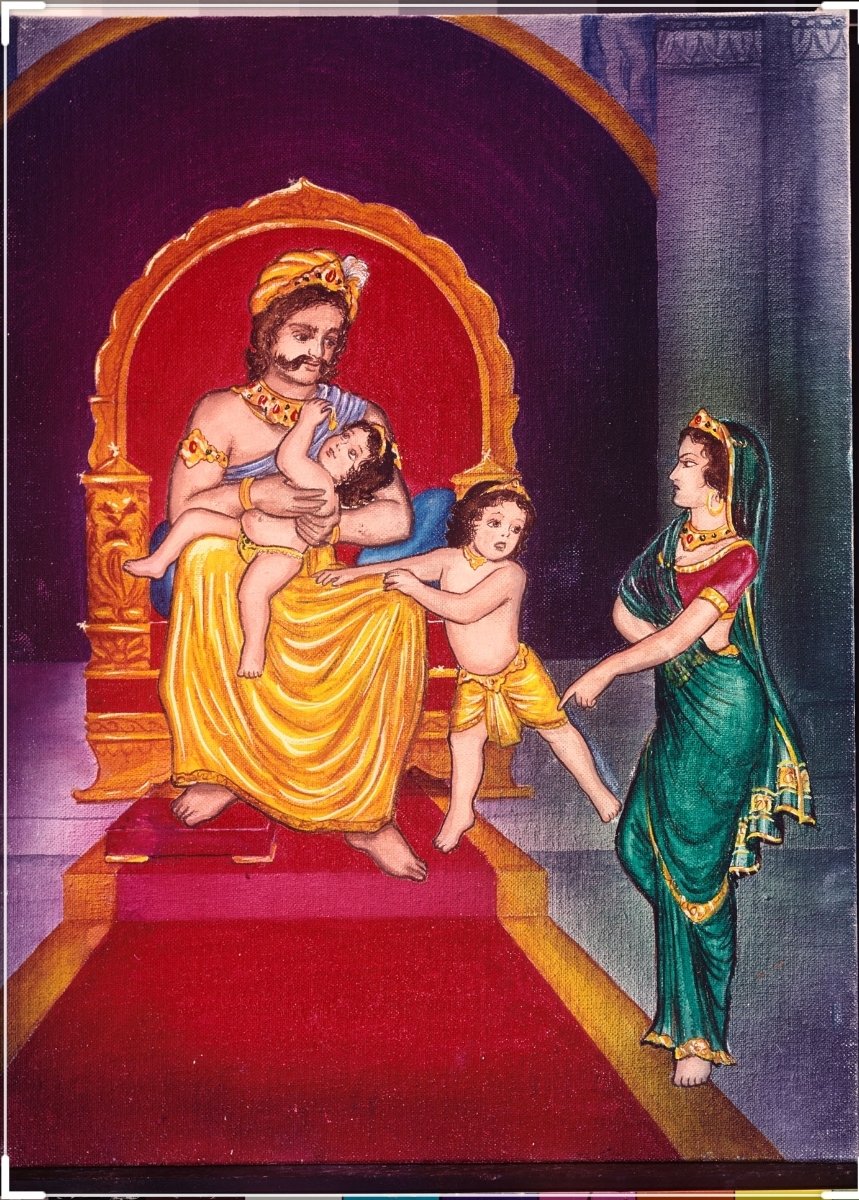
One day when Dhruva was just 5 years old he went on to sit on his father's lap. Suruchi, the jealous queen, got enraged and shoved him away from Raja as she never wanted Raja to shower Dhruva with his fatherly affection.
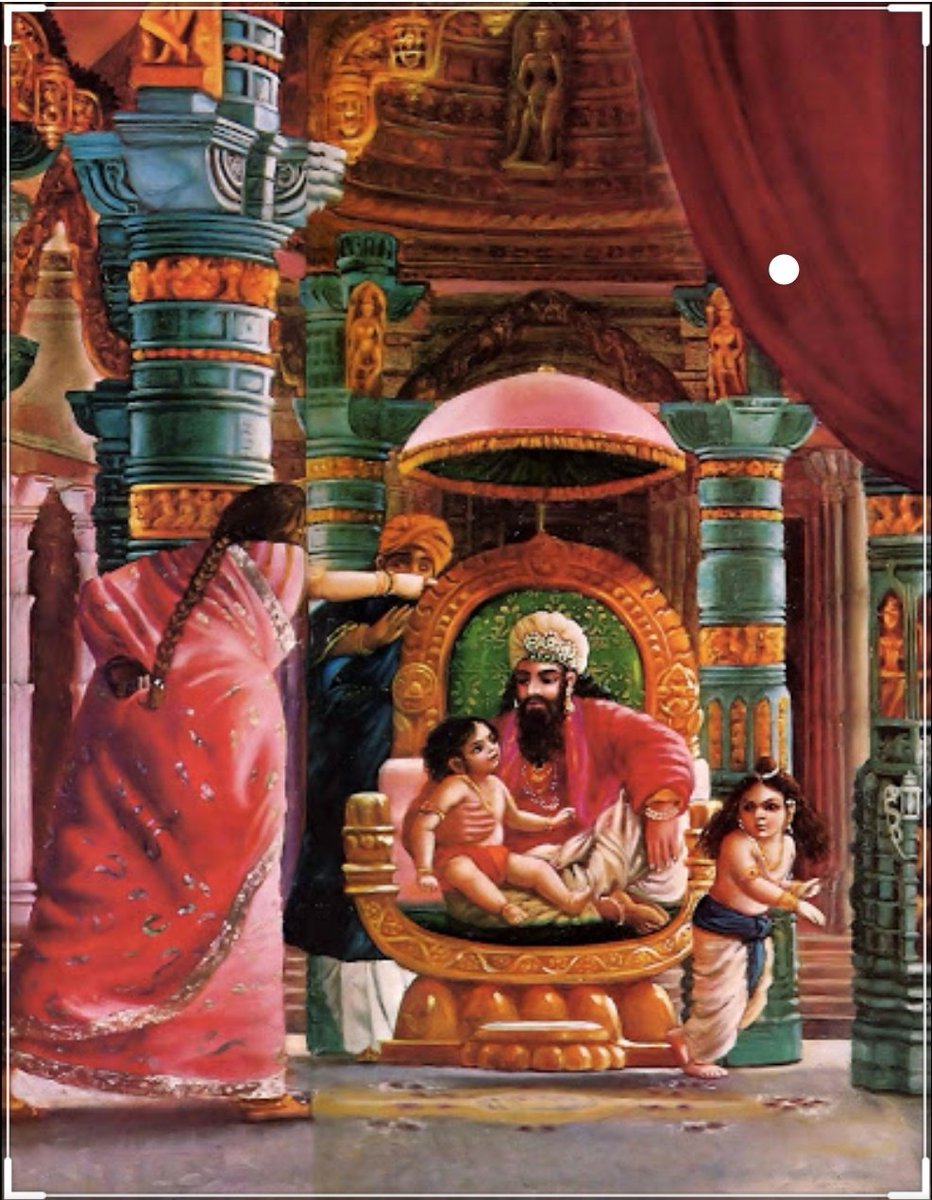
Dhruva protested questioning his step mother "why can't i sit on my own father's lap?" A furious Suruchi berated him saying "only God can allow him that privilege. Go ask him"
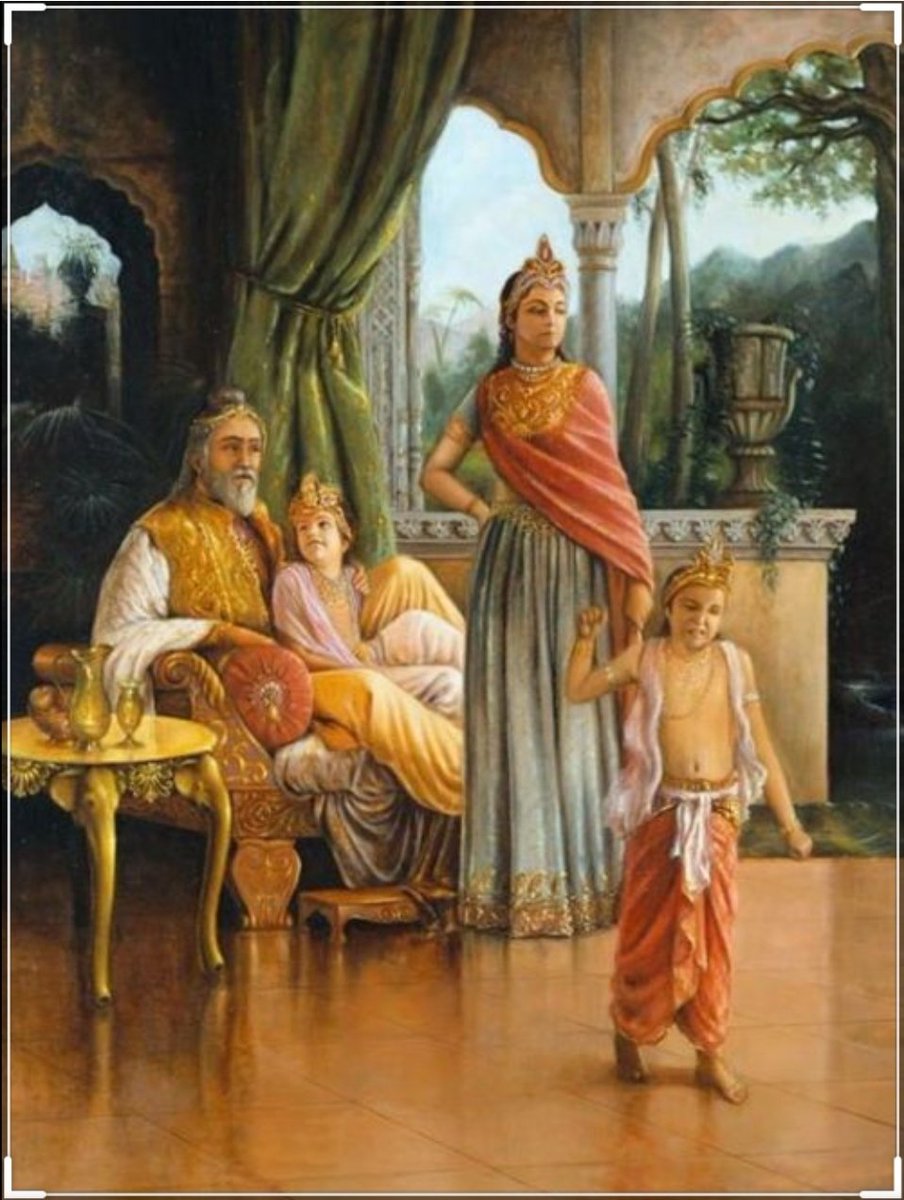
Once upon a time there was a Raja named Uttānapāda born of Svayambhuva Manu,1st man on earth.He had 2 beautiful wives - Suniti & Suruchi & two sons were born of them Dhruva & Uttama respectively.
#talesofkrishna https://t.co/E85MTPkF9W
Prabhu says i reside in the heart of my bhakt.
— Right Singh (@rightwingchora) December 21, 2020
Guess the event. pic.twitter.com/yFUmbfe5KL
Now Suniti was the daughter of a tribal chief while Suruchi was the daughter of a rich king. Hence Suruchi was always favored the most by Raja while Suniti was ignored. But while Suniti was gentle & kind hearted by nature Suruchi was venomous inside.
#KrishnaLeela
The story is of a time when ideally the eldest son of the king becomes the heir to the throne. Hence the sinhasan of the Raja belonged to Dhruva.This is why Suruchi who was the 2nd wife nourished poison in her heart for Dhruva as she knew her son will never get the throne.
One day when Dhruva was just 5 years old he went on to sit on his father's lap. Suruchi, the jealous queen, got enraged and shoved him away from Raja as she never wanted Raja to shower Dhruva with his fatherly affection.
Dhruva protested questioning his step mother "why can't i sit on my own father's lap?" A furious Suruchi berated him saying "only God can allow him that privilege. Go ask him"

