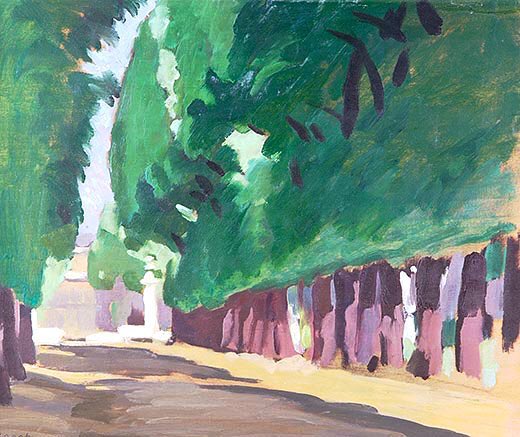
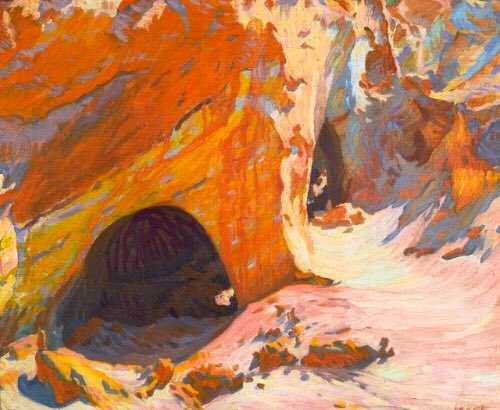
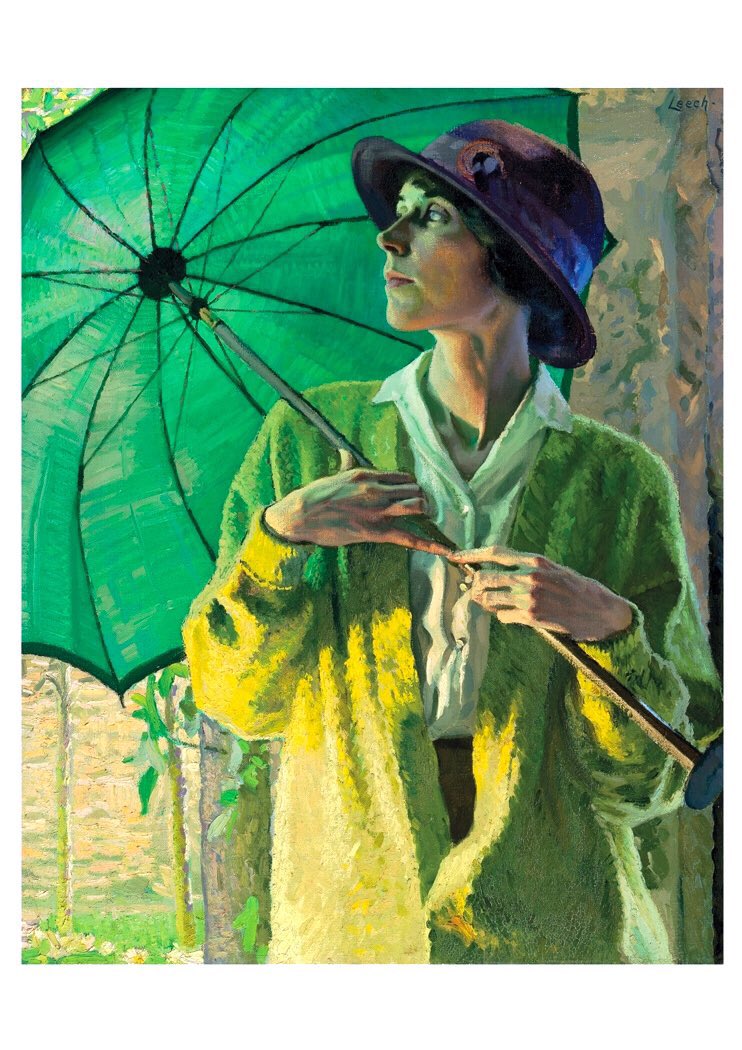
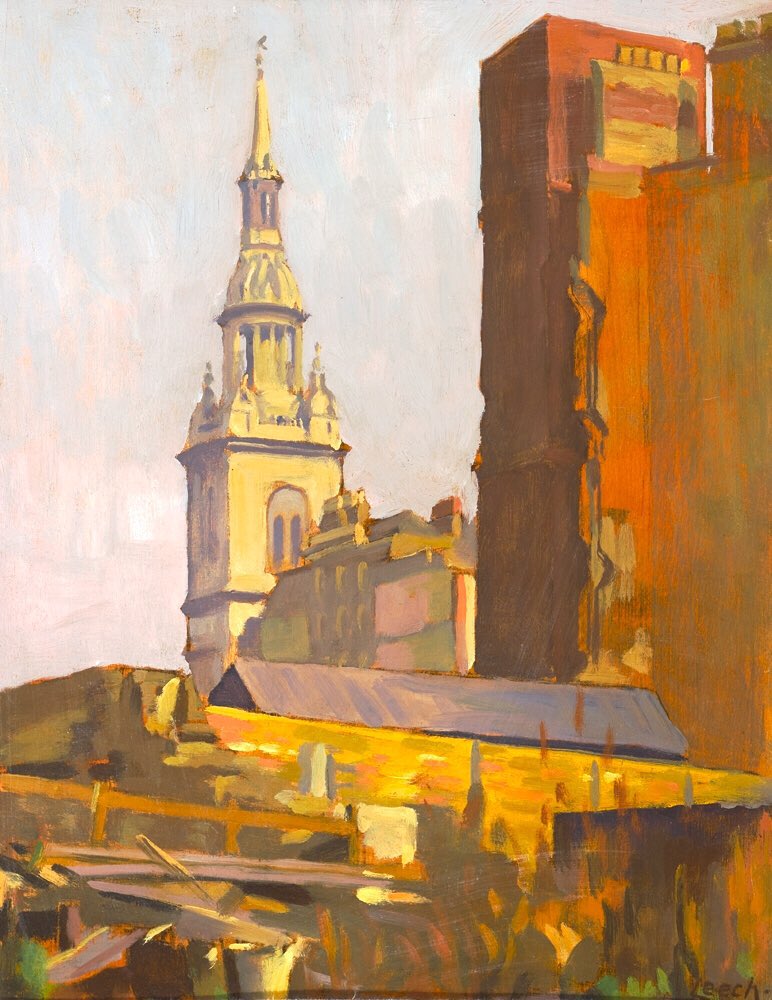
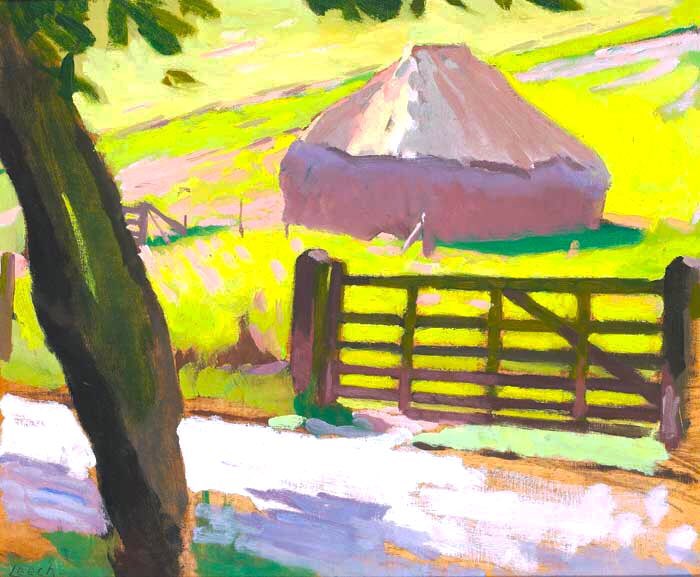
Thread: William Leech (1881-1968) was an Irish painter. He was a Post Impressionist who painted light & colour. Unknown outside of Ireland his pictures are a delight for the eye.
Born in Dublin into a professional Unionist family he went to the Metropolitan School & then the RHA Art School where he had the good luck to study under Walter Osborne. He left for France in 1901. (Images by Osborne)
Today is the final day for Christmas deliveries for the Republic of Ireland. Please order ASAP so I have time to have them shipped. Thanks! https://t.co/eiIPiTd7CM
He spent time in France & was open to influences. Later Matisse & Derain were his lodestars. He was at the Académie Julian (the main studio for foreigners in Paris). He went on to Brittany (1903). Paris (1901), Beach, Dublin (c1906) & Concarneau (c1903) & Blue Nets (c1903)
Leech was back in Dublin in 1903. He tried as a society portrait painter but there was not the demand there. He was noted for his small plein air landscapes. He left for London (1910-14). Caves, Concarneau (c1910-3), Howth (c1909) & Playing by the Shore (c1910s) & Seascape (nd)
Based in London with his parents he regularly travelled to France. He was elected an RHA in 1910. Grasse (c1917), Midi Landscape (c1920s) & Barber Shop (c1909)
One of the highlights of Leech’s work are his snow scenes. Interior of a Cafe (c1909) & Snow Scene (c1912)
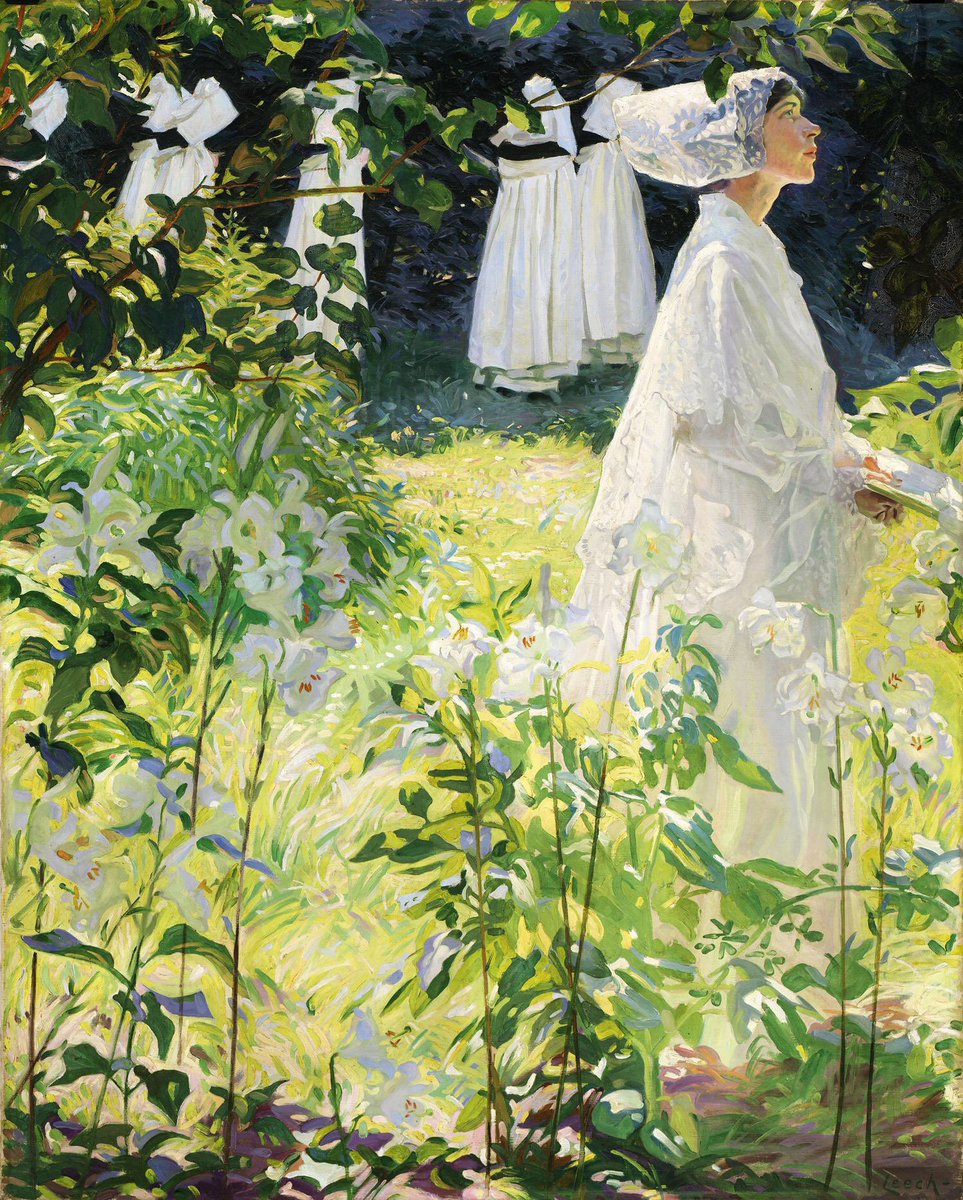
His Convent Garden (including his partner dressed as a novice) is considered his masterpiece. Convent Garden (c1913), Elizabeth (1910-12), Children on the Beach with Breakers (1912) & Girl with a Tinsel Scarf (c1912)
A particularly exciting part of his work are his series of aloe paintings which show his command of colour & light. The Sunshade (1913), Aloes (1914), Un Marin (1918) & Les Soeurs du Saint-Esprit (1912)
His portraits do not set out to flatter his subjects. For him light is always the main goal in his work. Three Children in a Summer Landscape (c1922), The Garden, Maida Vale, London (1920s), James Botterell (1926) & Aloes (1920s)
Another feature of his work is his painting of suburbia. These works, again, are his excuse to explore light as a kaleidoscope of colour. A Lawn (1930s), Regents Park, Summer (1937), The Pool of London (c1939) & Steps of the Cours (1930s)
Light in its reflection & refraction continued to be his key subject until his death. Reflections (c1930), Still Life with Tulips (c1930s), Bridge in Regents Park (c1930s) & Self-Portrait (nd)
A series of paintings of London landmarks was his response to WWII. His own studio was bombed out. St Giles, London (c1940s), The Norman Collonade, Christchurch Priory (c1949), Boats (c1940s) & Bowl of Fruit (c1944)
Haystack (c1945), The China Horse (c1945), The Terrace (c1940) & Refugee (c1947)
The ‘50s saw a turn towards domestic scenes. Tea Trolley (c1950s), Self-Portrait (1958), Window Sill (1950s) & Painting in the Garden(1950s)
As the years passed, his work remained the same. He was content to continue with a style first evinced in the 1920s. Grey Bridge, Regents Park, London (1950s), The Lake, Regents Park, London (1950s) & The Tea Tray (c1950-60s)
He died in 1968. Chloe Abbott (1965). Leech was an excellent painter, he may not have been ground breaking or evolutionary but his work is attractive & pleasant.
For Republic of Ireland residents today is the last day to place an order for Christmas. Please do so ASAP! https://t.co/MJv53c86AZ

More from History

Folks who don't know history just tweet whatever they want.

On Feb 1935, Bose attacked the Nazis as he was angry as Indians were described as Sub-Humans in Mein Kampf. The British arrested Bose in April 1936, because he insulted the Nazis.

#Thread


The West at this point had a soft spot for the Nazis. France, Great Britain, Netherlands, Poland all gave the Nazi Salute during the 1936 Olympics in Berlin.

Even during the Spanish Civil War (1936 - 1939), the Western powers observed neutrality as the Fascists rose in Spain.


In 1937, Hitler told British Foreign Secretary Lord Halifax that one of his fav movies was ‘The Lives of a Bengal Lancer’. Why?

‘The Lives of a Bengal Lancer’ depicted a handful of "superior race" Brits holding sway over an entire Indian subcontinent (Sub-Humans).

"Shoot Gandhi. If necessary, shoot more Congress Leaders (Nehru & Bose)."

- Hitler to Lord Halifax, Britain's Foreign Secretary

This statement by Hitler in 1937 angered many pro-Leftist leaders of the INC including Bose.

Bose reached London in Jan 1938, and he met many leaders of the British Labour Party including Attlee.

1938 & 1939 were two huge years for the Indian National Congress. As i always say, the 10-year phase from 1938 - 1948 shaped modern India and it began in 1938 Haripura session.
Thank you so much to the incredible @gregjenner and his team for having me on "You're Dead to Me" and to @kaekurd for being so hilarious and bringing Gilgamesh the restaurant into my life!

Here’s a thread of some of the stuff referenced in the podcast for those interested


First of all, what even is cuneiform?

It’s a writing system from the ancient Middle East, used to write several languages like Sumerian and Akkadian. Cuneiform signs can stand for whole words or syllables. Here’s a little primer of its evolution
https://t.co/7CVjLCHwkS


What kinds of texts was cuneiform used to write?

Initially, accounting records and lists.

Eventually, literature, astronomy, medicine, maps, architectural plans, omens, letters, contracts, law collections, and more.


Texts from the Library of Ashurbanipal, who ruled the ancient Assyrian empire when it was at its largest in the 7th century BCE, represent many of the genres of cuneiform texts and scholarship.

Here’s a short intro to the library via @opencuneiform https://t.co/wjnaxpMRrC


The Library of Ashurbanipal has a complicated modern and ancient history, which you can read about in this brilliant (and open access) book by Prof @Eleanor_Robson

You May Also Like