Why are civil-mil scholars upset about Austin Lloyd's nomination as the 28th Secretary of Defense?
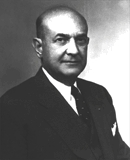
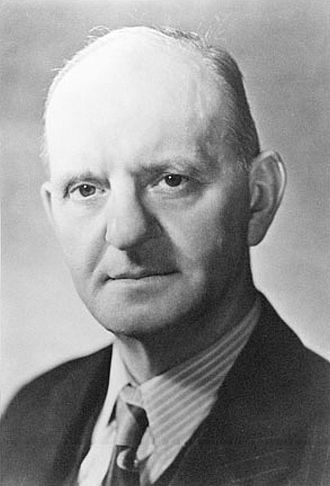
Consider the nomination of the 3rd Secretary of Defense: George Marshall
[THREAD]

https://t.co/bWx4h1OFah
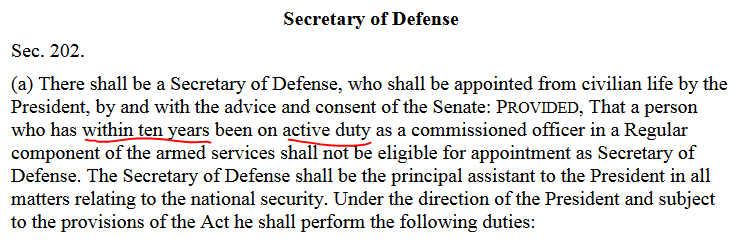
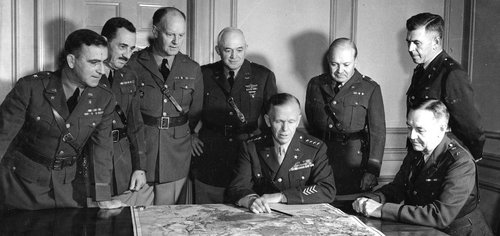
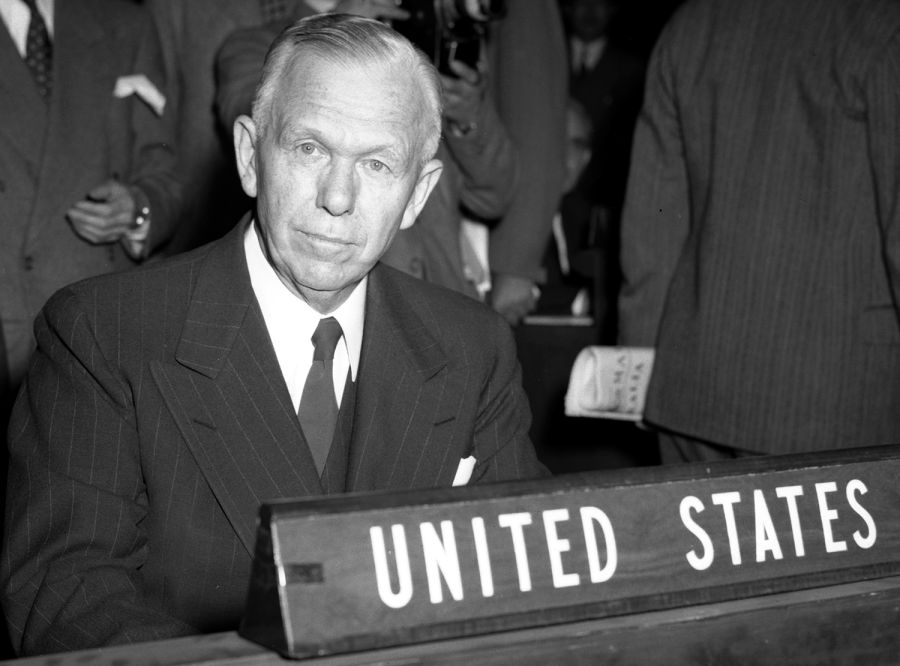
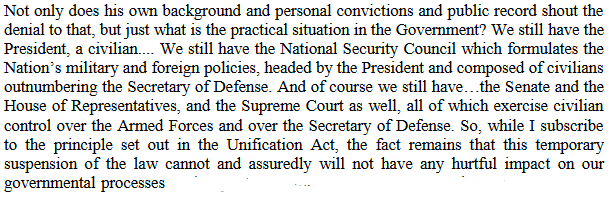
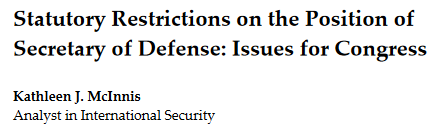
But section 202 was perfectly clear that he couldn't be SecDef...unless the law was changed/suspended.
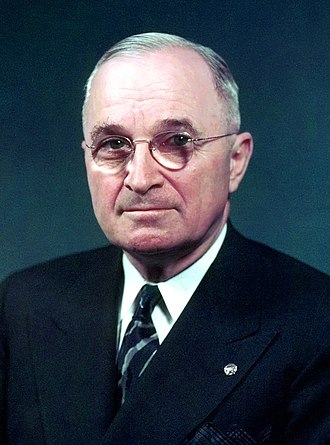
See, for example, H.R. 9646
https://t.co/alp9y1cHxU

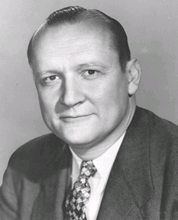

The US had a long history of being wary of creating and maintaining such an entity.

But others, namely Representative Carl Vinson of Georgia, essentially said "what's the big deal?"
https://t.co/9QYl8NTDT2
More from Paul Poast
Is it true that democracies don't go to war with each other?
Sort of. But I wouldn't base public policy on the finding.
Why? Let's turn to the data.
[THREAD]
The idea of a "Democratic Peace" is a widely held view that's been around for a long time.
By 1988, there already existed enough studies on the topic for Jack Levy to famously label Democratic Peace "an empirical law"

The earliest empirical work on the topic was the 1964 report by Dean Babst published in the "Wisconsin Sociologist"

Using the war participation data from Quincy Wright's "A Study of War", Babst produced the following two tables
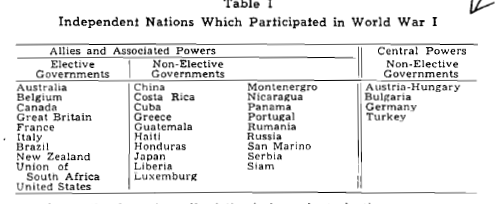
The tables show that democracies were NOT on both sides (of course, Finland is awkward given that it fought WITH Nazi Germany against the Soviet Union).
Babst expanded his study beyond the World Wars in a 1972 paper in Industrial Research. He confirmed his finding.
Sort of. But I wouldn't base public policy on the finding.
Why? Let's turn to the data.
[THREAD]
Democracies do not go to war with each other. There are a lot of empirical data to support that theory. I summarize that literature here. https://t.co/SQLk9J9rZ8 https://t.co/tLlSyisEIU
— Michael McFaul (@McFaul) December 12, 2020
The idea of a "Democratic Peace" is a widely held view that's been around for a long time.
By 1988, there already existed enough studies on the topic for Jack Levy to famously label Democratic Peace "an empirical law"
The earliest empirical work on the topic was the 1964 report by Dean Babst published in the "Wisconsin Sociologist"
Using the war participation data from Quincy Wright's "A Study of War", Babst produced the following two tables
The tables show that democracies were NOT on both sides (of course, Finland is awkward given that it fought WITH Nazi Germany against the Soviet Union).
Babst expanded his study beyond the World Wars in a 1972 paper in Industrial Research. He confirmed his finding.
Let's talk about that "Longer Telegram" making the rounds...and why it's a
First, to be clear, it IS NOT a telegram. It's a report. I mean, it has a flipping 11.5 page executive "summary"...

...a two page table of contents...
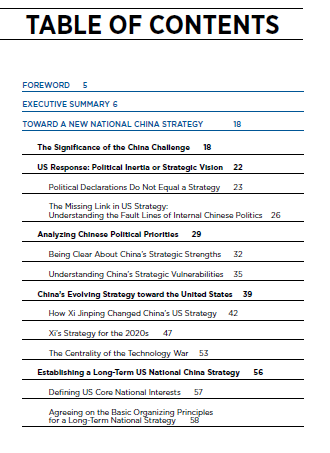
...and clocks in at 62 pages (minus the forward and executive summary) or 73 pages (if you include the executive summary).
Of course, the author of "The Longer Telegram" calls it a "telegram" because they want it to be directly and explicitly compared to George Kennan's 1946 "Long Telegram" about US policy towards the Soviet Union.
https://t.co/rHikkOYuoT

First, to be clear, it IS NOT a telegram. It's a report. I mean, it has a flipping 11.5 page executive "summary"...
...a two page table of contents...
...and clocks in at 62 pages (minus the forward and executive summary) or 73 pages (if you include the executive summary).
Of course, the author of "The Longer Telegram" calls it a "telegram" because they want it to be directly and explicitly compared to George Kennan's 1946 "Long Telegram" about US policy towards the Soviet Union.
https://t.co/rHikkOYuoT
Was the attack on the US Capitol an attempted coup?
Rather than debate that question here (or in another forum), I'm making it an assignment. Specifically, I'm asking my Quantitative Security students to determine if it belongs in our coup/attempted coup datasets.
[THREAD]
A core goal of this course is to introduce students to how Large-N data on violence and security are created.
We put WAY TOO much emphasis on estimators & software (Stata v R 🙄); not enough on the quality of the data going into the analysis.
First, what happened? @johncarey03755 offers a succinct
Second, I'll ask the students to read some of the recent pieces that say the event was NOT a coup attempt.
These include...
...detailed twitter threads by
Rather than debate that question here (or in another forum), I'm making it an assignment. Specifically, I'm asking my Quantitative Security students to determine if it belongs in our coup/attempted coup datasets.
[THREAD]
A core goal of this course is to introduce students to how Large-N data on violence and security are created.
We put WAY TOO much emphasis on estimators & software (Stata v R 🙄); not enough on the quality of the data going into the analysis.
First, what happened? @johncarey03755 offers a succinct
Second, I'll ask the students to read some of the recent pieces that say the event was NOT a coup attempt.
These include...
...detailed twitter threads by
Let me try this again\u2026 What would it look like if this were a coup (failed, in progress, or otherwise)? 1/n
— Kristen Harkness (@HarknessKristen) January 7, 2021