
There was no stigma around 1982 coup; Kenya was already sliding to the abyss. My fourth thread on Railaphobia in Kikuyuland. LONG THREAD, FREE TO DISCARD
“this kimundu (his word) is very dangerous...
“He was involved in the murder of hundreds of people during 82 coup....
"Because he is very power-hungry.”
It was such a good excuse
More from Daniel Njaga
More from History

Joshua Hawley, Missouri's Junior Senator, is an autocrat in waiting.
His arrogance and ambition prohibit any allegiance to morality or character.
Thus far, his plan to seize the presidency has fallen into place.
An explanation in photographs.
🧵
Joshua grew up in the next town over from mine, in Lexington, Missouri. A a teenager he wrote a column for the local paper, where he perfected his political condescension.
2/
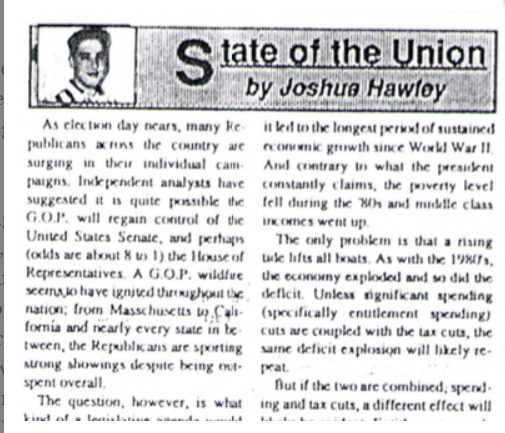
By the time he reached high-school, however, he attended an elite private high-school 60 miles away in Kansas City.
This is a piece of his history he works to erase as he builds up his counterfeit image as a rural farm boy from a small town who grew up farming.
3/

After graduating from Rockhurst High School, he attended Stanford University where he wrote for the Stanford Review--a libertarian publication founded by Peter Thiel..
4/
(Full Link: https://t.co/zixs1HazLk)
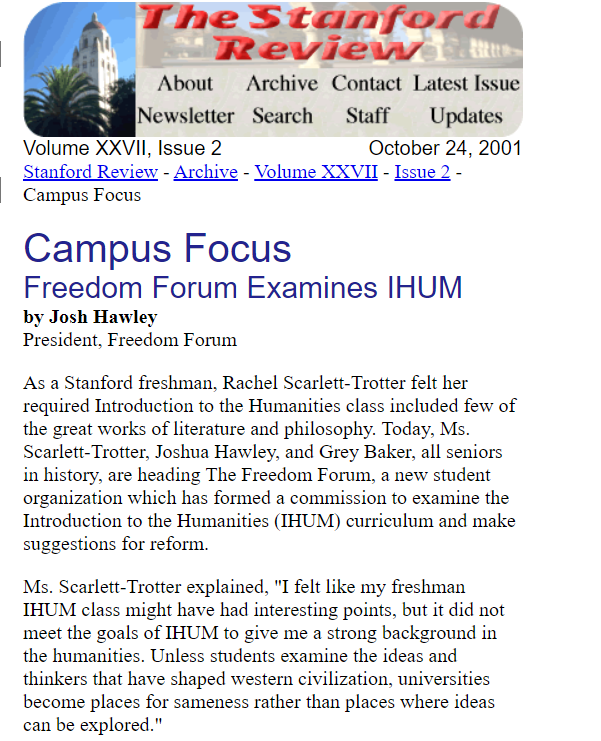
Hawley's writing during his early 20s reveals that he wished for the curriculum at Stanford and other "liberal institutions" to change and to incorporate more conservative moral values.
This led him to create the "Freedom Forum."
5/
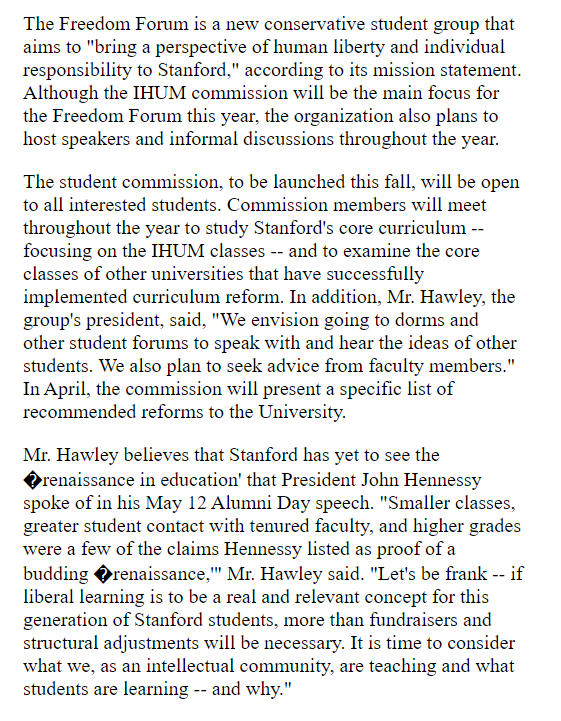
His arrogance and ambition prohibit any allegiance to morality or character.
Thus far, his plan to seize the presidency has fallen into place.
An explanation in photographs.
🧵
Joshua grew up in the next town over from mine, in Lexington, Missouri. A a teenager he wrote a column for the local paper, where he perfected his political condescension.
2/
By the time he reached high-school, however, he attended an elite private high-school 60 miles away in Kansas City.
This is a piece of his history he works to erase as he builds up his counterfeit image as a rural farm boy from a small town who grew up farming.
3/
After graduating from Rockhurst High School, he attended Stanford University where he wrote for the Stanford Review--a libertarian publication founded by Peter Thiel..
4/
(Full Link: https://t.co/zixs1HazLk)
Hawley's writing during his early 20s reveals that he wished for the curriculum at Stanford and other "liberal institutions" to change and to incorporate more conservative moral values.
This led him to create the "Freedom Forum."
5/


You May Also Like









"I lied about my basic beliefs in order to keep a prestigious job. Now that it will be zero-cost to me, I have a few things to say."
We know that elite institutions like the one Flier was in (partial) charge of rely on irrelevant status markers like private school education, whiteness, legacy, and ability to charm an old white guy at an interview.
Harvard's discriminatory policies are becoming increasingly well known, across the political spectrum (see, e.g., the recent lawsuit on discrimination against East Asian applications.)
It's refreshing to hear a senior administrator admits to personally opposing policies that attempt to remedy these basic flaws. These are flaws that harm his institution's ability to do cutting-edge research and to serve the public.
Harvard is being eclipsed by institutions that have different ideas about how to run a 21st Century institution. Stanford, for one; the UC system; the "public Ivys".
As a dean of a major academic institution, I could not have said this. But I will now. Requiring such statements in applications for appointments and promotions is an affront to academic freedom, and diminishes the true value of diversity, equity of inclusion by trivializing it. https://t.co/NfcI5VLODi
— Jeffrey Flier (@jflier) November 10, 2018
We know that elite institutions like the one Flier was in (partial) charge of rely on irrelevant status markers like private school education, whiteness, legacy, and ability to charm an old white guy at an interview.
Harvard's discriminatory policies are becoming increasingly well known, across the political spectrum (see, e.g., the recent lawsuit on discrimination against East Asian applications.)
It's refreshing to hear a senior administrator admits to personally opposing policies that attempt to remedy these basic flaws. These are flaws that harm his institution's ability to do cutting-edge research and to serve the public.
Harvard is being eclipsed by institutions that have different ideas about how to run a 21st Century institution. Stanford, for one; the UC system; the "public Ivys".