We believe that "health is a state of complete physical, mental and social well-being and not merely the absence of disease or infirmity."- @WHO 2/n
I disagree with you, Alastair. I believe @PanData19 is filling in the gaps that governments have failed to fill. I encourage you to have an open mind and listen intently to what we have to say. 1/n
It\u2019s disappointing that you would join an organization comprised of non-experts, spreading harmful misinformation about a pandemic.
— Alastair \u2018Wear a Mask\u2019 McAlpine (@AlastairMcA30) December 11, 2020
I would urge you to reconsider.
We believe that "health is a state of complete physical, mental and social well-being and not merely the absence of disease or infirmity."- @WHO 2/n
@MartinKulldorff
@SunetraGupta
@MLevitt_NP2013
@MichaelYeadon3
#JayBhattacharya
#SucharitBhakdi
They are supporting us every step of the way. 4/n
@ProfKarolSikora
a) the right to life
b) the right to liberty & security
c) respect to private and family life
d) freedom of opinion, speech and choice
8/n
f) protection from discrimination
g) the right to work and provide for one's family
h) the right to education
i) the right to move freely
9/n
https://t.co/8NVPHs7H5X
The public deserves to be empowered with accurate and unbiased information to make informed decisions not scared and fearmongered into compliance. 14/n
To end this fiasco,
We must all come together now to reopen our societies.
We must all come together to reverse the collateral damage and reduce total harm.
We must all come together to save our civilization. 19/n
@wodarg
We will soon publish our Protocol for Reopening Society on our website. Stay on the lookout! 20/n
https://t.co/uN5Pj9DaHB
More from Abir Ballan




All you need to know about COVID19
FACTS NOT FEAR
Covid 19 is a disease caused by the SARS-CoV-2 virus. SARS-CoV-2 is one of 7 coronaviruses known to man. 1/n
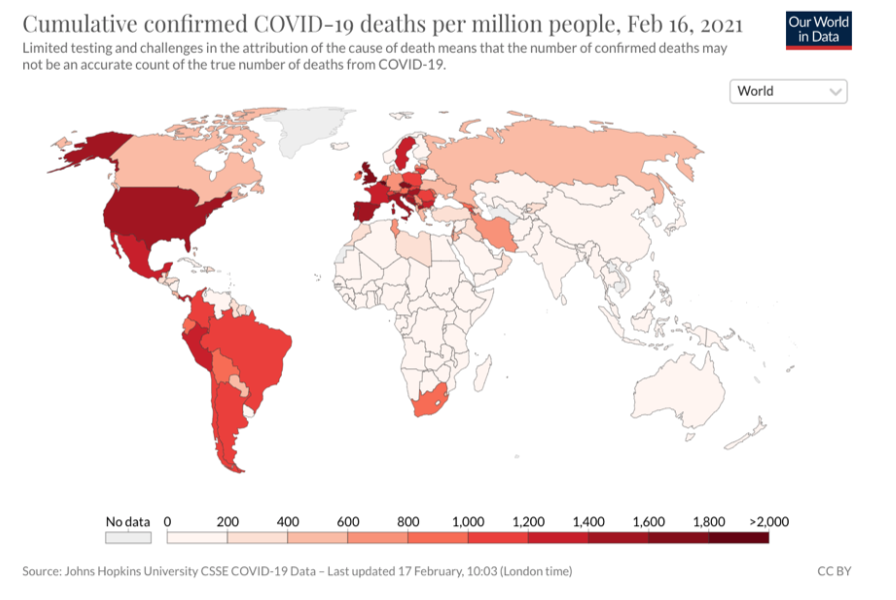
The pandemic is real. Excess deaths were observed in many countries. Not all countries were affected in the same way due to pre-existing immunity, the health status of the population and demographics (the proportion of elderly in the population) 2/n
https://t.co/65elPq3gp5
COVID 19 presents a high risk for the very few and negligible risk for the many.
The infection fatality rate in different age groups:
<19 y, IFR= 0.003%
20-49 y: IFR= 0.02%
50-69 y: 0.5%
>70y, IFR=
Not everybody is susceptible to the virus. If reinfected, pre-existing immunity from related viruses gives protection from developing the disease or from developing serious symptoms.
4/n
“The evidence that a subset of people has a cross-reactive T cell repertoire through exposure to related coronaviruses is
FACTS NOT FEAR
Covid 19 is a disease caused by the SARS-CoV-2 virus. SARS-CoV-2 is one of 7 coronaviruses known to man. 1/n
The pandemic is real. Excess deaths were observed in many countries. Not all countries were affected in the same way due to pre-existing immunity, the health status of the population and demographics (the proportion of elderly in the population) 2/n
https://t.co/65elPq3gp5
COVID 19 presents a high risk for the very few and negligible risk for the many.
The infection fatality rate in different age groups:
<19 y, IFR= 0.003%
20-49 y: IFR= 0.02%
50-69 y: 0.5%
>70y, IFR=
Not everybody is susceptible to the virus. If reinfected, pre-existing immunity from related viruses gives protection from developing the disease or from developing serious symptoms.
4/n
“The evidence that a subset of people has a cross-reactive T cell repertoire through exposure to related coronaviruses is
More from Health


I think @SamAdlerBell in his quest to be the contrarian on Fauci gets several things wrong here. 1/
First, the failure last year actually was driven by the White House, the #Trump inner circle. Watch what's happening now, the US' scientific and public health infrastructure is creaking back to life. 2/
I think Sam underestimates the decimation of many of our health agencies over the past four years and the establishment of ideological control over them during the pandemic. 3/
I also am puzzled why Tony gets the blame for not speaking up, etc. Robert Redfield, Brett Giroir, Deb Birx, Jerome Adams, Alex Azar all could have done the same. 4/
Several of these people Bob Redfield, Brett Giroir, Alex Azar were led by craven ambition, Jerome Adams by cowardice, but I do think Deb Birx and Tony tried as institutionalists, insiders to make a difference. 5/
— Matthew Yglesias (@mattyglesias) January 30, 2021
First, the failure last year actually was driven by the White House, the #Trump inner circle. Watch what's happening now, the US' scientific and public health infrastructure is creaking back to life. 2/
I think Sam underestimates the decimation of many of our health agencies over the past four years and the establishment of ideological control over them during the pandemic. 3/
I also am puzzled why Tony gets the blame for not speaking up, etc. Robert Redfield, Brett Giroir, Deb Birx, Jerome Adams, Alex Azar all could have done the same. 4/
Several of these people Bob Redfield, Brett Giroir, Alex Azar were led by craven ambition, Jerome Adams by cowardice, but I do think Deb Birx and Tony tried as institutionalists, insiders to make a difference. 5/