#Thread on Tantra
The word ’Tantra’ literally means ‘loom’ in Sanskrit. There are several differing explanations as to what this word means. According to one source, this name is supposed to be a pun, and in order to understand it, one has to first understand the word ‘sutra’.
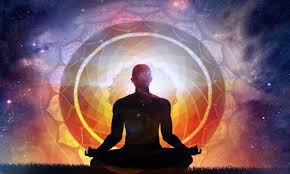
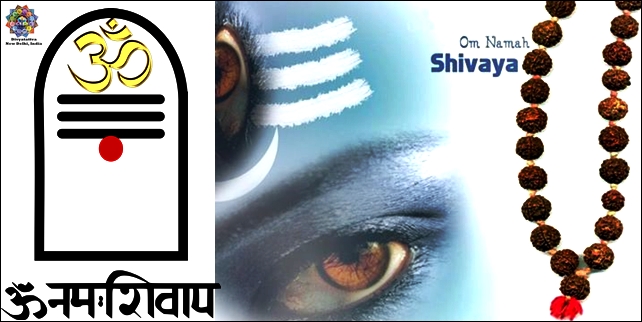
In the beginning of Satyuga, Lord Shiva appeared in the form of Swacchandanatha, with his five mukha(mouth), namely Ishana, Tatpurusha, Sadyojata,


When these five energies of Lord Shiva unite with each other in such a way that each of these take hold of the rest simultaneously,

It is believed that sacred scriptures on tantras were originally teachings given by Shiva to his wife, and

Tantra does not mean promiscuity. Tantra means extreme discipline. Tantra means a technology, a method to use the energies within the body or from the surroundings
One can not practice Tantra without Guru Diksha.

AdikshitA ye kurvanti japapujAdikAh kriyAha |
Na phalanti priye teshAm shilAyAmupta vijavat ||
[Shiva says to Sri Devi]

KulArnava Tantram 14.96.


More from हठयोगी






More from Health

You gotta think about this one carefully!
Imagine you go to the doctor and get tested for a rare disease (only 1 in 10,000 people get it.)
The test is 99% effective in detecting both sick and healthy people.
Your test comes back positive.
Are you really sick? Explain below 👇
The most complete answer from every reply so far is from Dr. Lena. Thanks for taking the time and going through
You can get the answer using Bayes' theorem, but let's try to come up with it in a different —maybe more intuitive— way.
👇
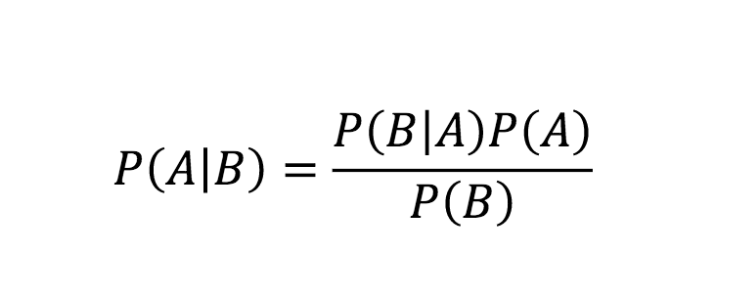
Here is what we know:
- Out of 10,000 people, 1 is sick
- Out of 100 sick people, 99 test positive
- Out of 100 healthy people, 99 test negative
Assuming 1 million people take the test (including you):
- 100 of them are sick
- 999,900 of them are healthy
👇
Let's now test both groups, starting with the 100 people sick:
▫️ 99 of them will be diagnosed (correctly) as sick (99%)
▫️ 1 of them is going to be diagnosed (incorrectly) as healthy (1%)
👇
Imagine you go to the doctor and get tested for a rare disease (only 1 in 10,000 people get it.)
The test is 99% effective in detecting both sick and healthy people.
Your test comes back positive.
Are you really sick? Explain below 👇
The most complete answer from every reply so far is from Dr. Lena. Thanks for taking the time and going through
Really doesn\u2019t fit well in a tweet. pic.twitter.com/xN0pAyniFS
— Dr. Lena Sugar \U0001f3f3\ufe0f\u200d\U0001f308\U0001f1ea\U0001f1fa\U0001f1ef\U0001f1f5 (@_jvs) February 18, 2021
You can get the answer using Bayes' theorem, but let's try to come up with it in a different —maybe more intuitive— way.
👇
Here is what we know:
- Out of 10,000 people, 1 is sick
- Out of 100 sick people, 99 test positive
- Out of 100 healthy people, 99 test negative
Assuming 1 million people take the test (including you):
- 100 of them are sick
- 999,900 of them are healthy
👇
Let's now test both groups, starting with the 100 people sick:
▫️ 99 of them will be diagnosed (correctly) as sick (99%)
▫️ 1 of them is going to be diagnosed (incorrectly) as healthy (1%)
👇


Before we get too far into 2021, I thought I’d write a thread recapping some of the research that came out of my lab in 2020. Most of this work was led by my talented team of graduate students, Kerrianne Morrison, @kmdebrabander, and @DesiRJones.
Back in January, a news story was published about Kerrianne’s study showing improved social interaction outcomes for autistic adults when paired with another autistic partner.
A detailed thread about the study and a link to the paper can be found here (feel free to DM me your email address if you’d like a copy of the full paper for this study or any of our studies):
Another paper published early in 2020 (it appeared a few months earlier online) showed that traditional standalone tasks of social cognition are less predictive of functional and social skills among autistic adults than commonly assumed in autism research.
Next, @kmdebrabander led and published an innovative study about how well autistic and non-autistic adults can predict their own cognitive and social cognitive performance.
Back in January, a news story was published about Kerrianne’s study showing improved social interaction outcomes for autistic adults when paired with another autistic partner.
A detailed thread about the study and a link to the paper can be found here (feel free to DM me your email address if you’d like a copy of the full paper for this study or any of our studies):
In our new paper out today, autistic adults held a \u201cget to know you\u201d conversation with an unfamiliar autistic or typically-developing (TD) person. We were curious: would social interaction outcomes differ when their partner was also autistic? THREAD https://t.co/4koqUKV9G1
— Noah Sasson (@Noahsasson) December 11, 2019
Another paper published early in 2020 (it appeared a few months earlier online) showed that traditional standalone tasks of social cognition are less predictive of functional and social skills among autistic adults than commonly assumed in autism research.
How well does social cognition predict functional and social skills in autism? Our new paper attempts to answer this question. This thread summarizes why we conducted the study, what we found, and why I think it\u2019s important. https://t.co/KB1nIpK0M2
— Noah Sasson (@Noahsasson) August 16, 2019
Next, @kmdebrabander led and published an innovative study about how well autistic and non-autistic adults can predict their own cognitive and social cognitive performance.
New by @kmdebrabander and our lab: Autistic adults don\u2019t differ from non-autistic adults in the accuracy of their self-assessment on general cognitive tasks but are less accurate on social cognitive tasks. This however was unrelated to social functioning https://t.co/0MrqMKKO0r
— Noah Sasson (@Noahsasson) September 20, 2020


You May Also Like





Recently, the @CNIL issued a decision regarding the GDPR compliance of an unknown French adtech company named "Vectaury". It may seem like small fry, but the decision has potential wide-ranging impacts for Google, the IAB framework, and today's adtech. It's thread time! 👇
It's all in French, but if you're up for it you can read:
• Their blog post (lacks the most interesting details): https://t.co/PHkDcOT1hy
• Their high-level legal decision: https://t.co/hwpiEvjodt
• The full notification: https://t.co/QQB7rfynha
I've read it so you needn't!
Vectaury was collecting geolocation data in order to create profiles (eg. people who often go to this or that type of shop) so as to power ad targeting. They operate through embedded SDKs and ad bidding, making them invisible to users.
The @CNIL notes that profiling based off of geolocation presents particular risks since it reveals people's movements and habits. As risky, the processing requires consent — this will be the heart of their assessment.
Interesting point: they justify the decision in part because of how many people COULD be targeted in this way (rather than how many have — though they note that too). Because it's on a phone, and many have phones, it is considered large-scale processing no matter what.