2/9
Rig Ved 1.36.7
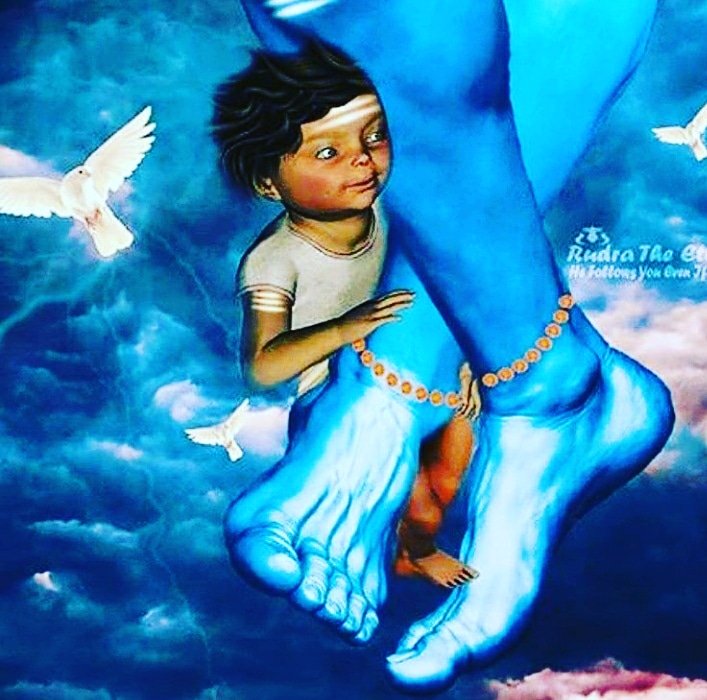
To do a Namaskaar or bow before someone means that you are humble or without pride and ego. This means that we politely bow before you since you are better than me. Pranipaat(प्राणीपात) also means the same that we respect you without any vanity.
1/9
2/9
3/9
होत्रा॑भिर॒ग्निं मनु॑षः॒ समिं॑धते तिति॒र्वांसो॒ अति॒ स्रिधः॑॥
Translation :
नमस्विनः - To bow.
स्वराजम् - Self illuminating.
तम् - His.
घ ईम् - Yours.
इत्था - This way.
उप - Upaasana.
आसते - To do.
स्त्रिधः - For enemies.
4/9
मनुषः - Yajman.
होत्राभिः - In seven numbers.
अग्निम् - Agnidev.
समिन्धते - Illuminated on all sides.
Explanation : Yajmans bow(do Namaskaar) before self illuminating Agnidev by making the offerings of Havi.
5/9
Deep meaning: To do a Namaskaar or bow before someone means that you are humble or without pride and ego. This means that we politely bow before you since you are better than me.
6/9
7/9
8/9
https://t.co/lN9gaoTnBj
Instagram link👇
https://t.co/V5RODQuCio
Facebook link👇
https://t.co/tipsBG750e
#RigVedPositivity
9/9
https://t.co/HW0hVRCzCl
\u0939\u092e \u0928\u092e\u0928 \u0915\u0930\u0924\u0947 \u0939\u0948 \u0915\u093f \u0906\u092a \u0939\u092e\u0915\u094b \u0906\u0924\u094d\u092e\u0938\u093e\u0924 \u0915\u0930\u0947\u0902,\u0909\u0938 \u0932\u093e\u092f\u0915 \u092c\u0928\u0947\u0902\u0964 \u0939\u092e\u093e\u0930\u0947 \u0935\u093f\u0915\u093e\u0930\u094b\u0902 \u0915\u093e \u0924\u094d\u092f\u093e\u0917 \u0939\u0940 \u0928\u092e\u0938\u094d\u0915\u093e\u0930 \u0939\u0948, \u0938\u092e\u0930\u094d\u092a\u0923 \u0915\u0930\u0928\u093e \u0939\u0940 \u0928\u092e\u0938\u094d\u0915\u093e\u0930 \u0939\u0948\u0964 \u0907\u0938\u0940\u0932\u093f\u092f\u0947 \u0905\u0928\u0941\u0937\u094d\u0920\u093e\u0928 \u0915\u0947 \u092a\u0939\u0932\u0947 \u0914\u0930 \u0905\u0902\u0924 \u092e\u0947 \u092f\u0939\u0940 \u092a\u094d\u0930\u093e\u0930\u094d\u0925\u0928\u093e \u0915\u0930\u0924\u0947 \u0939\u0948\u0902\u0964@Anshulspiritual
— \u092a\u0902\u0921\u093f\u0924 \u0935\u093f\u0936\u093e\u0932 \u0936\u094d\u0930\u094b\u0924\u094d\u0930\u093f\u092f (@VishalS50533075) December 26, 2020
More from Anshul Pandey







More from Religion


Assalam Alaiki dear Sister in Islam. I hope this meets you well. Hope you are keeping safe in this pandemic. May Allah preserve you and your beloved family. I would like to address the misconception and misinterpretation in your thread. Please peruse the THREAD below.
1. First off, a disclaimer. Should you feel hurt by my words in the course of the thread, then forgive me. It’s from me and not from Islam. And I probably have to improve on my delivery. And I may not quote you verbatim, but the intended meaning would be there. Thank You!
2. Standing on Imam Shafii’s quote: “And I never debated anyone but that I did not mind whether Allah clarified the truth on my tongue or his tongue” or “I never once debated anyone hoping to win the debate; rather I always wished that the truth would come from his side.”
3. Okay, into the meat (my love for meat is showing. Lol) of the thread. Even though you didn’t mention the verse that permitted polygamy, everyone knows the verse you were talking about (Q4:3).

4. Your reasons for the revelation of the verse are strange. The first time I came across such. I had to quickly consult the books on the exegeses or tafsir of the Quran written by renowned specialists!
A lot of things Muslims do now and claim as Islamic rule is actually a culture that Islam curtailed or tried to perfect.
— Sule Nana (@izesule) January 2, 2021
Let's talk polygamy.
Islam didn't come and say, "oh men, marry four wives"
No.
Polygamy was in existence, long before the coming of Islam.
1. First off, a disclaimer. Should you feel hurt by my words in the course of the thread, then forgive me. It’s from me and not from Islam. And I probably have to improve on my delivery. And I may not quote you verbatim, but the intended meaning would be there. Thank You!
2. Standing on Imam Shafii’s quote: “And I never debated anyone but that I did not mind whether Allah clarified the truth on my tongue or his tongue” or “I never once debated anyone hoping to win the debate; rather I always wished that the truth would come from his side.”
3. Okay, into the meat (my love for meat is showing. Lol) of the thread. Even though you didn’t mention the verse that permitted polygamy, everyone knows the verse you were talking about (Q4:3).
4. Your reasons for the revelation of the verse are strange. The first time I came across such. I had to quickly consult the books on the exegeses or tafsir of the Quran written by renowned specialists!

"Hinduism was one of the world's most easy-going faith traditions, famed for it's non-persecutory history."
I can assure you, it is NOT.
It is neither easy-going, nor non-persecutory. In fact it is the very opposite.
Thread.
Modern Hinduism is a British colonial concept, created in concert with Brahmins, who are at the "apex" of the caste system. The word "Hindoo" in fact, is of Persian origin, meaning a person who lives in the Indus valley.
Colonialists who attempted to study Indian religion in the 18th century (NOT, at the time, Hinduism) were baffled by it. Strata of people living distinctly (the caste system) with overlapping gods didn't fit into their Judeo-Christian understanding of religion.
Which has an ecclesiastical authority, a holy book etc., which Indian religions lacked. In studying "The Hindoo", colonialists prioritized textual sources of knowledge, which is where Brahmins, the priestly caste with a monopoly over education/text come in.
Brahminism was a distinct "religion" (although i don't really want to use the term in this way) that was frankly terrorized of other castes. In fact, the very basis of Brahminism is oppression. Brahmins had scholars who recorded *Brahminical* canon textually.
I can assure you, it is NOT.
It is neither easy-going, nor non-persecutory. In fact it is the very opposite.
Thread.
Hinduism was historically one of the world's most easy-going faith traditions, famed for its non-persecutory history. Now this ... pic.twitter.com/Obln4cns7b
— David Frum (@davidfrum) February 3, 2021
Modern Hinduism is a British colonial concept, created in concert with Brahmins, who are at the "apex" of the caste system. The word "Hindoo" in fact, is of Persian origin, meaning a person who lives in the Indus valley.
Colonialists who attempted to study Indian religion in the 18th century (NOT, at the time, Hinduism) were baffled by it. Strata of people living distinctly (the caste system) with overlapping gods didn't fit into their Judeo-Christian understanding of religion.
Which has an ecclesiastical authority, a holy book etc., which Indian religions lacked. In studying "The Hindoo", colonialists prioritized textual sources of knowledge, which is where Brahmins, the priestly caste with a monopoly over education/text come in.
Brahminism was a distinct "religion" (although i don't really want to use the term in this way) that was frankly terrorized of other castes. In fact, the very basis of Brahminism is oppression. Brahmins had scholars who recorded *Brahminical* canon textually.