The ten points of the Nuremberg Code
1) The voluntary consent of the human subject is absolutely essential.
10/n
More from Abir Ballan 😊

A brief tutorial in health education to show you how sound health education models have been used for manipulation instead of creating health awareness during the COVID 19 pandemic. We'll uses masks as an example of a health behavior.
Are you ready to explore? 1/n
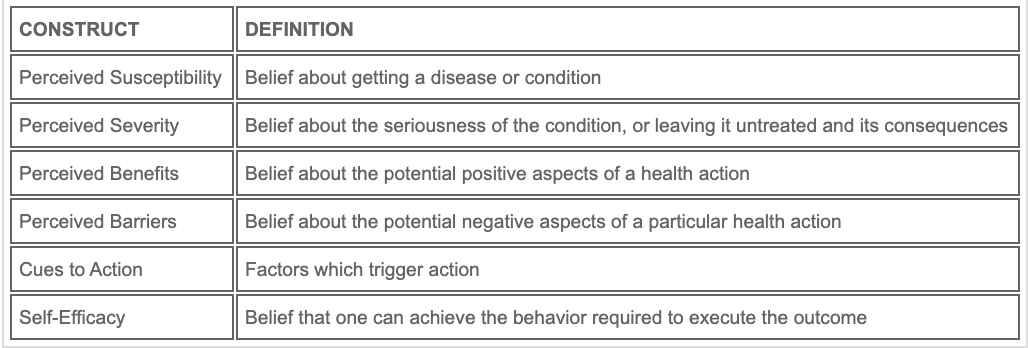
The Health Belief Model (HBM) consists of 5 components: perceived threat (lethality + Susceptibility),
perceived benefits,
perceived barriers and
cues to action.
Familiarise yourself with the definition of each concept in this table. 2/n
https://t.co/1tOz1cJFvc
Study this diagram to understand how the components are interrelated. 3/n
https://t.co/iUoaqNkgyP
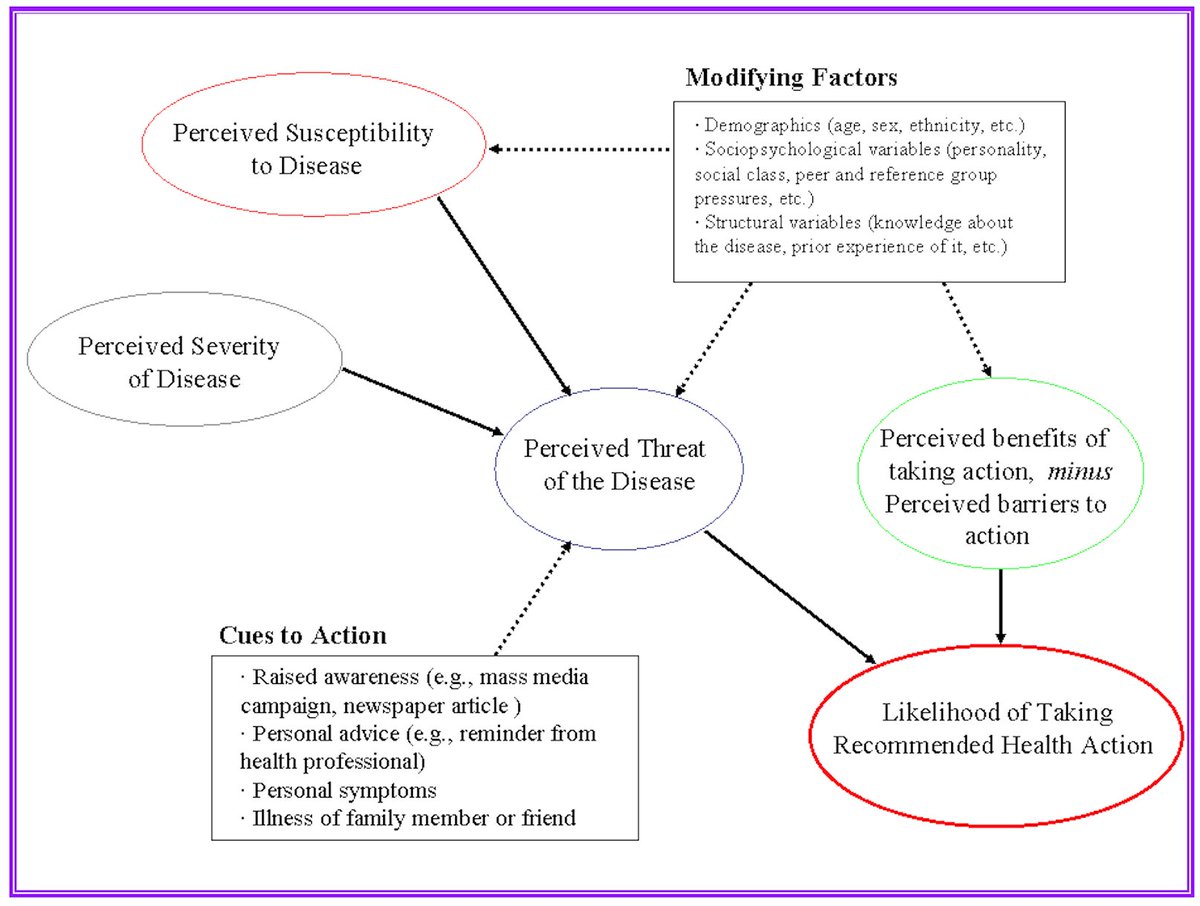
Now let’s apply this to the COVID 19 pandemic.
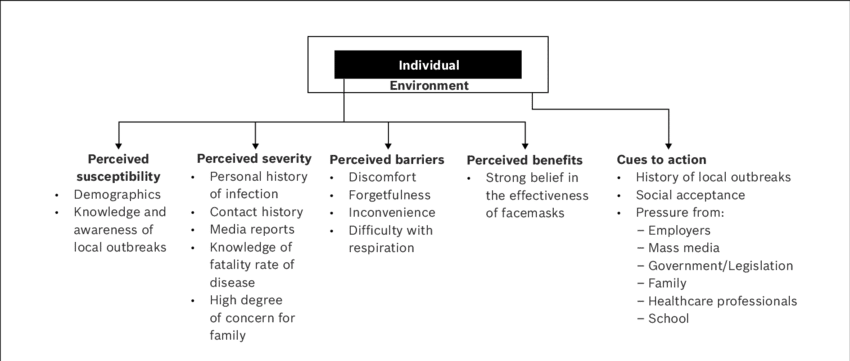
Review this diagram to see how the HBM applies to the behaviour of mask-wearing.
“perceived susceptibility appeared to be the most significant factor determining compliance” 4/n
https://t.co/xF6uwUx12N
Part I: The HBM
Increase the perceived threat of a disease
1) increase perceived severity: Confusing the general public with CFR & IFR- 2 indicators that are an order of magnitude apart.
People understood wrongly that the fatality rate of C19 is
Are you ready to explore? 1/n
The Health Belief Model (HBM) consists of 5 components: perceived threat (lethality + Susceptibility),
perceived benefits,
perceived barriers and
cues to action.
Familiarise yourself with the definition of each concept in this table. 2/n
https://t.co/1tOz1cJFvc
Study this diagram to understand how the components are interrelated. 3/n
https://t.co/iUoaqNkgyP
Now let’s apply this to the COVID 19 pandemic.
Review this diagram to see how the HBM applies to the behaviour of mask-wearing.
“perceived susceptibility appeared to be the most significant factor determining compliance” 4/n
https://t.co/xF6uwUx12N
Part I: The HBM
Increase the perceived threat of a disease
1) increase perceived severity: Confusing the general public with CFR & IFR- 2 indicators that are an order of magnitude apart.
People understood wrongly that the fatality rate of C19 is
"Globally, about 3.4% of reported #COVID19 cases have died. By comparison, seasonal flu generally kills far fewer than 1% of those infected"-@DrTedros #coronavirus
— World Health Organization (WHO) (@WHO) March 3, 2020
Humans inherently like the act of solidarity. We are social beings. We like to huddle up and be together.
They used this against us.
They convinced us that it was an act of solidarity to flatten the curve, to wear a mask for others, to take the vaccines for others,
and to reach #covidzero for others. They convinced us that this was for the greater good of society.
In reality, this couldn't be further away from the truth. They have divided us and broken the core structure of our society. They have dehumanized us with their masks.
They set us against each other into clans on opposite sides of a spectrum. They have turned us into aggressive beings fighting for our survival. Some of us fear harm from the virus, others fear harm from the vaccine, and yet others fear harm from the attack on our civilization.
We are all on a flight or fight mode. We are all operating under the influence of fear. We must collect ourselves and reflect on what has happened over the last year.
How is this for the greater good of society?
They used a tactical warfare strategy against us.
'Divide and conquer'.
We fell for it.
Now we must become aware of it and fight back.
We must reunite. We must find true solidarity to save our world. To free ourselves. To regain our autonomy.
They used this against us.
They convinced us that it was an act of solidarity to flatten the curve, to wear a mask for others, to take the vaccines for others,
If there was ever a time in our lifetime to be non-partisan and for citizens of all walks of life globally to unite behind the basic fundamentals of humanity, freedoms, liberties, human rights, sovereignty, autonomy, dignity, empathy and compassion: it is now. https://t.co/Fa3ieEq51x
— Kulvinder Kaur MD (@dockaurG) January 9, 2021
and to reach #covidzero for others. They convinced us that this was for the greater good of society.
In reality, this couldn't be further away from the truth. They have divided us and broken the core structure of our society. They have dehumanized us with their masks.
They set us against each other into clans on opposite sides of a spectrum. They have turned us into aggressive beings fighting for our survival. Some of us fear harm from the virus, others fear harm from the vaccine, and yet others fear harm from the attack on our civilization.
We are all on a flight or fight mode. We are all operating under the influence of fear. We must collect ourselves and reflect on what has happened over the last year.
How is this for the greater good of society?
They used a tactical warfare strategy against us.
'Divide and conquer'.
We fell for it.
Now we must become aware of it and fight back.
We must reunite. We must find true solidarity to save our world. To free ourselves. To regain our autonomy.
More from For later read



Every single public defender. Every single day.
Bail arguments, motions, oral arguments, hearings. Judges don’t know, follow, or care about the law. Prosecutors are willing to take advantage of it. And mandatory minimums, withheld evidence, & pretrial detention coerces people to plead before trial. When theres a jury. A shot.
But defenders still fight. And still win. Most times wins aren’t “Justice.” It’s power of repetition of argument in front of same judges. Introducing those in power to the people they oppress. Not just a RAP sheet or words on a page. Defenders make it harder to be brutal & cruel.
I worked as a public defender at an office as well resourced as any in the country. Social workers, team of investigators, a reentry team, support staff, specialist attorneys in immigration, housing, education, family. Relatively low caseloads (80-100). And yet still injustice.
Most think that balancing the scales of justice means more funding for defenders. Thats part of it. Enough a attorneys to actually be at bail hearings. Wrap around services to be able to help people trapped in the system end up better off in their communities. Lower caseloads.
Raise your hand if you\u2019ve lost a case despite having the law, facts, quality lawyering, and justice on your side.
— Jon Feinberg (@JonFeinberg) February 13, 2021
Bail arguments, motions, oral arguments, hearings. Judges don’t know, follow, or care about the law. Prosecutors are willing to take advantage of it. And mandatory minimums, withheld evidence, & pretrial detention coerces people to plead before trial. When theres a jury. A shot.
But defenders still fight. And still win. Most times wins aren’t “Justice.” It’s power of repetition of argument in front of same judges. Introducing those in power to the people they oppress. Not just a RAP sheet or words on a page. Defenders make it harder to be brutal & cruel.
I worked as a public defender at an office as well resourced as any in the country. Social workers, team of investigators, a reentry team, support staff, specialist attorneys in immigration, housing, education, family. Relatively low caseloads (80-100). And yet still injustice.
Most think that balancing the scales of justice means more funding for defenders. Thats part of it. Enough a attorneys to actually be at bail hearings. Wrap around services to be able to help people trapped in the system end up better off in their communities. Lower caseloads.