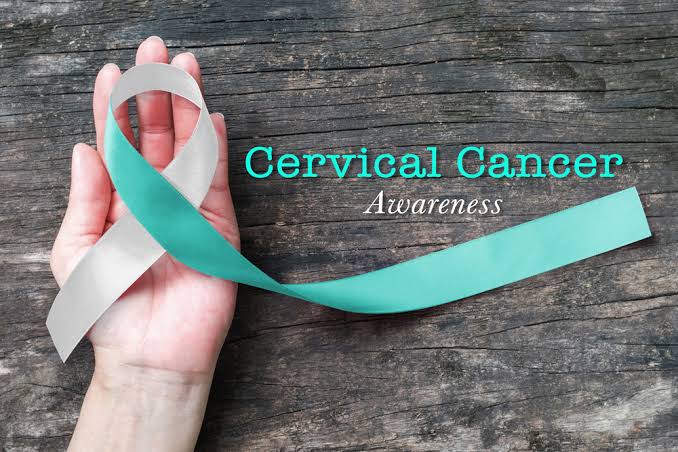
More than half of sexually active people might have HPV at some point in their lives, but few women will get CERVICAL CANCER.
Early Screening tests & the HPV vaccine can help prevent cervical cancer.
When cervical cancer is diagnosed early, it is highly treatable &....
2/cont.
associated with long survival and good quality of life.
Most (almost all) cervical cancers are caused by HPV.
There are many types of HPV.
Some HPV types can cause changes on a woman’s CERVIX that can lead to cervical cancer as time goes on, WHILE other types can cause genital
or skin WARTS . HPV is so common that most people get it at some time in their lives.
HPV usually causes no symptoms so you can’t tell that you have it. For most women, HPV might be SELF LIMITING (ie it will go away on its own); However, if it doesn't, there are a chances that
over time it may result to cervical cancer.
OTHER FACTORS CAN INCREASE YOUR RISK of CERVICAL CANCER —
•Having HIV/AIDS
•Smoking.
•Using Oral contraceptives (birth control pills) for a long time (5+ years)
•Having birth to many children (4+ yrs).
•Having many sexual partners
The most important thing you can do to help PREVENT cervical cancer is to have regular screening tests starting at age 21.
SCREENING TESTS :
2 screening tests can help prevent cervical cancer or find it early :
•THE PAP SMEAR TEST looks for PreCancers, which are cell changes
on the cervix that might become cervical cancer if they are not treated appropriately.
•The HPV TEST looks for the HPV virus (
that can cause these cell changes.
Both tests can be done in a HOSPITAL or a good Medical Laboratory.
HPV VACCINE :
The HPV vaccine protects against
the types of HPV that most often cause CERVICAL, VAGINAL & VULVAR cancers.
•HPV vaccination is recommended for PreTeens aged 11-12 yrs, BUT can be given starting at age 9.
HPV vaccine is also recommended for everyone through age 26 years, that's if they haven't been vaccinated
already.
HPV vaccination is NOT recommended for those older than age 26 years.
However, some people between the age of 27 - 45, who are not already vaccinated may decide to get the HPV vaccine after speaking with their DOCTOR about their risk for new HPV infections.
• BUT, HPV vaccination in this age range provides LESS BENEFIT, as more people hv already been exposed to HPV.
If vaccination is started before age 15, a 2-dose schedule is recommended, with the doses given 6 to 12 months apart.
For people who start the series after their 15th
birthday, the vaccine is given in a series of 3 shots.
HPV vaccination prevents new HPV infections, but does not treat existing infections/diseases.
This is why the HPV vaccine works best given before any exposure to HPV.
MORE STEPS TO HELP PREVENT CERVICAL CANCER
These things may also help lower your risk for cervical cancer—
•Don’t smoke.
•Use condoms during sex.*
•Limit your number of sexual partners.
HPV infection CAN occur in both male & female genital areas that are covered or protected by a latex condom, Also in areas that are
not covered.
While the effect of condoms in preventing HPV infection is unknown, condom use has been associated with a LOWER RATE of cancer.
At the early stage, cervical cancer may not cause any signs or symptoms BUT Advanced cervical cancer may cause bleeding or discharge from
the vagina that is not normal for you, such as bleeding after sex. If you have any of these signs, see your doctor.
This helps the doctor examine the vagina and the cervix, and collect a few cells and mucus from the cervix and the area around it. The cells are sent to a lab.
DON'T GOOGLE YOUR SYMPTOMS because they may be caused by something other than cancer, but the only way to know is to see your doctor.
WHEN TO GET SCREENED :
If You Are 21 to 29 Years Old
You should start getting Pap tests at age 21. If your Pap test result is normal, your
doctor may tell you that you can wait 3 years until your next Pap test & 5 years for your next HPV test.
If You Are 30 to 65 Years Old
Talk to your doctor about which testing option is right for you.
If You Are Older Than 65
Your doctor may tell you that you don’t need to be
screened anymore if—
•You have had normal screening test results for several year.
You have had your cervix removed as part of a total hysterectomy for non-cancerous conditions, like fibroids.
TYPES OF CERVICAL CANCER TREATMENT :
Treatment depends on the kind of cervical
cancer and how far it has spread. Treatments include surgery, chemotherapy, & radiation therapy.
SURGERY : Doctors remove cancer tissue in an operation.
CHEMOTHERAPY : Using special medicines to shrink or kill the cancer. The drugs can be pills you take or medicines given in
your veins, or sometimes both.
RADIATION : Using high-energy rays (similar to X-rays) to kill the cancer.
DON'T LET CERVICAL CANCER STOP YOU.
GET SCREENED & GET VACCINATED 💪