
The way to read the graph is: each line is a time history of difficulty. It starts dotted, goes through a criticality inflection point, and then crests in difficulty before coming down to a stable plateau.
following a discussion at @yak_collective this morning, I came up with this chart to capture a hypothesis I have that the difficulty of creating communities scales exponentially with the the "depth" of what you're trying to do
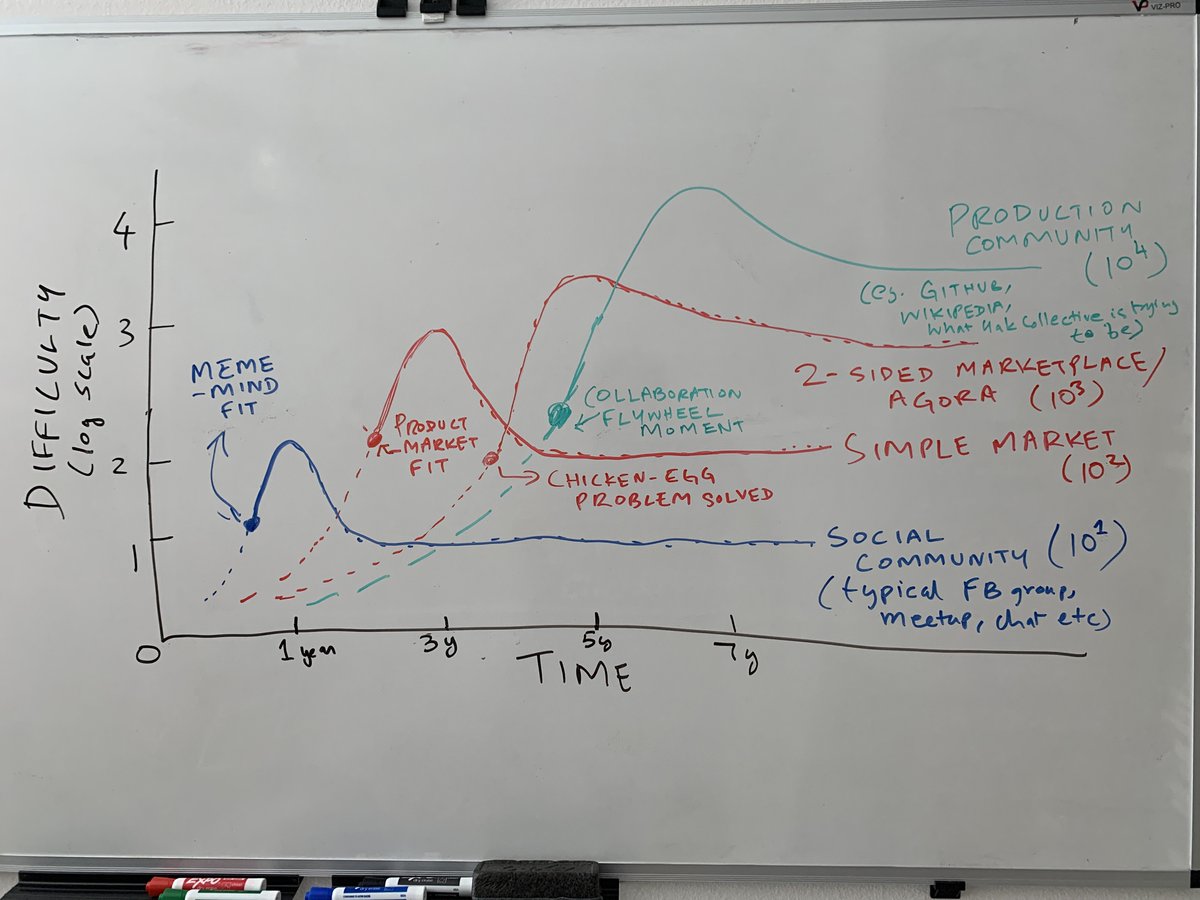
The way to read the graph is: each line is a time history of difficulty. It starts dotted, goes through a criticality inflection point, and then crests in difficulty before coming down to a stable plateau.
And even *talk* communities ain't easy. Failure rate is like 95%.
More from Venkatesh Rao
Heh, one thing the nyt piece managed was to do a Cunningham's law nerdsnipe-wmd at newspaper scale... now a bunch of people are energetically trying to post the right answer.
IMO trying to correct whatever the NYT writer thought he knew/understood is futile. "Willing to be misunderstood by the NYT" should be the default stance unless you want to waste a lot of time correcting an obsolete 2013 map for people who don't care.
The thing is, the NYT still has enough normative cultural power, even as it has fallen from newspaper-of-record, that it takes a particular sort of heretical self-confidence to sort of ignore whatever they happen to be wrong about on any given week, whether or not it concerns you
A subtle shift has occurred in the workings of the Gell-Mann amnesia effect. It used to be an individual private amnesia re: media ("I'll believe myself when I am certain they got it wrong because I'm an expert, but still believe them when I am not"). Now it's a collective effect
A sort of common-knowledge threshold has been crossed lately. "Everybody knows that everybody knows the NYT is wrong on X across largish subcultures." It's no longer mutual beliefs being validated occasionally 1:1.
One other thing I should really clarify and that the @nytimes piece got *severely* wrong: while I believe there are very strong sociological and even causal links between rationalism and NRx (especially in the Silicon Valley homes bases) their ideological and methodological
— (((E. Glen Weyl))) (@glenweyl) February 14, 2021
IMO trying to correct whatever the NYT writer thought he knew/understood is futile. "Willing to be misunderstood by the NYT" should be the default stance unless you want to waste a lot of time correcting an obsolete 2013 map for people who don't care.
The thing is, the NYT still has enough normative cultural power, even as it has fallen from newspaper-of-record, that it takes a particular sort of heretical self-confidence to sort of ignore whatever they happen to be wrong about on any given week, whether or not it concerns you
A subtle shift has occurred in the workings of the Gell-Mann amnesia effect. It used to be an individual private amnesia re: media ("I'll believe myself when I am certain they got it wrong because I'm an expert, but still believe them when I am not"). Now it's a collective effect
A sort of common-knowledge threshold has been crossed lately. "Everybody knows that everybody knows the NYT is wrong on X across largish subcultures." It's no longer mutual beliefs being validated occasionally 1:1.
Both this thread and the outraged response threads are... something.
This is why I never wanted kids. Way too much responsibility for another human’s development. Depending on the child, this might either be the day they discovered who they were or the day that traumatized them into a lifelong fuckup. Either way I don’t want to direct the show.
As far as the can opener goes, it wouldn’t even occur to me to try and turn it into a teachable moment. That sounds vaguely quixotic. I’d just show them how immediately. I think my default is to try and instruct clearly but not demonstrate unless the person is truly disoriented.
I think there’s basically a right answer here: show the kid. If the kid has the aptitude they’ll enjoy the mechanism so much they’ll develop the figure-it-out skill with other devices. If not, it’s a training data point that will build remedial levels of intuition more slowly.
I think perseverance is both misframed and over-rated as a virtue. Misframed as in: everybody has potential for it in some areas and lacks it in others. Aptitude is those areas where perseverance comes easily to you. Meta-skill of knowing where/why you persist is more important.
So, yesterday my daughter (9) was hungry and I was doing a jigsaw puzzle so I said over my shoulder \u201cmake some baked beans.\u201d She said, \u201cHow?\u201d like all kids do when they want YOU to do it, so I said, \u201cOpen a can and put it in pot.\u201d She brought me the can and said \u201cOpen it how?\u201d
— john roderick (@johnroderick) January 2, 2021
This is why I never wanted kids. Way too much responsibility for another human’s development. Depending on the child, this might either be the day they discovered who they were or the day that traumatized them into a lifelong fuckup. Either way I don’t want to direct the show.
As far as the can opener goes, it wouldn’t even occur to me to try and turn it into a teachable moment. That sounds vaguely quixotic. I’d just show them how immediately. I think my default is to try and instruct clearly but not demonstrate unless the person is truly disoriented.
I think there’s basically a right answer here: show the kid. If the kid has the aptitude they’ll enjoy the mechanism so much they’ll develop the figure-it-out skill with other devices. If not, it’s a training data point that will build remedial levels of intuition more slowly.
I think perseverance is both misframed and over-rated as a virtue. Misframed as in: everybody has potential for it in some areas and lacks it in others. Aptitude is those areas where perseverance comes easily to you. Meta-skill of knowing where/why you persist is more important.
I’m guessing these responses really reflect people’s weighted averages (age*current average effort fraction) though I kept it simple and asked for just averages.
I suspect a healthy weighted average should be ~ (age-20)/2. So a 30 year old should be at 5, a 40 year old at 10, a 50 year old at 15 etc.
Standard deviation should be ~average/3 maybe, so distribution spreads as you age and accumulate projects and get better at them.
Other things being equal, people get good at starting in their 20s, at follow through in 30s, at finishing in 40s.
No point learning food follow through until you’ve found a few good starts to bet on. No point getting good at finishing until a few projects have aged gracefully.
I’m in the 7+ range myself. Probably 8-9. Slightly less than healthy for my age.
I suspect most self-judgments on being good starters/follow-through-ers/finishers are really flawed because of the non-ergodicity of project management skill learning. You can’t learn good practices for the 3 phases in an arbitrary order. On,y one order actually works.
Poll: where is the temporal center of gravity of all your live projects based on average age of start-dates?
— Venkatesh Rao (@vgr) January 17, 2021
I suspect a healthy weighted average should be ~ (age-20)/2. So a 30 year old should be at 5, a 40 year old at 10, a 50 year old at 15 etc.
Standard deviation should be ~average/3 maybe, so distribution spreads as you age and accumulate projects and get better at them.
Other things being equal, people get good at starting in their 20s, at follow through in 30s, at finishing in 40s.
No point learning food follow through until you’ve found a few good starts to bet on. No point getting good at finishing until a few projects have aged gracefully.
I’m in the 7+ range myself. Probably 8-9. Slightly less than healthy for my age.
I suspect most self-judgments on being good starters/follow-through-ers/finishers are really flawed because of the non-ergodicity of project management skill learning. You can’t learn good practices for the 3 phases in an arbitrary order. On,y one order actually works.
More from For later read







I should mention, this is why I keep talking about this. Because I know so many people who legally CAN'T.
How do I know they have NDAs, if they can't talk legally about them? Because they trusted me with their secrets... after I said something. That's how they knew I was safe.
Some of the people who have reached out to me privately have been sitting with the pain of what happened to them and the regret that they signed for YEARS. But at the time, it didn't seem like they had any other option BUT to sign.
I do not blame *anyone* for signing an NDA, especially when it's attached to a financial lifeline. When you feel like your family's wellbeing is at stake, you'll do anything -- even sign away your own voice -- to provide for them. That's not a "choice"; that's survival.
And yes, many of the people whose stories I now know were pressured into signing an NDA by my husband's ex-employer. Some of whom I *never* would have guessed. People I thought "left well." Turns out, they've just been *very* good at abiding by the terms of their NDA.
(And others who have reached out had similar experiences with other Christian orgs. Turns out abuse, and the use of NDAs to cover up that abuse, is rampant in a LOT of places.)
How do I know they have NDAs, if they can't talk legally about them? Because they trusted me with their secrets... after I said something. That's how they knew I was safe.
And if the environment at the org was toxic or abusive, it is not uncommon to not realize the extent of that toxicity/abuse until after you're out. But by the time you realize that you signed under duress and presumed good faith where none existed, you're out of options.
— Lauren Thoman (@LaurenThoman) February 16, 2021
Some of the people who have reached out to me privately have been sitting with the pain of what happened to them and the regret that they signed for YEARS. But at the time, it didn't seem like they had any other option BUT to sign.
I do not blame *anyone* for signing an NDA, especially when it's attached to a financial lifeline. When you feel like your family's wellbeing is at stake, you'll do anything -- even sign away your own voice -- to provide for them. That's not a "choice"; that's survival.
And yes, many of the people whose stories I now know were pressured into signing an NDA by my husband's ex-employer. Some of whom I *never* would have guessed. People I thought "left well." Turns out, they've just been *very* good at abiding by the terms of their NDA.
(And others who have reached out had similar experiences with other Christian orgs. Turns out abuse, and the use of NDAs to cover up that abuse, is rampant in a LOT of places.)

You May Also Like






Tip from the Monkey
Pangolins, September 2019 and PLA are the key to this mystery
Stay Tuned!

1. Yang
2. A jacobin capuchin dangling a flagellin pangolin on a javelin while playing a mandolin and strangling a mannequin on a paladin's palanquin, said Saladin
More to come tomorrow!

3. Yigang Tong
https://t.co/CYtqYorhzH
Archived: https://t.co/ncz5ruwE2W

4. YT Interview
Some bats & pangolins carry viruses related with SARS-CoV-2, found in SE Asia and in Yunnan, & the pangolins carrying SARS-CoV-2 related viruses were smuggled from SE Asia, so there is a possibility that SARS-CoV-2 were coming from
Pangolins, September 2019 and PLA are the key to this mystery
Stay Tuned!
1. Yang
Meet Yang Ruifu, CCP's biological weapons expert https://t.co/JjB9TLEO95 via @Gnews202064
— Billy Bostickson \U0001f3f4\U0001f441&\U0001f441 \U0001f193 (@BillyBostickson) October 11, 2020
Interesting expose of China's top bioweapons expert who oversaw fake pangolin research
Paper 1: https://t.co/TrXESKLYmJ
Paper 2:https://t.co/9LSJTNCn3l
Pangolinhttps://t.co/2FUAzWyOcv pic.twitter.com/I2QMXgnkBJ
2. A jacobin capuchin dangling a flagellin pangolin on a javelin while playing a mandolin and strangling a mannequin on a paladin's palanquin, said Saladin
More to come tomorrow!
3. Yigang Tong
https://t.co/CYtqYorhzH
Archived: https://t.co/ncz5ruwE2W
4. YT Interview
Some bats & pangolins carry viruses related with SARS-CoV-2, found in SE Asia and in Yunnan, & the pangolins carrying SARS-CoV-2 related viruses were smuggled from SE Asia, so there is a possibility that SARS-CoV-2 were coming from






1/OK, data mystery time.
This New York Times feature shows China with a Gini Index of less than 30, which would make it more equal than Canada, France, or the Netherlands. https://t.co/g3Sv6DZTDE
That's weird. Income inequality in China is legendary.
Let's check this number.
2/The New York Times cites the World Bank's recent report, "Fair Progress? Economic Mobility across Generations Around the World".
The report is available here:
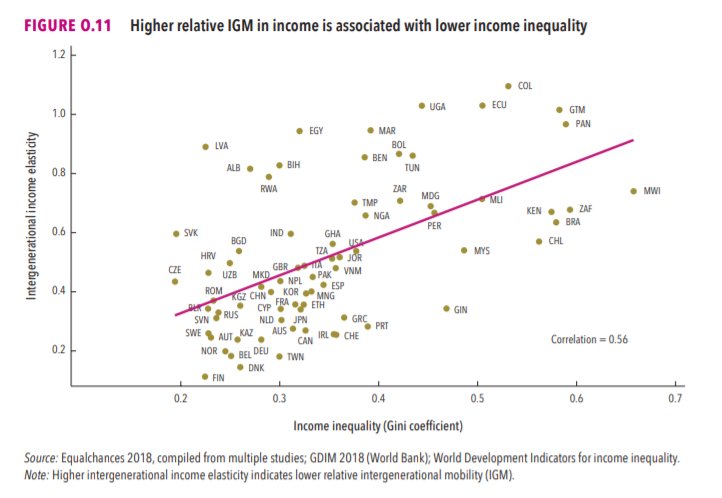
3/The World Bank report has a graph in which it appears to show the same value for China's Gini - under 0.3.
The graph cites the World Development Indicators as its source for the income inequality data.
4/The World Development Indicators are available at the World Bank's website.
Here's the Gini index: https://t.co/MvylQzpX6A
It looks as if the latest estimate for China's Gini is 42.2.
That estimate is from 2012.
5/A Gini of 42.2 would put China in the same neighborhood as the U.S., whose Gini was estimated at 41 in 2013.
I can't find the <30 number anywhere. The only other estimate in the tables for China is from 2008, when it was estimated at 42.8.
This New York Times feature shows China with a Gini Index of less than 30, which would make it more equal than Canada, France, or the Netherlands. https://t.co/g3Sv6DZTDE
That's weird. Income inequality in China is legendary.
Let's check this number.
2/The New York Times cites the World Bank's recent report, "Fair Progress? Economic Mobility across Generations Around the World".
The report is available here:
3/The World Bank report has a graph in which it appears to show the same value for China's Gini - under 0.3.
The graph cites the World Development Indicators as its source for the income inequality data.
4/The World Development Indicators are available at the World Bank's website.
Here's the Gini index: https://t.co/MvylQzpX6A
It looks as if the latest estimate for China's Gini is 42.2.
That estimate is from 2012.
5/A Gini of 42.2 would put China in the same neighborhood as the U.S., whose Gini was estimated at 41 in 2013.
I can't find the <30 number anywhere. The only other estimate in the tables for China is from 2008, when it was estimated at 42.8.

First update to https://t.co/lDdqjtKTZL since the challenge ended – Medium links!! Go add your Medium profile now 👀📝 (thanks @diannamallen for the suggestion 😁)

Just added Telegram links to https://t.co/lDdqjtKTZL too! Now you can provide a nice easy way for people to message you :)

Less than 1 hour since I started adding stuff to https://t.co/lDdqjtKTZL again, and profile pages are now responsive!!! 🥳 Check it out -> https://t.co/fVkEL4fu0L

Accounts page is now also responsive!! 📱✨

💪 I managed to make the whole site responsive in about an hour. On my roadmap I had it down as 4-5 hours!!! 🤘🤠🤘
Just added Telegram links to https://t.co/lDdqjtKTZL too! Now you can provide a nice easy way for people to message you :)
Less than 1 hour since I started adding stuff to https://t.co/lDdqjtKTZL again, and profile pages are now responsive!!! 🥳 Check it out -> https://t.co/fVkEL4fu0L
Accounts page is now also responsive!! 📱✨
💪 I managed to make the whole site responsive in about an hour. On my roadmap I had it down as 4-5 hours!!! 🤘🤠🤘