There are two major elements of the Indian economy.
An extensive yet super simple thread to understand the role of @RBI and how it uses 'Repo Rate' and 'Reverse Repo Rate' 👇🧵
You may bookmark this for further use.
#economy #RBI #financialliteracy
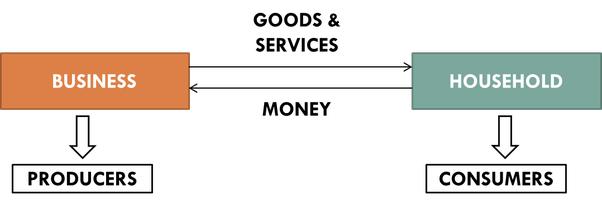
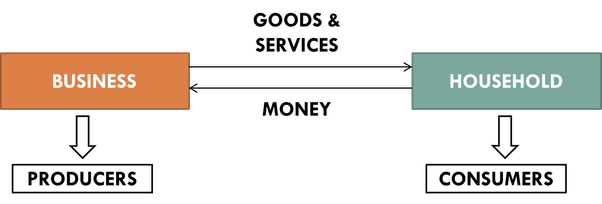
There are two major elements of the Indian economy.
They are the producers of the goods and services. Any business would be happy if it is growing and the prices of the goods and services sold are ever rising. They would be more interested in ‘Economic growth’.
It is the job of Reserve Bank of India to do this.
A. More the demand of any commodity, the businessman will increase the price. Less the demand of any commodity, the businessman will decrease the price to attract the consumers.


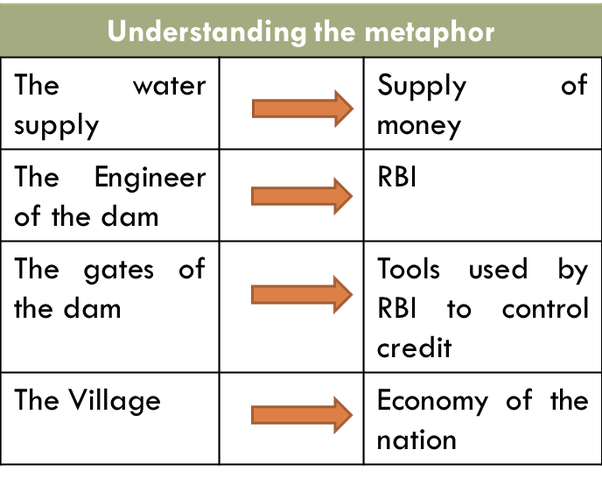
This can be done using various tools. Let us discuss 'Repo Rate' and 'Reverse Repo Rate' here.
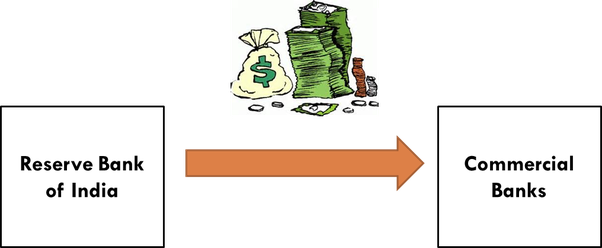
You go to a friend and ask for money, say 100 Rs. He don’t trust you so he asks you for security. You give him your watch as a security.
‘Reserve Bank of India’ decides the ‘Repo Rate’ and it changes it as and when needed keeping in mind the inflation and the growth factor of the economy.
👉 Decrease in ‘Repo Rate’ will make it easier for the Commercial Banks to lend money.
👉 Increased lending activity will cause an increase in the money supply.
👉 If RBI makes money supply easy then it will become very easy for commercial banks to lend loan to general public.
👉 Lending loan to general public in excess will cause increase in the supply of money in the hands of people.
👉 More money in the hands of people would imply more purchasing power.
👉 Increased purchasing power will lead to greater demand of goods and services. Hence, the prices will increase causing inflation to rise.
The rate at which commercial banks lend money to RBI is called as Reverse Repo Rate.
More from swapnilkabra

More from Finance








Two year back thread on MFI, someone liked this so came up in notifications . Rather than running around 100s of indicators, I have made this my go to indicator under any circumstances and have been using this for years
This thread actually had some great answers , one can learn a lot about the thought processes of different traders from the answers. Please go thru them
What do you think/use as the most robust leading indicator if following technical analysis ? Please answer with reason , I will provide my answer after 2 hours
— Subhadip Nandy (@SubhadipNandy16) August 12, 2019
( At Delhi airport , bored as hell )
This thread actually had some great answers , one can learn a lot about the thought processes of different traders from the answers. Please go thru them
You May Also Like

1/OK, data mystery time.
This New York Times feature shows China with a Gini Index of less than 30, which would make it more equal than Canada, France, or the Netherlands. https://t.co/g3Sv6DZTDE
That's weird. Income inequality in China is legendary.
Let's check this number.
2/The New York Times cites the World Bank's recent report, "Fair Progress? Economic Mobility across Generations Around the World".
The report is available here:
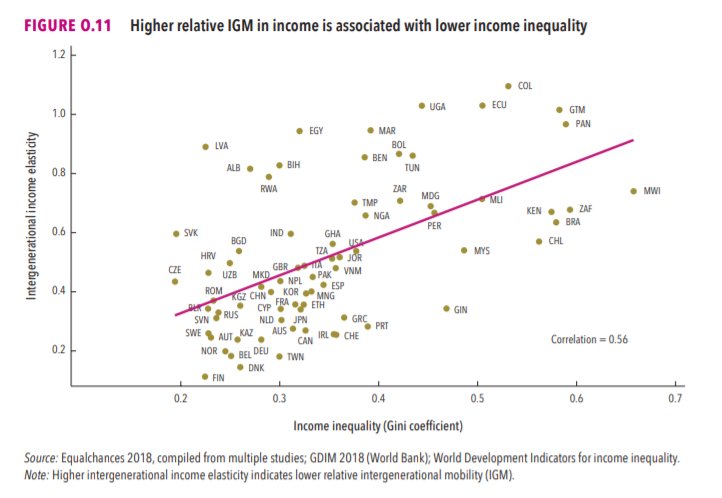
3/The World Bank report has a graph in which it appears to show the same value for China's Gini - under 0.3.
The graph cites the World Development Indicators as its source for the income inequality data.
4/The World Development Indicators are available at the World Bank's website.
Here's the Gini index: https://t.co/MvylQzpX6A
It looks as if the latest estimate for China's Gini is 42.2.
That estimate is from 2012.
5/A Gini of 42.2 would put China in the same neighborhood as the U.S., whose Gini was estimated at 41 in 2013.
I can't find the <30 number anywhere. The only other estimate in the tables for China is from 2008, when it was estimated at 42.8.
This New York Times feature shows China with a Gini Index of less than 30, which would make it more equal than Canada, France, or the Netherlands. https://t.co/g3Sv6DZTDE
That's weird. Income inequality in China is legendary.
Let's check this number.
2/The New York Times cites the World Bank's recent report, "Fair Progress? Economic Mobility across Generations Around the World".
The report is available here:
3/The World Bank report has a graph in which it appears to show the same value for China's Gini - under 0.3.
The graph cites the World Development Indicators as its source for the income inequality data.
4/The World Development Indicators are available at the World Bank's website.
Here's the Gini index: https://t.co/MvylQzpX6A
It looks as if the latest estimate for China's Gini is 42.2.
That estimate is from 2012.
5/A Gini of 42.2 would put China in the same neighborhood as the U.S., whose Gini was estimated at 41 in 2013.
I can't find the <30 number anywhere. The only other estimate in the tables for China is from 2008, when it was estimated at 42.8.