1/ "Widespread adoption of public-key/private-key encryption technologies will soon allow many economic activities to be completed anywhere you please."
"Many transactions in the Information Age will not need to be domiciled in any territorial sovereignty at all."
2/ From Monopoly to Competition
"This new economic dynamic directly contradicts the desire of government left over from the industrial era to impose monopoly pricing for its protection services."
3/ The Death of Seignorage
"In the past, megapolitical transitions have been associated with changes in the character of money."
"As cybercommerce begins, it will lead inevitably to cybermoney."
"..this new cybermoney will be denationalized."
4/ "Any individual or firm with access to cyberspace will be able to easily shift out of any currency that appears in danger of depreciation."
5/ "While paper money will no doubt remain in circulation as a residual medium of exchange for the poor and computer-illiterate, money for high-value transactions will be privatized."
6/ "..the new digital gold.. will be almost impossible to counterfeit for the fundamental mathematical reason that it is all but impossible to unravel the product of multihundred-digit prime numbers. All receipts will be verifiably unique."
7/ "The verifiability of the digital receipts rules out this classic expedient for expropriating wealth through inflation."
As "there is no intrinsic necessity that currency depreciate or that the nominal cost of living rise every year."
8/ Privatizing Money
"Hayek argued in 1976 that the use of competitive, private currencies would eradicate inflation.. Any issuer of a private currency failing to maintain its value would soon lose its customers."
9/ "The new digital gold will overcome many of the practical problems that inhibited direct use of gold as money in the past."
"Digital receipts will not be too heavy to carry.. Nor will it be difficult to divide.. into units small enough to pay for even microvalue purchases."
10/ "The capacity of digital money to deliver micropayments will facilitate the emergence of new types of businesses that heretofore could not have existed, specializing in organizing the distribution of low-value information."
11/ "the most momentous consequence of the new digital money will be the end of inflation and the deleveraging of the financial system. The economic implications are profound."
12/ "The death of inflation will take away the disguised profits that inflation previously conveyed to those who were monopolistic issuers of currency."
Additionally, "they will lose a major part of their indirect capacity to commandeer resources."
13/ "This will create a dilemma for Western gov'ts. They will face a sharp drop in revenue from taxation and the virtual elimination of leverage in the monetary system. At the same time, they will retain the unfunded liabilities and inflated expectations for social spending.."
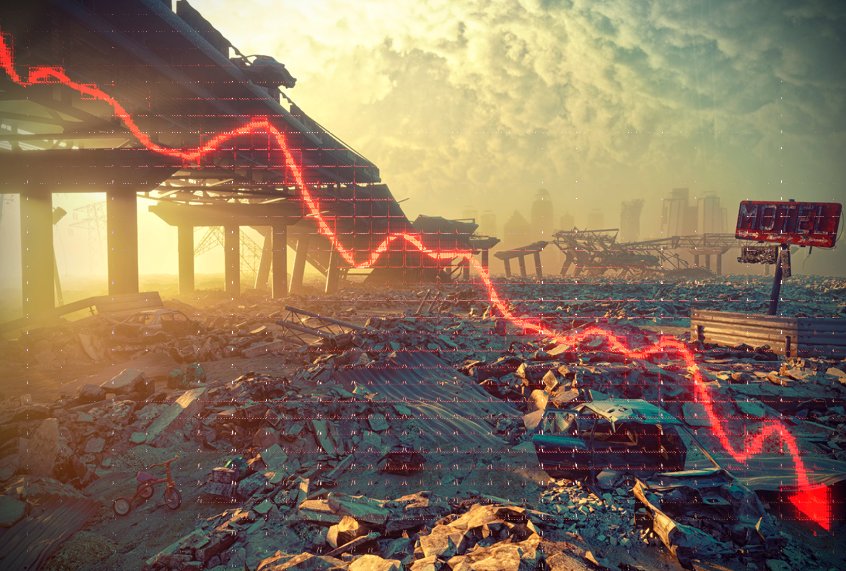
14/ "The result to be expected is an intense fiscal crisis with many unpleasant social side effects.. The economic consequences of this transition will probably include a one-time spike in real interest rates. Debtors will be squeezed.."
15/ "Because it will probably be gold-linked, cybermoney will also benefit from the appreciation of gold. The price of gold will probably rise significantly relative to other commodities.."
Why?
"The real price of gold almost always rises in deflation."
16/ "to compensate the issuers of currency directly.. use of the new monetary system will therefore probably involve a more explicit transaction cost."
17/ "Higher real rates all around will spur liquidation of high-cost, unproductive activities, and temporarily reduce consumption."
Long-term "the liberation of capital to find the highest returns globally, should rapidly compensate for the output lost early in the transition.."
18/ "Conventional thinkers reviewing our argument.. would conclude that the breakdown of income redistribution in the leading nation-states would doom the world to economic collapse. Do not believe it."
19/ "A dramatic improvement in the efficiency of resource use will arise when revenues historically engrossed by governments come to be controlled instead by persons of genuine talent."
20/ "The new stewards of wealth are likely to prove far abler than politicians in utilizing resources and deploying investment... megapolitical conditions will allow the ablest investors and entrepreneurs rather than specialists in violence ultimate control over capital."
21/ "..freedom from predatory violence will allow the cybereconomy to grow at far higher compound rates of growth that conventional economies dominated by nation-states."
"..the cybereconomy will rapidly become the most important new economy of the new millennium."
22/ "If it becomes impossible for politicians to obtain resources to redistribute, the public may respond in a rational way and forget about politics, just as well-intentioned people ceased organizing marches of penitents when the Middle Ages came to an end."
23/ "Setting aside transition difficulties, which could last for decades, the long-term prospects for the global economy should be highly bullish."
---------------
THE END
---------------
If you found this thread interesting, here are some other books you may enjoy:
https://t.co/ATPE2N8D1a